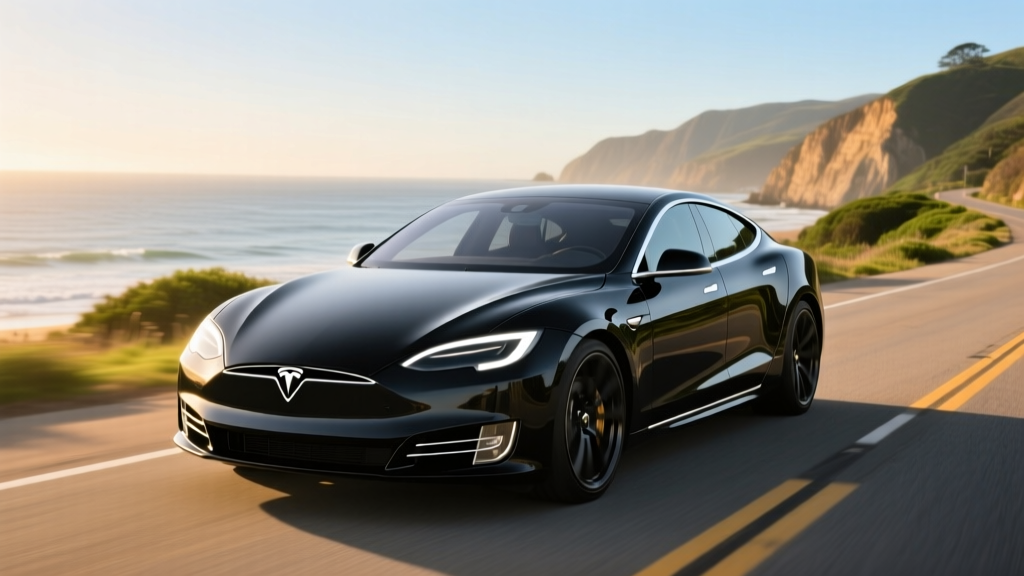
When shoppers ask, "how far will a Tesla go on a full charge?" the answer depends on which model you buy, how you drive, and the weather outside. Tesla's 2026 lineup spans from the refreshed Model 3 to the Cybertruck, and the gap between the EPA sticker and what you'll actually see on a road trip can be significant. This guide walks through every current Tesla model's range, battery chemistry, charging speed, and real-world efficiency so you can plan trips and budgets with exact numbers.
2026 Tesla Range by Model: EPA vs Real World
Tesla's EPA range estimates are among the most accurate in the industry, but they assume a mix of city and highway driving at moderate temperatures. Highway-only trips at 75+ mph, cold weather below freezing, and aggressive acceleration all reduce range. Below is the current 2026 lineup with real-world expectations based on independent testing and owner data.
| Model (2026) | Trim | Battery (kWh usable) | Chemistry | EPA Range | Real-World Highway | Real-World Cold (20°F) |
|---|---|---|---|---|---|---|
| Model 3 | Long Range RWD | 75 kWh | NMC | 363 mi | ~305–320 mi | ~250–275 mi |
| Model 3 | Long Range AWD | 75 kWh | NMC | 346 mi | ~290–310 mi | ~240–260 mi |
| Model 3 | Performance | 75 kWh | NMC | 315 mi | ~265–285 mi | ~215–240 mi |
| Model Y | Long Range AWD | 75 kWh | NMC | 320 mi | ~270–290 mi | ~220–245 mi |
| Model Y | Performance | 75 kWh | NMC | 285 mi | ~240–260 mi | ~195–220 mi |
| Model S | Long Range | 95 kWh | NMC | 402 mi | ~340–360 mi | ~280–310 mi |
| Model S | Plaid | 95 kWh | NMC | 359 mi | ~300–320 mi | ~250–275 mi |
| Model X | Long Range | 95 kWh | NMC | 335 mi | ~280–300 mi | ~230–255 mi |
| Cybertruck | AWD | 123 kWh | NMC | 340 mi | ~285–305 mi | ~235–260 mi |
The EPA's testing methodology uses dynamometer cycles that don't fully replicate sustained highway speeds or extreme temperatures. Tesla's heat pump, standard across the 2026 lineup, helps mitigate cold-weather losses compared to resistive heating, but physics still wins: battery chemistry slows in the cold, and cabin heating draws energy regardless of the system type.
Battery Chemistry and Longevity: What's Inside
Tesla uses two primary battery chemistries in 2026. Understanding the difference matters for both range expectations and long-term ownership.
| Attribute | NMC (Nickel Manganese Cobalt) | LFP (Lithium Iron Phosphate) |
|---|---|---|
| Energy Density | Higher — enables longer range per kWh | Lower — heavier pack for same capacity |
| Models Using | All Long Range, Performance, S, X, Cybertruck | Base Model 3 RWD (where available) |
| Charging to 100% | Recommended to 80% daily; 100% for trips | Can charge to 100% daily without degradation concern |
| Cold Performance | Better low-temp conductivity | More range loss in freezing weather |
| Cycle Life | ~1,500–2,000 cycles to 80% SoH | ~3,000+ cycles to 80% SoH |
| Cost | Higher per kWh | Lower per kWh |
Most 2026 Teslas sold in the U.S. use NMC chemistry in their Long Range and Performance trims. The base Model 3 RWD has used LFP in recent years, giving it a lower EPA range (~272 mi) but the advantage of daily 100% charging without long-term degradation concerns. If you see an LFP-equipped Tesla, you can treat it like a phone — plug in to 100% every night. For NMC packs, Tesla's onboard battery management system recommends an 80% daily limit to maximize lifespan.
Charging Speed: DC Fast Charge and Home Level 2
Range only matters if you can replenish it efficiently. Tesla's Supercharger network remains the most reliable DC fast-charging ecosystem in the U.S., and 2026 models support NACS natively — no adapter needed. Here's how fast each model charges.
| Model | Max DC kW | 10–80% Time | Level 2 Rate (kW) | Level 2 Miles/Hour |
|---|---|---|---|---|
| Model 3 Long Range | 250 kW | ~25 min | 11.5 kW | ~44 mi/hr |
| Model 3 Performance | 250 kW | ~25 min | 11.5 kW | ~40 mi/hr |
| Model Y Long Range | 250 kW | ~27 min | 11.5 kW | ~42 mi/hr |
| Model S Long Range | 250 kW | ~30 min | 11.5 kW | ~48 mi/hr |
| Model X Long Range | 250 kW | ~32 min | 11.5 kW | ~44 mi/hr |
| Cybertruck AWD | 250 kW | ~35 min | 11.5 kW (17 kW capable) | ~40 mi/hr |
Charge curve reality: Peak kW is not sustained kW. A Model 3 Long Range may hit 250 kW at 10% SoC, but by 50% it tapers to ~150 kW, and above 80% it drops below 50 kW. That's why 10–80% time is the useful metric — the last 20% can take as long as the first 70%. Always plan road-trip stops around the 10–80% window for maximum efficiency.
At home, a Tesla Wall Connector on a 60-amp circuit delivers up to 11.5 kW (48 amps continuous), adding roughly 40–48 miles of range per hour of charging. An overnight charge from 20% to 80% takes about 5–6 hours — more than enough for daily use. The Cybertruck supports up to 17 kW on Level 2 with an 80-amp circuit, but this requires a hardwired Wall Connector and a panel that can support it. A Tesla Wall Connector costs approximately $475 before installation.
Performance, Efficiency, and Specs at a Glance
| Model (2026) | Drivetrain | 0–60 mph | Horsepower | MPGe (Combined) | kWh/100mi |
|---|---|---|---|---|---|
| Model 3 LR RWD | RWD | 5.8 sec | 283 hp | 132 MPGe | 25 kWh |
| Model 3 LR AWD | Dual Motor AWD | 4.2 sec | 384 hp | 125 MPGe | 27 kWh |
| Model 3 Performance | Dual Motor AWD | 2.9 sec | 510 hp | 113 MPGe | 30 kWh |
| Model Y LR AWD | Dual Motor AWD | 4.8 sec | 384 hp | 120 MPGe | 28 kWh |
| Model Y Performance | Dual Motor AWD | 3.5 sec | 510 hp | 110 MPGe | 31 kWh |
| Model S LR | Dual Motor AWD | 3.1 sec | 670 hp | 120 MPGe | 28 kWh |
| Model S Plaid | Tri-Motor AWD | 1.99 sec | 1,020 hp | 115 MPGe | 29 kWh |
| Model X LR | Dual Motor AWD | 3.8 sec | 670 hp | 105 MPGe | 32 kWh |
| Cybertruck AWD | Dual Motor AWD | 4.1 sec | 600 hp | 76 MPGe | 47 kWh |
Efficiency, measured in kWh per 100 miles, tells you how much energy the car uses to travel a fixed distance — lower is better. The Model 3 Long Range RWD at 25 kWh/100mi is one of the most efficient EVs on the road. The Cybertruck's 47 kWh/100mi reflects its heavy stainless-steel body, large frontal area, and all-terrain tires. For context, the average U.S. electricity rate of ~$0.17/kWh means the Model 3 costs about $4.25 per 100 miles to fuel at home, while the Cybertruck costs about $7.99 — still cheaper than gasoline but notably higher than the sedan.
Pricing, Tax Credits, and Total Cost
Tesla's 2026 pricing positions the Model 3 and Model Y as mass-market EVs, while the S, X, and Cybertruck occupy premium segments. Federal tax credit eligibility under IRS §30D depends on MSRP caps, buyer income, and battery component/critical-mineral sourcing requirements.
| Model (2026) | Base MSRP | As-Tested (Typical) | Federal Credit Eligible? | After Max Credit |
|---|---|---|---|---|
| Model 3 LR RWD | $44,130 | $46,630 | Partial ($3,750)* | ~$40,380 |
| Model 3 LR AWD | $49,130 | $52,000 | Partial ($3,750)* | ~$45,380 |
| Model 3 Performance | $55,130 | $58,500 | Partial ($3,750)* | ~$51,380 |
| Model Y LR AWD | $46,630 | $50,000 | Partial ($3,750)* | ~$42,880 |
| Model Y Performance | $52,130 | $56,000 | Partial ($3,750)* | ~$48,380 |
| Model S LR | $79,990 | $87,000 | No (exceeds MSRP cap) | $79,990 |
| Model X LR | $84,990 | $92,000 | No (exceeds MSRP cap) | $84,990 |
| Cybertruck AWD | $79,990 | $88,000 | No (exceeds MSRP cap) | $79,990 |
*Credit amounts reflect partial eligibility based on critical-mineral and battery-component sourcing rules as of 2026. The Model 3 and Model Y meet the MSRP cap ($55,000 for sedans, $80,000 for SUVs/trucks) and buyer income limits ($150K single / $300K joint for new vehicles), but sourcing requirements may limit the credit to $3,750 rather than the full $7,500. The IRS §30D guidelines detail exact eligibility. Credits can now be transferred to the dealer at point of sale, reducing your out-of-pocket cost at purchase rather than waiting for tax filing. Always verify eligibility with a tax professional before purchasing.
Interior Space, Tech, and Driver Assistance
Tesla's minimalist interior centers on a 15.4-inch touchscreen (17-inch in Model S/X) that controls nearly every vehicle function. Physical controls are limited to steering-wheel stalks and buttons. Build quality has improved substantially since the 2024 Model 3 Highland refresh, with better panel gaps, acoustic glass, and ventilated front seats now standard on Long Range trims.
| Model | Cargo (rear seats up) | Cargo (rear seats down) | Frunk | Rear Legroom |
|---|---|---|---|---|
| Model 3 | 23 cu ft | — (sedan trunk) | 3.1 cu ft | 35.3 in |
| Model Y | 30 cu ft | 72 cu ft | 4.1 cu ft | 36.5 in |
| Model S | 28 cu ft | — (liftback) | — | 35.4 in |
| Model X | 42 cu ft (5-seat) | 88 cu ft | — | 35.5 in |
| Cybertruck | 34 cu ft (bed) | — | 7.0 cu ft (front trunk) | 36.0 in (est.) |
Tesla Autopilot and FSD (Supervised): Every 2026 Tesla ships with Basic Autopilot, which includes Traffic-Aware Cruise Control and Autosteer — a solid Level 2 system for highway lane-keeping. Full Self-Driving (Supervised) is an $8,000 option (or $99/month subscription) that adds automatic lane changes, traffic-light recognition, and city-street navigation. However, FSD remains an SAE Level 2 driver-assistance system. You must keep your hands on the wheel and eyes on the road at all times. It is not autonomous driving. Tesla's camera-only vision approach has improved, but it still struggles with construction zones, faded lane markings, and heavy rain.
Warranty and Long-Term Ownership
Tesla's warranty coverage is competitive within the EV segment:
- Basic Vehicle Warranty: 4 years / 50,000 miles, whichever comes first
- Battery & Drive Unit Warranty: 8 years / 120,000 miles (Model 3/Y RWD); 8 years / 120,000 miles (Model 3/Y AWD & Performance); 8 years / 150,000 miles (Model S/X)
- Battery Capacity Guarantee: Tesla warrants that the battery will retain at least 70% of its original capacity during the warranty period. If degradation exceeds 30%, Tesla will repair or replace the pack.
Real-world data from owner surveys and Tesla's Impact Reports show average battery degradation of approximately 10–12% at 150,000 miles for NMC packs. LFP packs show even slower degradation curves. Battery replacement out of warranty runs $12,000–$20,000 depending on the model, though third-party refurbishment options are growing and can cut that cost by 40–50%.
Who Should Buy a Tesla in 2026?
Choose the Model 3 Long Range if: You want the best efficiency and range in Tesla's lineup, commute daily with occasional road trips, and value a sedan's driving dynamics over cargo space. Best for: commuters, couples, solo drivers.
Choose the Model Y Long Range if: You need SUV cargo room for a family, want the same Supercharger access, and can accept ~40 fewer miles of range versus the Model 3. Best for: families, active lifestyles, road-trippers who need versatility.
Choose the Model S if: You want 400+ miles of range, premium interior appointments, and don't mind paying $80K+ with no federal credit. Best for: luxury sedan buyers, high-mileage executives.
Choose the Cybertruck if: You need a truck bed for work or recreation, want standout design, and can accept the efficiency penalty (~76 MPGe). Best for: truck buyers who want electrification without sacrificing utility.
Look elsewhere if: You want physical buttons, a traditional dealership experience, or need a vehicle that qualifies for the full $7,500 tax credit without sourcing caveats. Competitors like the Hyundai Ioniq 5 and Chevrolet Equinox EV may offer better credit eligibility and more conventional ergonomics.
Biggest Pros and Cons
Pros
- Best-in-class Supercharger network with 60,000+ stalls globally and strong uptime
- Industry-leading efficiency (Model 3 at 25 kWh/100mi)
- Over-the-air updates continuously add features and improve performance
- Strong real-world range with usable 10–80% charging windows under 30 minutes
- Heat pump standard across lineup for better cold-weather range retention
- Point-of-sale tax credit transfer reduces upfront cost where eligible
Cons
- Minimalist interior not for everyone — no physical climate or volume knobs
- FSD (Supervised) costs $8,000 and remains Level 2 — not autonomous
- Model S/X and Cybertruck exceed MSRP caps — no federal tax credit
- Cybertruck efficiency is poor (47 kWh/100mi) — expensive to "fuel"
- Service center wait times can be long in high-population areas
- Panel gap and paint quality, while improved, still trail legacy luxury brands
Frequently Asked Questions
What is the real-world range of a Tesla on a full charge?
For highway driving at 70–80 mph, expect 10–15% less than the EPA sticker. A Model 3 Long Range RWD rated at 363 miles EPA will deliver roughly 305–320 miles on a highway trip. In cold weather (below 30°F), reduce that further to approximately 250–275 miles. The Model S Long Range remains the range king at ~340–360 real-world highway miles thanks to its 95 kWh pack.
How fast does a Tesla charge at home and on the road?
On a Tesla Supercharger (V3 or V4), most 2026 models charge at up to 250 kW, reaching 10–80% in 25–35 minutes depending on the model. At home with a Tesla Wall Connector on a 60-amp circuit, you'll get 11.5 kW (48 amps), adding about 40–48 miles of range per hour. A full overnight charge from 20% to 80% takes 5–6 hours.
Does a 2026 Tesla qualify for the $7,500 federal EV tax credit?
Partially. The Model 3 and Model Y fall under the MSRP cap ($55,000 sedans, $80,000 SUVs) and buyer income limits apply ($150K single / $300K joint). However, battery-component and critical-mineral sourcing rules under IRS §30D may limit the credit to $3,750 in 2026. The Model S, Model X, and Cybertruck exceed MSRP caps and do not qualify. Always confirm eligibility with a tax professional and check the latest IRS guidance before purchasing.
Is a Tesla worth buying vs. competitors like Hyundai Ioniq 5 or Ford Mustang Mach-E?
Tesla's advantages are the Supercharger network, OTA updates, and class-leading efficiency. The Ioniq 5 charges faster on 800V architecture (10–80% in ~18 minutes at 350 kW chargers) and offers more physical controls. The Mach-E provides a more traditional SUV feel. If Supercharger access matters for your road-trip habits, Tesla still has an edge. If you prioritize charging speed or conventional ergonomics, the competition is strong and often qualifies for the full $7,500 credit.
How long will a Tesla battery last before needing replacement?
Tesla's battery warranty guarantees at least 70% capacity retention for 8 years / 120,000–150,000 miles. Real-world data shows most NMC packs degrade about 10–12% at 150,000 miles, meaning you'll still have ~88–90% of original range. Full battery replacement out of warranty costs $12,000–$20,000 but is rarely needed within the first decade of ownership. Proper charging habits (80% daily limit for NMC, avoiding frequent DC fast charging) extend battery life.