Quick Verdict: A Proven Subcompact EV Bargain on the Used Market
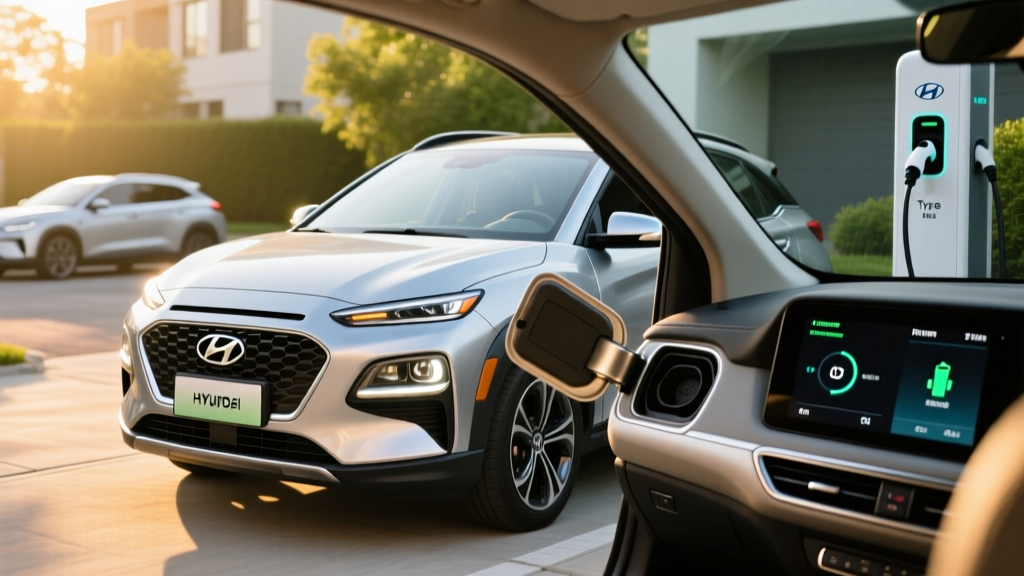
The first-generation Hyundai Kona Electric (model years 2019–2023) remains one of the most compelling used EVs you can buy in 2026. With a 258-mile EPA range, efficient powertrain, and Hyundai's generous 10-year/100,000-mile battery warranty (transferable to second owners on certified pre-owned models), it punches well above its price in the pre-owned subcompact EV segment. If you're cross-referencing the OEM front grille assembly part number 56120-J9000-TRY for the 2018–2021 Kona body style — whether for a replacement after front-end damage or to verify parts compatibility on a used purchase — this review covers everything you need to know about the EV that wears it.
| Spec | Value |
|---|---|
| EPA Range | 258 miles (64 kWh battery) |
| Battery Capacity | 64 kWh usable (NMC lithium-ion) |
| Battery Chemistry | NMC (Nickel Manganese Cobalt) |
| Motor Output | 150 kW (201 hp) / 290 lb-ft torque |
| Drivetrain | Front-wheel drive (single motor) |
| 0–60 mph | ~6.4 seconds |
| EPA Efficiency | 120 MPGe combined (28 kWh/100 mi) |
| Max DC Fast Charge | ~100 kW peak (CCS1 connector) |
| 10–80% DCFC Time | ~47 minutes (est.) |
| Level 2 Charge Rate | 7.2 kW onboard charger (~25 mi/hr) |
| Cargo Volume | 19.2 cu ft (rear seats up) / 45.8 cu ft (folded) |
| Front / Rear Legroom | 41.5 in / 33.4 in |
| Battery Warranty | 10 yr / 100,000 mi (original owner); transferable on CPO |
| Original MSRP (2023) | $34,100 (SEL) – $42,900 (Limited) |
| Typical Used Price (2026) | $14,000–$24,000 depending on year/mileage |
Range and Efficiency: Real-World Expectations vs. the EPA Sticker
EPA Sticker: 258 miles
Real-World Expectation: 220–250 miles in mixed driving; 190–215 miles sustained highway at 70+ mph; 155–185 miles in sub-freezing winter conditions.
The Kona Electric's 258-mile EPA rating was class-leading when it launched for the 2019 model year, and it still holds up. According to fueleconomy.gov, the 64 kWh NMC pack delivers a combined 120 MPGe (28 kWh per 100 miles) — meaning this is one of the most energy-efficient EVs ever sold in the U.S.
But real-world range tells a more nuanced story. In warm-weather city and suburban driving, owners routinely report matching or slightly exceeding the 258-mile sticker thanks to regenerative braking and low-speed efficiency. Highway driving at 70–75 mph, however, drops range to roughly 200–220 miles because the Kona's relatively upright crossover profile creates more aerodynamic drag than a sedan.
Cold weather is the biggest range killer. In temperatures below 32°F, expect a 25–35% reduction in usable range, bringing realistic winter range to 155–185 miles. The first-generation Kona Electric uses a resistive PTC heater rather than a heat pump, which draws significantly more energy for cabin heating. Preconditioning the cabin and battery while plugged in is essential for preserving range in winter — always schedule departure preconditioning through the Blue Link app if your model year supports it.
One practical note: the Kona Electric's battery management system (BMS) includes a buffer above and below the displayed 0–100% state of charge, so you're never truly at zero. Still, plan trips with a 15–20% buffer for unexpected detours or charger outages.
Charging Speed: DC Fast Charging and Home Level 2
Charging performance is where the first-generation Kona Electric shows its age compared to newer 800V EVs, but it remains practical for daily use and moderate road trips.
| Charging Level | Power / Voltage | Speed (mi/hr added) | Notes |
|---|---|---|---|
| Level 1 (120V household) | ~1.4 kW | ~5 mi/hr | Emergency/top-up only; full charge ~45+ hours |
| Level 2 (240V home/public) | 7.2 kW | ~25 mi/hr | Full 0–100% in ~9 hours; ideal for overnight |
| DC Fast Charge (CCS1) | ~100 kW peak | ~150–200 mi/hr (peak) | 10–80% in ~47 min; tapers significantly above 80% |
The 7.2 kW onboard charger is adequate for overnight home charging — plug in at 30% and wake up at 100%. Most Kona Electric owners install a 32-amp or 40-amp Level 2 home station (such as a ChargePoint Home Flex or Emporia Level 2), which delivers the full 7.2 kW the car can accept.
DC fast charging tops out around 100 kW on a CCS1 connector, which was competitive in 2019 but trails today's 150–350 kW capable EVs. The charge curve is the critical detail: the Kona peaks near 75–100 kW from roughly 10–40% state of charge, then steps down progressively. From 60–80%, you're looking at roughly 50–60 kW, and above 80% the rate drops sharply to protect battery health. Plan road-trip stops to charge from 10–80% and move on — sitting at a charger above 80% is painfully slow.
One important caveat for used buyers: 2019–2020 models originally shipped with a 7.2 kW Level 2 charger, and Hyundai did not upgrade this for later model years of this generation. All years use the CCS1 (Combo 1) DC fast-charging standard. With Hyundai's transition to NACS on new models starting in 2025, CCS1 adapters for Tesla Superchargers are available, expanding your public charging options.
Performance and Driving Impressions
The Kona Electric's single front-mounted motor produces 201 hp (150 kW) and 290 lb-ft of instant torque, routing power exclusively to the front wheels. The 0–60 mph time of approximately 6.4 seconds feels genuinely quick in daily driving — the instant torque delivery makes it punchy off the line and confident for highway merging.
However, the FWD-only layout means torque steer is noticeable under hard acceleration, especially on wet surfaces. There was no AWD option for this generation (the redesigned 2024+ Kona Electric offers AWD). The low center of gravity from the floor-mounted battery pack keeps body roll reasonable, but the suspension tuning leans firm — you'll feel expansion joints and potholes more than in a comfort-tuned crossover.
Regenerative braking is adjustable via steering-wheel paddles across four levels (0–3), with Level 3 providing near one-pedal driving in city traffic. The transition between regen and friction braking is generally smooth, though some owners report a slight grab at the very end of stops.
Interior, Cargo, and Technology
The first-generation Kona Electric shares its cabin with the gas Kona, which means materials are hard-plastic-heavy but assembly quality is solid. What sets the EV apart is the tech suite:
- Infotainment: 7-inch (SEL) or 8-inch (Limited/Ultimate) touchscreen with Apple CarPlay and Android Auto (wired on most trims; wireless on select 2022–2023 models)
- Digital cluster: 7-inch LCD gauge cluster with EV-specific displays (energy flow, regen level, battery temperature)
- Driver assistance: Hyundai SmartSense suite standard on most trims — includes forward collision-avoidance assist, lane keeping assist, blind-spot monitoring, and rear cross-traffic alert
- Adaptive cruise: Available on Limited and Ultimate trims with stop-and-go capability
- Blue Link: Connected-car app for remote climate preconditioning, charge scheduling, and location services (subscription required after trial period)
Cargo space is the Kona Electric's most significant practical limitation. At 19.2 cubic feet behind the rear seats and 45.8 cu ft with them folded, it trails competitors like the Chevrolet Bolt EUV (which offers 16.3/54.7 cu ft — narrower but longer load floor) and is substantially smaller than the Volkswagen ID.4's 30.3 cu ft. There is no frunk (front trunk); the space under the hood is occupied by power electronics. Rear-seat legroom at 33.4 inches is tight for adults on longer trips — this is a subcompact, and it shows.
Pricing, Trims, and Federal Tax Credit Eligibility
When new, the 2023 Kona Electric started at $34,100 for the SEL trim and climbed to $42,900 for the fully loaded Limited. In the 2026 used market, you'll find these vehicles ranging from roughly $14,000 (high-mileage 2019 models) to $24,000 (low-mileage 2022–2023 Limited trims).
| Trim (2023) | Original MSRP | Typical Used (2026) | Used EV Credit (§25E) |
|---|---|---|---|
| SEL | $34,100 | $16,000–$19,000 | Up to $4,000 (30% of sale price, max $4,000) |
| Blue | $35,650 | $17,000–$20,000 | Up to $4,000 |
| Limited | $42,900 | $20,000–$24,000 | Up to $4,000 |
Critical tax credit note: Because the Kona Electric is no longer sold new, the federal §30D new EV tax credit ($7,500) does not apply. Instead, used buyers should investigate the §25E Previously-Owned Clean Vehicle Credit, which provides up to $4,000 (30% of the sale price, capped at $4,000) for qualifying used EVs purchased from a dealer. Per IRS guidelines, eligibility requires:
- Sale price of $25,000 or less
- Buyer income below $75,000 (single) / $112,500 (head of household) / $150,000 (joint)
- Vehicle purchased from a licensed dealer (private-party sales don't qualify)
- Vehicle model year at least two years older than the calendar year of purchase
- Buyer has not claimed the used-EV credit in the prior three years
A 2019–2021 Kona Electric purchased from a dealer for $18,000 in 2026 would yield a $4,000 credit (30% of $18,000 = $5,400, but capped at $4,000), bringing your effective cost to $14,000 — exceptional value for a 258-mile EV. Always consult a tax professional to confirm your eligibility before relying on this credit.
Battery Health, Degradation, and Warranty
The 64 kWh NMC battery pack in the Kona Electric has proven durable in real-world use. Data aggregated from owner forums and fleet studies suggests typical degradation of 5–8% over the first 100,000 miles — meaning a five-year-old Kona Electric with 60,000 miles should still deliver 235–245 miles of usable range.
Hyundai's battery warranty covers 10 years or 100,000 miles (whichever comes first) against capacity loss below 70% of original capacity. This is one of the strongest battery warranties in the industry. However, warranty transferability varies:
- Original owner: Full 10yr/100,000mi coverage
- Second owner (non-CPO): Warranty typically reverts to 5yr/60,000mi from original in-service date — check with Hyundai directly
- Certified Pre-Owned (CPO): Full 10yr/100,000mi warranty transfers, making CPO the safest used purchase path
For used buyers, request a battery state-of-health (SoH) report from the dealer or use an OBD-II EV diagnostic tool (such as Car Scanner or EV-Log) to check remaining capacity before purchase. Any Kona Electric showing more than 10% degradation should be evaluated carefully — it may indicate exposure to frequent DC fast charging or sustained high-SoC storage in hot climates.
Kona Electric vs. Key Competitors
In the used subcompact EV market, the Kona Electric faces three main rivals. Here's how they stack up:
| Spec | Hyundai Kona Electric | Chevrolet Bolt EV/EUV | Nissan LEAF Plus | Kia Niro EV |
|---|---|---|---|---|
| EPA Range | 258 mi | 259 mi (EV) / 247 mi (EUV) | 212 mi | 239 mi |
| Battery | 64 kWh NMC | 65 kWh NMC | 62 kWh NMC | 64.8 kWh NMC |
| DC Fast Charge | ~100 kW CCS1 | ~55 kW CCS1 | ~100 kW CHAdeMO | ~77 kW CCS1 |
| 0–60 mph | 6.4 sec | 6.5 sec | 6.9 sec | 7.8 sec |
| Cargo (seats up) | 19.2 cu ft | 16.3 cu ft (EV) | 23.6 cu ft | 18.5 cu ft |
| Battery Warranty | 10yr/100k mi | 8yr/100k mi | 8yr/100k mi | 10yr/100k mi |
The Bolt EV/EUV offers nearly identical range but suffers from much slower DC fast charging (~55 kW), making road trips frustrating. The Nissan LEAF Plus uses the declining CHAdeMO connector standard, limiting future charging network access. The Kia Niro EV is the Kona's corporate cousin (shared platform and battery) but offers slightly less range and slower DC charging. For a balance of range, charging speed, and warranty coverage, the Kona Electric holds a slight edge — though the Niro EV's larger cabin may suit families better.
Pros
- 258-mile EPA range still competitive in 2026
- Excellent efficiency (120 MPGe combined)
- Industry-leading 10yr/100k battery warranty
- Strong DC fast-charge speed for its era (~100 kW)
- Comprehensive Hyundai SmartSense safety suite
- Eligible for up to $4,000 used-EV tax credit (§25E)
- Proven battery durability with low degradation rates
Cons
- Tight rear-seat legroom (33.4 in) and modest cargo space
- No frunk; limited storage options
- Resistive heater (no heat pump) hurts winter range
- FWD only — no AWD option for this generation
- CCS1 connector requires adapter for Tesla Superchargers
- Firm ride quality over rough roads
- Infotainment feels dated vs. 2024+ Hyundai models
Who Should Buy the Kona Electric?
Choose the Kona Electric if: You're a commuter or small household seeking a proven, affordable used EV with strong range and the best battery warranty in the business. Ideal for daily drives under 60 miles round-trip with home Level 2 charging.
Look elsewhere if: You regularly carry rear-seat passengers, need cargo space for family gear, live in extreme cold climates (winter range drops sharply without a heat pump), or take frequent long road trips where 47-minute DC charge stops become tedious.
Frequently Asked Questions
What is the real-world range of the 2019–2023 Hyundai Kona Electric?
Expect 220–250 miles in warm mixed driving, 190–215 miles on sustained highway trips, and 155–185 miles in freezing temperatures. The 258-mile EPA rating is achievable in ideal city conditions but optimistic for highway-heavy or cold-weather use.
How fast does the Kona Electric charge at home and on DC fast chargers?
At home on a Level 2 (240V/7.2 kW) charger, the Kona adds about 25 miles of range per hour, fully charging in roughly 9 hours. On a DC fast charger, it peaks around 100 kW and charges from 10–80% in approximately 47 minutes, with significant tapering above 80%.
Does the Kona Electric qualify for any federal tax credit in 2026?
Not the $7,500 new-vehicle credit (§30D) — the Kona Electric is discontinued as a new vehicle. However, used buyers may qualify for the §25E Previously-Owned Clean Vehicle Credit of up to $4,000 if purchasing from a dealer for $25,000 or less and meeting income requirements. Consult a tax professional for eligibility.
What does the Hyundai part number 56120-J9000-TRY refer to?
This is an OEM front grille assembly part number for the 2018–2021 Hyundai Kona body style. The Kona Electric uses a distinctive closed-off grille panel (since EVs need less cooling airflow than gas models). If you're replacing front-end bodywork on a used Kona Electric, verify the exact part number with your VIN at a Hyundai dealer, as the EV's grille differs from the gas Kona's.
Is the Kona Electric worth buying over a Chevrolet Bolt EV?
For road-trip flexibility, yes — the Kona's ~100 kW DC fast charging is nearly twice as fast as the Bolt's ~55 kW, saving 20+ minutes per stop. For pure value and interior space, the Bolt EUV offers more rear-seat room at a similar used price. Both qualify for the used-EV credit.
How long will the Kona Electric's battery last?
NMC batteries in the Kona Electric have shown 5–8% degradation over 100,000 miles in real-world data. Hyundai warrants the battery for 10 years/100,000 miles against dropping below 70% capacity. With proper care (avoiding frequent 100% charges, minimizing DC fast charging in extreme heat), expect the battery to remain functional for 150,000–200,000+ miles.
Can I charge the Kona Electric at Tesla Superchargers?
Not natively — the Kona Electric uses the CCS1 connector. However, Hyundai has partnered with Tesla to provide NACS adapter access for older CCS-equipped Hyundais. Check Hyundai's official adapter program for availability and compatibility with your specific model year.
Sources: EPA fueleconomy.gov, IRS §25E Used Clean Vehicle Credit, Hyundai Motor America specifications.