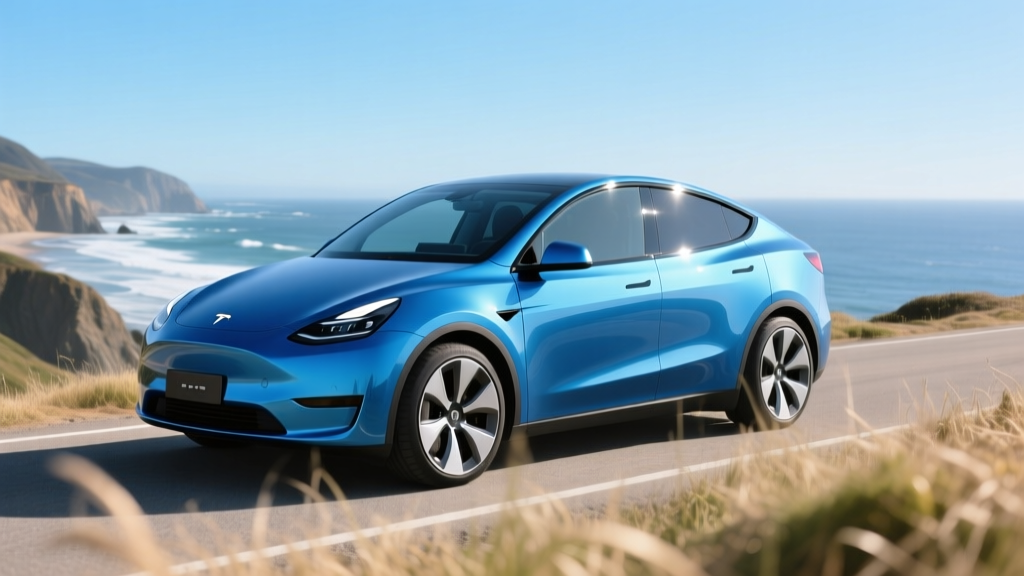
The Tesla Model Y remains the best-selling electric vehicle in the United States for good reason: strong range, access to the Supercharger network, and continuous over-the-air updates. But the sticker price only tells part of the ownership story. Between Full Self-Driving (FSD) subscriptions, Premium Connectivity, and the shifting landscape of federal tax credits, understanding the true Tesla subscription cost is essential before signing on the dotted line.
This review covers the 2026 Tesla Model Y Long Range AWD and Performance trims with exact EPA figures, real-world range expectations, charging data, and a complete breakdown of every recurring subscription Tesla offers — so you know exactly what you're paying monthly and annually.
2026 Tesla Model Y at a Glance: Key Specifications
| Spec | Long Range AWD | Performance |
|---|---|---|
| EPA Range | 320 miles | 295 miles |
| Battery (usable) | ~75 kWh, NMC | ~75 kWh, NMC |
| Drivetrain | Dual-Motor AWD | Dual-Motor AWD |
| Horsepower | 384 hp | 456 hp |
| 0–60 mph | 4.8 sec | 3.5 sec |
| Peak DC Fast Charge | 250 kW | 250 kW |
| 10–80% DC Time | ~27 min | ~27 min |
| Level 2 Home Charge | 11.5 kW (~44 mi/hr) | 11.5 kW (~44 mi/hr) |
| MPGe (combined) | 122 MPGe | 111 MPGe |
| Efficiency | 28 kWh/100 mi | 30 kWh/100 mi |
| Cargo (rear seats up) | 30.2 cu ft | 30.2 cu ft |
| Cargo (rear seats folded) | 72.1 cu ft | 72.1 cu ft |
| Rear Legroom | 41.6 in | 41.6 in |
| Base MSRP | $44,990 | $48,990 |
| Battery Warranty | 8 yr / 120,000 mi | 8 yr / 120,000 mi |
Source: EPA Fuel Economy, Tesla Model Y.
Real-World Range: What the EPA Number Doesn't Tell You
EPA Estimated Range: 320 miles (Long Range AWD) / 295 miles (Performance)
Real-World Expectation: Plan for approximately 260–285 miles on highway-heavy trips at 70–75 mph. In freezing temperatures (below 32°F), expect a 20–30% reduction, bringing usable range to roughly 220–250 miles on the Long Range trim. City driving with regenerative braking recovers more energy and can exceed EPA estimates in mild weather.
Tesla's NMC (nickel manganese cobalt) battery chemistry delivers strong energy density, which is why the Model Y packs 320 miles into a relatively compact ~75 kWh usable pack. However, NMC batteries are more sensitive to extreme temperatures than LFP chemistry. Tesla's thermal management system — including a heat pump standard on all trims — mitigates cold-weather losses better than many competitors, but physics still applies. If your commute involves sustained highway speeds in Midwestern winters, budget your charging stops accordingly.
Charging Speed: DC Fast Charging and Home Setup
Charging speed is often the deciding factor for road-trip viability. The Model Y peaks at 250 kW on a V3 Supercharger, but sustained rates tell the real story.
| Charging Level | Power (kW) | Speed | Notes |
|---|---|---|---|
| Level 1 (120V) | ~1.4 kW | ~5 mi/hr | Emergency/trickle only |
| Level 2 (240V, 48A) | 11.5 kW | ~44 mi/hr | Home Wall Connector; full charge in ~7 hr |
| DC Fast (V3 Supercharger) | Peak 250 kW | ~162 mi in 15 min | 10–80% in ~27 min; tapers sharply above 80% |
| DC Fast (CCS adapter) | Up to 250 kW | Varies by station | Tesla includes CCS adapter; works on Electrify America, EVgo |
The 250 kW peak only holds between roughly 10–30% State of Charge (SoC). From 30–60%, expect ~150–170 kW, and from 60–80%, rates drop to ~80–100 kW. This charge-curve taper is why the 10–80% time is 27 minutes rather than the ~15 minutes a flat 250 kW rate would suggest. Preconditioning the battery by navigating to a Supercharger in the Tesla app is critical — without it, peak rates can drop by 40–50% in cool weather.
For home charging, a Tesla Wall Connector on a 60-amp circuit delivers the full 11.5 kW (48A continuous). Expect to pay $800–$2,000 for professional installation depending on panel proximity and local permit fees. If your home has a 200-amp panel with capacity, this is straightforward. Older 100-amp panels may require a $2,000–$4,000 upgrade.
Tesla Subscription Cost: FSD, Connectivity, and More
This is where ownership costs diverge from the window sticker. Tesla offers several subscription services, and understanding the Tesla subscription cost structure helps you decide what's worth paying monthly versus upfront.
| Subscription | Monthly Cost | Annual Cost | What It Includes |
|---|---|---|---|
| Full Self-Driving (Supervised) | $99/mo | $1,188/yr | Auto lane change, navigate on Autopilot, Smart Summon, traffic light/stop sign control. SAE Level 2 — driver must remain engaged. |
| FSD One-Time Purchase | — | $8,000 upfront | Same features; no recurring fee |
| Premium Connectivity | $9.99/mo | $99/yr | Live traffic, satellite maps, Sentry Mode live camera, streaming media, web browser |
| Basic Connectivity | Free | $0 | Navigation, traffic-based routing, OTA updates (no live traffic visualization) |
Important: Tesla FSD (Supervised) is an SAE Level 2 driver-assistance system. It does not make the vehicle autonomous. You must keep your hands on the wheel and eyes on the road at all times. True driverless capability (Level 4) currently exists only in geofenced robotaxi services like Waymo. FSD capability continues to improve via OTA updates, but regulatory approval for unsupervised operation has not been granted.
Total recurring Tesla subscription cost if you opt into both FSD and Premium Connectivity: $108.99/month ($1,307.88/year). Over a typical 5-year ownership period, that's $6,539 on top of the vehicle price. Compare this to the $8,000 one-time FSD purchase — if you plan to keep the car more than ~6.7 years, the subscription is actually more expensive. However, the subscription offers flexibility: you can cancel and resume as needed, which is useful if you only need FSD for road trips.
Note that FSD subscriptions and purchases do not currently transfer between vehicles. If you sell your Model Y, the next owner does not inherit your FSD unless Tesla runs a limited-time transfer promotion (these have appeared sporadically).
Pricing, Trims, and Federal Tax Credit Eligibility
The 2026 Model Y lineup has simplified to two primary trims:
| Trim | Base MSRP | As-Tested (typical config) | Est. After §30D Credit |
|---|---|---|---|
| Long Range AWD | $44,990 | $47,490 (with paint + wheels) | ~$37,490–$39,990* |
| Performance | $48,990 | $51,490 (with paint + wheels) | ~$41,490–$43,990* |
*Tax credit estimates assume full $7,500 eligibility. Actual credit depends on your individual tax situation.
IRS §30D Federal EV Tax Credit Requirements (2026):
- MSRP Cap: SUVs/vans/pickups must have an MSRP ≤ $80,000. Both Model Y trims qualify.
- Buyer Income Cap: Modified AGI ≤ $150,000 (single), $225,000 (head of household), $300,000 (joint). Exceed these and you get $0 credit.
- Battery Sourcing: Battery components must be manufactured or assembled in North America; critical minerals must be sourced from the U.S. or FTA partners. Tesla's Fremont and Austin battery supply chains have been progressively qualifying — check the EPA/DOE qualified vehicle list for current status.
- Point-of-Sale Transfer: You can transfer the credit to the dealer at purchase, reducing your out-of-pocket cost immediately rather than waiting for tax filing.
- Tax Liability: The credit is non-refundable. If your federal tax liability is less than $7,500, you cannot claim the full amount (unless transferred at point of sale under the 2024+ rules).
Always verify eligibility at IRS.gov and consult a tax professional before purchase.
Interior, Tech, and Daily Usability
The Model Y's cabin is minimalist by design — a 15.4-inch center touchscreen handles virtually every function, from climate controls to glovebox release. There is no instrument cluster; speed and navigation appear on the touchscreen. The 2026 model continues with ventilated front seats, a panoramic glass roof (with improved UV-blocking tint over earlier years), and power-folding second-row seats.
Cargo and passenger space remain class-competitive: 30.2 cubic feet behind the second row expands to 72.1 cubic feet with seats folded. Rear legroom of 41.6 inches accommodates adults comfortably. The front trunk (frunk) adds ~4.1 cubic feet for cables or a small bag. However, the absence of physical buttons for climate and mirrors draws continued criticism from traditionalists.
Standout tech features:
- Over-the-air updates that add features post-purchase (new UI, games, efficiency improvements)
- Sentry Mode with live camera access (Premium Connectivity required)
- Dog Mode and Camp Mode for climate control while parked
- Tesla app with remote preconditioning, location tracking, and service scheduling
- Native NACS charging port — no adapter needed at Superchargers
Notable drawbacks:
- No Apple CarPlay or Android Auto — Tesla's proprietary infotainment only
- Ride quality on 20-inch wheels can be firm over broken pavement
- Panel gap consistency has improved but still lags legacy luxury brands
- No physical stalks for turn signals (steering-wheel buttons on 2025+ refresh) takes adjustment
Model Y vs. Key Competitors: Is It Still the Best Buy?
Choose the Tesla Model Y if:
- Supercharger network access is a priority for road trips
- You want OTA updates that meaningfully improve the car over time
- You value the strongest resale value in the EV segment
- You prefer a minimalist interior and touchscreen-first controls
Choose a competitor (Hyundai Ioniq 5, Ford Mustang Mach-E, BMW iX3) if:
- You want Apple CarPlay/Android Auto integration
- You prefer physical buttons, knobs, and a traditional instrument cluster
- You want 800V architecture for faster DC charging peaks (Ioniq 5: up to 350 kW)
- Ride comfort and cabin quietness are top priorities (BMW iX3)
The Model Y's 250 kW peak charge rate now trails the Hyundai Ioniq 5's 800V architecture, which sustains higher rates and achieves 10–80% in approximately 18 minutes versus the Tesla's 27 minutes. However, Tesla's Supercharger network reliability remains the gold standard — over 60,000 V3/V4 stalls globally with near-universal uptime. Public CCS networks (Electrify America, EVgo) have improved but still trail in consistency.
Warranty and Long-Term Battery Outlook
Tesla covers the Model Y battery and drive unit for 8 years or 120,000 miles (whichever comes first), with a guaranteed minimum 70% capacity retention during that period. The vehicle limited warranty is 4 years / 50,000 miles.
NMC batteries in the Model Y have shown approximately 10–15% degradation over the first 100,000 miles based on fleet data, with the steepest drop occurring in the first 20,000 miles before leveling off. To maximize longevity, Tesla recommends daily charging to 80–90% for NMC packs and only charging to 100% when needed for long trips. This differs from LFP-equipped vehicles (like the base Model 3 RWD), which Tesla recommends charging to 100% regularly.
A full battery replacement outside warranty currently runs $12,000–$16,000 at Tesla service centers, though this cost has been declining as battery prices per kWh continue to fall.
Pros and Cons
Pros
- 320-mile EPA range covers most commutes and road trips comfortably
- Supercharger network: most reliable DC fast-charging ecosystem in the U.S.
- Strong performance (3.5 sec 0–60 on Performance trim)
- Best-in-class cargo volume for the compact EV SUV segment
- OTA updates continuously add features and refinements
- Qualifies for up to $7,500 federal tax credit (subject to eligibility)
- Excellent resale value relative to EV competitors
Cons
- No Apple CarPlay or Android Auto
- FSD subscription adds $99/month; not truly autonomous (Level 2 only)
- Turn signal buttons on steering wheel require adaptation
- 27-minute 10–80% DC charge time trails 800V competitors
- Premium Connectivity ($9.99/mo) needed for basic features like live traffic
- Firm ride on larger wheel options
- Insurance costs run 15–25% higher than comparable gas SUVs
Frequently Asked Questions
What is the real-world range of the 2026 Tesla Model Y?
The EPA rates the Long Range AWD at 320 miles and the Performance at 295 miles. In real-world highway driving at 70–75 mph, expect 260–285 miles. In sub-freezing temperatures, plan for 220–250 miles due to battery efficiency loss and cabin heating demands. The heat pump helps, but cold-weather range loss is unavoidable in any EV.
How fast does the Model Y charge at home and on DC fast chargers?
On a Level 2 Tesla Wall Connector (11.5 kW / 48A), you'll add roughly 44 miles per hour, fully charging from empty in about 7 hours. On a V3 Supercharger, the Model Y peaks at 250 kW and charges from 10–80% in approximately 27 minutes. Always precondition the battery by setting a Supercharger as your navigation destination for optimal charge speeds.
How much does the Tesla Model Y cost after tax credits?
The Long Range AWD starts at $44,990 MSRP. If you qualify for the full $7,500 §30D federal tax credit (income, sourcing, and MSRP requirements met), your effective cost drops to approximately $37,490 before destination fees, paint, or wheel upgrades. State incentives (e.g., California, Colorado, New York) may reduce cost further — check your state's EV rebate program. Use the point-of-sale transfer option to apply the credit at purchase rather than waiting for tax filing.
What is the total Tesla subscription cost for FSD and connectivity?
FSD (Supervised) costs $99/month or $8,000 as a one-time purchase. Premium Connectivity is $9.99/month or $99/year. Combined, the monthly Tesla subscription cost is $108.99/month ($1,307.88/year). Over 5 years, subscriptions total $6,539 — making the one-time $8,000 FSD purchase more economical if you plan to keep the vehicle beyond ~6.7 years.
Does the Tesla Model Y qualify for the federal EV tax credit?
Both Model Y trims fall under the $80,000 SUV MSRP cap for §30D eligibility. However, you must also meet income limits ($150K single / $300K joint), and the battery must satisfy critical-mineral and component-sourcing requirements. Tesla's North American battery supply chain has largely qualified in recent years, but always verify current status on the DOE qualified vehicles list before purchasing. Consult a tax professional for your specific situation.
Is the Tesla Model Y worth buying vs. competitors in 2026?
The Model Y remains the default recommendation for buyers who prioritize Supercharger access, cargo space, and strong resale value. If you take frequent road trips, Tesla's charging network reliability is a meaningful advantage. However, if you want faster DC charging (Hyundai Ioniq 5's 800V system), Apple CarPlay (Ford Mach-E), or a more refined ride (BMW iX3), competitors have closed the gap significantly. Test-drive at least one alternative before committing.
What are the biggest pros and cons of the 2026 Model Y?
Top pros: 320-mile range, Supercharger network, 72.1 cu ft cargo space, OTA updates, strong resale value, and available $7,500 tax credit. Top cons: no CarPlay/Android Auto, FSD is Level 2 (not autonomous), subscription costs add up, DC charging speed trails 800V rivals, and insurance premiums are above average.
Prices, tax credit rules, and subscription costs reflect information available as of early 2026 and are subject to change. Always verify current figures on Tesla.com and IRS.gov before making a purchase decision.