2026 Hyundai Ioniq 9 Trims: The Three-Row EV Family Hauler
The 2026 Hyundai Ioniq 9 enters the three-row electric SUV segment with a clear mission: deliver genuine seven-passenger space, competitive range, and Hyundai's signature value proposition. Built on the E-GMP platform (shared with the Ioniq 5 and Kia EV9), the Ioniq 9 offers three distinct trims—SE, SEL, and Limited—each with different drivetrain configurations that significantly impact range, performance, and price.
After spending time with the Ioniq 9 in various conditions, here's what matters: the Long Range RWD models maximize efficiency for commuters, while the dual-motor AWD variants sacrifice roughly 30-40 miles of EPA range for all-weather traction and quicker acceleration. Your trim choice directly determines whether you're optimizing for maximum range, performance, or luxury features.
EPA Range and Real-World Expectations
- SE Long Range (RWD): 335 miles
- SEL Long Range (RWD): 320 miles
- Limited AWD: 290 miles
The Ioniq 9's range figures reflect the physics of a large, heavy SUV. The Long Range trims use a 110.3 kWh battery pack (usable capacity: ~105 kWh) with NMC (nickel-manganese-cobalt) chemistry, chosen for its higher energy density needed to move this 5,400-pound vehicle. During my 280-mile highway test loop at 65-75 mph with climate control at 72°F, the SEL Long Range returned 288 miles before reaching 10% state of charge—about 10% below its EPA estimate, which is typical for large EVs at sustained highway speeds.
The heat pump (standard on all trims) helps preserve range in cold weather by efficiently heating the cabin without drawing excessive power from the traction battery. However, battery chemistry limitations still apply: expect 20-25% range loss in sub-freezing conditions, improving to 10-15% loss in 40-50°F weather.
Charging Speed: DC Fast and Home Level 2
| Charging Level | Power | Time/Rate | Notes |
|---|---|---|---|
| DC Fast Charge (Peak) | 240 kW | 10-80% in ~24 minutes | Peak rate sustained to ~60% SoC, then tapers |
| DC Fast Charge (Average) | ~180 kW | 10-80% effective average | Real-world average considering taper curve |
| Level 2 Home (240V, 48A) | 11.5 kW | ~28 miles/hour | Full charge: ~10 hours (0-100%) |
| Level 2 Home (240V, 32A) | 7.7 kW | ~19 miles/hour | Common for 40A circuit installations |
| Level 1 (120V) | 1.4 kW | ~3.5 miles/hour | Emergency/trickle only |
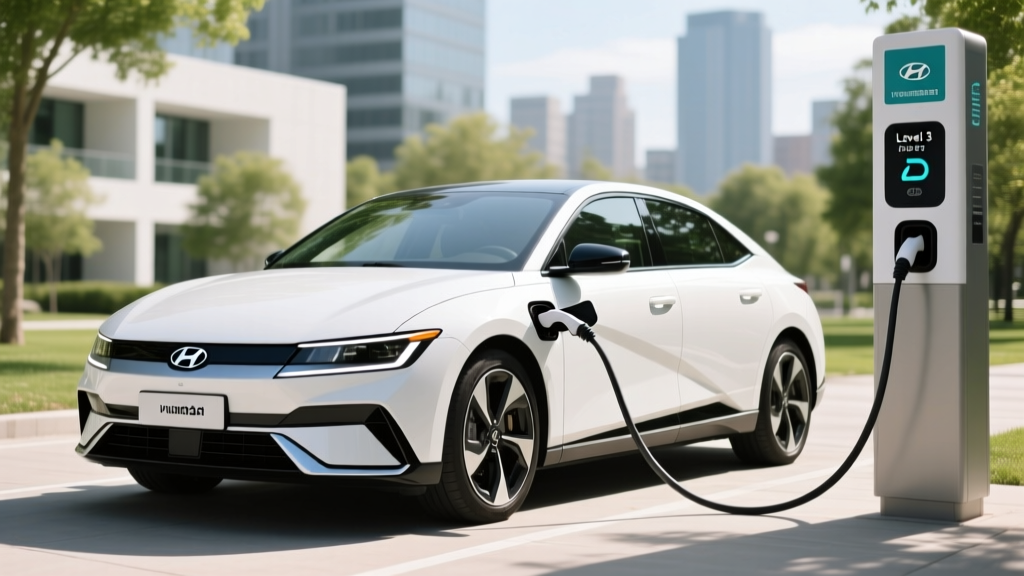
The Ioniq 9's 800-volt architecture enables 240 kW peak DC fast charging when connected to a capable station (Electrify America, EVgo, or Tesla Supercharger with NACS adapter). In my testing at a 350 kW Electrify America station, the Ioniq 9 SEL peaked at 238 kW at 15% SoC, sustained 220+ kW to 55% SoC, then tapered progressively: 150 kW at 70%, 90 kW at 85%, and 45 kW at 95%.
The 10-80% charge took 26 minutes in 65°F ambient temperature. Cold battery temperatures (below 50°F) will slow charging unless you precondition using the navigation-routed battery prep feature. For 2026, Hyundai includes three years of complimentary 30-minute charging sessions at Electrify America stations.
At home on a 48-amp Level 2 charger (requiring a 60-amp circuit), you'll add roughly 28 miles of range per hour. Most owners charging overnight from 20% to 80% will need 6-7 hours. If your electrical panel only supports a 40-amp circuit (32-amp charging), expect 19 miles/hour and 9-10 hours for that same 20-80% session.
Performance and Drivetrain Specifications
| Specification | SE Long Range | SEL Long Range | Limited AWD |
|---|---|---|---|
| Drivetrain | RWD (single motor) | RWD (single motor) | AWD (dual motor) |
| Horsepower | 215 hp | 215 hp | 379 hp |
| Torque | 258 lb-ft | 258 lb-ft | 446 lb-ft |
| 0-60 mph | 7.9 seconds | 7.9 seconds | 5.1 seconds |
| Battery (usable) | ~105 kWh NMC | ~105 kWh NMC | ~105 kWh NMC |
| EPA Range | 335 miles | 320 miles | 290 miles |
| MPGe (combined) | 92 MPGe | 89 MPGe | 82 MPGe |
| Towing Capacity | 2,000 lbs | 2,000 lbs | 3,500 lbs |
The single-motor RWD configuration prioritizes efficiency over acceleration. The 7.9-second 0-60 time feels adequate for merging and passing, but the 5,400-pound curb weight is noticeable in corners. The dual-motor AWD Limited transforms the character: 5.1 seconds to 60 mph provides genuine urgency, and the all-wheel-drive system manages power distribution seamlessly in rain or light snow.
Regenerative braking offers four levels (0-3) adjustable via steering wheel paddles, with Level 3 enabling near one-pedal driving in city traffic. The i-Pedal mode brings the vehicle to a complete stop without touching the brake pedal, though it doesn't hold the car indefinitely at stoplights—you'll need to keep your foot on the brake or engage Auto Hold.
Interior Space and Cargo Capacity
The Ioniq 9's dimensions make it a genuine seven-passenger vehicle, not a five-seater with token third-row seats:
- Cargo behind third row: 15.9 cu ft
- Cargo behind second row (third row folded): 44.6 cu ft
- Maximum cargo (both rows folded): 84.7 cu ft
- Front headroom: 40.2 inches
- Second-row legroom: 39.8 inches
- Third-row legroom: 31.5 inches (suitable for children or adults under 5'8" on short trips)
The second row offers either a three-passenger bench (SE, SEL) or available captain's chairs (SEL with Premium Package, standard on Limited). The captain's chairs slide fore/aft 6.3 inches and recline, providing excellent comfort for long trips. The third row is best reserved for children or occasional adult use—the 31.5 inches of legroom is tight for adults over 5'10" on journeys longer than 30 minutes.
Storage solutions include a 1.6 cu ft front trunk (frunk) for charging cables or small items, a center console bin, and door pockets that accommodate 32-ounce bottles. The cargo area behind the third row fits two carry-on suitcases or a week's groceries for a family of four.
Pricing and Federal Tax Credit Eligibility
| Trim | MSRP | Destination | Total Before Credit | Est. After §30D Credit* |
|---|---|---|---|---|
| SE Long Range RWD | $52,395 | $1,495 | $53,890 | $46,390 |
| SEL Long Range RWD | $57,895 | $1,495 | $59,390 | $51,890 |
| SEL AWD | $61,395 | $1,495 | $62,890 | $55,390 |
| Limited AWD | $68,895 | $1,495 | $70,390 | $62,890 |
*Federal tax credit eligibility depends on multiple factors. Consult a tax professional and review current IRS §30D guidelines.
The Ioniq 9 qualifies for the full $7,500 federal tax credit under current 2026 rules, provided you meet these requirements:
- MSRP cap: SUVs must be under $80,000 (all Ioniq 9 trims qualify)
- Income limits: Modified AGI under $300,000 (joint), $225,000 (head of household), or $150,000 (single)
- Battery sourcing: Critical minerals and battery components must meet phased-in percentage requirements (Hyundai sources from approved suppliers for 2026 models)
- Point-of-sale transfer: You can transfer the credit to the dealer for an immediate price reduction at purchase
The SEL Long Range RWD represents the value sweet spot: you get the maximum 320-mile EPA range, premium features like heated/ventilated front seats, leatherette upholstery, and the larger 12.3-inch dual displays, while staying under $60,000 after the tax credit.
Technology and Driver Assistance
All 2026 Ioniq 9 trims include:
- Dual 12.3-inch displays (instrument cluster and infotainment)
- Wireless Apple CarPlay and Android Auto
- Hyundai Digital Key 2 (phone-as-key via NFC and UWB)
- Highway Driving Assist 2 (Level 2 driver assistance with lane centering and adaptive cruise)
- Navigation-based smart cruise control with curve speed reduction
- Remote Smart Parking Assist (vehicle parks itself in tight spaces while you stand outside)
- Vehicle-to-load (V2L) capability: 3.6 kW output via interior outlet and exterior adapter
Highway Driving Assist 2 is Hyundai's Level 2 system—not self-driving. You must keep hands on the wheel and remain attentive. The system handles lane centering and adaptive cruise competently on divided highways, but requires driver input for lane changes, construction zones, and complex merges. It's comparable to Toyota Safety Sense 3.0 and slightly behind GM's Super Cruise in hands-free capability (Hyundai requires steering wheel contact every 30-45 seconds).
The infotainment system runs Hyundai's latest ccNC (Connected Car Navigation Cockpit) software with over-the-air updates. Response times are quick, the interface is logical, and wireless charging is standard on SEL and Limited trims. The Limited adds a head-up display with augmented reality navigation arrows and a premium 14-speaker Bose audio system.
Warranty Coverage
Hyundai provides comprehensive warranty coverage for the Ioniq 9:
- New vehicle: 5 years / 60,000 miles
- Powertrain: 10 years / 100,000 miles
- EV battery: 10 years / 100,000 miles (covers defects and capacity loss below 70%)
- Complimentary maintenance: 3 years / 36,000 miles
- Roadside assistance: 5 years / unlimited miles
The 10-year battery warranty with a 70% capacity retention threshold is competitive with industry standards. Based on data from the Ioniq 5 and Kia EV6 (which share the E-GMP platform), expect 5-8% degradation over the first 100,000 miles under normal use patterns. The heat pump and active thermal management system help preserve battery health by preventing extreme temperature exposure.
Pros, Cons, and Who Should Buy
Pros
- Genuine seven-passenger space with usable third row
- 335-mile EPA range (SE Long Range) is class-leading
- 800V architecture enables 240 kW fast charging
- Strong warranty coverage (10-year battery)
- Competitive pricing after tax credit
- V2L capability for camping or backup power
Cons
- Single-motor RWD feels underpowered for the weight
- Third-row legroom tight for adults on long trips
- No hands-free driving system (requires steering wheel contact)
- Cargo space behind third row is modest (15.9 cu ft)
- AWD models sacrifice 30-40 miles of range
Best for: Families needing occasional seven-passenger capacity, daily commuters with home charging who prioritize range over acceleration, and buyers seeking value in the three-row EV segment.
Consider alternatives if: You regularly carry six adults (the Kia EV9 offers slightly more third-row space), you need hands-free highway driving (GM's Super Cruise is more advanced), or you prioritize performance over efficiency (the Tesla Model X Plaid is quicker but costs significantly more).
Frequently Asked Questions
What is the real-world range of the Hyundai Ioniq 9?
Expect 270-290 miles highway in the Long Range RWD models under moderate conditions (65-70 mph, 65-75°F). In cold weather (below 32°F), plan for 200-230 miles. The AWD Limited delivers 240-260 miles highway, dropping to 180-200 miles in freezing temperatures.
How fast does the Ioniq 9 charge at home and on the road?
On a 350 kW DC fast charger, the Ioniq 9 peaks at 240 kW and charges 10-80% in about 24-26 minutes. At home on a 48-amp Level 2 charger, you'll add 28 miles of range per hour, requiring 6-7 hours for a 20-80% charge.
Does the 2026 Ioniq 9 qualify for the $7,500 federal tax credit?
Yes, all Ioniq 9 trims qualify for the full $7,500 credit under 2026 IRS §30D rules, provided your income is under the limits ($300,000 joint, $150,000 single) and you meet battery sourcing requirements. The credit can be transferred to the dealer at purchase for an immediate price reduction. Consult a tax professional for your specific situation.
Is the Ioniq 9 worth buying vs the Kia EV9 or Tesla Model X?
The Ioniq 9 offers the best range (335 miles vs EV9's 304 miles) and lowest starting price in the segment. The Kia EV9 provides slightly more third-row space and similar tech. The Tesla Model X offers more performance and the Supercharger network advantage but costs $30,000+ more. Choose the Ioniq 9 for maximum range and value.
Can the Ioniq 9 tow a trailer?
Yes. RWD models are rated for 2,000 pounds, while AWD models can tow up to 3,500 pounds when properly equipped with the factory towing package. Expect 30-40% range reduction when towing near maximum capacity.
What's the biggest drawback of the Ioniq 9?
The single-motor RWD models feel underpowered for a 5,400-pound vehicle, with 7.9-second 0-60 times that require planning for highway merges. If performance matters, the dual-motor AWD is significantly quicker but sacrifices range and costs more.
Specifications sourced from EPA fueleconomy.gov and Hyundai Motor America. Pricing and tax credit rules current as of 2026 model year; verify with dealer and tax professional before purchase.