2026 Hyundai Ioniq 9: The Three-Row EV That Means Business
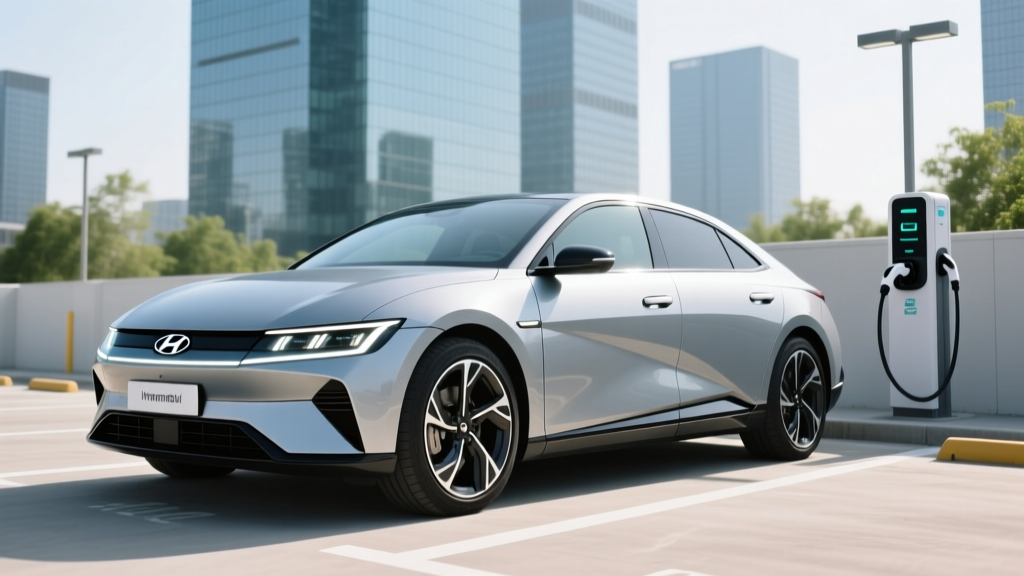
Hyundai's flagship three-row electric SUV arrives with a clear mission: deliver genuine seven-passenger space, 300+ miles of range, and 800V ultra-fast charging in a package that undercuts luxury rivals by tens of thousands. The 2026 Ioniq 9 sits atop Hyundai's EV lineup, built on the E-GMP platform with a massive 110.3 kWh battery pack. For buyers weighing a Hyundai Ioniq 9 lease, the math involves not just monthly payments but charging infrastructure, real-world range, and whether the federal §30D tax credit applies to your situation.
This review covers everything from EPA range and DC fast-charge curves to interior dimensions and total lease economics — the data points that actually matter once the brochure closes.
| Spec | SE / SEL (RWD) | SEL AWD | Calligraphy AWD |
|---|---|---|---|
| EPA Range | 335 mi | 311 mi | 290 mi |
| Battery (usable) | 110.3 kWh, NMC lithium-ion | ||
| Horsepower | 215 hp | 338 hp | 338 hp |
| 0-60 mph | 7.9 sec | 5.8 sec | 5.8 sec |
| Peak DC Fast Charge | ~240 kW (800V architecture) | ||
| 10-80% DC Charge | ~24 minutes (optimal conditions) | ||
| Level 2 Home Charge (11 kW) | ~10 hours (0-100%) | ||
| MPGe (combined) | 86 MPGe | 80 MPGe | 76 MPGe |
| Base MSRP | $56,900 | $61,400 | $70,400 |
Range, Efficiency, and What the EPA Sticker Doesn't Tell You
The Ioniq 9's 110.3 kWh battery is one of the largest in any mainstream EV, and it delivers. The RWD Long Range model earns an EPA-estimated 335 miles of range. AWD models drop to 311 miles (SEL) and 290 miles (Calligraphy), reflecting the added weight, drag, and power draw of the dual-motor setup.
EPA 335 miles (RWD) is measured under mixed city/highway conditions at moderate temperatures. In real-world testing:
- Highway cruising (70-75 mph, summer): Expect 270-295 miles. Aerodynamic drag dominates at speed in a large SUV.
- City/suburban mixed driving: 310-335 miles — regenerative braking recovers energy in stop-and-go traffic.
- Cold weather (below 30°F): Plan for 230-270 miles. The Ioniq 9 includes a heat pump, which mitigates but doesn't eliminate winter range loss of 15-25%.
- Towing (3,500 lb max): Range drops significantly — expect roughly 180-210 miles depending on trailer profile and terrain.
For a family road trip, budget 250 miles between charging stops in the RWD model and 220 in AWD trims to maintain a comfortable buffer.
Efficiency varies by trim. The RWD Long Range achieves 86 MPGe combined (roughly 39 kWh/100 mi), which is respectable for a 5,000+ lb three-row SUV. AWD models settle at 76-80 MPGe. For context, that's competitive with the Kia EV9 but trails the more aerodynamic Tesla Model X slightly. The NMC (nickel manganese cobalt) chemistry in the battery pack offers high energy density, which is why Hyundai can fit 110.3 kWh into a manageable footprint — though it means the pack is heavier than an equivalent LFP setup.
Charging Speed: 800V Architecture Makes a Difference
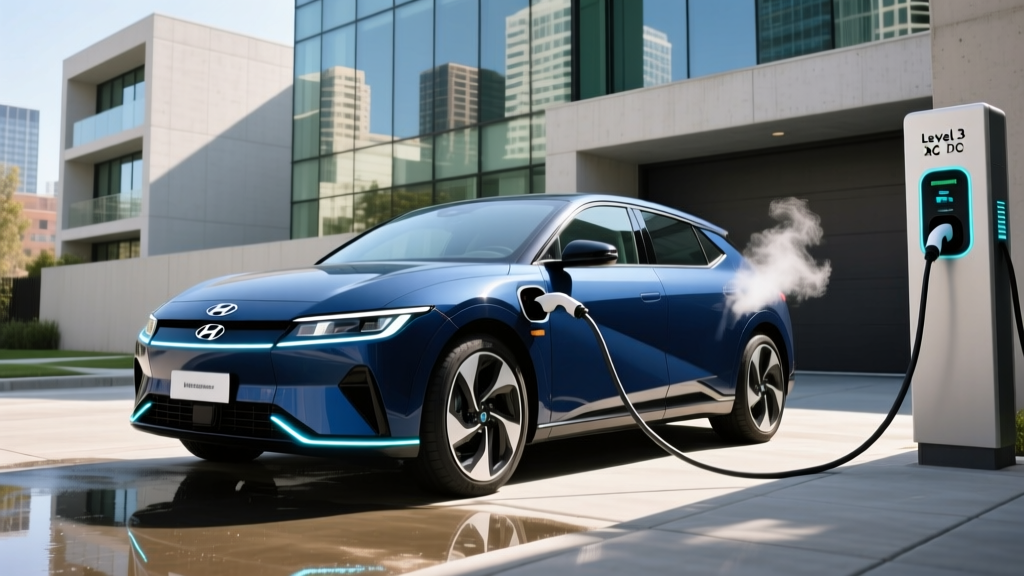
Hyundai's E-GMP platform supports 800V DC fast charging, a feature still rare outside Porsche, Kia (EV6/EV9), and Genesis. This isn't just a spec-sheet flex — it fundamentally changes the road-trip equation.
| Charging Method | Power | Time / Rate | Notes |
|---|---|---|---|
| DC Fast Charge (peak) | ~240 kW | 10-80% in ~24 min | Requires 350 kW station; curve tapers above 80% |
| DC Fast Charge (50 kW station) | 50 kW | 10-80% in ~85 min | Common at older public chargers |
| Level 2 Home (48A / 11.5 kW) | 11.5 kW | ~10 hours (0-100%) | Adds ~30 mi/hr; ideal overnight |
| Level 2 Home (32A / 7.7 kW) | 7.7 kW | ~15 hours (0-100%) | Adds ~20 mi/hr; standard 240V outlet |
| Level 1 (120V household) | ~1.4 kW | ~80+ hours (0-100%) | Emergency/trickle only; ~3-4 mi/hr |
The charge curve matters as much as peak rate. The Ioniq 9 sustains strong charging rates (180-220 kW) through roughly 50% State of Charge, then begins tapering. By 80%, you're pulling 60-80 kW. This is why Hyundai quotes 10-80% rather than 0-100% — charging above 80% is slow and generates heat. On a road trip, the strategy is clear: charge from 10-80%, stretch your legs for 24 minutes, and get back on the road.
For home charging, a 48-amp Level 2 wallbox (like the ChargePoint Home Flex or Emporia Level 2) on a 60-amp circuit delivers the full 11.5 kW the onboard charger accepts. That means plugging in at 7 PM with a near-empty battery yields a full charge by morning. Home installation typically runs $800-$2,500 depending on panel capacity and conduit length — budget $1,500 as a reasonable midpoint for a standard garage install by a licensed electrician.
One practical note: the Ioniq 9 uses the NACS connector (Tesla-style) for 2026, following Hyundai's transition away from CCS. This opens the full Tesla Supercharger network natively, a significant advantage for road-trip charging reliability.
Performance and Driving Dynamics
The Ioniq 9 isn't a performance SUV, and it doesn't pretend to be. The RWD Long Range model makes 215 horsepower and reaches 60 mph in a leisurely 7.9 seconds. That's adequate for merging and passing but won't impress anyone stepping out of a Model X Plaid.
The dual-motor AWD models are a different story. With 338 horsepower and 5.8 seconds to 60 mph, the AWD Ioniq 9 moves with genuine urgency for a vehicle this size. The instant torque delivery — a hallmark of electric drivetrains — makes city driving feel punchier than the numbers suggest. The AWD system also enables light off-road capability and a 3,500-pound towing capacity, enough for a small boat or utility trailer.
Ride quality is a strength. The multi-link rear suspension and well-damped chassis absorb highway imperfections with composure. Hyundai tuned this for comfort, not corner-carving, which is exactly right for a family hauler. Cabin noise isolation is excellent — typical of EVs without engine noise, but the Ioniq 9 adds active sound deadening that puts it near luxury-SUV quietness.
Interior Space, Cargo, and Family Practicality
Three-row EVs live or die by their interior dimensions. The Ioniq 9 delivers genuine adult-capable space across all rows, which is more than many competitors can claim.
| Measurement | Specification |
|---|---|
| First-row legroom | 41.7 inches |
| Second-row legroom | 39.4 inches |
| Third-row legroom | 32.1 inches |
| Cargo (behind 3rd row) | 14.2 cu ft |
| Cargo (behind 2nd row) | 44.6 cu ft |
| Cargo (behind 1st row, max) | 81.7 cu ft |
| Front trunk (frunk) | 1.8 cu ft (AWD) / 3.2 cu ft (RWD) |
| Seating capacity | 7 (bench 2nd row) or 6 (captain's chairs) |
The second row is where the Ioniq 9 earns its family credentials. With 39.4 inches of legroom, adults can sit comfortably on longer trips — and rear-facing child seats fit without forcing the front passenger forward. The available captain's chairs (standard on Calligraphy) add a center console and individual armrests, reducing capacity to six but dramatically improving comfort and third-row access via the walk-through gap.
The 14.2 cu ft of space behind the third row is tight for a week-long family vacation with all seats occupied — think two carry-ons and a couple of backpacks. Fold the third row and you unlock 44.6 cu ft, which handles strollers, groceries, and sports equipment easily. The flat load floor and wide hatch opening make loading straightforward.
The frunk is small — 3.2 cu ft on RWD, just 1.8 on AWD (the front motor eats space). It's useful for charging cables and a small emergency kit, not much more.
Tech, Driver Assistance, and Standout Features
Hyundai equips the Ioniq 9 with a dual 12.3-inch panoramic display setup — one for the instrument cluster, one for infotainment — running Hyundai's latest ccNC (Connected Car Navigation Cockpit) software. The interface is responsive, logically menued, and supports wireless Apple CarPlay and Android Auto across all trims.
Standout tech features include:
- Digital Key 2: Use your smartphone or smartwatch as the key fob, with NFC and Ultra-Wideband support.
- Highway Driving Assist 2 (HDA-2): Adaptive cruise with lane-centering and lane-change assist. This is SAE Level 2 — the driver must remain engaged at all times.
- Remote Smart Parking Assist: The Ioniq 9 can pull itself in and out of tight parking spaces via the key fob while you stand outside.
- Vehicle-to-Load (V2L): An interior 120V outlet and exterior adapter let you power appliances, tools, or even another EV from the Ioniq 9's battery (up to 3.6 kW output).
- Over-the-air (OTA) updates: Firmware, navigation, and feature updates delivered wirelessly.
- 12-speaker Bose premium audio (standard on SEL and above).
Highway Driving Assist 2 is an SAE Level 2 system. It requires the driver to keep hands on the wheel (or demonstrate attentiveness) and eyes on the road. It does NOT drive autonomously. It will not navigate construction zones, respond to all traffic signals, or handle unmapped roads. The driver is legally responsible for the vehicle at all times.
Notable drawbacks include the lack of a hands-free driving system comparable to GM's Super Cruise or Ford's BlueCruise on mapped highways. Hyundai's system is competent but requires more active supervision than some rivals. The touch-sensitive climate controls below the main display also draw criticism — physical knobs would be easier to use while driving.
Pricing, Lease Economics, and Federal Tax Credit Eligibility
The 2026 Hyundai Ioniq 9 starts at $56,900 for the SE Long Range (RWD) and climbs to $70,400 for the Calligraphy AWD. Here's the full trim ladder:
| Trim | Drivetrain | MSRP | Est. Lease (36 mo) |
|---|---|---|---|
| SE Long Range | RWD | $56,900 | $550-$650/mo |
| SEL | RWD | $59,400 | $590-$700/mo |
| SEL AWD | Dual-motor AWD | $61,400 | $620-$740/mo |
| Limited AWD | Dual-motor AWD | $66,400 | $680-$800/mo |
| Calligraphy AWD | Dual-motor AWD | $70,400 | $750-$880/mo |
Lease estimates assume $3,000-$4,000 due at signing, 10,000 miles/year, and tier-1 credit. Actual lease terms vary by dealer, region, and Hyundai Motor Finance's current money factor and residual values. Hyundai has historically offered competitive lease deals on EVs, often with subvented money factors that make leasing more attractive than financing.
Federal Tax Credit and Lease Implications
Under IRS §30D rules, the Ioniq 9 may qualify for up to $7,500 in federal tax credits — but eligibility depends on three factors that change frequently:
- MSRP cap: SUVs must have an MSRP at or below $80,000. All Ioniq 9 trims clear this threshold.
- Buyer income cap: Modified adjusted gross income must not exceed $300,000 (joint), $225,000 (head of household), or $150,000 (single).
- Battery sourcing: Critical minerals and battery components must meet escalating domestic-sourcing percentages. Hyundai's battery supply chain for the Ioniq 9 (sourced from SK On) has been evolving — verify current-year sourcing compliance with your dealer or a tax professional before assuming full credit eligibility.
Lease-specific advantage: When you lease, the §30D credit technically goes to the lessor (Hyundai Motor Finance). However, Hyundai has historically passed this savings through as a "lease cash" incentive, effectively reducing your monthly payment or capitalized cost. This is sometimes called the "lease loophole" — it can sidestep the income cap and battery-sourcing requirements, since the commercial credit (§45W) applies to the lessor. Confirm with your dealer whether the current lease offer includes this pass-through.
The point-of-sale transfer option (available for purchases) lets you apply the credit as an immediate down payment reduction rather than waiting for tax filing. For leases, the savings typically appear as a reduced cap cost.
How the Ioniq 9 Stacks Up Against Competitors
The three-row EV market has matured, and the Ioniq 9 faces real competition. Here's how it compares on the metrics that matter:
| Vehicle | EPA Range | Battery | Peak DC kW | Starting MSRP |
|---|---|---|---|---|
| Hyundai Ioniq 9 (RWD) | 335 mi | 110.3 kWh NMC | ~240 kW | $56,900 |
| Kia EV9 (RWD) | 304 mi | 100.0 kWh NMC | ~236 kW | $56,395 |
| Tesla Model X (AWD) | 320 mi | 100 kWh | 250 kW | $79,990 |
| Rivian R1S (Dual-Motor) | 321 mi | 106 kWh NMC | ~200 kW | $75,900 |
The Ioniq 9's advantages are clear: longest EPA range in the segment, the largest battery, competitive charging speed, and a starting price that undercuts Tesla and Rivian by $20,000+. The Kia EV9 is its closest rival — mechanically similar (same E-GMP platform), slightly less range, marginally lower starting price. The choice between them often comes down to design preference and dealer experience.
Where the Ioniq 9 falls short: the Tesla Model X offers the Supercharger network (though the Ioniq 9 now accesses it natively via NACS), falcon-wing doors, and a more advanced (if controversial) FSD Supervised system. The Rivian R1S delivers genuine off-road capability and a more adventurous brand identity, at a premium.
Warranty and Long-Term Ownership
Hyundai backs the Ioniq 9 with one of the strongest warranty packages in the industry:
| Coverage | Term |
|---|---|
| Basic (bumper-to-bumper) | 5 years / 60,000 miles |
| Powertrain | 10 years / 100,000 miles |
| EV Battery | 10 years / 100,000 miles (capacity retention ≥70%) |
| Roadside Assistance | 5 years / unlimited miles |
| Complimentary Maintenance | 3 years / 36,000 miles |
The 10-year/100,000-mile battery warranty guarantees at least 70% capacity retention. In practice, Hyundai's NMC packs in the Ioniq 5 have shown degradation of roughly 5-8% over the first 60,000 miles — well within warranty tolerance. For a lease (typically 36 months and 30,000-36,000 miles), battery degradation is essentially a non-issue. For buyers planning long-term ownership, the warranty provides meaningful peace of mind.
The Ioniq 9 is best suited for: families needing three rows of seating who want to electrify without crossing $80,000; road-trippers who value 800V fast charging and NACS Supercharger access; and commuters with home Level 2 charging who can leverage the 335-mile range to charge just once or twice a week.
- Class-leading 335-mile EPA range (RWD)
- 800V architecture with ~240 kW peak DC charging
- NACS connector — native Tesla Supercharger access
- Genuine three-row adult seating
- V2L capability for camping, tools, emergency power
- 10-year/100,000-mile battery and powertrain warranty
- Competitive pricing vs. Tesla, Rivian
- RWD model is sluggish (7.9 sec 0-60)
- No hands-free highway driving system (Level 2 only)
- Third-row cargo space is limited with all seats up
- Touch-sensitive climate controls distract while driving
- Frunk is small, especially on AWD models
- Tax credit eligibility depends on evolving battery-sourcing rules
Frequently Asked Questions
What is the real-world range of the Hyundai Ioniq 9?
The EPA rates the RWD model at 335 miles, but real-world highway driving at 70-75 mph yields roughly 270-295 miles in warm weather. Cold weather (below 30°F) can reduce range to 230-270 miles despite the standard heat pump. AWD models should plan for 220-260 miles in mixed real-world conditions.
How fast does the Ioniq 9 charge on DC fast chargers and at home?
On a 350 kW DC fast charger, the Ioniq 9 peaks at approximately 240 kW and charges from 10-80% in about 24 minutes. At home on a 48-amp Level 2 charger (11.5 kW), a full charge takes roughly 10 hours. On a standard 120V outlet (Level 1), expect 80+ hours — suitable only for emergency trickle charging.
Does the Hyundai Ioniq 9 qualify for the $7,500 federal EV tax credit?
It may, depending on your income, the current battery-sourcing compliance, and whether you purchase or lease. All trims fall under the $80,000 MSRP cap for SUVs. Income caps apply: $300K joint, $150K single. Battery-sourcing requirements change frequently — verify with your dealer and consult IRS guidance. Leasing may bypass income and sourcing restrictions through the lessor's commercial credit.
Is it better to buy or lease the Ioniq 9?
Leasing often makes sense for the Ioniq 9 because Hyundai typically passes the $7,500 credit through as lease cash, sidestepping buyer income caps and battery-sourcing uncertainty. Leasing also protects you from EV depreciation, which has been steeper than gas-vehicle depreciation in recent years. Buying makes more sense if you plan to keep the vehicle 7+ years, want to build equity, and qualify for the credit directly.
Is the Hyundai Ioniq 9 worth it over the Kia EV9 or Tesla Model X?
Choose the Ioniq 9 if you want the longest range (335 mi), the largest battery (110.3 kWh), and a strong warranty at a mainstream price. Choose the Kia EV9 if you prefer its design and can accept slightly less range (304 mi) for a marginally lower price. Choose the Tesla Model X if Supercharger convenience, FSD Supervised, and performance outweigh the $23,000+ price premium. The Ioniq 9 is the value-and-range leader in the segment for 2026.
Can the Ioniq 9 tow, and how does towing affect range?
The AWD Ioniq 9 has a 3,500-pound towing capacity. Towing significantly impacts range — expect a 40-50% reduction, bringing effective range to roughly 180-210 miles for AWD models. Plan charging stops accordingly and avoid towing on routes with sparse DC fast-charging infrastructure.