Why BYD's Sales Slide Matters to U.S. EV Shoppers
BYD vehicle sales decline headlines have dominated automotive news cycles in early 2026, and for good reason. After years of explosive growth that briefly made BYD the world's largest plug-in vehicle manufacturer, the Chinese automaker is facing its first sustained sales contraction in key markets. For U.S.-based EV buyers, the question isn't whether BYD is struggling — it's whether this shift affects your purchasing decision, the competitive landscape, and where the best value lies right now.
Here's the critical context: BYD does not currently sell passenger vehicles in the United States. The company has no U.S. dealer network, no EPA-certified models for American consumers, and faces a 100% tariff on Chinese-made EVs imposed under Section 301 trade provisions. So if you're shopping for an EV in the U.S., the BYD vehicle sales decline doesn't directly remove a competitor from your shortlist. But it does reshape the global competitive dynamics that influence pricing, technology, and availability from the brands you can buy — Tesla, Hyundai, Kia, Ford, GM, Rivian, and others.
This analysis breaks down what's driving the decline, how it affects the U.S. EV market, and which available models fill the segments BYD would compete in.
What's Behind the BYD Vehicle Sales Decline?
Several converging factors explain the contraction in BYD's sales volume through late 2025 and into 2026:
- European Union tariffs: The EU imposed provisional countervailing duties on Chinese EV imports ranging from 17% to 36.3%, with BYD facing a 17% rate. This eroded the aggressive pricing advantage BYD leveraged to capture European market share.
- Domestic Chinese market saturation: China's NEV (new energy vehicle) penetration exceeded 50% of new car sales, and BYD faces intensifying competition from NIO, XPeng, Leapmotor, and Xiaomi's new EV division — all undercutting on price or differentiating on software.
- PHEV mix shift: BYD's plug-in hybrid sales have held steadier than pure BEV sales, but global demand is increasingly favoring BEVs in premium segments where BYD has less brand equity outside China.
- Geopolitical barriers: Beyond U.S. tariffs, India, Turkey, and Canada have imposed restrictions on Chinese EV imports, closing off growth markets BYD was counting on.
The result: BYD's month-over-month BEV deliveries dropped approximately 8-12% in several quarters, a notable reversal for a company that had posted year-over-year gains exceeding 60% as recently as 2023.
The U.S. EVs That Compete Where BYD Can't
Since BYD isn't available stateside, here's a spec-driven look at the models U.S. buyers should actually evaluate in the segments BYD targets globally — compact crossovers, midsize sedans, and affordable family haulers.
| Spec | Tesla Model Y (Long Range AWD) | Hyundai Ioniq 5 (SEL AWD) | Chevrolet Equinox EV (3RS) | Kia EV6 (GT-Line AWD) |
|---|---|---|---|---|
| EPA Range | 320 mi | 290 mi | 319 mi | 282 mi |
| Battery (usable kWh) | 75 kWh (NMC) | 77.4 kWh (NMC) | 85 kWh (NMC) | 77.4 kWh (NMC) |
| Peak DC Fast Charge | 250 kW | 240 kW | 190 kW | 240 kW |
| 10-80% DC Charge Time | ~22 min | ~18 min | ~24 min | ~18 min |
| Level 2 Home Charge Rate | 11.5 kW (~44 mi/hr) | 10.9 kW (~40 mi/hr) | 11.5 kW (~38 mi/hr) | 10.9 kW (~40 mi/hr) |
| 0-60 mph | 4.8 sec | 5.1 sec | 7.9 sec | 5.0 sec |
| Horsepower | 384 hp | 320 hp | 288 hp | 320 hp |
| Drivetrain | Dual-motor AWD | Dual-motor AWD | Dual-motor AWD | Dual-motor AWD |
| Efficiency (MPGe) | 122 MPGe combined | 110 MPGe combined | 105 MPGe combined | 109 MPGe combined |
| Cargo Volume (rear seats up) | 30.2 cu ft (+ 4.1 cu ft frunk) | 27.2 cu ft (+ 0.85 cu ft frunk) | 26.4 cu ft (no frunk) | 24.4 cu ft (+ 0.7 cu ft frunk) |
| Rear Legroom | 41.6 in | 39.4 in | 38.9 in | 39.2 in |
| Battery/Powertrain Warranty | 8 yr / 120,000 mi | 10 yr / 100,000 mi | 8 yr / 100,000 mi | 10 yr / 100,000 mi |
| Base MSRP (AWD trim shown) | $48,990 | $50,550 | $45,400 | $52,900 |
Sources: EPA fueleconomy.gov, manufacturer press sites. Specs reflect 2026 model year where published; carryover specs noted.
Real-World Range: What the EPA Sticker Doesn't Tell You
EPA vs. Reality: The EPA range figures above assume a mix of city and highway driving at moderate temperatures. In real-world testing, expect the following adjustments:
- Sustained highway driving (70-80 mph): Subtract 10-15% from EPA. A 320-mile Model Y delivers roughly 275-290 miles at highway speeds.
- Cold weather (below 32°F / 0°C): Subtract 20-30% depending on cabin heating demands. LFP-equipped vehicles (not in this comparison, but relevant for BYD models sold elsewhere) tend to lose range faster in cold than NMC packs.
- Combined worst case (cold + highway + elevation): Plan for 60-65% of EPA. That 290-mile Ioniq 5 becomes roughly 185 miles of reliable range in a January road trip through the Rockies.
Preconditioning the battery before DC fast charging — a feature all four models above support — recovers some efficiency and is essential for hitting advertised charge speeds.
Charging Speed: Where These Models Leave BYD Behind
One area where the U.S.-market EVs outperform most BYD models is DC fast-charge architecture. BYD's global lineup largely relies on 400-volt platforms (with the exception of newer models like the Seal, which uses an 800V system in some markets). The Hyundai Ioniq 5 and Kia EV6 use 800V architecture as standard, enabling sustained high-power charging that 400V systems struggle to match.
| Model | Architecture | Peak DC kW | Avg 10-80% kW | 10-80% Time | Connector |
|---|---|---|---|---|---|
| Tesla Model Y | 400V | 250 kW | ~170 kW | ~22 min | NACS (native) |
| Hyundai Ioniq 5 | 800V | 240 kW | ~190 kW | ~18 min | NACS (2025+) |
| Chevrolet Equinox EV | 400V | 190 kW | ~135 kW | ~24 min | NACS (2025+) |
| Kia EV6 | 800V | 240 kW | ~185 kW | ~18 min | NACS (2025+) |
Key insight: Peak kW is a marketing number. The average sustained rate across the 10-80% window is what determines actual road-trip downtime. The Ioniq 5 and EV6 hold near-peak rates longer thanks to 800V architecture, making them measurably faster on real charging stops even though their peak kW matches or trails the Model Y.
For home Level 2 charging, all four vehicles add roughly 35-44 miles of range per hour at their maximum AC rate — enough to fully replenish overnight on a standard 48-amp home charger installation.
Federal Tax Credit: What You'll Actually Pay
The IRS §30D Clean Vehicle Credit offers up to $7,500 for qualifying new EVs, but eligibility hinges on several requirements that change frequently:
- MSRP cap: SUVs, vans, and pickups must be under $80,000; sedans under $55,000.
- Buyer income cap: Modified AGI must not exceed $300,000 (joint), $225,000 (head of household), or $150,000 (single).
- Battery sourcing: Increasing percentages of critical minerals and battery components must be sourced from the U.S. or FTA partners — and explicitly NOT from a "foreign entity of concern" (FEOC), which effectively excludes Chinese-sourced battery materials.
- Point-of-sale transfer: As of 2024, buyers can transfer the credit to the dealer for an immediate price reduction at purchase.
| Model | MSRP (AWD) | Est. §30D Credit | Effective Price | Credit Notes |
|---|---|---|---|---|
| Tesla Model Y LR AWD | $48,990 | $7,500 | ~$41,490 | Qualifies (U.S.-built, sourcing compliant) |
| Hyundai Ioniq 5 SEL AWD | $50,550 | $3,750 | ~$46,800 | Partial credit — battery component sourcing phase-in |
| Chevrolet Equinox EV 3RS | $45,400 | $7,500 | ~$37,900 | Qualifies (U.S.-built, GM Ultium sourcing) |
| Kia EV6 GT-Line AWD | $52,900 | $3,750 | ~$49,150 | Partial credit — same sourcing constraints as Ioniq 5 |
Credit amounts are estimates based on current IRS guidance. Always verify eligibility at irs.gov and consult a tax professional before purchasing. Sourcing rules tighten annually.
Who Should Buy What — And Who Was BYD Actually Targeting?
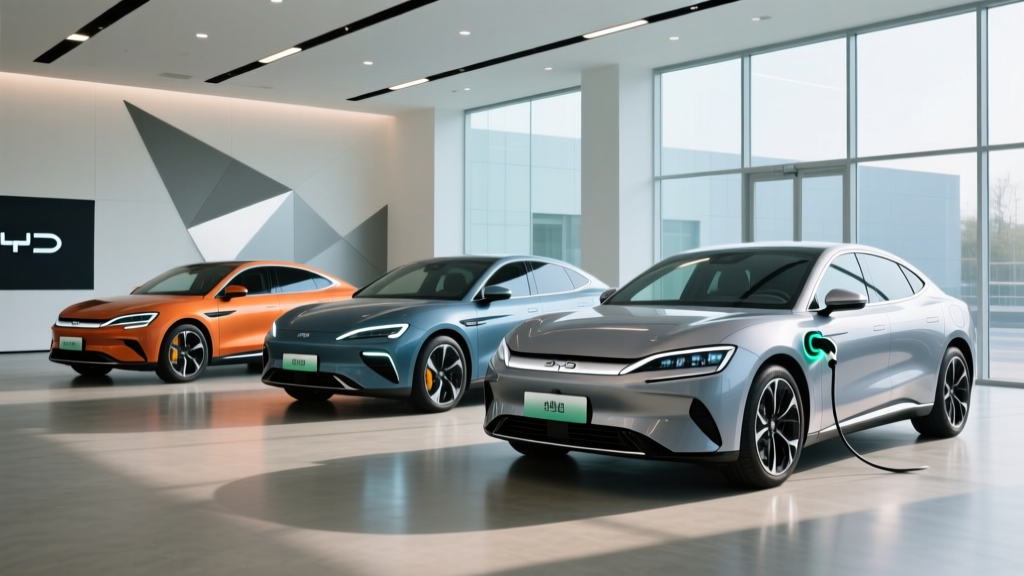
BYD's global lineup targets budget-conscious buyers who want EV practicality at prices that undercut Western competitors by 20-40%. In China, the BYD Dolphin starts under $15,000 USD equivalent. The BYD Atto 3 (Yuan Plus) competes at roughly $25,000 in export markets. That price point simply doesn't exist in the U.S. EV market — and with 100% tariffs, it won't anytime soon.
Here's which U.S. model fits each use case:
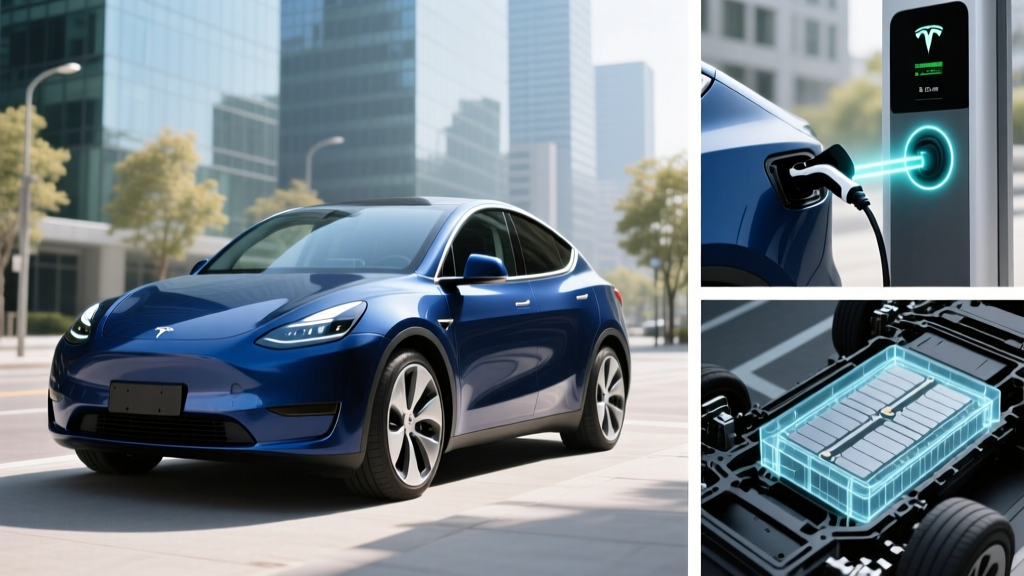
Choose the Tesla Model Y if: You prioritize Supercharger network access (the most reliable U.S. DC network), best-in-class efficiency (122 MPGe), and strong resale value. Best for road-trippers and Tesla ecosystem users.
Choose the Hyundai Ioniq 5 if: Fast charging is your top priority (18-min 10-80% is class-leading), you want a distinctive design, and you value Hyundai's 10-year powertrain warranty. Best for frequent DC fast-charge users without home charging.
Choose the Chevrolet Equinox EV if: You want the lowest effective price after the full $7,500 credit (~$37,900), strong range (319 mi), and a mainstream dealer network for service. Best for budget-focused families and first-time EV buyers.
Choose the Kia EV6 if: You want the Ioniq 5's 800V charging in a sportier package with premium interior touches. Best for driving enthusiasts who also need practicality.
The Biggest Pros and Cons Across U.S. Alternatives
Pros of Buying U.S.-Market EVs Over Waiting for BYD
- Full §30D tax credit eligibility (up to $7,500 point-of-sale)
- Established dealer networks for warranty service and recalls
- NACS connector compatibility with Tesla Supercharger network (20,000+ stalls)
- EPA-tested and NHTSA/IIHS safety-rated
- No tariff uncertainty affecting parts availability or resale
- 800V fast-charge architecture (Hyundai/Kia) outpaces most BYD models
Cons — What BYD Offers That U.S. EVs Don't
- Sub-$30,000 EV pricing (BYD Dolphin, Seagull) — no U.S. equivalent exists
- LFP battery standardization (longer cycle life, lower degradation) across affordable models
- Standard V2L (vehicle-to-load) on many models without adapter purchases
- Rotating center screens and distinctive interior design language
- Blade Battery cell-to-pack architecture offering competitive energy density at lower cost
What BYD's Decline Means for U.S. EV Pricing in 2026
Paradoxically, BYD's sales struggles may help U.S. EV buyers in one indirect way. As BYD faces overcapacity in China, the company and its competitors are aggressively cutting prices domestically — which forces Tesla (which operates a major Shanghai Gigafactory) to respond with price reductions globally to maintain market share.
Tesla has already cut Model Y pricing multiple times since late 2024, and the ripple effect pressures Hyundai, Kia, and Ford to offer competitive lease deals and manufacturer incentives. The BYD vehicle sales decline, in other words, is accelerating a global EV price correction that benefits American buyers — even if they never see a BYD badge on a U.S. lot.
Frequently Asked Questions
Can I buy a BYD vehicle in the United States?
No. BYD does not sell passenger vehicles in the U.S. market. Chinese-made EVs face a 100% Section 301 tariff, making import economically unviable. BYD has explored a potential Mexico-based manufacturing plant to serve North America, but as of 2026, no U.S.-market vehicles are available or announced.
Does the BYD vehicle sales decline affect Tesla pricing?
Indirectly, yes. BYD's overcapacity and price cuts in China pressure Tesla's Shanghai-built vehicles, leading to global price adjustments. U.S. Tesla buyers have benefited from multiple Model Y price reductions tied to this competitive dynamic.
What is the cheapest new EV available in the U.S. in 2026?
The Chevrolet Equinox EV starts at approximately $33,600 (base 2LT FWD) before the $7,500 federal credit, bringing the effective price to roughly $26,100 — the closest U.S. equivalent to BYD's global pricing tier. The Nissan Leaf (if still in production for your market year) and base Hyundai Kona EV also compete in the sub-$35,000 segment.
Will BYD ever enter the U.S. market?
There is no announced timeline. Geopolitical tensions, 100% tariffs, and FEOC battery-sourcing restrictions under §30D make U.S. entry extremely difficult. BYD is instead focusing on Southeast Asia, Latin America, Europe (despite tariffs), and Australia as growth markets.
Are BYD's LFP Blade Batteries better than NMC?
Better depends on your priority. LFP (lithium iron phosphate) offers superior cycle life (3,000+ full cycles vs. ~1,500 for NMC), better thermal stability, and lower cost. The trade-off is lower energy density (heavier for the same kWh) and worse cold-weather range retention. BYD's Blade Battery is an LFP cell-to-pack design that maximizes pack-level density. Most U.S. competitors use NMC for higher range in a lighter package, though Tesla offers LFP in the Model 3 RWD.
Should I delay my EV purchase hoping BYD enters the U.S.?
No. There is no credible timeline for BYD U.S. sales, and current U.S.-market EVs already offer competitive range, charging speed, and tax-credit-adjusted pricing. Waiting for a speculative market entrant means forgoing years of fuel savings and available incentives that may change or expire.