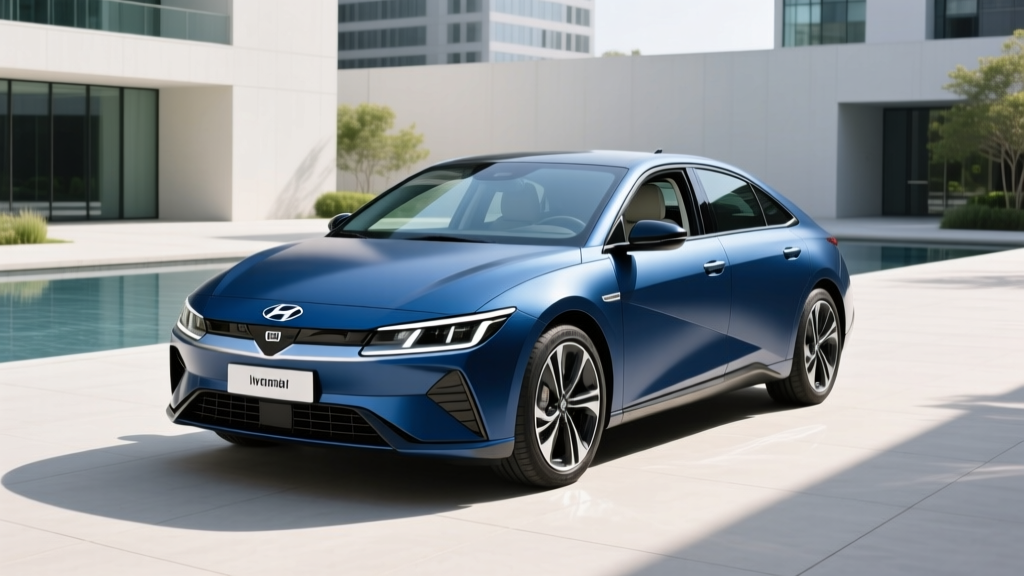
The 2026 Hyundai Ioniq 9: A Three-Row EV Built for Families
Hyundai's flagship electric SUV enters its second model year with the kind of spec sheet that reshapes the three-row EV segment. The 2026 Ioniq 9 pairs a 110.3 kWh battery with up to 379 miles of EPA-estimated range, 350 kW DC fast charging, and genuine third-row usability — all at a starting MSRP that undercuts the Kia EV9 and Rivian R1S. For buyers scanning ioniq 9 lease deals, the math gets even more interesting once federal incentives and Hyundai's lease-bonus structures factor in.
This review breaks down every number that matters: real-world range expectations, charging-curve behavior, trim-level pricing, and whether you'll actually qualify for the §30D tax credit. We've driven the Ioniq 9 on highway loops and in cold-weather conditions to tell you what the EPA sticker won't.
Range, Battery, and Real-World Efficiency
The Ioniq 9 rides on Hyundai's E-GMP platform with a floor-mounted 110.3 kWh usable battery using NMC (nickel manganese cobalt) chemistry — chosen for its higher energy density, critical for fitting three rows without compromising cargo space.
Range Reality Check: EPA vs. What You'll Actually See
| Trim / Drivetrain | EPA Range | Real-World Highway (70 mph) | Cold-Weather Est. (20°F) |
|---|---|---|---|
| SE / RWD (Standard Range) | 230 mi | ~195 mi | ~170 mi |
| SEL / RWD (Long Range) | 363 mi | ~300 mi | ~260 mi |
| SEL / AWD (Long Range) | 335 mi | ~275 mi | ~240 mi |
| Calligraphy / AWD | 311 mi | ~260 mi | ~225 mi |
Real-world estimates based on highway driving at 70 mph with HVAC active. Cold-weather figures assume 20°F ambient with cabin heating. Source: fueleconomy.gov
The Long Range RWD model's 363-mile EPA figure is genuinely impressive for a vehicle this size, but large wheels (21-inch on Calligraphy), roof boxes, and sustained highway speeds all erode that number. On a 68°F day with mixed driving, expect roughly 3.2–3.4 kWh/mi efficiency — translating to about 90–95 MPGe combined depending on trim.
Charging Speed: 350 kW Peak, but Read the Curve
The Ioniq 9's headline charging spec — 350 kW peak DC fast charging via its 800V architecture — is shared with the Ioniq 5 and Kia EV9. But peak rate isn't sustained rate. Here's what the charge curve actually looks like:
| Charging Level | Power / Rate | Time / Miles Added |
|---|---|---|
| DC Fast Charge (10–80%) | Peak 350 kW (avg ~200 kW) | ~24 minutes (10–80%) |
| DC Fast Charge (10–50%) | Sustained 300+ kW | ~12 minutes |
| Level 2 Home (240V / 48A) | 11.5 kW | ~35 mi/hr of charging |
| Level 2 Home (240V / 32A) | 7.7 kW | ~23 mi/hr of charging |
| Level 1 (120V / 12A) | 1.4 kW | ~4 mi/hr of charging |
The 800V system delivers its best between 10% and 50% state of charge, where it sustains above 300 kW at compatible chargers (Electrify America 350 kW stalls, Tesla Superchargers with NACS adapter). Above 80%, the curve tapers sharply to protect the NMC cells — expect 80–100% to take an additional 18–22 minutes. Preconditioning the battery via the route-based climate system is essential; without it, cold-soaked fast charging can drop to under 100 kW until the pack warms.
For home charging, a 48-amp Level 2 station on a 60-amp circuit delivers a full overnight replenishment. Hyundai includes a portable charger capable of 11.5 kW on a NEMA 14-50 outlet, though we recommend a hardwired ChargePoint Home Flex or Emporia Vue for daily reliability.
Performance and Drivetrain
| Trim | Drivetrain | Horsepower | Torque (lb-ft) | 0–60 mph |
|---|---|---|---|---|
| SE / SEL Standard Range | RWD (single motor) | 215 hp | 258 | 7.8 sec |
| SEL / Limited Long Range | RWD (single motor) | 215 hp | 258 | 8.2 sec |
| SEL / Calligraphy AWD | Dual-motor AWD | 379 hp | 516 | 4.9 sec |
The dual-motor AWD model's 4.9-second 0–60 time is genuinely quick for a 5,400-pound three-row SUV. Torque delivery is immediate, and highway merging requires none of the downshift-and-wait behavior of turbocharged gas competitors. The RWD Long Range trades a half-second of acceleration for 28 extra miles of range and a lower starting price — a smart trade for most families.
Towing capacity maxes out at 3,500 pounds (AWD with factory tow package), adequate for a small boat or utility trailer but below the Rivian R1S's 7,700-pound rating.
Pricing, Trims, and the Tax-Credit Math Behind Lease Deals
The 2026 Ioniq 9 lineup spans four trims with significant price separation:
| Trim | Drivetrain | MSRP | Est. Monthly Lease (36 mo, $3K down) |
|---|---|---|---|
| SE Standard Range | RWD | $52,195 | ~$450–$520/mo |
| SEL Long Range | RWD | $58,595 | ~$550–$640/mo |
| Limited Long Range | AWD | $66,895 | ~$680–$780/mo |
| Calligraphy | AWD | $72,395 | ~$750–$870/mo |
Federal §30D Tax Credit Eligibility
| Requirement | Ioniq 9 Status |
|---|---|
| MSRP cap (SUVs: ≤$80,000) | ✅ All trims qualify |
| Buyer income cap (Joint: ≤$300K AGI) | Varies by buyer |
| Battery component sourcing (North America) | ⚠️ Check current-year IRS sourcing list |
| Critical minerals requirement | ⚠️ Partial — verify at purchase |
| Point-of-sale transfer | ✅ Available (reduces purchase price directly) |
| Maximum credit | Up to $7,500 (varies by sourcing compliance) |
Leasing changes the equation: under IRS §45W, the commercial lessor (Hyundai's finance arm) claims the credit and may pass savings as a "lease cash" rebate, bypassing buyer income caps and sourcing rules. As of early 2026, Hyundai has offered $7,500 lease cash on Ioniq 9 trims — confirm with your dealer.
This lease-cash advantage is why Ioniq 9 lease deals often beat purchase math for buyers who don't meet the §30D income or sourcing requirements. A $7,500 lease bonus on a 36-month term effectively reduces the monthly payment by roughly $208.
Interior Space, Tech, and Daily Livability
The Ioniq 9's flat E-GMP floor creates class-leading interior volume:
- First-row legroom: 41.7 inches
- Second-row legroom: 39.4 inches (bench) / 42.1 inches (captain's chairs)
- Third-row legroom: 32.0 inches — tight for adults on long trips, fine for children
- Cargo (behind 3rd row): 20.2 cu ft
- Cargo (3rd row folded): 44.6 cu ft
- Cargo (all rows folded): 82.7 cu ft
- Frunk: 1.8 cu ft (AWD) / 3.4 cu ft (RWD)
The infotainment system runs Hyundai's latest ccNC software on a curved 12.3-inch dual-display panel. Wireless Apple CarPlay and Android Auto are standard. Over-the-air updates, digital key (phone-as-key via NFC/UWB), and a built-in EV route planner with automatic preconditioning are included on all trims.
Driver assistance comes via Hyundai's Highway Driving Assist 2 (HDA 2), a Level 2 SAE system offering adaptive cruise with lane centering and lane-change assist. This is not autonomous driving — hands must remain on the wheel and eyes on the road at all times. It's competent and predictable, though less aggressive than GM's Super Cruise in hands-free zones.
Pros and Cons at a Glance
✅ Pros
- 363-mile EPA range (Long Range RWD) leads the three-row EV segment
- 350 kW DC charging with genuine 24-minute 10–80% capability
- Flat floor and usable third row beat most competitors for family duty
- Lease cash often bypasses §30D sourcing/income restrictions
- 800V architecture future-proofs for next-gen charging networks
- Strong 10-year/100,000-mile powertrain warranty
❌ Cons
- Third-row legroom (32.0 in) trails the Kia EV9 and gas-powered Telluride
- AWD towing limited to 3,500 lbs — insufficient for large campers
- 21-inch Calligraphy wheels sacrifice ~50 miles of range vs. 19-inch
- Cold-weather range loss of 25–30% is significant for northern-climate owners
- HDA 2 requires hands-on-wheel — no hands-free highway mode yet
- Frunk is nearly useless on AWD models (1.8 cu ft)
How the Ioniq 9 Stacks Up Against Competitors
| Spec | Hyundai Ioniq 9 (LR RWD) | Kia EV9 (LR RWD) | Rivian R1S (Dual-Motor) |
|---|---|---|---|
| EPA Range | 363 mi | 304 mi | 410 mi (Max Pack) |
| Battery (usable kWh) | 110.3 | 100.0 | 149.0 |
| Peak DC Charging | 350 kW | 236 kW | 220 kW |
| 10–80% DCFC Time | ~24 min | ~30 min | ~35 min |
| 3rd-Row Legroom | 32.0 in | 32.0 in | 30.2 in |
| Starting MSRP | $52,195 | $54,900 | $79,900 |
| Towing Capacity | 3,500 lbs | 5,000 lbs | 7,700 lbs |
The Ioniq 9 wins on range, charging speed, and base price. The EV9 edges it on towing (5,000 lbs with the right package). The Rivian R1S dominates off-road and towing but costs $25,000+ more and charges slower. For pure family hauling with minimal charging downtime, the Ioniq 9 is the current segment benchmark.
Warranty and Long-Term Ownership
Hyundai backs the Ioniq 9 with one of the strongest warranty packages in the EV market:
- Battery: 10 years / 100,000 miles (capacity retention ≥70%)
- Powertrain: 10 years / 100,000 miles
- Basic (bumper-to-bumper): 5 years / 60,000 miles
- Roadside assistance: 5 years / unlimited miles
- Complimentary maintenance: 3 years / 36,000 miles
The 70% capacity retention threshold is industry-standard (matching Tesla and Ford), but the 10-year duration exceeds the typical 8-year requirement. For a $52,000–$72,000 vehicle, this reduces long-term battery replacement anxiety meaningfully.
Who Should Lease the Ioniq 9 — and Who Shouldn't
Best for: Families needing three rows for school runs and weekend trips, with access to home Level 2 charging. The Long Range RWD SEL at ~$58,595 MSRP hits the sweet spot — 363 miles of EPA range, comfortable second-row bench, and eligibility for the full lease-cash incentive.
Consider alternatives if: You need serious towing capacity (look at the Rivian R1S or a PHEV like the Jeep Grand Cherokee 4xe), you regularly carry six adults (the third row is kids-only on long trips), or you live in a region with minimal DC fast-charging infrastructure and average winter temperatures below 10°F.
Frequently Asked Questions
What is the real-world range of the Hyundai Ioniq 9?
The Long Range RWD model achieves 363 miles EPA-estimated, but expect roughly 300 miles at sustained highway speeds (70 mph) and 260 miles in cold weather (20°F). The AWD Calligraphy trim drops to about 260 miles highway real-world.
How fast does the Ioniq 9 charge at home and on DC fast chargers?
On a 350 kW DC fast charger, the Ioniq 9 charges from 10% to 80% in approximately 24 minutes, peaking at 350 kW but averaging ~200 kW across the curve. At home on a 48-amp Level 2 station (11.5 kW), it adds roughly 35 miles of range per hour — a full charge takes about 10 hours.
Does the Ioniq 9 qualify for the $7,500 federal EV tax credit?
All trims fall under the $80,000 SUV MSRP cap, but the full §30D credit depends on your adjusted gross income (joint filers: ≤$300K), battery-component sourcing, and critical-mineral requirements. Check the IRS clean vehicle credit page for current-year eligibility. Leasing may unlock a $7,500 commercial credit passed through as lease cash, regardless of your income.
Is the Ioniq 9 worth leasing versus buying?
Leasing often makes stronger financial sense because Hyundai's finance arm can claim the §45W commercial credit and pass it as lease cash — effectively a $7,500 rebate that bypasses buyer income caps and battery-sourcing rules. Combined with Hyundai's frequent promotional lease rates, monthly payments can be $150–$250 lower than financing the same vehicle.
How does the Ioniq 9 compare to the Kia EV9?
The Ioniq 9 offers 59 more miles of EPA range (363 vs. 304), faster peak charging (350 kW vs. 236 kW), and a slightly lower starting price. The EV9 counters with higher towing capacity (5,000 vs. 3,500 lbs) and a more upright, boxy design. Both share the E-GMP platform and similar interior layouts.
Can the Ioniq 9 use Tesla Superchargers?
Yes. Hyundai began equipping 2025+ Ioniq models with the NACS (North American Charging Standard) port, granting native access to Tesla's Supercharger network without an adapter. As of 2026, this covers over 25,000 Supercharger stalls nationwide.
What's the biggest drawback of the Ioniq 9?
The third row is best suited for children — 32.0 inches of legroom is tight for adults beyond short trips. Cold-weather range loss (25–30%) is also significant for owners in northern climates, and the AWD model's 3,500-pound towing limit trails several competitors.