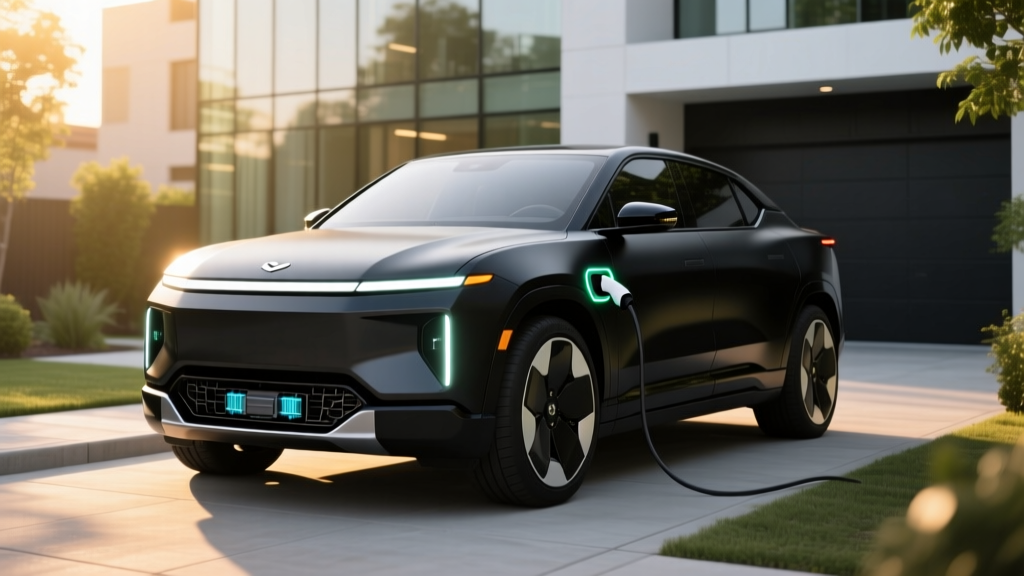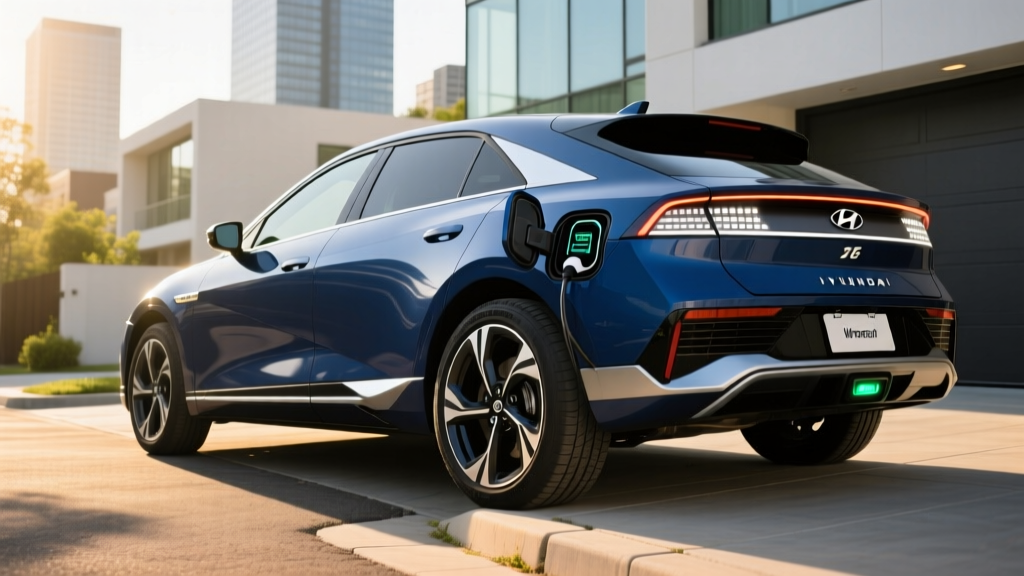
The 2026 Hyundai Ioniq 9 enters the three-row electric SUV segment with a clear mission: deliver genuine family-hauling practicality, competitive range, and the kind of interior space that makes a 200-inch vehicle feel livable. But for buyers navigating steep driveways, snow-covered roads, or light trail access, one spec rises to the top of the research pile — Ioniq 9 ground clearance. At 8.3 inches, it sits among the more capable crossovers in its class, though it falls short of body-on-frame SUVs. This review covers every number that matters: range, charging curves, battery chemistry, pricing after tax credits, and whether the Ioniq 9 earns a spot in your garage over a Kia EV9, Tesla Model X, or Rivian R1S.
2026 Ioniq 9 Specs at a Glance
| Spec | SE/SEL (RWD) | SEL/Limited (AWD) | Calligraphy (AWD) |
|---|---|---|---|
| EPA Range | 335 mi | 311 mi | 300 mi |
| Battery (Usable) | 110.3 kWh (NMC) | ||
| Ground Clearance | 8.3 in | ||
| 0-60 mph | 7.9 sec | 5.8 sec | 5.8 sec |
| Horsepower | 215 hp | 378 hp | 378 hp |
| Max DC Fast Charge | ~240 kW (peak) | ||
| 10-80% DC Time | ~24 min (preconditioned) | ||
| Level 2 (11.5 kW) | ~32 mi/hr | ||
| EPA MPGe (Combined) | 89 MPGe | 83 MPGe | 80 MPGe |
| Efficiency (kWh/100 mi) | 37 | 40 | 42 |
| Towing Capacity | Up to 5,000 lbs | ||
| Base MSRP | $57,395 | $63,895 | $71,895 |
| Battery/Powertrain Warranty | 10 yr / 100,000 mi | ||
Source: Hyundai Newsroom and fueleconomy.gov. Figures reflect 2026 model-year EPA data.
Ground Clearance: 8.3 Inches and What It Means in Practice
The Ioniq 9's 8.3 inches of ground clearance places it in a practical sweet spot for a unibody electric SUV. For context, the Kia EV9 sits at 8.0 inches, the Rivian R1S offers up to 14.9 inches (with adjustable air suspension in Max mode), and the Tesla Model X provides approximately 8.1 inches in its standard ride height setting.
At 8.3 inches, the Ioniq 9 handles the real-world obstacles that matter for most families: steeply crowned driveways, speed bumps at parking-lot speeds, unplowed neighborhood streets after a moderate snowfall, and gravel forest-service roads to a trailhead. It does not provide the breakover angle needed for serious off-road work or deep-rut fire roads — the wheelbase stretches over 123 inches, which limits breakover geometry regardless of ride height.
Hyundai does not offer air suspension on the Ioniq 9 (unlike the Rivian R1S or the Mercedes EQS SUV), so this 8.3-inch figure is fixed across all trims. If your use case involves frequent high-clearance situations, the Rivian remains the segment benchmark. If you need enough clearance for snow and rough pavement without paying an air-suspension premium, the Ioniq 9 checks the box adequately.
Real-World Range vs. the EPA Sticker
EPA sticker: 335 mi (RWD) / 311 mi (AWD SEL) / 300 mi (AWD Calligraphy)
Expect on the highway (70-75 mph): ~260-285 mi (RWD), ~240-265 mi (AWD)
Cold weather (below 32°F): Subtract 15-25% — plan for ~215-250 mi in winter conditions
Best-case city/mild-weather driving: Close to or slightly above EPA sticker
The Ioniq 9's 110.3 kWh usable battery (NMC chemistry, supplied in a pack co-developed with SK On) is among the largest in the segment. The RWD model's 335-mile EPA rating is genuinely competitive — it outdistances the base Kia EV9 (304 mi) and sits close to the Rivian R1S Dual-Motor Large (about 340 mi).
However, large, boxy SUVs pay an efficiency tax at highway speeds. The Ioniq 9's frontal area and three-row proportions mean aerodynamic drag dominates above 65 mph. In real-world highway testing at 70-75 mph in moderate temperatures (60-75°F), expect the RWD model to deliver roughly 260-285 miles before hitting a 10% state of charge. The AWD models, carrying more weight and dual-motor drivetrain losses, settle around 240-265 miles under the same conditions.
Cold weather compounds the loss. NMC chemistry is less resilient to low temperatures than LFP, and the Ioniq 9's large cabin volume demands significant thermal energy. Below freezing, budget for a 15-25% range reduction. Hyundai includes a heat pump on all trims, which mitigates cabin-heating losses, but battery chemistry physics still apply. If you live in northern-tier states and regularly drive 200+ miles in winter, plan charging stops accordingly.
Charging Speeds: DC Fast, Level 2, and the Curve
| Charging Method | Max Power | Speed / Time | Notes |
|---|---|---|---|
| DC Fast Charge (350 kW station) | ~240 kW (peak) | 10-80% in ~24 min | Requires battery preconditioning; tapers significantly above 80% |
| DC Fast Charge (150 kW station) | ~150 kW (sustained) | 10-80% in ~38 min | More common at Electrify America / EVgo sites |
| Level 2 (240V / 48A home charger) | 11.5 kW | ~32 mi/hr; full in ~10.5 hrs | Requires hardwired 60A circuit or NEMA 14-50 outlet |
| Level 1 (120V / 12A) | 1.4 kW | ~4 mi/hr; full in ~80+ hrs | Emergency/trickle only — impractical for daily use on a 110 kWh pack |
Hyundai equips the Ioniq 9 with an 800V-class electrical architecture (the E-GMP platform's hallmark), enabling peak charge rates around 240 kW at compatible 350 kW chargers. With the battery preconditioned — meaning you've navigated to a DC fast charger in the Hyundai navigation system, which triggers thermal prep — a 10-80% session takes approximately 24 minutes.
The charge curve matters more than the peak number. Like all large NMC packs, the Ioniq 9 sustains its highest charge rate between roughly 10% and 45% state of charge. Above 60%, the rate tapers to protect cell longevity; above 80%, it drops sharply. If you're road-tripping, plan your stops around 10-80% windows — pushing to 95% at a DC fast charger adds 20+ minutes for only ~40 extra miles of range. It's faster to charge to 80%, drive, and charge again.
At home on a Level 2 charger (11.5 kW onboard charger), the Ioniq 9 gains approximately 32 miles of range per hour. A full 10-100% session takes roughly 10.5 hours — fine for overnight replenishment, but the sheer size of the 110.3 kWh battery means you'll want a dedicated 48-amp Level 2 unit (requiring a 60-amp circuit) installed by a licensed electrician. Expect installation costs of $800-$2,000 depending on panel proximity and local permit fees, or $3,000-$5,000+ if your electrical panel needs a 200-amp upgrade.
The Ioniq 9 ships with a NACS (Tesla-style) charge port for the 2026 model year, granting native access to Tesla Superchargers without an adapter. For legacy CCS stations, Hyundai provides a NACS-to-CCS adapter.
Performance and Drivetrain
The RWD Ioniq 9 routes 215 horsepower and 258 lb-ft of torque to the rear wheels, yielding a 0-60 mph time of approximately 7.9 seconds. That's adequate for merging and passing, but this is a 5,000+ pound vehicle — it moves with authority rather than urgency.
Step up to the AWD dual-motor configuration (SEL, Limited, Calligraphy) and output jumps to 378 hp and 516 lb-ft, dropping the 0-60 time to roughly 5.8 seconds. That's the configuration most buyers will prefer for the confidence of all-wheel traction in rain and snow, and the extra torque makes highway overtaking effortless.
Ride quality is a highlight. The Ioniq 9's multi-link rear suspension and well-damped tuning absorb highway expansion joints and broken pavement with composure. Road noise is present but muted — the thick battery slab under the floor acts as a sound barrier. Steering is light and accurate, though it offers little feedback. This is a cruiser, not a canyon carver, and that's the right calibration for the segment.
Interior Space, Cargo, and Family Practicality
The Ioniq 9's 123.4-inch wheelbase translates to genuinely usable third-row space — a claim many three-row SUVs fail to deliver. Key interior dimensions:
- Front headroom: 40.9 in
- Second-row legroom: 41.7 in (bench) / 39.5 in (captain's chairs)
- Third-row legroom: 32.0 in
- Cargo behind 3rd row: 15.9 cu ft
- Cargo behind 2nd row (3rd row folded): 47.3 cu ft
- Max cargo (all rear seats folded): 87.1 cu ft
The third row accommodates children and smaller adults for short trips; six-foot adults will find the 32 inches of legroom tight beyond 30 minutes. The 15.9 cubic feet behind the third row fits a couple of carry-ons and a stroller, but a full grocery run with all three rows in use requires roof-box or under-floor storage utilization.
Second-row captain's chairs (standard on Calligraphy, optional on SEL/Limited) offer a relaxation mode with powered recline and leg rests — a feature Hyundai calls "Relaxation Seats." It's a genuine differentiator for airport pickup duty or rest stops on road trips.
The Ioniq 9 does not have a front trunk (frunk). The E-GMP platform's front-end packaging in this application prioritizes HVAC and power electronics over storage. If frunk space is a must-have, the Rivian R1S and Ford Expedition EV offer one.
Pricing, Trims, and Federal Tax Credit Eligibility
| Trim | Drivetrain | Base MSRP | Est. After §30D Credit* |
|---|---|---|---|
| SE Standard Range | RWD | $57,395 | Check eligibility — see below |
| SE | RWD | $60,895 | Check eligibility |
| SEL | AWD | $63,895 | Check eligibility |
| Limited | AWD | $67,895 | Check eligibility |
| Calligraphy | AWD | $71,895 | Check eligibility |
*Destination charge (~$1,495) not included in MSRP figures above.
Federal tax credit (§30D) eligibility for the Ioniq 9 requires careful verification. Under current IRS rules, the full $7,500 credit depends on meeting all of the following criteria:
- MSRP cap: SUVs must not exceed $80,000 MSRP. All Ioniq 9 trims fall under this cap.
- Buyer income limits: Modified AGI must not exceed $150,000 (single), $225,000 (head of household), or $300,000 (joint). Check your prior-year or current-year MAGI.
- Battery component sourcing: At least 50% of battery components must be manufactured or assembled in North America (threshold increases annually). The Ioniq 9's SK On battery cells are produced at the Hyundai Motor Group Metaplant America (HMGMA) in Georgia, but critical mineral and component sourcing rules are complex and change annually.
- Point-of-sale transfer: As of 2024+, eligible buyers can transfer the credit to the dealer at purchase, reducing the out-of-pocket price immediately rather than waiting for a tax refund.
Because sourcing requirements tighten each year, do not assume the full $7,500 credit applies. Some Ioniq 9 configurations may qualify for $3,750 (meeting only one of the two sourcing thresholds) or $0 depending on the model year's specific battery supply chain. Always verify current eligibility at IRS.gov and consult a tax professional before purchase. Hyundai's dealer network can also provide a point-of-sale credit eligibility letter at the time of order.
Technology, Safety, and Driver Assistance
The Ioniq 9's tech suite is comprehensive and largely intuitive:
- Displays: Dual 12.3-inch screens (instrument cluster + infotainment) in a curved panoramic layout
- Infotainment: Wireless Apple CarPlay and Android Auto, over-the-air (OTA) updates, Hyundai Digital Key 2 (phone-as-key via UWB)
- Highway Driving Assist 2 (HDA 2): Adaptive cruise + lane centering + lane-change assist — SAE Level 2, requiring continuous driver supervision
- Remote Smart Parking Assist: The vehicle can pull in and out of tight parking spaces via key fob while the driver stands outside
- V2L (Vehicle-to-Load): Powers external devices up to 3.6 kW via an interior outlet or exterior adapter — useful for camping, tailgating, or emergency backup
- Safety: Forward collision-avoidance assist with junction turning detection, blind-spot collision-avoidance, rear cross-traffic collision-avoidance, safe exit assist
Hyundai's Highway Driving Assist 2 is a driver-assistance system, not a self-driving system. You must keep your hands on the wheel (or demonstrate attentiveness via the capacitive steering wheel) and eyes on the road at all times. The system will issue escalating warnings and eventually bring the vehicle to a stop if it detects driver inattention. For context on automation levels, see NHTSA's guidance on vehicle automation.
Notable drawbacks include the absence of a true hands-free driving mode (unlike GM's Super Cruise or Ford's BlueCruise on approved highways) and the touch-capacitive climate controls that lack physical buttons — a common complaint in Hyundai's recent interiors. The haptic feedback helps, but gloved operation in winter is frustrating.
Pros, Cons, and the Competition
Pros
- 335-mile EPA range (RWD) is segment-leading for a three-row SUV
- 800V architecture enables ~24-minute 10-80% DC fast charges
- 8.3-inch ground clearance handles snow and rough pavement
- Genuinely usable third row with 32 inches of legroom
- 10-year/100,000-mile battery warranty — best in class
- NACS port native for Tesla Supercharger access
- V2L capability for camping and backup power
Cons
- Starting MSRP near $57K — expensive even before options
- No frunk (front trunk) for additional cargo
- Highway real-world range drops significantly below EPA sticker
- No hands-free driving mode (HDA 2 requires hands on wheel)
- Touch-capacitive climate controls frustrate in cold weather
- Air suspension not available — fixed ride height only
- §30D tax credit eligibility uncertain due to sourcing rules
How It Stacks Up
vs. Kia EV9: The EV9 shares the E-GMP platform and offers similar range (304 mi EPA for Long Range RWD) at a slightly lower starting price (~$54,900). The Ioniq 9 edges ahead on EPA range (335 vs 304 mi), interior refinement, and second-row relaxation seats. The EV9 is the value pick; the Ioniq 9 is the premium sibling.
vs. Rivian R1S (Dual-Motor Large): The R1S offers air suspension (up to 14.9 inches of ground clearance), genuine off-road capability, and a frunk. It starts higher (~$75,000+) and its real-world range is comparable. If you need serious clearance or off-road chops, the R1S wins. For pavement-oriented family duty, the Ioniq 9 is more efficient and less expensive.
vs. Tesla Model X: The Model X provides falcon-wing doors, more cargo space, and access to the mature Supercharger network (though the Ioniq 9 now has native NACS access). The Model X starts significantly higher (~$80,000+) and its interior quality has drawn consistent criticism. The Ioniq 9 is the more refined daily driver; the Model X is the tech-forward statement.
Who Should Buy the Ioniq 9?
- You need a three-row electric SUV with real third-row usability
- Your daily driving is under 200 miles and you can charge at home
- You value a long battery warranty (10 yr / 100,000 mi)
- You want NACS-native Supercharger access without adapters
- You need 8+ inches of ground clearance for snow or rough driveways
- You need serious off-road capability (consider Rivian R1S)
- You want hands-free highway driving (consider GM Super Cruise vehicles)
- Your budget is under $50,000 (consider the Kia EV9 Light or a used EV)
- You need a frunk for gear organization
Frequently Asked Questions
What is the ground clearance of the 2026 Hyundai Ioniq 9?
The 2026 Hyundai Ioniq 9 has 8.3 inches of ground clearance across all trims. This is a fixed ride height — Hyundai does not offer air suspension on the Ioniq 9. The clearance is sufficient for snow, steep driveways, and light gravel roads but not for technical off-road terrain.
What is the real-world range of the Ioniq 9?
The EPA rates the RWD Ioniq 9 at 335 miles and AWD models at 300-311 miles. In real-world highway driving at 70-75 mph, expect approximately 260-285 miles (RWD) or 240-265 miles (AWD). In cold weather below freezing, subtract 15-25% from those figures. Always plan road-trip charging stops around 80% state of charge for the best time efficiency.
How fast does the Ioniq 9 charge?
On a 350 kW DC fast charger with battery preconditioning, the Ioniq 9 peaks at approximately 240 kW and charges from 10% to 80% in about 24 minutes. On a typical 150 kW public charger, expect 10-80% in roughly 38 minutes. At home on a Level 2 charger (11.5 kW), it gains about 32 miles of range per hour, with a full charge taking approximately 10.5 hours.
Does the Ioniq 9 qualify for the federal EV tax credit?
Eligibility for the $7,500 §30D federal tax credit depends on your income (under $300,000 MAGI for joint filers), the vehicle's MSRP (all Ioniq 9 trims are under the $80,000 SUV cap), and battery component/critical-mineral sourcing requirements that change annually. The Ioniq 9's battery is assembled at Hyundai's Georgia plant, but full credit eligibility is not guaranteed for every model year. Verify current status at IRS.gov and ask your dealer for a point-of-sale eligibility determination before purchase.
Is the Ioniq 9 worth buying over the Kia EV9?
The Ioniq 9 and EV9 share the same E-GMP platform, but the Ioniq 9 offers more EPA range (335 vs 304 mi for RWD), more premium interior materials, and second-row relaxation seats. The EV9 starts roughly $3,000-$5,000 lower depending on trim. If value is your priority, the EV9 is the stronger pick. If you want maximum range and a more refined cabin, the Ioniq 9 justifies its premium.
How much cargo space does the Ioniq 9 have?
The Ioniq 9 provides 15.9 cubic feet behind the third row, 47.3 cubic feet with the third row folded, and 87.1 cubic feet with all rear seats folded. There is no front trunk (frunk). For a three-row SUV, these numbers are competitive — similar to the Kia EV9 and slightly less than the Rivian R1S (which includes a large frunk).
What is the Ioniq 9's battery warranty?
Hyundai covers the Ioniq 9's high-voltage battery and electric powertrain for 10 years or 100,000 miles, whichever comes first. This is among the best warranties in the EV segment and applies to capacity retention — if the battery degrades below a specified threshold (typically 70% state of health), Hyundai will repair or replace it under warranty.