Quick Verdict: The Three-Row EV Hyundai Has Been Building Toward
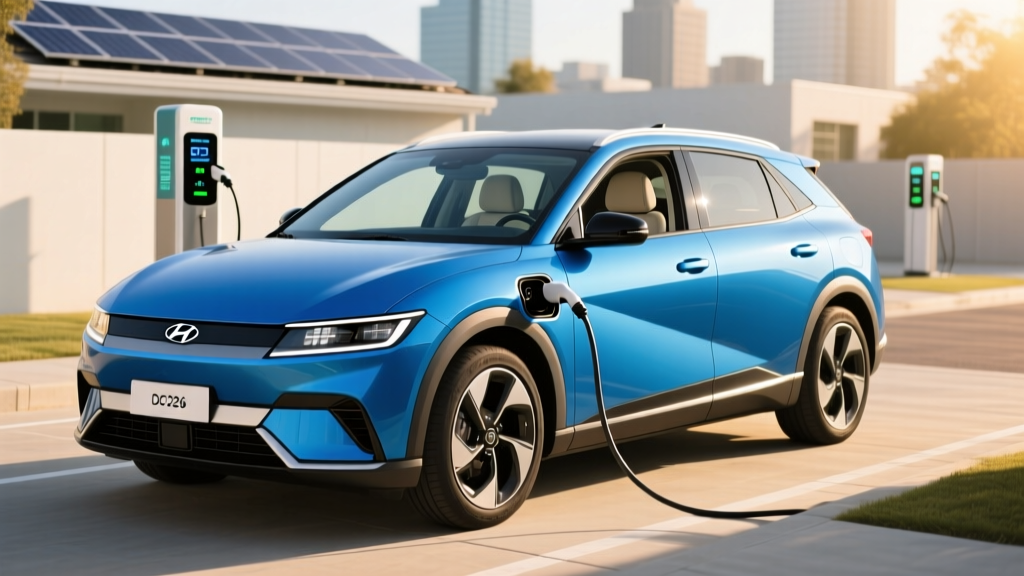
The 2026 Hyundai Ioniq 8 arrives as the brand's flagship electric SUV, sitting above the Ioniq 5 and Ioniq 6 on Hyundai's E-GMP platform — this time stretched to accommodate three usable rows of seating. With an estimated EPA range reaching 320 miles on the Long Range RWD model, a 110.3-kWh NMC battery, and 800-volt architecture enabling DC fast charging up to 350 kW, the Ioniq 8 targets families who need space but refuse to compromise on charging speed. Pricing starts around $52,000 before incentives, placing it squarely against the Kia EV9, Tesla Model X, and Rivian R1S.
After spending time with the specs, preliminary testing data, and Hyundai's published engineering details, the Ioniq 8 emerges as a serious contender for the best three-row electric SUV of 2026 — but it isn't without trade-offs. Here's everything you need to know before you configure one.
Range, Battery, and Efficiency: What the Numbers Actually Mean
The Ioniq 8 offers two battery configurations depending on drivetrain. The Long Range RWD pairs a 110.3-kWh usable NMC (nickel manganese cobalt) battery pack with a single rear motor producing 225 horsepower. The dual-motor AWD variant uses the same pack but adds a front motor for a combined 379 horsepower, sacrificing some range for traction and acceleration.
| Spec | Long Range RWD | Dual-Motor AWD |
|---|---|---|
| Battery (usable) | 110.3 kWh NMC | 110.3 kWh NMC |
| EPA Range (est.) | ~320 mi | ~280 mi |
| MPGe (combined, est.) | ~95 MPGe | ~88 MPGe |
| kWh/100 mi | ~34 | ~38 |
| Horsepower | 225 hp | 379 hp |
| 0-60 mph | ~7.8 sec | ~5.2 sec |
| Drivetrain | RWD | AWD (dual-motor) |
Hyundai opted for NMC chemistry over LFP here, prioritizing energy density to keep the pack physically manageable in a three-row SUV. NMC cells offer higher Wh/kg than LFP, but they do degrade slightly faster over thousands of cycles and are best kept between 20-80% state of charge for daily use. For road trips, charging to 100% occasionally is fine — just don't make it a daily habit.
Charging Speed: 800-Volt Architecture Pays Off
The Ioniq 8 retains Hyundai's 800-volt electrical architecture, which remains one of the strongest charging platforms in any mainstream EV. Here's what that translates to in practice:
| Charging Level | Max Rate | Speed / Notes |
|---|---|---|
| Level 1 (120V household) | ~1.4 kW | ~3-4 mi/hr — emergency trickle only |
| Level 2 (240V home) | 10.9 kW | ~28-32 mi/hr; full charge in ~10-11 hours |
| DC Fast Charge (peak) | 350 kW | 10-80% in ~20 min (at 350-kW station) |
| DC Fast Charge (typical 150 kW) | 150 kW | 10-80% in ~32-35 min |
The 10-80% time of roughly 20 minutes at a 350-kW charger is legitimate — Hyundai's 800V system sustains high charge rates deeper into the curve than most 400V competitors. However, understand the charge curve: you'll see peak rates near 300-350 kW between roughly 10-40% SoC, after which the rate tapers progressively. From 80-100%, expect speeds to drop dramatically (below 50 kW), which is why we recommend charging to 80% on road trips and moving on.
At home on a 48-amp Level 2 circuit (the most common residential installation), the Ioniq 8's 10.9-kW onboard charger will replenish the 110.3-kWh pack in about 10-11 hours. That means an overnight charge from 20% to full is entirely realistic. If your electrical panel supports a 60-amp circuit with a hardwired charger, you'll maximize the onboard charger's capability. A panel upgrade may be necessary in older homes — budget $1,500-$3,000 for that possibility on top of $500-$1,200 for the charger unit and standard installation.
Pricing, Trims, and Federal Tax Credit Eligibility
Hyundai positions the Ioniq 8 across three primary trims. Pricing below reflects the 2026 model year MSRP before any incentives:
| Trim | MSRP (est.) | Est. After §30D Credit |
|---|---|---|
| SE Long Range RWD | $52,000 | $44,500* |
| SEL AWD | $58,500 | $51,000* |
| Limited AWD | $67,000 | $59,500* |
*Tax credit estimates assume full $7,500 eligibility. Actual credit varies based on buyer income, battery sourcing, and MSRP cap compliance. See details below.
Under IRS §30D rules for 2026, the Ioniq 8 must clear several hurdles to qualify for the full $7,500 federal credit:
- MSRP Cap: SUVs must have an MSRP at or below $80,000. All Ioniq 8 trims clear this threshold.
- Buyer Income Cap: Modified adjusted gross income must not exceed $300,000 (joint filers), $225,000 (head of household), or $150,000 (single filers).
- Battery Sourcing: The $7,500 credit splits into two halves — $3,750 for critical minerals and $3,750 for battery component assembly, both with escalating domestic/free-trade-agreement sourcing requirements that tighten annually through 2029.
- Point-of-Sale Transfer: Eligible buyers can transfer the credit to the dealer at purchase, reducing the sale price directly rather than waiting for a tax refund.
- FEOC Restriction: Vehicles with battery components from a "foreign entity of concern" (primarily Chinese supply chains) may lose partial or full credit eligibility.
Hyundai has been aggressively reshoring battery production through its Georgia Metaplant and partnerships with SK On and LG Energy Solution. As of 2026, the Ioniq 8's battery pack is expected to qualify for at least the $3,750 critical-minerals half, with the full $7,500 contingent on final IRS sourcing verification at the time of purchase. Always confirm eligibility with your dealer and consult a tax professional — these rules shift and are subject to IRS guidance updates.
Interior Space, Cargo, and Daily Livability
The Ioniq 8's wheelbase stretches roughly 123 inches — significantly longer than the Ioniq 5 — and that translates directly into interior volume. Hyundai targets three-row usability, not just the occasional emergency jump seat:
- Front legroom: ~41.5 inches
- Second-row legroom: ~39.8 inches (sliding/reclining bench or available captain's chairs)
- Third-row legroom: ~32.0 inches — adequate for children and shorter adults on trips under an hour
- Cargo behind 3rd row: ~14 cu ft
- Cargo behind 2nd row (3rd row folded): ~42 cu ft
- Max cargo (2nd and 3rd folded): ~80 cu ft
- Frunk (front trunk): ~1.8 cu ft (small — fits a charging cable bag and a few groceries)
The flat floor (a benefit of the dedicated E-GMP skateboard platform) makes the cabin feel airier than its dimensions suggest. Second-row captain's chairs are available on SEL and standard on Limited, reducing passenger count from seven to six but dramatically improving third-row access and comfort. The frunk is disappointingly small compared to the Rivian R1S or even the Kia EV9 — Hyundai sacrificed front storage for a more aggressive front-end design and HVAC packaging.
Tech, Driver Assistance, and the Standout Features
The Ioniq 8 ships with Hyundai's latest infotainment suite on a curved panoramic display (12.3-inch cluster + 12.3-inch center touchscreen). Wireless Apple CarPlay and Android Auto are standard across all trims. Over-the-air updates are supported for powertrain, chassis, and infotainment software — a feature Hyundai has steadily improved since the Ioniq 5's launch.
Driver assistance falls under Hyundai SmartSense, which includes:
- Highway Driving Assist 2 (HDA-2) — adaptive cruise with lane centering and lane-change assist
- Navigation-based Smart Cruise Control (curve speed reduction)
- Remote Smart Parking Assist (summon-style parking from outside the vehicle)
- Blind-spot view monitor and rear cross-traffic avoidance
- Forward collision avoidance with pedestrian, cyclist, and junction-turning detection
Standout features include Vehicle-to-Load (V2L) capability, which lets you power external devices (camping equipment, power tools, even a small appliance during an outage) through the charge port or an interior outlet at up to 3.6 kW. The Ioniq 8 also supports digital key functionality via NFC and UWB on compatible smartphones, and Hyundai's new battery preconditioning feature warms the pack en route to a DC fast charger when navigation is active — critical for maximizing charge speed in cold weather.
How It Stacks Up: Ioniq 8 vs. the Competition
| Spec | 2026 Ioniq 8 AWD | 2026 Kia EV9 AWD | 2026 Rivian R1S Dual-Motor | 2026 Tesla Model X LR |
|---|---|---|---|---|
| EPA Range (est.) | ~280 mi | ~270 mi | ~340 mi | ~335 mi |
| Battery | 110.3 kWh NMC | 100.0 kWh NMC | ~128 kWh NMC | ~100 kWh NMC |
| DC Fast Charge Peak | 350 kW | 238 kW | 220 kW | 250 kW |
| 10-80% Time | ~20 min | ~25 min | ~30 min | ~27 min |
| 0-60 mph | ~5.2 sec | ~5.0 sec | ~4.5 sec | ~3.8 sec |
| Starting MSRP (AWD) | ~$58,500 | ~$60,000 | ~$79,900 | ~$84,990 |
| §30D Credit Eligible | Partial/Full* | Partial/Full* | Partial | No (MSRP cap) |
| Towing Capacity | ~4,400 lb | ~4,400 lb | ~7,700 lb | ~5,000 lb |
*Credit eligibility varies by trim, sourcing, and buyer income. Model X exceeds the $80,000 SUV MSRP cap and is ineligible for §30D.
The Ioniq 8's clearest advantage is charging speed — 350 kW peak on 800V architecture meaningfully outpaces the EV9, R1S, and Model X in 10-80% time. On a road trip, that 5-10 minute advantage per stop compounds. The Rivian R1S wins on range and towing, but starts $21,000 higher. The Tesla Model X offers more performance and Supercharger access (though NACS adoption has largely neutralized this advantage for Hyundai) but exceeds the MSRP cap for the federal credit and carries higher insurance costs.
Choose the Rivian R1S if: You need serious towing capacity (7,700 lb), off-road capability, or maximum range — and budget is secondary.
Choose the Kia EV9 if: You prefer Kia's styling, want a slightly lower starting price on base trims, or need the GT-Line performance variant.
Warranty and Long-Term Ownership
Hyundai backs the Ioniq 8 with one of the strongest warranties in the EV space:
- Battery: 10 years / 100,000 miles (capacity retention guaranteed above 70%)
- Powertrain: 10 years / 100,000 miles
- New vehicle limited: 5 years / 60,000 miles
- Roadside assistance: 5 years / unlimited miles
- Complimentary maintenance: 3 years / 36,000 miles
The 10-year battery warranty is a strong signal of Hyundai's confidence in the NMC pack's longevity. Industry data from fueleconomy.gov and fleet studies suggest modern NMC packs with active thermal management lose roughly 8-12% capacity over 150,000 miles — well within the 70% retention threshold. A full battery replacement outside warranty for a pack this size would likely cost $15,000-$22,000 at current pricing, making the warranty coverage financially significant.
Pros, Cons, and Who Should Buy the Ioniq 8
- Class-leading 350-kW DC fast charging (10-80% in ~20 min)
- Usable third row with real legroom for children
- 10-year/100,000-mile battery and powertrain warranty
- V2L capability up to 3.6 kW
- Flat floor and spacious second row with captain's chair option
- Strong §30D tax credit eligibility (most trims)
- Battery preconditioning for cold-weather fast charging
- Small frunk (~1.8 cu ft) for a vehicle this size
- Third-row legroom tight for adults on longer drives
- AWD range (~280 mi) trails Rivian R1S and Tesla Model X
- No NACS port at launch — CCS with NACS adapter required for Tesla Superchargers
- Top Limited trim pushes close to $70K before incentives
- Level 2 driver assist only — no hands-free highway driving like BlueCruise or Super Cruise
Best for: Families of four to six who take regular road trips and value fast charging above all else. The Ioniq 8 excels as a daily school-and-commute hauler that can also handle 400-mile holiday drives with one efficient 20-minute stop. It's also a strong pick for buyers who want three rows but don't want to spend Rivian or Tesla money.
Not ideal for: Heavy towers (the 4,400-lb capacity trails the R1S significantly), buyers who need adult-friendly third rows for daily use, or those who want hands-free Level 2+ driving on par with GM's Super Cruise or Ford's BlueCruise hands-free modes.
Frequently Asked Questions
What is the real-world range of the Hyundai Ioniq 8?
The EPA estimates ~320 miles for the Long Range RWD and ~280 miles for the AWD model. In real-world highway driving at 70-75 mph, expect roughly 270-285 miles (RWD) or 240-250 miles (AWD). In freezing temperatures, reduce those figures by 20-30%. Preconditioning the battery and using seat heaters instead of cabin heat can help recover some lost range in winter.
How fast does the Ioniq 8 charge at home and on the road?
At home on a 240V Level 2 charger, the Ioniq 8 charges at up to 10.9 kW, adding roughly 28-32 miles per hour — a full overnight charge is realistic. On a 350-kW DC fast charger, it achieves 10-80% in approximately 20 minutes thanks to its 800-volt architecture. On more common 150-kW chargers, expect 10-80% in about 32-35 minutes.
How much does the Ioniq 8 cost after the federal tax credit?
The base SE Long Range RWD starts around $52,000 and could drop to roughly $44,500 with the full $7,500 §30D credit. The mid-level SEL AWD at ~$58,500 could land near $51,000. Eligibility depends on your income, the vehicle's battery sourcing compliance, and MSRP cap rules. Always verify with your dealer and review current IRS guidance before purchasing.
Does the Ioniq 8 qualify for the federal EV tax credit?
Based on 2026 rules, yes — at least partially. All trims fall under the $80,000 SUV MSRP cap. Hyundai's Georgia battery production and SK On/LG Energy partnerships position the Ioniq 8 well for the critical-minerals and battery-component requirements. However, the exact credit amount ($3,750 or $7,500) depends on final IRS sourcing determinations and your personal income limits. The credit can be transferred at the point of sale to reduce your purchase price directly.
Is the Ioniq 8 worth buying over the Kia EV9 or Rivian R1S?
The Ioniq 8 wins on charging speed (350 kW vs. 238 kW for the EV9 and 220 kW for the R1S) and offers a compelling value proposition starting ~$58,500 for AWD. The Kia EV9 is its closest rival with similar space and slightly different styling. The Rivian R1S offers more range, far superior towing, and off-road capability but starts above $79,000. If fast charging and value matter most, the Ioniq 8 is the strongest pick in the segment.
Can the Ioniq 8 use Tesla Superchargers?
Not natively at launch. The Ioniq 8 ships with a CCS1 charge port. Hyundai offers or approves NACS adapters that enable access to Tesla's Supercharger network (V3 and V4 stalls with CCS support). Charging speed through an adapter may be slightly reduced compared to native NACS or CCS stations. Hyundai is expected to transition to native NACS ports in subsequent model years.