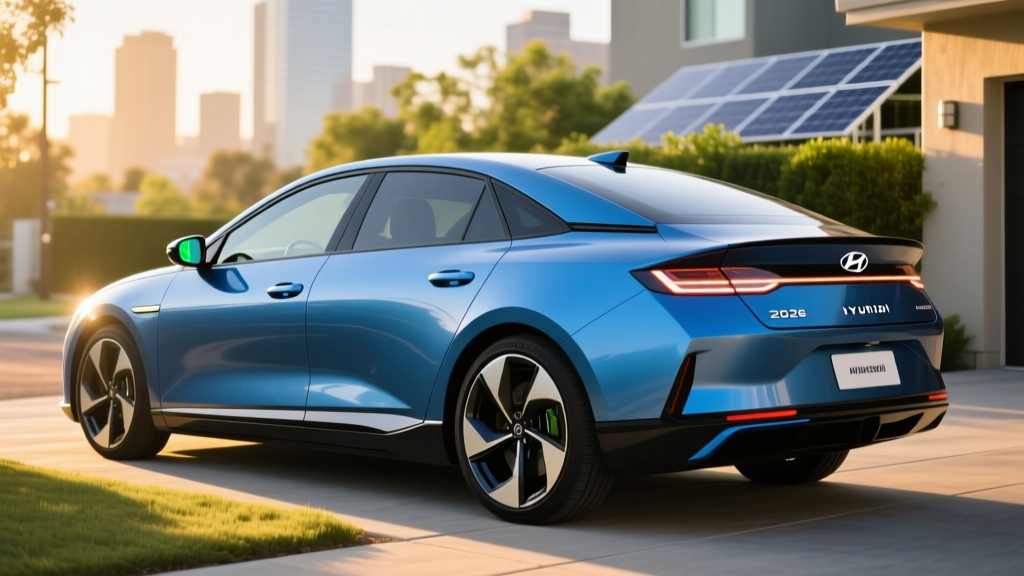
If you're researching the Hyundai Ioniq 6 and searching for how much the Ioniq 6 weighs, you're not alone. Curb weight directly impacts an electric vehicle's efficiency, range, tire wear, and handling dynamics — and the Ioniq 6's mass tells an interesting story about Hyundai's engineering priorities. This comprehensive review covers the 2026 Hyundai Ioniq 6 weight, range, charging performance, pricing, and whether this aerodynamic sedan earns a spot in your driveway.
2026 Hyundai Ioniq 6 Curb Weight by Trim
The 2026 Hyundai Ioniq 6's curb weight varies depending on drivetrain configuration and battery size. Here's the breakdown by trim level:
| Trim / Configuration | Curb Weight (lbs) | Drivetrain | Battery (kWh) |
|---|---|---|---|
| SE Standard Range | 4,541 | RWD | 54.0 (LFP) |
| SE / SEL Long Range | 4,655 | RWD | 77.4 (NMC) |
| SEL / Limited AWD | 4,953–5,027 | Dual-Motor AWD | 77.4 (NMC) |
The lightest Ioniq 6 is the Standard Range RWD at 4,541 pounds — roughly comparable to a midsize gasoline sedan. The heaviest is the Long Range AWD Limited, tipping the scales at 5,027 lbs. That ~486-pound spread between base and top trim is driven primarily by the larger 77.4 kWh NMC battery pack and the addition of a front-axle motor with its associated power electronics.
For context, the Tesla Model 3 Long Range AWD weighs approximately 4,034 lbs — nearly 1,000 pounds lighter. The BMW i4 eDrive40 sits at around 4,682 lbs. The Ioniq 6's weight is on the heavier side for the segment, but Hyundai compensates with its 800V E-GMP platform's ultra-fast charging capability and one of the lowest drag coefficients of any production vehicle (0.21 Cd).
EPA Range and Real-World Efficiency
Real-World Expectation: ~280–310 miles highway; ~230–260 miles in cold weather (below 32°F)
The 2026 Ioniq 6 lineup offers three distinct range tiers depending on how much weight you're carrying and which drivetrain you choose:
- SE Standard Range RWD: 240 miles EPA — 54.0 kWh LFP battery, 4,541 lbs
- SE / SEL Long Range RWD: 361 miles EPA — 77.4 kWh NMC battery, 4,655 lbs
- SEL / Limited Long Range AWD: 316 miles EPA — 77.4 kWh NMC battery, ~5,000 lbs
The efficiency gap between RWD and AWD trims is significant. The Long Range RWD achieves an EPA-rated 140 MPGe combined (24 kWh/100 mi), making it one of the most efficient EVs in its class. The AWD version drops to 117 MPGe combined (29 kWh/100 mi), largely because that extra ~350 pounds of drivetrain hardware requires more energy to accelerate and sustain speed.
In real-world highway driving at 70–75 mph, expect the Long Range RWD to deliver roughly 280–310 miles before needing a charge. Cold weather (below freezing) with cabin heating active can reduce range by 20–30%, bringing effective range down to 230–260 miles. The Ioniq 6's standard heat pump helps mitigate this loss compared to EVs without one, but physics is physics — cold batteries and heated cabins consume energy.
According to fueleconomy.gov, the Long Range RWD's combined kWh/100mi figure of 24 ranks among the best in the midsize EV sedan category.
Charging Speed: 800V Architecture Makes the Difference
The Ioniq 6's standout technical advantage is Hyundai's 800V Electrical Global Modular Platform (E-GMP). Most competitors in this price range use 400V architectures, which limits peak charging rates. The Ioniq 6's 800V system enables charging speeds that rival vehicles costing twice as much.
| Charging Level | Power / Rate | Time / Speed | Connector |
|---|---|---|---|
| Level 1 (120V household) | ~1.4 kW | ~3–4 miles per hour | J1772 (NACS adapter included) |
| Level 2 (240V home) | 10.9 kW | ~37 miles per hour; full charge in ~7.5 hrs | J1772 / NACS |
| DC Fast Charge (350 kW station) | Peak ~235 kW | 10–80% in ~18 minutes | CCS1 / NACS |
| DC Fast Charge (150 kW station) | Peak ~150 kW | 10–80% in ~25 minutes | CCS1 / NACS |
A few critical nuances on the Ioniq 6's charging behavior:
- Charge curve taper: The Ioniq 6 sustains its peak ~235 kW rate from roughly 10–45% State of Charge (SoC), then tapers progressively. From 80–100%, charging slows dramatically to protect the battery — this is normal for all lithium-ion packs. Plan your road-trip stops around the 10–80% window for maximum efficiency.
- Preconditioning: The Ioniq 6 offers battery preconditioning when you navigate to a DC fast charger via the built-in navigation. This warms the battery to optimal temperature and can shave several minutes off your charge time — especially important in cold weather. Always use this feature.
- NACS transition: For 2026, Hyundai includes a NACS adapter in the box, giving Ioniq 6 owners access to Tesla Supercharger stations (V3 at 150 kW and V4 at higher rates). Native NACS ports are expected on future model years.
For home Level 2 charging, a 48-amp hardwired charger on a 60-amp circuit delivers the full 10.9 kW, adding roughly 37 miles of range per hour. A full overnight charge from 10–100% takes about 7.5 hours for the Long Range battery. Budget $500–$1,500 for a quality Level 2 home charger installation (equipment plus electrician), more if your panel needs an upgrade.
Performance: 0–60, Horsepower, and Drivetrain Options
| Configuration | Horsepower | Torque (lb-ft) | 0–60 mph | Drivetrain |
|---|---|---|---|---|
| Standard Range RWD | 149 hp | 258 | ~7.5 sec | Rear-Wheel Drive |
| Long Range RWD | 225 hp | 258 | ~6.2 sec | Rear-Wheel Drive |
| Long Range AWD | 320 hp | 446 | ~4.5 sec | Dual-Motor AWD |
The Long Range AWD is the performance pick, delivering 320 horsepower and a 4.5-second 0–60 mph time that makes merging and passing effortless. The RWD models prioritize efficiency over acceleration, and the Standard Range's 149 hp feels adequate for city commuting but underwhelming for highway overtaking.
One benefit of the Ioniq 6's heavier weight: ride quality. The ~5,000-pound AWD models feel planted and composed at highway speeds, with well-damped suspension tuning that absorbs imperfections. The low center of gravity from the floor-mounted battery pack minimizes body roll through corners. That said, the weight does show up in tire wear — expect to replace tires every 25,000–35,000 miles depending on driving style, which is typical for heavy EVs.
Pricing, Trims, and Federal Tax Credit Eligibility
| Trim | Base MSRP | Est. Federal Credit (§30D) | Effective Price |
|---|---|---|---|
| SE Standard Range | $37,500 | Up to $7,500* | ~$30,000 |
| SE Long Range | $42,500 | Up to $7,500* | ~$35,000 |
| SEL Long Range | $45,500 | Up to $7,500* | ~$38,000 |
| Limited Long Range | $52,200 | Up to $7,500* | ~$44,700 |
*Federal EV tax credit eligibility under IRS §30D is subject to multiple requirements. Always verify with a tax professional and the latest IRS guidance.
- MSRP Cap: Sedan MSRP must not exceed $55,000 (all Ioniq 6 trims qualify)
- Income Cap: Modified AGI ≤ $150,000 (single) / $300,000 (joint filers)
- Battery Sourcing: Critical minerals and battery components must meet escalating domestic-content thresholds — verify VIN eligibility on the IRS portal before purchase
- Point-of-Sale Transfer: Eligible buyers can transfer the credit to the dealer at purchase for an immediate price reduction
The Ioniq 6's sedan classification works in its favor here — the $55,000 MSRP cap for sedans (vs. $80,000 for SUVs/trucks) means every trim qualifies on price. However, battery sourcing requirements continue to tighten annually. Hyundai has been working to shift battery component sourcing to qualify, but you should verify the specific VIN's eligibility through the IRS portal and confirm with your tax advisor before relying on the full $7,500 credit.
Cargo Space, Interior, and Standout Tech
The Ioniq 6's swoopy fastback design comes with a trade-off: cargo practicality. Here are the key dimensions:
- Cargo volume (rear seats up): 12.3 cu ft
- Cargo volume (rear seats folded): ~37 cu ft (estimated)
- Front legroom: 41.7 inches
- Rear legroom: 35.7 inches
- Frunk (front trunk): 0.5 cu ft (AWD) / 1.6 cu ft (RWD) — enough for charging cables
That 12.3 cu ft trunk is the Ioniq 6's most notable drawback compared to the Ioniq 5 hatchback (27.2 cu ft) or Tesla Model 3 (23 cu ft). If cargo versatility is a priority, the Ioniq 6's sedan trunk opening limits what you can load. Folding the rear seats helps, but the through-pas is narrower than a hatchback.
On the tech front, the Ioniq 6 delivers:
- Dual 12-inch displays: One for the instrument cluster, one for infotainment with wireless Apple CarPlay and Android Auto
- Hyundai SmartSense (ADAS): Highway Driving Assist 2 (HDA-2) with lane-centering and adaptive cruise, Navigation-Based Smart Cruise Control, and Remote Smart Parking Assist on higher trims
- Digital Side Mirrors: Available on Limited trim — camera-based mirrors that reduce drag and improve visibility in rain, though they require an adjustment period
- Vehicle-to-Load (V2L): Interior and exterior V2L outlets allow you to power devices or small appliances from the battery — up to 3.6 kW output
- Over-the-Air (OTA) Updates: Hyundai pushes firmware and feature updates remotely, including battery management improvements
Important note on HDA-2: Hyundai's Highway Driving Assist 2 is an SAE Level 2 driver-assistance system. It provides steering, acceleration, and braking support, but the driver must remain fully engaged and attentive at all times. This is not a self-driving system.
Warranty Coverage
| Component | Coverage |
|---|---|
| New Vehicle (Bumper-to-Bumper) | 5 years / 60,000 miles |
| EV Battery & Powertrain | 10 years / 100,000 miles |
| Battery Capacity Retention | Maintains ≥70% capacity over warranty period |
| Roadside Assistance | 5 years / unlimited miles |
| Complimentary Maintenance | 3 years / 36,000 miles |
Hyundai's 10-year/100,000-mile battery and powertrain warranty is among the best in the industry and should ease long-term ownership concerns. The 70% capacity retention threshold is standard — if your battery degrades below 70% of original capacity within the warranty window, Hyundai will repair or replace it. Real-world data from early Ioniq 5 owners (same E-GMP platform) suggests degradation of roughly 5–8% over the first 60,000 miles, well within this threshold.
Pros, Cons, and Who Should Buy the Ioniq 6
- Class-leading 800V DC fast charging (10–80% in ~18 min)
- Outstanding efficiency — 140 MPGe combined on Long Range RWD
- 361-mile EPA range (Long Range RWD) covers most road trips comfortably
- Industry-best 10-yr/100,000-mi battery warranty
- Ultra-low 0.21 Cd drag coefficient improves highway efficiency
- V2L capability for camping, tailgating, or emergency backup power
- All trims under $55K sedan MSRP cap for §30D tax credit
- Small 12.3 cu ft trunk — sedan shape limits cargo versatility
- Heavier than key rivals (up to 5,027 lbs) impacts AWD efficiency
- Rear visibility compromised by fastback roofline and high trunk lid
- Standard Range RWD feels underpowered at 149 hp
- Infotainment learning curve — touch-capacitive climate controls
- No native NACS port yet (adapter-dependent for Superchargers)
- Commuters and efficiency seekers: The Long Range RWD's 361-mile EPA range and 140 MPGe combined make it an outstanding daily driver with minimal charging cost.
- Road-trip enthusiasts: 800V charging means shorter stops. A 10–80% charge in ~18 minutes at a 350 kW station keeps you moving.
- Tech-forward buyers: V2L, digital mirrors, and OTA updates appeal to gadget-oriented owners.
- Families needing cargo space: The Ioniq 5, Tesla Model Y, or Kia EV6 offer significantly more cargo volume and hatchback practicality.
- Performance-focused drivers: The Tesla Model 3 Performance (0–60 in ~2.9 sec) or BMW i4 M50 offer sharper dynamics, though at higher prices.
Frequently Asked Questions
What is the real-world range of the Hyundai Ioniq 6?
The Long Range RWD's EPA estimate is 361 miles, but expect approximately 280–310 miles in real-world highway driving at 70–75 mph. In freezing temperatures with cabin heat, range can drop to 230–260 miles. The AWD version (316 EPA) typically delivers 250–280 miles highway.
How fast does the Ioniq 6 charge at home and on the road?
At home on a Level 2 (240V, 48-amp) charger, the Ioniq 6 charges at 10.9 kW, adding about 37 miles per hour and reaching a full charge in roughly 7.5 hours. On a 350 kW DC fast charger, it peaks at ~235 kW and charges from 10–80% in approximately 18 minutes thanks to its 800V architecture.
How much does the Ioniq 6 cost after federal tax credits?
With a base MSRP starting at $37,500 and potential eligibility for up to $7,500 in federal tax credits under §30D, the effective price can start around $30,000 for the SE Standard Range. However, eligibility depends on buyer income, battery sourcing requirements, and MSRP caps. Verify your specific eligibility on the IRS portal before purchase.
Does the Hyundai Ioniq 6 qualify for the federal EV tax credit?
As of 2026, the Ioniq 6 qualifies on MSRP (all trims are under the $55,000 sedan cap). However, the full $7,500 credit depends on battery component and critical mineral sourcing requirements that tighten annually, plus buyer income limits ($150K single / $300K joint). Always check the IRS clean vehicle credit page for the latest VIN-level eligibility data.
Is the Ioniq 6 worth buying vs. the Tesla Model 3 or Ioniq 5?
The Ioniq 6 wins on charging speed (800V vs. Model 3's ~250 kW peak on CCS) and efficiency (140 MPGe vs. Model 3 LR's ~132 MPGe). The Tesla Model 3 offers more cargo space, a more mature Supercharger network (though Hyundai's NACS adapter helps), and quicker 0–60 times. The Ioniq 5 offers dramatically more cargo room in a hatchback body but slightly less range. If you prioritize efficiency, charging speed, and a comfortable sedan ride, the Ioniq 6 is a strong choice.
How much does the Hyundai Ioniq 6 weigh and why does it matter?
The Ioniq 6 weighs between 4,541 lbs (Standard Range RWD) and 5,027 lbs (Long Range AWD Limited). Heavier EVs consume more energy per mile, which is why the AWD model's EPA range drops from 361 to 316 miles despite using the same 77.4 kWh battery. Weight also affects tire wear and braking distances — plan for tire replacement every 25,000–35,000 miles.