Quick Verdict: The Most Aero-Efficient Sedan in Its Class
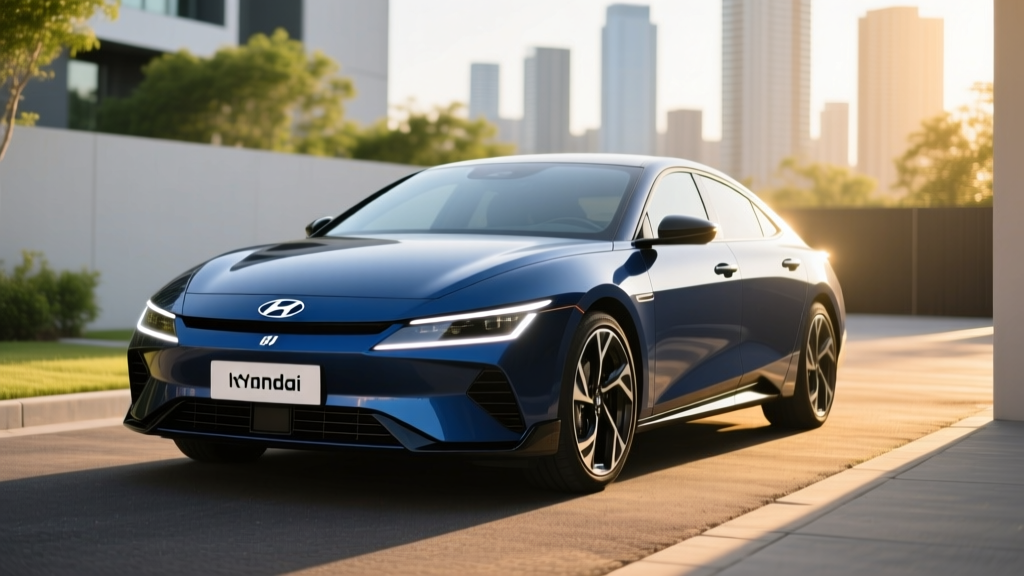
The Hyundai Ioniq 6 sedan remains one of the most energy-efficient electric vehicles on the market in 2026, leveraging its teardrop silhouette and E-GMP platform to extract maximum miles from every kilowatt-hour. With a refreshed interior, expanded battery options, and continued access to Tesla Superchargers via the NACS port, the Ioniq 6 positions itself as a direct rival to the Tesla Model 3, BMW i4, and Polestar 2 — often undercutting all three on price while matching or exceeding their EPA range figures.
This review covers the 2026 model year Ioniq 6 across all trims, with a focus on the numbers that matter most to buyers: real-world range, charging speed, ownership cost, and federal tax credit eligibility under current IRS §30D rules.
2026 Ioniq 6 Sedan: Core Specifications at a Glance
| Spec | SE Standard Range (RWD) | SE / SEL Long Range (RWD) | SEL / Limited (AWD) |
|---|---|---|---|
| Base MSRP | $38,650 | $43,850 | $47,850 (SEL AWD) |
| EPA Range | 240 mi | 361 mi | 316 mi |
| Battery (usable) | 54.0 kWh (LFP) | 77.4 kWh (NMC) | 77.4 kWh (NMC) |
| Horsepower | 149 hp | 225 hp | 320 hp |
| 0–60 mph | 7.0 sec | 6.1 sec | 4.5 sec |
| Drivetrain | RWD | RWD | AWD (dual-motor) |
| Max DC Fast Charge | 180 kW | 240 kW (350 kW capable) | 240 kW (350 kW capable) |
| 10–80% DCFC Time | ~20 min | ~18 min | ~18 min |
| Level 2 Home Charge Rate | 10.9 kW | 10.9 kW | 10.9 kW |
| EPA Efficiency (combined) | 135 MPGe / 25 kWh/100mi | 140 MPGe / 24 kWh/100mi | 111 MPGe / 30 kWh/100mi |
| Battery/Powertrain Warranty | 10 yr / 100,000 mi | 10 yr / 100,000 mi | 10 yr / 100,000 mi |
Source: Hyundai USA specifications, fueleconomy.gov. Pricing excludes destination charge (~$1,195).
Range and Real-World Efficiency: Beyond the EPA Sticker
EPA sticker: 361 miles
Real-world highway (70–75 mph, moderate temps): ~300–320 miles
Cold weather (below 32°F, mixed driving): ~250–280 miles
City / suburban (regen-heavy): ~340–360 miles
The 361-mile EPA figure on the Long Range RWD is among the highest of any mainstream electric sedan, trailing only the Lucid Air Pure. But the EPA test cycle favors lower-speed, stop-and-go driving where regenerative braking recovers energy. At sustained highway speeds of 70–75 mph, expect a 10–15% reduction from the sticker — putting real-world highway range in the 300–320 mile window. That is still enough for most single-day road trips without a charging stop.
Cold weather compounds the loss. Without preconditioning the battery, lithium-ion cells lose charge acceptance and the cabin heater draws 2–4 kW continuously. In sub-freezing conditions, plan for 250–280 miles of usable range. The Ioniq 6's standard heat pump mitigates some of this — it scavenges waste heat from the powertrain rather than relying solely on resistive heating — but physics still wins in extreme cold.
The SE Standard Range model's 240-mile EPA figure is better suited to urban commuters who charge nightly at home. The AWD trims sacrifice roughly 45 miles of range for the traction and performance of dual motors, landing at 316 miles EPA.
Charging Speed: DC Fast Charging and Home Setup
Charging speed is where the E-GMP platform's 800-volt architecture pays dividends. Most competing EVs in this price range use 400-volt systems that peak below 200 kW; the Ioniq 6 Long Range can sustain higher charge rates for longer portions of the curve.
| Charging Level | Power (kW) | Miles Added per Hour | Typical Use Case |
|---|---|---|---|
| Level 1 (120V household) | ~1.4 kW | ~4–5 mi/hr | Emergency / overnight trickle |
| Level 2 (240V home charger) | 10.9 kW | ~36–40 mi/hr | Daily home charging; full charge in ~7–8 hrs |
| DC Fast (350-kW station) | Peak 240 kW | ~800+ mi/hr (at peak) | Road trips; 10–80% in ~18 min |
| DC Fast (150-kW station) | ~130–150 kW | ~500 mi/hr (at peak) | Common public chargers; 10–80% in ~28 min |
Understanding kW vs. kWh: kW (kilowatts) measures the rate of power delivery — like water pressure from a hose. kWh (kilowatt-hours) measures total energy stored in the battery — like the size of the tank. A 240 kW charger fills the 77.4 kWh battery quickly, but only while conditions allow peak flow.
The charge curve matters. The Ioniq 6 Long Range peaks near 240 kW at low state-of-charge (roughly 10–30% SoC) on a 350-kW charger, then tapers progressively. By 60% SoC, it drops to ~175 kW; above 80%, it falls below 80 kW to protect cell longevity. This is why the 10–80% time of ~18 minutes is the meaningful metric — charging from 80–100% can take an additional 25+ minutes and is rarely worth the wait on a road trip.
The Standard Range trim with its LFP battery maxes out at 180 kW DC. LFP cells charge more slowly but tolerate daily 100% charging better than NMC — making the Standard Range a practical pick for buyers who want to charge to full every night without degradation concerns.
Hyundai equips all 2026 Ioniq 6 models with a NACS (North American Charging Standard) port, granting native access to Tesla's Supercharger network without an adapter. This dramatically expands reliable fast-charging coverage, particularly in rural corridors where Electrify America and EVgo have sparse coverage.
Performance and Driving Dynamics
The Ioniq 6 is not a sports sedan, but the AWD dual-motor variant's 4.5-second 0–60 mph time puts it in serious performance territory. The 320 hp and 446 lb-ft of torque deliver confident highway merging and passing. The RWD Long Range model, at 225 hp and 6.1 seconds, prioritizes efficiency over acceleration — a deliberate trade-off that most sedan buyers will find appropriate.
Ride quality benefits from a low center of gravity (the battery pack sits under the floor) and Hyundai's tuned multi-link rear suspension. The steering is numb by enthusiast standards, but the cabin remains impressively quiet at highway speeds, aided by the 0.21 drag coefficient — one of the lowest of any production vehicle.
Towing: The Ioniq 6 is not rated for towing. Buyers needing tow capacity should look at the Ioniq 5 crossover or Hyundai's upcoming E-GMP SUVs.
Interior, Cargo, and Technology
The Ioniq 6's cabin is spacious for its class, with 42.3 inches of front legroom and 37.1 inches of rear legroom — enough for six-foot passengers in both rows without compromise. The floor-mounted battery does elevate the seating position slightly, creating a "legs-forward" posture in the rear that some passengers find less natural than a traditional sedan.
Cargo volume: 12.3 cubic feet in the trunk, plus a 0.5 cu-ft front trunk (frunk) on RWD models (AWD models forgo the frunk to house the front motor). The trunk is wide but the sloping roofline limits vertical space for taller items. A 60/40 split-folding rear seat helps with longer cargo. Compared to the Tesla Model 3's 23 cu ft (including its deeper frunk and hatchback-style opening), the Ioniq 6 gives up practicality in exchange for its aerodynamic profile.
Infotainment: Dual 12.3-inch screens (instrument cluster and center touchscreen) run Hyundai's latest infotainment software with wireless Apple CarPlay and Android Auto. Physical climate controls below the screen are a welcome retention — Hyundai resisted the trend of burying HVAC settings in touch menus.
Driver Assistance (SAE Level 2): Hyundai's Highway Driving Assist 2 (HDA2) provides adaptive cruise control with stop-and-go, lane centering, and lane-change assist. It is a Level 2 driver-assist system, meaning the driver must keep hands on the wheel and eyes on the road at all times. It is not autonomous driving. HDA2 is competent for highway cruising but requires active supervision — expect occasional lane-centering drift on faded markings and abrupt disengagement in construction zones.
Pricing, Trims, and Federal Tax Credit Eligibility
| Trim | MSRP | Est. After §30D Credit | Credit Eligible? |
|---|---|---|---|
| SE Standard Range | $38,650 | ~$31,150 | Yes (if sourcing rules met) |
| SE Long Range | $43,850 | ~$36,350 | Yes (if sourcing rules met) |
| SEL Long Range | $46,850 | ~$39,350 | Yes (if sourcing rules met) |
| Limited AWD | $53,600 | ~$46,100 | Yes (under $55K sedan cap) |
The Ioniq 6 qualifies for the IRS §30D Clean Vehicle Credit of up to $7,500, but eligibility is not automatic. The credit has multiple requirements:
- MSRP cap: Sedans must have an MSRP at or below $55,000. All Ioniq 6 trims currently fall under this cap.
- Buyer income limits: Adjusted gross income must not exceed $150,000 (single), $225,000 (head of household), or $300,000 (joint filing).
- Battery sourcing: The $7,500 credit splits into two halves — $3,750 for critical minerals sourcing and $3,750 for battery component manufacturing. Sourcing requirements tighten annually; by 2026, a significant percentage of minerals must come from the U.S. or FTA partners, and battery components must be manufactured or assembled in North America. Hyundai has shifted some battery production to the U.S. (via the Georgia Metaplant), but specific trim-level eligibility can change as supply chains evolve.
- Point-of-sale transfer: As of 2024, buyers can transfer the credit to the dealer at purchase, reducing the out-of-pocket cost immediately rather than waiting for tax filing.
Always verify current eligibility with your tax professional and the fueleconomy.gov tax credit lookup before purchasing. Rules change, and dealer-level credit application may vary.
Ownership Costs and Warranty
Hyundai backs the Ioniq 6's battery and powertrain with a 10-year / 100,000-mile warranty — among the strongest in the industry. The warranty covers battery capacity loss below 70% of original capacity, which is the standard threshold. Real-world degradation data from 2023–2025 Ioniq 5 and Ioniq 6 owners suggests NMC packs lose roughly 5–8% capacity over the first 50,000 miles before stabilizing. LFP packs in the Standard Range model may degrade even more slowly, though long-term data on Hyundai's LFP cells is still accumulating.
Charging cost vs. gasoline: At the U.S. average electricity rate of ~$0.16/kWh, charging the Long Range Ioniq 6 at home costs roughly $12.40 for a full 77.4 kWh fill-up — equivalent to about $0.034 per mile. A comparable gasoline sedan averaging 30 MPG at $3.40/gallon costs $0.113 per mile, or roughly 3.3× more per mile. Over 15,000 annual miles, home charging saves approximately $1,185 per year.
Insurance premiums for the Ioniq 6 run 15–25% higher than equivalent ICE sedans, reflecting higher repair costs for EV-specific components and elevated parts pricing. Shop quotes before purchase.
Pros and Cons
- Class-leading 361-mi EPA range (Long Range RWD)
- 800V architecture enables 10–80% DCFC in ~18 min
- NACS port = native Tesla Supercharger access
- 10-yr/100,000-mi battery warranty
- Heat pump standard on all trims
- Quiet, comfortable highway cruiser
- Under $55K MSRP cap for full §30D credit
- Trunk is small (12.3 cu ft) for a sedan this size
- Rear headroom limited by sloping roofline
- No towing capacity
- AWD range drops to 316 mi
- Infotainment can lag with multiple apps open
- HDA2 lane centering inconsistent on older highways
- Insurance costs higher than ICE equivalents
Who Should Buy the 2026 Ioniq 6 Sedan?
Best for: Efficiency-minded commuters and road-trippers who prioritize range and charging speed over cargo space. The Long Range RWD at ~$36,350 after the federal credit is one of the best value-per-mile-of-range propositions in the EV market. If your daily commute is under 60 miles and you have home Level 2 charging, the Standard Range LFP model at ~$31,150 after credit is a compelling budget option with minimal degradation risk.
Look elsewhere if: You regularly haul cargo (the trunk is tight), need AWD for harsh winters and want maximum range (the AWD drops to 316 mi), or want a sporty driving experience (the steering is detached and the suspension prioritizes comfort over cornering).
Key competitors to cross-shop: Tesla Model 3 Long Range (341 mi EPA, $42,990, hatchback cargo), BMW i4 eDrive40 (301 mi EPA, $52,200, premium interior), Polestar 2 (276 mi EPA, $49,800, hatchback). The Ioniq 6 beats all three on EPA range and price but loses to the Model 3 on charging network breadth (even with NACS, Tesla's network is denser) and to the i4 on interior material quality.
Frequently Asked Questions
What is the real-world range of the Ioniq 6 sedan?
The Long Range RWD's EPA estimate is 361 miles. In real-world highway driving at 70–75 mph, expect 300–320 miles. In cold weather below freezing, plan for 250–280 miles. City driving with regenerative braking can approach or match the EPA figure.
How fast does the Ioniq 6 charge at home and on the road?
At home on a 240V Level 2 charger (10.9 kW), the Long Range model adds ~36–40 miles per hour and charges fully in about 7–8 hours. On a 350-kW DC fast charger, it peaks at 240 kW and charges from 10–80% in approximately 18 minutes. On more common 150-kW chargers, expect 10–80% in about 28 minutes.
Does the 2026 Ioniq 6 qualify for the $7,500 federal EV tax credit?
Most trims qualify for up to $7,500 under IRS §30D, provided the buyer meets income limits ($150K single / $300K joint), the MSRP is under $55,000 (all trims qualify), and the battery meets critical-mineral and component-sourcing requirements. The credit can be transferred to the dealer at point of sale. Verify eligibility at purchase time, as sourcing rules tighten annually.
Is the Ioniq 6 worth buying over a Tesla Model 3?
The Ioniq 6 Long Range offers more EPA range (361 vs. 341 mi) and a lower starting price than the Model 3 Long Range. With the NACS port, it accesses Tesla's Supercharger network natively. However, the Model 3 offers more cargo space (hatchback design), a more mature software ecosystem, and generally higher Supercharger station density. If range-per-dollar and a quieter ride matter most, the Ioniq 6 wins. If cargo flexibility and software polish are priorities, the Model 3 is the stronger pick.
What is the battery warranty on the Ioniq 6?
Hyundai covers the battery and powertrain for 10 years or 100,000 miles, whichever comes first. The warranty guarantees the battery will retain at least 70% of its original capacity during that period. The bumper-to-bumper warranty is 5 years / 60,000 miles.
Can the Ioniq 6 use Tesla Superchargers?
Yes. All 2026 Ioniq 6 models come equipped with a NACS (Tesla-compatible) charging port, allowing direct access to Tesla's Supercharger network without an adapter. This adds over 17,000 fast-charging stalls to the Ioniq 6's usable charging map.