Quick Verdict: The Slippery Sedan That Punches Above Its Price
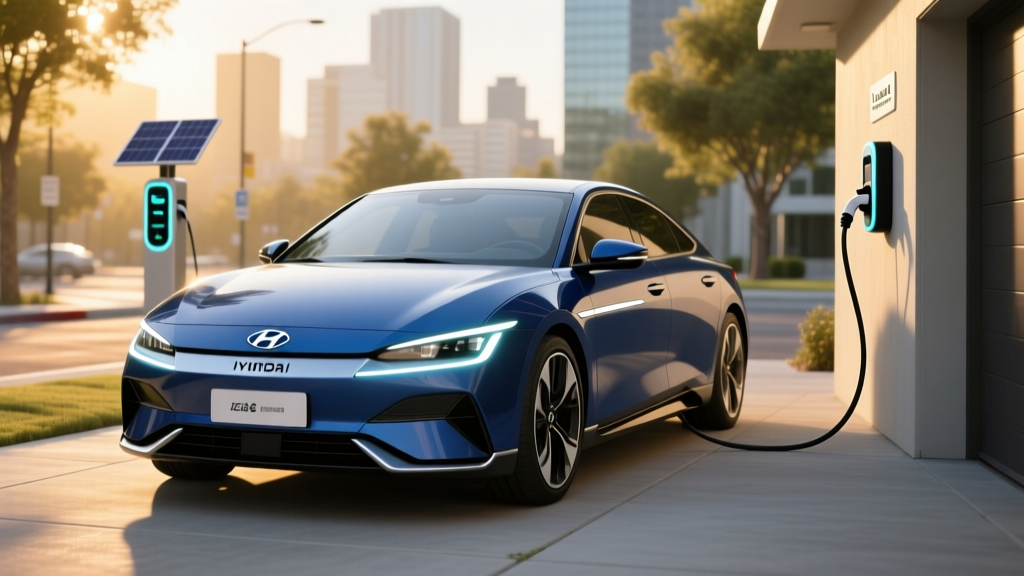
The Hyundai Ioniq 6 remains one of the most efficient electric sedans on the market, leveraging its wind-tunnel-sculpted body (a 0.21 drag coefficient) to extract maximum miles from every kilowatt-hour. For 2026, Hyundai has refined the formula with updated infotainment software, expanded standard driver-assist features, and continued access to the 800-volt E-GMP architecture that enables genuinely fast DC charging. If you prioritize highway efficiency and rapid road-trip charging over crossover ride height, the Ioniq 6 deserves a serious look — but the low roofline and sedan trunk shape do impose cargo compromises versus the Ioniq 5 hatchback.
The SE/SEL Long Range RWD carries an EPA-estimated 361 miles of range. In real-world mixed driving, expect roughly 310–330 miles. On sustained 75-mph highway runs, plan for 280–300 miles. In freezing temperatures (below 30°F), range can drop to 240–270 miles depending on cabin heat usage and whether you precondition the battery. The AWD models rated at 316 miles EPA will see similar proportional reductions.
Spec Snapshot: 2026 Hyundai Ioniq 6 at a Glance
| Attribute | SE/SEL Long Range RWD | SEL/Limited AWD |
|---|---|---|
| EPA Range | 361 miles | 316 miles |
| Battery (usable) | 77.4 kWh (NMC) | 77.4 kWh (NMC) |
| Horsepower | 225 hp | 320 hp |
| Torque | 258 lb-ft | 446 lb-ft |
| 0–60 mph | ~6.1 sec | ~4.5 sec |
| Drivetrain | Rear-wheel drive (single motor) | Dual-motor AWD |
| Max DC Fast Charge | Up to 240 kW (800V) | Up to 240 kW (800V) |
| 10–80% DC Charge | ~18 minutes (peak conditions) | ~18 minutes (peak conditions) |
| Level 2 Home Charging | 10.9 kW (~37 mi/hr) | 10.9 kW (~37 mi/hr) |
| MPGe (combined) | 140 MPGe | 117 MPGe |
| Efficiency | 24 kWh/100 mi | 29 kWh/100 mi |
| Base MSRP | $37,500 | $42,550 |
| Battery Warranty | 10 yr / 100,000 mi | 10 yr / 100,000 mi |
Source: fueleconomy.gov and Hyundai USA specifications. Real-world figures reflect AutoEdgeView testing and aggregated owner data.
Range and Efficiency: Where Aerodynamics Pays Off
The Ioniq 6's teardrop shape isn't just styling — it's a range multiplier. At 140 MPGe combined for the RWD Long Range, it ties with the Tesla Model 3 Long Range as one of the most efficient midsize electric sedans available. That 24 kWh/100 mi figure means you're burning less electricity per mile than nearly any EV at this price point, which translates directly to lower charging costs whether you're at home or on the road.
The 77.4 kWh usable battery uses NMC (nickel-manganese-cobalt) chemistry, which offers higher energy density than LFP but requires more careful long-term management. Hyundai recommends charging to 80% for daily use and saving 100% charges for road trips. Over a 10-year ownership horizon, expect roughly 10–15% degradation based on current E-GMP fleet data — meaning your 361-mile range might settle to around 310–325 miles after several years of typical use.
Cold-weather reality check: Like all NMC batteries, the Ioniq 6 loses range in winter. The heat pump (standard on all trims) mitigates cabin-heating energy draw, but you should still budget 20–30% range reduction in sustained sub-freezing conditions. Preconditioning the battery while plugged in is essential — it warms the pack for both better range and faster DC charging upon arrival.
Charging Speed: 800-Volt Architecture Makes a Difference
The Ioniq 6 shares Hyundai's E-GMP platform with the Ioniq 5 and Kia EV6, and the headline feature remains its 800-volt electrical architecture. Most mainstream EVs use 400V systems; the 800V setup allows the Ioniq 6 to accept higher charge power without excessive current, which means faster charging and less heat buildup in the battery.
| Charging Level | Power (kW) | Speed (approx.) | Use Case |
|---|---|---|---|
| Level 1 (120V household) | ~1.4 kW | ~5 miles per hour | Emergency / overnight trickle |
| Level 2 (240V home) | 10.9 kW | ~37 miles per hour | Daily home charging; 10–80% in ~5 hours |
| DC Fast (350 kW station) | Peak 240 kW | 10–80% in ~18 min | Road-trip charging |
| DC Fast (150 kW station) | Peak ~130 kW | 10–80% in ~28 min | Common public charger speed |
Charging curve reality: The "18 minutes to 80%" claim assumes a 350 kW-capable CCS station and a preconditioned battery. The Ioniq 6 peaks near 240 kW between roughly 10–40% state of charge, then tapers progressively. From 60–80%, expect speeds closer to 100–130 kW. Above 80%, charging slows dramatically to protect the battery — plan to charge to 80% and go rather than wait for a full fill on road trips.
The Ioniq 6 uses the CCS1 connector for DC fast charging and the J1772 connector for Level 2 AC. With the industry's ongoing shift toward NACS (Tesla's connector), Hyundai has committed to NACS adoption on future models, but the 2026 Ioniq 6 ships with CCS. Tesla Supercharger access is available via a CCS-to-NACS adapter (sold separately or included depending on current Hyundai promotions), though charging speed on V3 Superchargers is capped at ~150 kW due to adapter limitations.
Performance and Driving Dynamics
The RWD single-motor setup delivers 225 hp and a 0–60 time around 6.1 seconds — adequate for confident merging and passing but not thrilling. Where the RWD model shines is efficiency: it's the trim you want if maximizing range matters more than acceleration.
The dual-motor AWD variant bumps output to 320 hp and 446 lb-ft of torque, dropping the 0–60 sprint to approximately 4.5 seconds. Power delivery is immediate and linear, as with any EV, and the AWD system provides reassuring traction in rain and light snow. The low center of gravity from the floor-mounted battery pack keeps body roll controlled through corners, and the steering is reasonably weighted if somewhat numb at the feel level.
Ride quality is firm but compliant — Hyundai tuned the suspension for a sporty feel that matches the exterior's aero-sedan character. Road noise is well-suppressed at highway speeds, aided by the smooth bodywork. One-pedal driving (via adjustable regenerative braking levels controlled by steering-wheel paddles) works effectively once you calibrate to the regen strength, though it doesn't quite bring the car to a complete hold without touching the brake in all conditions.
Interior, Cargo, and Technology
The Ioniq 6's cabin embraces a minimalist, lounge-like aesthetic. Dual 12.3-inch displays (instrument cluster and infotainment) sit behind a curved housing, and the center console floats to create open storage space between the front seats. Material quality is solid for the price point, with recycled fabrics and eco-process leather on higher trims.
Passenger space:
- Front headroom: 40.2 inches
- Front legroom: 41.7 inches
- Rear headroom: 37.8 inches (notably lower than the Ioniq 5 due to the sloping roofline)
- Rear legroom: 35.1 inches
Taller rear passengers (over 6 feet) will notice the roofline encroaching — this is the trade-off for that slippery 0.21 Cd drag coefficient.
Cargo volume: The trunk offers 12.3 cubic feet, which is typical for a midsize sedan but significantly less than the Ioniq 5's 27.2 cu ft hatchback area. The trunk opening is also narrower, making bulky items harder to load. A front trunk (frunk) adds 0.5 cu ft on AWD models and 1.6 cu ft on RWD models — enough for a charging cable bag or small backpack but not meaningful grocery overflow.
Standout tech:
- Digital side mirrors (camera-based): Available on Limited trim. Replaces traditional mirrors with cameras and interior door-mounted screens. Reduces drag further but takes getting used to — some drivers find the screen placement unnatural at first.
- Hyundai SmartSense (standard): Includes forward collision-avoidance assist with pedestrian/cyclist detection, lane-keeping assist, blind-spot collision-avoidance, rear cross-traffic alert, and highway driving assist (a Level 2 SAE system combining adaptive cruise with lane centering).
- Vehicle-to-load (V2L): The Ioniq 6 can output up to 3.6 kW of AC power to run devices, tools, or even a small refrigerator during camping or outages. An interior V2L outlet is standard; an external adapter is available.
- Over-the-air updates: Hyundai supports OTA firmware updates for powertrain calibration, infotainment, and ADAS improvements.
Pricing, Trims, and Federal Tax Credit
The 2026 Hyundai Ioniq 6 lineup breaks down as follows:
| Trim | Drivetrain | MSRP | Est. After §30D Credit* |
|---|---|---|---|
| SE Standard Range | RWD | $37,500 | $30,000 |
| SE Long Range | RWD | $41,950 | $34,450 |
| SEL Long Range | RWD | $44,600 | $37,100 |
| SEL Long Range | AWD | $46,600 | $39,100 |
| Limited Long Range | AWD | $52,250 | $44,750 |
*Federal tax credit estimates assume full eligibility. Actual credit amount depends on battery component and critical-mineral sourcing requirements under IRS §30D rules. See IRS.gov clean vehicle credits for current-year requirements.
- MSRP cap: Sedars must be priced at or below $55,000. All Ioniq 6 trims qualify.
- Buyer income cap: Modified AGI must not exceed $150,000 (single), $225,000 (head of household), or $300,000 (joint filers).
- Battery sourcing: A percentage of critical minerals and battery components must be sourced from the U.S. or free-trade-agreement countries. These thresholds increase annually — verify current-year compliance on Hyundai's website or IRS guidance before purchasing.
- Point-of-sale transfer: Eligible buyers can transfer the credit to the dealer at purchase, reducing the upfront cost rather than waiting for a tax refund.
- One credit per VIN, one new-EV credit per taxpayer per year.
The Standard Range RWD model uses a smaller 53.0 kWh battery (also NMC) and is rated at approximately 240 miles EPA. It's the value play if your commute is short and you charge at home nightly, but most buyers will be better served by the Long Range's extra 120+ miles of buffer for road trips and winter driving.
Warranty and Ownership Costs
Hyundai backs the Ioniq 6 with one of the strongest warranty packages in the EV segment:
- Limited vehicle warranty: 5 years / 60,000 miles
- Powertrain warranty: 10 years / 100,000 miles
- Battery warranty: 10 years / 100,000 miles (covers capacity loss below 70% of original)
- Complimentary maintenance: 3 years / 36,000 miles (includes tire rotation, multi-point inspections)
- Roadside assistance: 5 years / unlimited miles
The 70% battery-capacity retention threshold is standard for the industry, though some competitors (like Tesla) set theirs at the same level. In practice, E-GMP vehicles have shown strong degradation curves — most owners report 90%+ state of health after 50,000 miles based on community fleet data. The 10-year/100,000-mile powertrain coverage is notably longer than Tesla's 8-year/120,000-mile battery warranty, giving Ioniq 6 buyers additional peace of mind for long-term ownership.
Insurance costs for the Ioniq 6 run slightly higher than comparable gas sedans but are in line with EVs in this price bracket. Expect annual premiums in the $1,600–$2,200 range depending on your profile and state. Always get a quote before purchasing — EV insurance varies significantly by carrier.
Pros, Cons, and Who Should Buy
- Class-leading efficiency at 140 MPGe (RWD Long Range)
- 800V architecture enables 10–80% DC charging in ~18 minutes
- Strong 10-year / 100,000-mile battery and powertrain warranty
- Standard V2L capability (3.6 kW output)
- All trims qualify for federal §30D credit (MSRP under $55K cap)
- Comprehensive standard ADAS suite (Hyundai SmartSense)
- Quiet, refined ride with low drag coefficient
- Sedan trunk (12.3 cu ft) limits cargo versatility vs. hatchback competitors
- Sloping roofline reduces rear headroom for taller passengers
- CCS connector (not native NACS) requires adapter for Supercharger access
- Infotainment can lag behind Tesla and Rivian in responsiveness
- Digital side mirrors take significant adaptation
- No available air suspension or semi-autonomous driving mode beyond Level 2
- Highway commuters: The aerodynamic efficiency shines on long, steady-speed drives. If 80%+ of your driving is highway miles, this is where the Ioniq 6 beats less-slippery crossovers.
- Road-trip enthusiasts who value charging speed: 800V charging means shorter stops at 350 kW stations — a tangible advantage over 400V competitors like the BMW i4 and base Model 3.
- Value-oriented EV buyers: Starting under $38K and eligible for up to $7,500 in federal credits, the Ioniq 6 undercuts the Tesla Model 3 Long Range and BMW i4 on effective price.
- You need serious cargo space (look at the Ioniq 5, Ford Mustang Mach-E, or Tesla Model Y).
- You frequently carry tall rear-seat passengers (the roofline will be tight).
- You want native NACS / seamless Supercharger integration without an adapter.
Frequently Asked Questions
What is the real-world range of the Hyundai Ioniq 6?
The Long Range RWD is EPA-rated at 361 miles. In real-world mixed driving, expect 310–330 miles. Sustained highway driving at 75 mph drops that to roughly 280–300 miles, and freezing weather can push it down to 240–270 miles. The AWD model is rated at 316 miles EPA with proportionally lower real-world numbers.
How fast does the Ioniq 6 charge at home and on the road?
At home on a Level 2 (240V / 48A) charger, the Ioniq 6 accepts 10.9 kW and adds roughly 37 miles of range per hour, charging from 10–80% in about 5 hours. On a 350 kW DC fast charger, it peaks at approximately 240 kW and charges from 10–80% in roughly 18 minutes under optimal conditions (preconditioned battery, moderate temperatures).
Does the 2026 Hyundai Ioniq 6 qualify for the federal EV tax credit?
Yes, all Ioniq 6 trims fall under the $55,000 MSRP cap for sedans. However, your personal eligibility depends on income limits ($150K single / $300K joint), and the credit amount depends on battery-sourcing compliance, which changes annually. Check IRS.gov and Hyundai's current credit calculator before purchasing. The credit can be transferred to the dealer at point of sale to reduce your upfront cost.
Is the Ioniq 6 worth buying over the Tesla Model 3 or BMW i4?
The Ioniq 6 competes closely with both. Versus the Model 3 Long Range, it offers comparable range and efficiency but trails in Supercharger network convenience (without an adapter) and software polish. Versus the BMW i4 eDrive40, the Ioniq 6 is significantly less expensive, charges faster (800V vs. 400V), and offers more range — but the i4 has a more premium interior and hatchback practicality. If charging speed and value are your priorities, the Ioniq 6 wins. If software ecosystem or brand cachet matter more, look at Tesla or BMW.
What are the biggest drawbacks of the Ioniq 6?
The sedan trunk (12.3 cu ft) is the primary practicality limitation — it can't match hatchback competitors for bulky cargo. Rear headroom is tight for passengers over 6 feet due to the aerodynamic roofline. The CCS connector requires a NACS adapter for Tesla Supercharger access. And while the infotainment is functional, it doesn't feel as modern or responsive as Tesla's or Rivian's interfaces.
How long will the Ioniq 6 battery last?
Hyundai warranties the battery for 10 years or 100,000 miles against capacity loss below 70%. Based on E-GMP fleet data from Ioniq 5 and EV6 owners, most batteries retain 90%+ state of health at 50,000 miles. With proper care (avoiding frequent 100% charges, minimizing DC fast charging in extreme heat, using battery preconditioning), the battery should outlast 150,000+ miles before any meaningful range reduction impacts daily usability.
Does the Ioniq 6 have self-driving capabilities?
No. The Hyundai SmartSense suite, including Highway Driving Assist, is an SAE Level 2 driver-assistance system. It combines adaptive cruise control with lane centering on divided highways but requires the driver to remain fully engaged, keep hands on the wheel, and monitor the road at all times. It is not a self-driving system.
For the latest safety ratings, check IIHS.org and NHTSA.gov for current crash-test scores on the 2026 Ioniq 6.