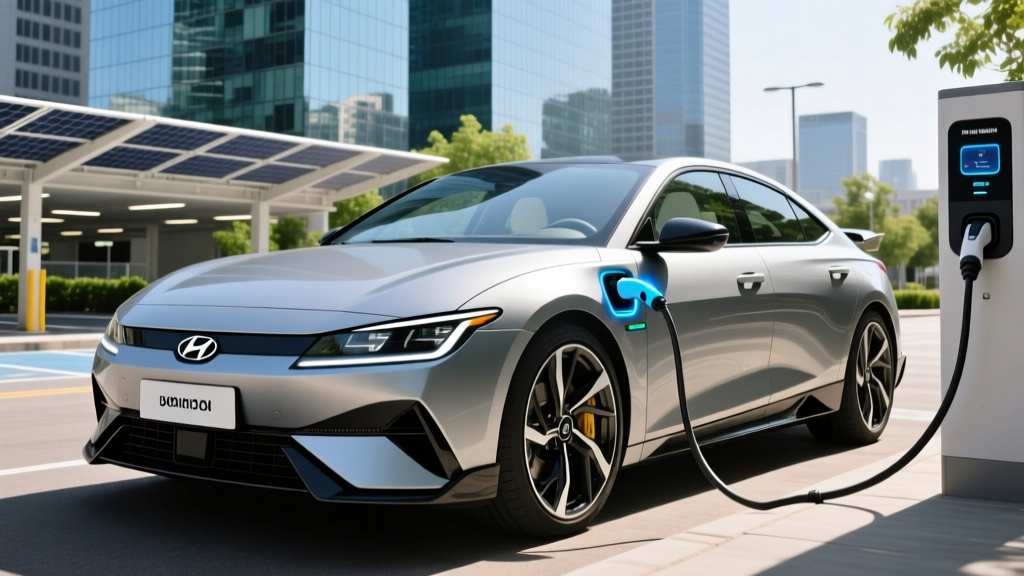
If you are searching for an Ioniq 6 N for sale, you are likely cross-shopping the fastest electric sedans on the market. Hyundai's N performance division has taken the already slippery Ioniq 6 and turned it into a track-capable EV with dual motors, 641 horsepower in N Grin Boost mode, and an 84.0 kWh battery. But performance EVs come with trade-offs: reduced range, stiffer rides, and premium pricing. This review breaks down the real-world numbers you need before heading to the dealer.
Range and Efficiency: What to Expect Beyond the EPA Sticker
Real-World Expectation: Expect 220–240 miles in mixed driving. Highway-only trips at 75+ mph drop this to ~200 miles. In freezing temperatures (below 32°F), plan for 170–190 miles of usable range. The Ioniq 6 N's performance tuning and stickier tires sacrifice some efficiency versus the standard Ioniq 6.
The standard Ioniq 6 SE Long Range achieves an impressive 360 miles of EPA range thanks to its 0.21 drag coefficient and RWD layout. The N variant gives up 100 miles of that range in exchange for all-wheel drive, 641 hp, and a lowered sport suspension. According to fueleconomy.gov, the Ioniq 6 N posts a combined MPGe of approximately 90 MPGe (37 kWh/100 mi), which is respectable for a performance EV but trails the standard model's 140 MPGe.
For daily commuting under 100 miles round-trip, the Ioniq 6 N's range is a non-issue. But if you regularly drive 300+ miles without stopping, you'll need to plan charging stops. The good news: this EV charges fast enough that a 20-minute break adds meaningful range.
Battery, Charging Speed, and Home Setup
The Ioniq 6 N uses an 84.0 kWh (usable) NMC (nickel-manganese-cobalt) battery pack on Hyundai's E-GMP platform with an 800-volt architecture. That 800V system is the key to its class-leading charge speeds.
| Charging Level | Power (kW) | Charge Time / Rate | Notes |
|---|---|---|---|
| Level 1 (120V household) | ~1.4 kW | ~3–4 miles per hour | Emergency/trickle only |
| Level 2 (240V home) | 10.9 kW | ~33 miles per hour / ~8 hours 0–100% | Requires 48A circuit |
| DC Fast Charge | Up to 240 kW peak | 10–80% in ~18 minutes | Requires 350 kW CCS station; tapers above 80% |
The 10–80% time of 18 minutes is among the fastest in the segment, rivaling the Porsche Taycan and outpacing the Tesla Model S Plaid on comparable chargers. However, peak 240 kW is only sustained from roughly 10–55% state of charge. Above 80%, the charge curve tapers sharply to protect battery longevity — expect 80–100% to take an additional 15+ minutes.
For home charging, a Level 2 wallbox at 10.9 kW will replenish the full battery overnight. Installation costs vary, but budget $500–$2,000 for equipment plus electrician labor, depending on whether your panel needs an upgrade.
Performance: 641 HP and a Sub-3.5-Second 0–60
The Ioniq 6 N delivers supercar-rivaling acceleration. In N Grin Boost mode (a 10-second overboost), output peaks at 641 hp and 569 lb-ft of torque. Standard N mode produces 601 hp. The dual-motor AWD system launches the sedan to 0–60 mph in approximately 3.2 seconds.
But straight-line speed is only part of the story. Hyundai N has equipped this model with:
- N-tuned adaptive dampers with track-focused settings
- Enhanced body rigidity and a lowered ride height
- N e-Shift: simulated 8-speed dual-clutch shifts with audible and haptic feedback
- N Active Sound+: synthesized engine and turbo sounds through interior and exterior speakers
- Launch control and an N Drift Optimizer
The e-Shift and Active Sound+ features are polarizing. Some drivers appreciate the engagement; others prefer the silent, seamless EV experience. Fortunately, both can be toggled off.
Pricing, Trims, and Federal Tax Credit Eligibility
The Ioniq 6 N is offered as a single, fully loaded trim. Pricing for the 2026 model year starts at an MSRP of approximately $66,000 (destination included). With optional packages (N Performance package, matte paint), as-tested pricing can approach $70,000.
| Item | Amount |
|---|---|
| Base MSRP (2026 Ioniq 6 N) | ~$66,000 |
| Federal EV Tax Credit (§30D) | Up to $7,500 (see eligibility below) |
| Estimated Price After Credit | ~$58,500 |
| As-Tested (with options) | ~$68,000–$70,000 |
Federal tax credit eligibility is subject to IRS §30D rules, which include:
- MSRP cap: Sedans must have an MSRP of $55,000 or less to qualify. The Ioniq 6 N's ~$66,000 price exceeds this cap, making it ineligible for the federal credit unless reclassified as a sport-utility vehicle (SUV) by the IRS. Verify current classification on irs.gov.
- Income caps: AGI must not exceed $150,000 (single), $225,000 (head of household), or $300,000 (joint).
- Battery sourcing: Critical minerals and battery components must meet phased-in sourcing requirements.
- Point-of-sale transfer: Eligible buyers can apply the credit at purchase, reducing upfront cost.
Given the MSRP cap issue, most Ioniq 6 N buyers should not expect the $7,500 federal credit. However, state-level incentives (e.g., California's CVRP, Colorado's tax credit) may still apply. Consult a tax professional for your specific situation.
Interior, Cargo, and Daily Practicality
The Ioniq 6 N's interior is driver-focused but not as spacious as some competitors. Key dimensions:
- Front legroom: 41.7 inches
- Rear legroom: 35.1 inches (tighter than Model S or Taycan)
- Cargo volume: 12.3 cubic feet (trunk) + 1.6 cu ft (frunk)
- Seats: Heated/ventilated N sport buckets with leather and Alcantara
The sloping roofline and raised floor (to accommodate the battery) compromise rear headroom and cargo space. This is a sports sedan, not a family hauler. If you need 25+ cubic feet of cargo or regularly carry adults in back, look at the Ioniq 5 N or a Model S.
Tech highlights include a 12.3-inch digital cluster and infotainment display, wireless Apple CarPlay/Android Auto, Bluelink connected services, and a head-up display. The N-specific software adds lap timers, G-force meters, and battery thermal management preconditioning for track use.
Warranty and Long-Term Ownership
Hyundai backs the Ioniq 6 N with one of the best warranties in the industry:
- Battery: 8 years / 100,000 miles (capacity retention threshold: 70%)
- Powertrain: 5 years / 60,000 miles
- Basic vehicle: 5 years / 60,000 miles
- Roadside assistance: 5 years / unlimited miles
Long-term battery degradation data for the E-GMP platform is still emerging, but early Ioniq 5 owners report less than 5% degradation after 50,000 miles. The 800V architecture's thermal management system should support longevity, even with repeated high-power charging.
Pros and Cons: Is the Ioniq 6 N Right for You?
- Class-leading 240 kW DC fast charging (10–80% in ~18 min)
- 641 hp and 3.2-second 0–60 in a sleek sedan package
- 800V architecture future-proofs charging infrastructure access
- Comprehensive warranty (8-yr/100,000-mi battery)
- N e-Shift and Active Sound+ add engagement (optional use)
- 260-mile EPA range trails standard Ioniq 6 and some rivals
- Likely ineligible for $7,500 federal tax credit (MSRP cap)
- Rear seat and cargo space are compromised vs. hatchback/SUV EVs
- Stiff ride on rough roads (N-tuned suspension trade-off)
- Simulated shifts and sounds may feel gimmicky to purists
Who Should Buy the Ioniq 6 N?
This EV is best suited for:
- Enthusiast commuters who want a thrilling daily driver with fast-charge capability
- Track-day hobbyists who value battery preconditioning and N-tuned dynamics
- Two-person households who prioritize style and performance over cargo space
It is not ideal for:
- Families needing rear-seat space and 300+ mile range
- Buyers dependent on the federal tax credit to justify the price
- Drivers in regions with limited 350 kW CCS charging infrastructure
Frequently Asked Questions
What is the real-world range of the Ioniq 6 N?
The EPA estimates 260 miles, but expect 220–240 miles in mixed driving. Highway speeds and cold weather can reduce this to 170–200 miles. Plan charging stops accordingly on road trips.
How fast does the Ioniq 6 N charge?
At a 350 kW CCS DC fast charger, it peaks at 240 kW and charges from 10–80% in approximately 18 minutes. Home Level 2 charging at 10.9 kW adds ~33 miles per hour, fully replenishing the battery in about 8 hours.
Does the Ioniq 6 N qualify for the federal EV tax credit?
Most likely not. The ~$66,000 MSRP exceeds the $55,000 sedan cap under IRS §30D rules. Verify current classification and eligibility on irs.gov, and explore state-level incentives as alternatives.
Is the Ioniq 6 N worth buying vs. the Tesla Model S Plaid or Porsche Taycan?
The Ioniq 6 N undercuts both on price and offers faster DC charging. However, the Model S Plaid has more range (402 mi EPA) and cargo space, while the Taycan offers superior handling precision. Test-drive all three to prioritize your preferences.
What are the biggest drawbacks of the Ioniq 6 N?
Reduced range vs. the standard Ioniq 6, likely ineligibility for the federal tax credit, limited rear-seat and cargo space, and a firm ride. If these are dealbreakers, consider the Ioniq 5 N (more practical SUV shape) or a standard Ioniq 6 (more range, lower price).
Final Verdict
The 2026 Hyundai Ioniq 6 N is a compelling performance sedan for buyers who prioritize acceleration, fast charging, and cutting-edge tech over maximum range and practicality. Its 240 kW charge speed and 641 hp are genuine standouts, but the ~$66,000 price and likely tax-credit ineligibility mean it's a passion purchase, not a budget-conscious one. If you can accommodate the range and space trade-offs, the Ioniq 6 N delivers an engaging, future-proof EV experience.