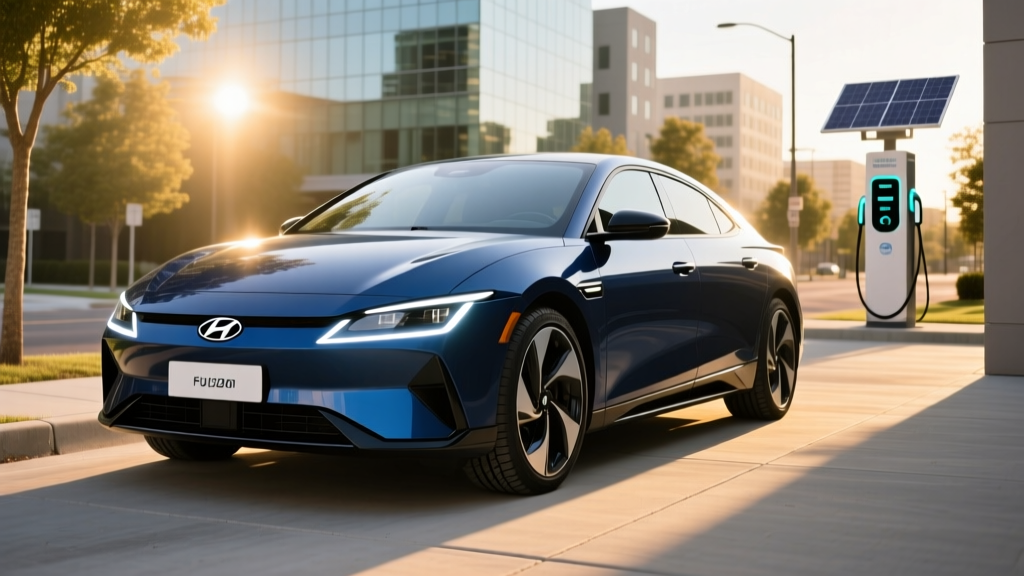
The Hyundai Ioniq 6 occupies a distinct space in the midsize electric sedan segment. Where competitors chase crossover proportions, Hyundai leaned into aerodynamics with a 0.21 drag coefficient that directly translates to highway efficiency. For 2026, the Ioniq 6 carries forward with the same E-GMP platform that underpins the Ioniq 5, but its sleeker body and longer wheelbase create a fundamentally different driving and ownership experience. This review breaks down the 2026 Hyundai Ioniq 6 horsepower options, real-world range, charging behavior, and whether the federal tax credit applies to your purchase.
Hyundai Ioniq 6 Horsepower and Powertrain Breakdown
The 2026 Ioniq 6 offers two distinct powertrain configurations that serve different priorities. The entry point is a single-motor rear-wheel-drive (RWD) setup producing 168 horsepower and 258 lb-ft of torque. This is the efficiency play — lighter, less complex, and tuned for maximum range. Hyundai estimates 0-60 mph in approximately 7.4 seconds, which is adequate for merging and passing but won't win any stoplight sprints.
The dual-motor all-wheel-drive (AWD) variant is where the Ioniq 6 horsepower figure jumps significantly: 320 horsepower and 446 lb-ft of torque across both axles. This drops the 0-60 mph time to 5.1 seconds — genuinely quick for a family sedan and competitive with the Tesla Model 3 Long Range AWD. The AWD system is a permanent-magnet synchronous motor on the rear axle paired with an induction motor up front, allowing the front motor to disconnect under light loads to reduce drag.
| Spec | SE/SEL RWD | SEL/Limited AWD |
|---|---|---|
| Horsepower | 168 hp | 320 hp |
| Torque | 258 lb-ft | 446 lb-ft |
| Drivetrain | Rear-Wheel Drive | Dual-Motor AWD |
| 0-60 mph | ~7.4 sec | ~5.1 sec |
| Battery (usable) | 77.4 kWh (NMC) | 77.4 kWh (NMC) |
| EPA Range | 361 miles | 316 miles |
| MPGe (combined) | 140 MPGe | 111 MPGe |
| Efficiency | 24 kWh/100 mi | 30 kWh/100 mi |
Both trims share the same 77.4 kWh usable battery pack (84 kWh gross) using NMC (nickel manganese cobalt) chemistry. Hyundai has not adopted LFP for the Ioniq 6 — the higher energy density of NMC is necessary to hit the 361-mile EPA target in a sedan form factor. The trade-off is that NMC batteries are more sensitive to sustained high-state-of-charge storage, so daily charging to 80% is recommended unless you need the full pack for a road trip.
EPA Range vs. Real-World Expectations
Real-World Highway (70 mph, 75°F): ~290-310 miles (RWD) / ~260-280 miles (AWD)
Cold-Weather Highway (30°F): ~230-260 miles (RWD) / ~210-230 miles (AWD)
The Ioniq 6's 361-mile EPA rating for the RWD Long Range is among the highest of any non-Tesla sedan, and the car's aerodynamic efficiency is the primary reason. On the highway at 70 mph in moderate temperatures, expect to see approximately 290-310 miles of real-world range in the RWD model. The AWD version, carrying more weight and driving both axles, typically delivers 260-280 miles under the same conditions.
Cold weather is the great equalizer for all EVs. The Ioniq 6 includes a battery heat pump (standard on all trims for 2026), which mitigates some of the range loss by scavenging waste heat from the motors and electronics. Even so, plan for a 25-35% reduction in range during sustained sub-freezing driving. On a 30°F highway run, the RWD Ioniq 6 will realistically cover 230-260 miles before needing a charge. Preconditioning the battery while plugged in — using the Hyundai Bluelink app to warm the cabin and battery before departure — recovers a meaningful portion of that loss.
One ownership nuance worth noting: the Ioniq 6's efficiency shines brightest at moderate speeds. Around town at 35-45 mph, you'll easily exceed the EPA rating thanks to regenerative braking. It's sustained 80+ mph highway driving where the 0.21 Cd aero advantage diminishes and consumption climbs sharply. According to fueleconomy.gov, the RWD model achieves 140 MPGe combined, translating to just 24 kWh per 100 miles — exceptional for a car of this size.
Charging Speed: DC Fast Charge and Home Level 2
Charging performance is where the E-GMP platform's 800-volt architecture pays dividends. Most mainstream EVs use 400-volt systems that limit peak DC fast-charging rates. The Ioniq 6's 800V system allows it to accept up to 240 kW peak at a compatible DC fast charger, translating to a 10-80% charge in approximately 18 minutes under ideal conditions.
"Ideal conditions" requires context. The 240 kW peak is not sustained across the entire charging session. The charge curve is aggressive between 10-55% SoC, then tapers progressively. Expect to see 200+ kW in the early phase, dropping to ~150 kW by 65%, and falling below 80 kW past 80%. This is why the 10-80% metric matters — charging beyond 80% is painfully slow on any EV and should be reserved for overnight Level 2 sessions or when you genuinely need the last 20% for a long leg.
| Charging Level | Power | Time / Rate | Notes |
|---|---|---|---|
| Level 1 (120V) | ~1.4 kW | ~3-4 miles/hour | Emergency/trickle only; 77 kWh pack takes 55+ hours |
| Level 2 (240V, 48A) | 10.9 kW | ~33 miles/hour; full charge ~8 hrs | Recommended home setup; requires 60A circuit |
| Level 2 (240V, 32A) | 7.7 kW | ~23 miles/hour; full charge ~11 hrs | Common portable/L2 charger; adequate overnight |
| DC Fast (350 kW station) | 240 kW peak | 10-80% in ~18 min | Requires 800V-capable station (Electrify America, etc.) |
| DC Fast (150 kW station) | ~130 kW avg | 10-80% in ~30 min | Common CCS station speed; still practical |
For home charging, the Ioniq 6's onboard charger accepts up to 10.9 kW on a 240V Level 2 circuit (48 amps). This adds roughly 33 miles of range per hour, meaning a depleted 77.4 kWh pack reaches full in about 8 hours — ideal for overnight charging. A 32-amp Level 2 unit (7.7 kW) is more common and still sufficient, adding ~23 miles per hour and completing a full charge in roughly 11 hours.
Connector note: For 2026, the Ioniq 6 ships with the CCS1 connector in the US market. Hyundai has begun transitioning to NACS on newer models, and a NACS port is expected for the 2027 model year. Current Ioniq 6 owners can access Tesla Superchargers using Hyundai's provided CCS-to-NACS adapter, though charging speeds on Superchargers are typically limited to 150 kW due to adapter protocol constraints.
Interior Space, Cargo, and Technology
The Ioniq 6's swooping roofline creates an interior that feels more intimate than a crossover, which is the trade-off for its aerodynamic efficiency. Front headroom measures 39.4 inches and rear headroom 37.1 inches — adequate for most adults but noticeably tighter than the Ioniq 5's boxier greenhouse. Rear legroom is a generous 38.2 inches, thanks to the E-GMP platform's flat floor and long 116.1-inch wheelbase.
Cargo space is the Ioniq 6's most debated spec. The trunk offers 12.3 cubic feet — respectable for a sedan but significantly less than the Ioniq 5's 27.2 cu ft hatch. The rear seats fold 60/40 to expand utility, and there is a small front trunk (frunk) providing an additional 1.6 cubic feet on AWD models (2.0 cu ft on RWD). For road trips with two people, it's sufficient. For families hauling strollers and gear, the Ioniq 5 or a midsize SUV is the more practical call.
The technology suite is comprehensive. A dual 12.3-inch display setup handles infotainment and instrument cluster duties, running Hyundai's latest connected-car OS with over-the-air update capability. Wireless Apple CarPlay and Android Auto are standard. The Ioniq 6 also includes vehicle-to-load (V2L) capability through both an interior outlet and an exterior adapter, allowing you to power devices up to 3.6 kW — useful for camping, tailgating, or emergency backup power.
On the driver-assistance front, Hyundai SmartSense is standard across all trims, bundling adaptive cruise control with stop-and-go, lane-keeping assist, blind-spot monitoring, and forward collision avoidance. The available Highway Driving Assist 2 (HDA2) adds lane-centering and automatic lane-change assist on divided highways. This is an SAE Level 2 system — it requires continuous driver supervision and is not autonomous. It performs competently on interstate drives but doesn't match the hands-free capability of GM's Super Cruise or Ford's BlueCruise on mapped highways.
2026 Pricing, Trim Levels, and Federal Tax Credit
| Trim | Drivetrain | MSRP | Est. After §30D Credit* |
|---|---|---|---|
| SE Standard Range | RWD (58 kWh) | $38,650 | Varies — see eligibility below |
| SE | RWD (77.4 kWh) | $43,600 | Varies — see eligibility below |
| SEL | RWD (77.4 kWh) | $46,100 | Varies — see eligibility below |
| SEL | AWD (77.4 kWh) | $49,600 | Varies — see eligibility below |
| Limited | AWD (77.4 kWh) | $54,250 | Varies — see eligibility below |
*Destination charge (~$1,195) not included. Prices reflect 2026 MSRP as published by Hyundai.
The federal EV tax credit under IRS §30D can reduce the effective purchase price by up to $7,500, but eligibility is not automatic. For 2026, the following rules apply:
- MSRP cap: Sedans must be priced at or below $55,000. The Ioniq 6 Limited AWD at $54,250 clears this threshold, but options and dealer markups could push the final transaction price above the cap — verify the MSRP on the window sticker, not the negotiated price.
- Income cap: Modified adjusted gross income must not exceed $150,000 (single), $225,000 (head of household), or $300,000 (married filing jointly).
- Battery sourcing: The $7,500 credit is split into two $3,750 halves — one tied to critical-mineral sourcing and one to battery-component manufacturing. Hyundai's supply chain has evolved significantly since 2023, and the Ioniq 6 built at the Metaplant in Georgia with US-sourced battery cells from the SK On/LG joint venture qualifies for at least a partial credit. The exact amount varies by production batch — confirm with your dealer and cross-reference the DOE fueleconomy.gov credit list for the specific VIN.
- Point-of-sale transfer: Since 2024, eligible buyers can transfer the credit to the dealer at purchase, applying it as an immediate price reduction rather than waiting for a tax refund. This is the recommended path if you qualify.
State and local incentives vary widely. California's CVRP, Colorado's state credit, and various utility rebates can stack on top of the federal credit. Check your state energy office and local utility for current programs.
Warranty and Long-Term Battery Outlook
Hyundai backs the Ioniq 6 with one of the strongest warranty packages in the segment:
- Battery & powertrain: 10 years / 100,000 miles (whichever comes first)
- New vehicle limited: 5 years / 60,000 miles
- Corrosion perforation: 7 years / unlimited miles
- Roadside assistance: 5 years / unlimited miles
The battery warranty guarantees the pack will retain at least 70% of its original capacity over the 10-year/100,000-mile term. In practice, NMC batteries in the E-GMP platform with active thermal management have shown degradation curves that plateau around 90-93% capacity after 2-3 years, then degrade very slowly. Real-world data from early Ioniq 5 owners (same platform, same chemistry) suggests 8-12% total degradation over 100,000 miles is typical — well within the warranty threshold.
If a replacement is needed out of warranty, expect a cost in the $12,000-$18,000 range for the 77.4 kWh pack, based on current Hyundai parts pricing and labor. This is a worst-case scenario that few owners will face, but it's a number worth budgeting awareness of when evaluating long-term ownership costs.
Pros, Cons, and Who Should Buy the Ioniq 6
Pros
- 361-mile EPA range (RWD) is top-tier for the segment
- 240 kW peak DC charging with 10-80% in ~18 min
- 10-yr/100,000-mi battery warranty — best in class
- Exceptional aerodynamic efficiency (140 MPGe combined)
- V2L capability for off-grid and emergency power
- Refined ride quality and low cabin noise
- Standard heat pump for cold-weather efficiency
Cons
- 12.3 cu ft trunk is tight vs. hatchback competitors
- Rear headroom compromised by sloping roofline
- RWD base model's 168 hp feels leisurely for the price
- CCS1 port in 2026 requires adapter for Superchargers
- HDA2 lane-centering is competent but not class-leading
- No hands-free driving feature comparable to Super Cruise
- Rear visibility limited by thick C-pillars and small rear window
The Ioniq 6 is the right choice if you're a commuter or frequent road-tripper who values maximum range and charging speed over cargo volume. The RWD Long Range model delivers the best efficiency-per-dollar in the segment, and the 800V charging architecture makes DC fast-charging stops genuinely brief. It's ideal for two-adult households without large cargo needs.
Look elsewhere if you need family-friendly cargo space (consider the Ioniq 5 or Kia EV6), want the most powerful base model (the Tesla Model 3 RWD makes 271 hp to the Ioniq 6's 168 hp), or require hands-free highway driving (GM's Super Cruise on the Cadillac Lyriq or Chevrolet Blazer EV is superior for that use case).
Frequently Asked Questions
What is the real-world range of the Hyundai Ioniq 6?
The EPA rates the RWD Long Range at 361 miles and the AWD at 316 miles. In real-world highway driving at 70 mph in moderate temperatures, expect 290-310 miles (RWD) and 260-280 miles (AWD). Cold weather at 30°F reduces these figures by 25-35%, bringing realistic winter highway range to roughly 230-260 miles for the RWD model.
How fast does the Ioniq 6 charge at home and on the road?
On a 48-amp Level 2 home charger (10.9 kW), the Ioniq 6 adds about 33 miles of range per hour and charges from empty to full in approximately 8 hours. On a 350 kW-capable DC fast charger, it peaks at 240 kW and charges from 10-80% in roughly 18 minutes, though sustained rates taper significantly above 65% state of charge.
Does the 2026 Ioniq 6 qualify for the $7,500 federal tax credit?
Eligibility depends on your income, the specific vehicle's battery sourcing, and MSRP. All Ioniq 6 trims fall under the $55,000 sedan MSRP cap. Income must not exceed $150K single / $300K joint. Battery-component and critical-mineral sourcing rules determine whether you receive the full $7,500, a partial $3,750, or no credit. Verify your specific VIN on fueleconomy.gov and consult a tax professional for your situation.
Is the Ioniq 6 worth buying over the Tesla Model 3?
It depends on your priorities. The Ioniq 6 RWD offers more EPA range (361 vs. 341 miles for the Model 3 Long Range RWD), a longer battery warranty (10yr/100K vs. 8yr/120K), and a more traditional ownership experience with dealer service. The Model 3 counters with a more mature Supercharger network (no adapter needed), more horsepower in the base model, and more advanced driver-assist software (FSD Supervised, still Level 2). If charging speed and warranty matter most, the Ioniq 6 wins. If charging network convenience and performance-per-dollar are priorities, the Model 3 remains compelling.
How much horsepower does the Ioniq 6 AWD have?
The dual-motor AWD Ioniq 6 produces 320 horsepower and 446 lb-ft of combined torque, achieving a 0-60 mph time of approximately 5.1 seconds. The single-motor RWD version produces 168 horsepower and 258 lb-ft.
What is the battery chemistry and will it last?
The Ioniq 6 uses NMC (nickel manganese cobalt) lithium-ion cells with a 77.4 kWh usable capacity. NMC offers higher energy density than LFP, which is necessary for the 361-mile range target. With the E-GMP platform's active liquid thermal management, real-world degradation data from the same platform suggests 8-12% capacity loss over 100,000 miles. Hyundai's 10-year/100,000-mile battery warranty covers capacity retention above 70%.