Why the Hyundai Ioniq 6 Efficiency Story Matters in 2026
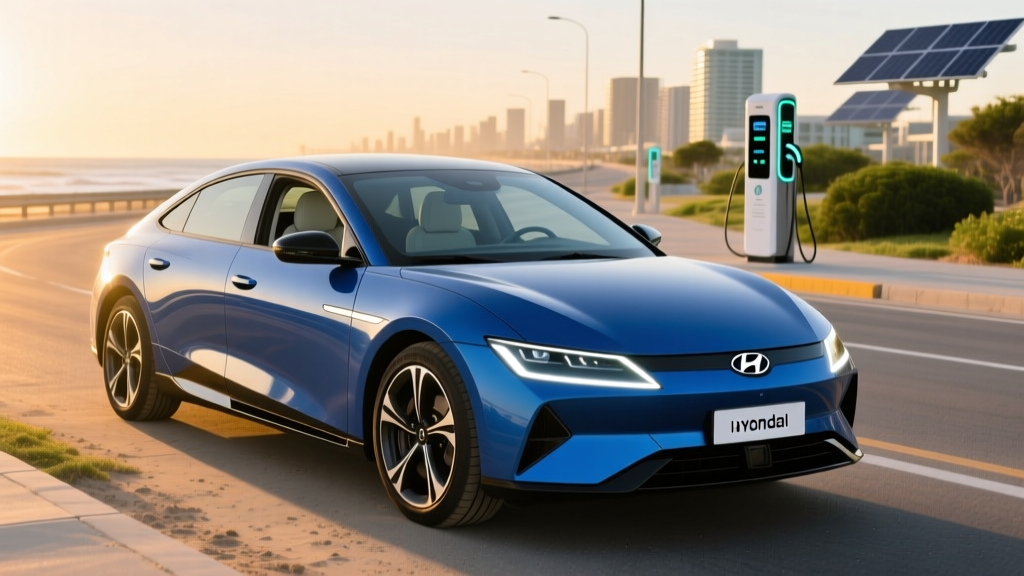
If you've been tracking the EV market, you already know the Hyundai Ioniq 6 is one of the most aerodynamic production cars ever sold — its 0.21 drag coefficient rivals purpose-built efficiency concepts. But for buyers in 2026, the question isn't just about wind-tunnel bragging rights. It's about what Hyundai Ioniq 6 efficiency and MPGe figures actually translate to on your daily commute and your monthly electricity bill.
The Ioniq 6 continues into the 2026 model year with the same E-GMP (Electric Global Modular Platform) architecture that debuted for 2023, featuring an 800V electrical system capable of ultra-fast DC charging, a sleek fastback silhouette, and a lineup spanning efficient single-motor RWD to a punchy dual-motor AWD variant. With the EV market now crowded with rivals like the Tesla Model 3, BMW i4, and Polestar 2, the Ioniq 6's efficiency advantage remains its sharpest competitive edge.
This review covers the full ownership picture: EPA range versus what you'll actually see, charging speeds across all three levels, federal tax credit eligibility under current IRS §30D rules, and whether the Ioniq 6's real-world efficiency justifies its price tag.
2026 Hyundai Ioniq 6: Core Specifications at a Glance
Before we get into the weeds on efficiency, here's the spec snapshot buyers need. All figures reflect the 2026 model year with the Long Range battery pack.
| Specification | SE/SEL RWD (Long Range) | SEL/Limited AWD (Long Range) | SE Standard Range RWD |
|---|---|---|---|
| EPA Range | 361 miles | 316 miles | 240 miles |
| Battery (Usable) | 77.4 kWh (NMC) | 77.4 kWh (NMC) | 53.0 kWh (LFP) |
| MPGe (City / Hwy / Combined) | 140 / 121 / 132 | 111 / 94 / 103 | 134 / 112 / 124 |
| kWh per 100 Miles | 25 | 32 | 27 |
| Horsepower | 225 hp | 320 hp | 149 hp |
| 0–60 mph | ~7.0 sec | ~5.1 sec | ~8.8 sec |
| Drivetrain | RWD (single motor) | AWD (dual motor) | RWD (single motor) |
| Max DC Fast Charge | ~240 kW (800V) | ~240 kW (800V) | ~150 kW (400V) |
| 10–80% DCFC Time | ~18 min | ~18 min | ~25 min |
| Level 2 Home Charging | 10.9 kW (~36 mi/hr) | 10.9 kW (~36 mi/hr) | 7.2 kW (~24 mi/hr) |
| Base MSRP (2026) | $42,750 | $47,250 | $38,250 |
| Battery/Powertrain Warranty | 10 years / 100,000 miles | ||
Source: fueleconomy.gov and Hyundai USA.
Hyundai Ioniq 6 Efficiency and MPGe: The Numbers Explained
The headline figure is the Long Range RWD's 132 MPGe combined, which places the Ioniq 6 among the most efficient EVs on the road — trailing only the Lucid Air Pure in the premium sedan segment and edging out the Tesla Model 3 Long Range RWD (132 MPGe combined, though with a slightly different test-cycle breakdown). To understand what this means for your wallet, let's break down the two ways EV efficiency is measured.
MPGe vs. kWh/100 Miles: Which Metric Matters More?
MPGe (miles per gallon equivalent) converts electricity consumption into a gasoline-equivalent figure using the ratio 33.7 kWh = 1 gallon of gasoline. It's useful for cross-shopping against gas cars, but it can obscure the actual energy you're paying for. kWh per 100 miles is the more practical metric for EV owners — it tells you exactly how much electricity the car uses over a set distance, which you can multiply by your local utility rate.
The Ioniq 6 Long Range RWD consumes 25 kWh per 100 miles combined. At the US average residential electricity rate of roughly $0.17/kWh (EIA, early 2026), that's about $4.25 per 100 miles, or roughly $0.043 per mile. Compare that to a 30 MPG gas car at $3.30/gallon — that's $11.00 per 100 miles, or $0.11 per mile. The Ioniq 6 RWD costs about 60% less to "fuel" per mile than an efficient gas sedan at national averages.
Why the Ioniq 6 Is So Efficient
Three engineering decisions drive these class-leading numbers:
- Aerodynamics: The 0.21 Cd is among the lowest of any production vehicle. At highway speeds, aero drag dominates energy consumption, and the Ioniq 6's teardrop fastback shape, active air flaps, and smooth underbody pay direct dividends.
- 800V Architecture: Higher voltage means lower current for the same power, reducing resistive losses in the motor controller and wiring. The E-GMP platform also uses a highly efficient silicon carbide (SiC) inverter on the rear motor.
- Heat Pump Standard: All Ioniq 6 trims include a heat pump for cabin heating, which is dramatically more efficient than resistive (PTC) heating in cold weather. This matters for real-world winter range.
Real-World Range: What You'll Actually See
EPA Range vs. Real-World Expectations
EPA Sticker: 361 miles (Long Range RWD)
Real-World Highway (70–80 mph, 75°F): Expect ~290–315 miles. The Ioniq 6's aero advantage partially offsets high-speed energy penalties, but sustained 80 mph driving still cuts range by roughly 12–20% versus the EPA combined figure.
Real-World City/Mixed: ~330–350 miles. Regenerative braking in stop-and-go traffic recovers meaningful energy, and the Ioniq 6's low rolling-resistance tires shine at lower speeds.
Cold Weather (20–35°F, highway): Expect ~230–270 miles. Even with the standard heat pump, cold temperatures reduce battery chemical efficiency and increase cabin heating load. Preconditioning while plugged in mitigates some of this loss.
In independent testing by outlets like Edmunds and Car and Driver, the Ioniq 6 Long Range RWD has consistently delivered within 5–8% of its EPA estimate in mixed driving at moderate temperatures — a strong showing. The AWD variant, with its higher weight and dual-motor losses, typically sees a wider gap between EPA and real-world results, especially on highway-heavy routes.
One underappreciated factor: the Ioniq 6's regenerative braking system offers four levels (including i-PEDAL one-pedal mode) adjustable via steering-wheel paddles. Drivers who learn to modulate regen effectively can squeeze an extra 5–10% range in city driving versus coasting in the lowest regen setting.
Charging Speed: 800V Architecture in Practice
The Ioniq 6's 800V electrical architecture is one of its most compelling features — shared with the Kia EV6, Genesis Electrified G80, and Porsche Taycan. Here's what it means at the charger:
DC Fast Charging
The Long Range models peak at approximately 240 kW at a compatible 350 kW DC fast charger. Hyundai's published 10–80% time is 18 minutes. However, real-world charging curves tell a more nuanced story:
- 10–50% SoC: Sustained ~220–240 kW — this is where the 800V system shines.
- 50–70% SoC: Tapers to ~150–180 kW as the battery management system protects cell health.
- 70–80% SoC: Drops to ~80–100 kW.
- Above 80% SoC: Sharp taper to ~30–50 kW. Charging above 80% on DCFC is slow and generally not worth the time unless you need the extra miles to reach your destination.
The Standard Range model, using a 400V architecture and LFP battery, peaks at around 150 kW and takes roughly 25 minutes for a 10–80% charge. LFP chemistry also tolerates regular 100% charging better than NMC, so Standard Range owners can safely charge to full daily without accelerated degradation concerns.
Level 2 Home Charging
On a 240V Level 2 home charger (such as a 48-amp wallbox on a 60-amp circuit), the Long Range Ioniq 6 accepts up to 10.9 kW, adding roughly 36 miles of range per hour. A full 0–100% charge takes about 7.5 hours — easily accomplished overnight. The Standard Range model charges at 7.2 kW (~24 mi/hr), taking about 7.5 hours for its smaller battery.
Home charging cost: At $0.17/kWh national average, a full Long Range charge (77.4 kWh usable) costs roughly $13.16 for 361 miles of range — about 3.6 cents per mile. Install a smart charger with scheduled charging to take advantage of off-peak utility rates, which can drop this to 2 cents per mile or less in many regions.
Level 1 Emergency Charging
On a standard 120V outlet (Level 1), the Ioniq 6 adds approximately 3–4 miles of range per hour. This is suitable only for emergency top-ups or very low-mileage daily routines. For any serious EV ownership, a Level 2 home installation is strongly recommended.
Pricing, Trims, and Federal Tax Credit Eligibility
The 2026 Ioniq 6 lineup starts at $38,250 for the SE Standard Range and climbs to approximately $53,000 for a fully optioned Limited AWD. Here's a trim-level breakdown:
| Trim | Drivetrain | Battery | MSRP (2026) |
|---|---|---|---|
| SE Standard Range | RWD | 53.0 kWh LFP | $38,250 |
| SE | RWD | 77.4 kWh NMC | $42,750 |
| SEL | RWD | 77.4 kWh NMC | $45,250 |
| SEL | AWD | 77.4 kWh NMC | $47,250 |
| Limited | AWD | 77.4 kWh NMC | $52,000 |
Does the Ioniq 6 Qualify for the Federal EV Tax Credit?
Under current IRS §30D rules, the Hyundai Ioniq 6's eligibility for the $7,500 federal clean vehicle credit depends on several factors that buyers must verify before purchase:
- Final Assembly: The vehicle must undergo final assembly in North America. As of 2026, Hyundai assembles the Ioniq 6 at its Metaplant America facility in Ellabell, Georgia, satisfying this requirement.
- MSRP Cap: Sedans must have an MSRP at or below $55,000. All Ioniq 6 trims fall within this cap.
- Buyer Income Limits: Adjusted gross income must not exceed $150,000 (single), $225,000 (head of household), or $300,000 (joint filers).
- Battery Sourcing: The full $7,500 requires meeting both critical minerals ($3,750) and battery component ($3,750) sourcing thresholds. Hyundai has been actively reshoring battery supply chains with SK On and LG Energy Solution, but exact credit amounts vary by model year and production batch. Some vehicles may qualify for only $3,750 or none at all depending on the specific VIN's battery provenance.
- Point-of-Sale Transfer: Eligible buyers can transfer the credit to the dealer at purchase, reducing the sale price directly rather than waiting to claim it on their tax return.
Bottom line: Always check the specific VIN on fueleconomy.gov or ask the dealer for the manufacturer's §30D certification letter before assuming the full $7,500. With the credit, an SE Long Range RWD could effectively cost as little as $35,250 — exceptional value for a 361-mile EV.
Interior, Cargo, and Daily Livability
The Ioniq 6's fastback design creates a cabin that feels spacious up front but imposes compromises in the rear and cargo area compared to crossover-shaped competitors.
- Front headroom: 40.2 inches — generous even for tall drivers.
- Front legroom: 42.3 inches — excellent.
- Rear headroom: 37.1 inches — adequate but tight for passengers over 6'2" due to the sloping roofline.
- Rear legroom: 35.5 inches — acceptable but less than the Ioniq 5's 39.4 inches.
- Cargo volume (rear seats up): 11.3 cubic feet — modest, roughly comparable to a traditional sedan trunk. The trunk opening is narrower than a hatchback, limiting bulky-item loading.
- Cargo volume (rear seats folded): ~40 cubic feet — usable for longer items but still less than the Ioniq 5 or Model Y.
- Frunk (front trunk): 0.5 cubic feet — essentially a small cubby for charging cables, not meaningful storage.
The cabin materials are a step up from the Ioniq 5, with soft-touch surfaces on the dashboard and door panels, recycled fabric on the seats (Limited trim gets eco-processed leather), and dual 12-inch displays for the instrument cluster and infotainment. The center console features physical climate control buttons — a welcome usability choice versus touchscreen-only HVAC.
Standout Tech and Driver Assistance
- Hyundai SmartSense (standard): Forward collision-avoidance assist with pedestrian/cyclist detection, blind-spot collision-avoidance, rear cross-traffic avoidance, lane-keeping assist, highway driving assist (HDA) with stop-and-go adaptive cruise, and rear occupant alert.
- Highway Driving Assist 2 (HDA2, SEL and above): Adds lane-change assist and curve speed reduction. This is a solid SAE Level 2 driver-assist system — it requires continuous driver attention and hands on the wheel. It is not autonomous driving.
- Digital Key 2: Use your smartphone (NFC/UWB) as a key fob. Share digital keys with family members.
- V2L (Vehicle-to-Load): The Ioniq 6 can output up to 3.6 kW of 120V AC power via an interior outlet (Limited) or an exterior adapter — enough to run a laptop, small appliance, or campsite lighting.
- Over-the-Air Updates: The Ioniq 6 supports OTA updates for infotainment, navigation, and certain vehicle control modules.
Pros and Cons: The Honest Assessment
Pros
- Class-leading efficiency (132 MPGe combined, 25 kWh/100mi)
- Ultra-fast 800V DC charging — 10–80% in ~18 minutes
- 361 miles EPA range (Long Range RWD) is top-tier for the segment
- Heat pump standard on all trims — better cold-weather range
- 10-year/100,000-mile battery and powertrain warranty
- Comprehensive standard ADAS suite
- V2L capability for camping and emergency power
- Qualifies for §30D credit (verify VIN-specific eligibility)
Cons
- Small trunk (11.3 cu ft) and narrow opening limit cargo utility
- Rear headroom compromised by fastback roofline
- AWD models see a significant efficiency drop (103 MPGe vs 132)
- Tiny frunk (0.5 cu ft) — essentially useless for real storage
- Infotainment can be slow to respond compared to Tesla's system
- No rear wiper — visibility in rain is a known complaint
- Standard Range model uses 400V architecture with slower charging
- Insurance premiums tend to run 15–25% higher than equivalent gas sedans
Who Should Buy the Hyundai Ioniq 6?
Choose the Ioniq 6 if:
- You commute 30–80 miles daily and want to minimize charging frequency and cost — the RWD Long Range's 361-mile range means charging 2–3 times per week at most, even without home charging.
- Road trips are part of your routine — the 18-minute 10–80% DCFC time keeps rest stops short, and the Ioniq 6 is compatible with the growing Tesla Supercharger network (via NACS adapter, standard on 2025+ models).
- You prioritize efficiency and low running costs over cargo space and ride height.
- You want a long factory warranty — Hyundai's 10-year/100,000-mile powertrain coverage is among the best in the industry.
Look elsewhere if:
- You regularly carry four adults or need substantial cargo space — the Ioniq 5, Tesla Model Y, or Kia EV6 offer more practical interiors.
- You tow — the Ioniq 6 is not rated for towing. Consider the Ford F-150 Lightning or Rivian R1S for towing needs.
- You want the fastest possible acceleration — the AWD model's 5.1-second 0–60 is quick but trails the Tesla Model 3 Performance (3.1 seconds) in this price range.
Frequently Asked Questions
What is the real-world range of the Hyundai Ioniq 6?
The Long Range RWD's EPA rating is 361 miles. In real-world mixed driving at moderate temperatures, expect 320–340 miles. Highway-only driving at 75–80 mph drops this to roughly 290–315 miles. In cold weather (below 35°F), plan for 230–270 miles on the highway. The AWD model's 316-mile EPA rating translates to approximately 260–290 miles in real-world mixed driving.
How fast does the Ioniq 6 charge at home and on the road?
At home on a Level 2 charger (240V, 48A), the Long Range model charges at 10.9 kW, adding about 36 miles of range per hour — a full charge in roughly 7.5 hours. On a 350 kW DC fast charger, it peaks at ~240 kW and charges from 10–80% in about 18 minutes. The Standard Range model charges slower at 7.2 kW on Level 2 and peaks at ~150 kW on DCFC.
Does the Hyundai Ioniq 6 qualify for the $7,500 federal EV tax credit?
It can, but eligibility depends on your income, the vehicle's VIN-specific battery sourcing, and the MSRP cap (all trims qualify on MSRP). The Ioniq 6 is assembled in Georgia, meeting the North American final assembly requirement. Verify your specific vehicle on fueleconomy.gov and consult a tax professional. The credit can be transferred to the dealer at point of sale to reduce your purchase price directly.
Is the Ioniq 6 worth buying versus the Tesla Model 3 or Hyundai Ioniq 5?
It depends on your priorities. The Ioniq 6 beats the Model 3 Long Range RWD on EPA range (361 vs 341 miles) and matches its efficiency, while offering a longer warranty (10yr/100k vs 8yr/120k battery). However, the Model 3 has a more responsive infotainment system, a more usable hatchback cargo area, and access to the native Supercharger network (though Ioniq 6 now has NACS adapter compatibility). The Ioniq 5 offers far more cargo and passenger space but sacrifices about 60 miles of range compared to the Ioniq 6 Long Range RWD. If efficiency and range are your top priorities, the Ioniq 6 RWD is the strongest pick in this segment.
What battery chemistry does the Ioniq 6 use?
The Long Range models use NMC (nickel manganese cobalt) cells supplied by SK On, offering high energy density for maximum range. The Standard Range model uses LFP (lithium iron phosphate) chemistry, which is slightly less energy-dense but offers longer cycle life, better thermal stability, and the ability to charge to 100% regularly without accelerated degradation.
Does the Ioniq 6 have self-driving capability?
No. The Ioniq 6's Highway Driving Assist 2 (HDA2) is an SAE Level 2 driver-assistance system. It can manage steering, acceleration, and braking on divided highways, but the driver must remain attentive, keep hands on the wheel, and be prepared to take over at any moment. It is not autonomous or self-driving.