Quick Verdict: The Sedan That Makes Tesla Sweat
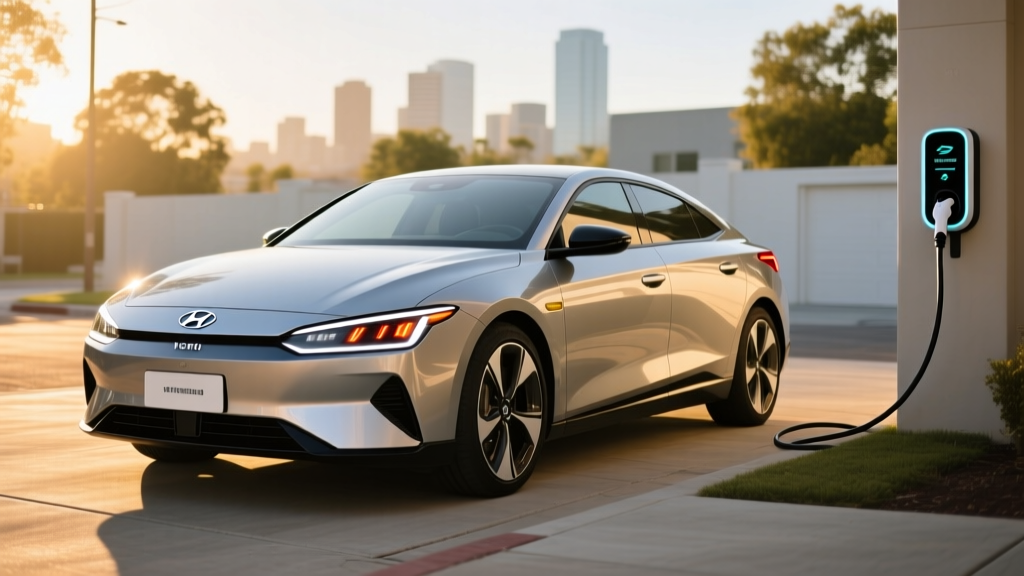
When buyers search for an EV that can echo Tesla levels of efficiency, range, and charging speed, one sedan consistently surfaces: the Hyundai Ioniq 6. Now in its 2026 model year with minor pricing adjustments and continued NACS adapter support, the Ioniq 6 remains the closest any mainstream automaker has come to matching the Tesla Model 3's combination of aerodynamic efficiency, rapid DC charging, and long-range capability — while undercutting it on price by thousands.
This is not a Tesla clone. It's a legitimate alternative that trades Tesla's minimalist interior and Supercharger network exclusivity for a more traditional cabin, Hyundai's generous warranty, and access to virtually every major charging network via the NACS adapter included since the 2025 model year.
Range, Efficiency, and the Real-World Reality Check
- EPA Estimated: 361 miles
- Real-World Highway (70-75 mph, mild weather): ~295–315 miles
- Real-World Highway (30°F, heater on): ~245–270 miles
- City / Mixed Commuting: ~330–350 miles
The Ioniq 6's drag coefficient of 0.21 Cd is among the lowest of any production car, which is why highway efficiency is exceptional — but physics still dictates ~15-25% range loss at sustained 75+ mph speeds, and cold weather compounds this with battery resistance and cabin heating demands.
The 2026 Ioniq 6 is available with two battery configurations. The Standard Range model uses a 54.0 kWh usable battery (LFP chemistry) with an EPA rating of 240 miles. The Long Range variant — the one most buyers want — packs a 77.4 kWh usable NMC (nickel manganese cobalt) battery, delivering the headline 361-mile EPA figure in RWD form.
Efficiency is where this car truly echoes Tesla territory. The Long Range RWD achieves an EPA-rated 140 MPGe combined, translating to roughly 24 kWh per 100 miles. That's nearly identical to the Tesla Model 3 Long Range RWD and meaningfully better than competitors like the BMW i4 eDrive40 (which rates around 120 MPGe combined). The Ioniq 6's slippery aero profile is the primary reason — Hyundai sacrificed rear headroom and a traditional trunk shape to achieve that 0.21 Cd figure, and the efficiency payoff is undeniable.
| Spec | SE/SEL Standard Range | SE/SEL Long Range (RWD) | SEL/Limited Long Range (AWD) |
|---|---|---|---|
| EPA Range | 240 mi | 361 mi | 316 mi |
| Battery (usable) | 54.0 kWh (LFP) | 77.4 kWh (NMC) | 77.4 kWh (NMC) |
| Powertrain | RWD, 168 hp | RWD, 225 hp | AWD dual-motor, 320 hp |
| 0-60 mph | ~7.5 sec | ~6.5 sec | ~4.5 sec |
| MPGe (combined) | 129 MPGe | 140 MPGe | 120 MPGe |
| Max DC Charge Rate | ~150 kW | ~239 kW (peak) | ~239 kW (peak) |
| 10-80% DC Fast Charge | ~22 min | ~18 min | ~18 min |
| Base MSRP | $38,650 | $43,150 | $47,150 |
Source: EPA fueleconomy.gov, Hyundai USA. Prices include destination. Specs reflect 2026 model year.
Charging Speed: Where the Ioniq 6 Earns Its Tesla Comparison
The Ioniq 6's 800-volt electrical architecture is the same platform found in the Porsche Taycan and Kia EV6, and it pays dividends at the DC fast charger. On a 350 kW-capable station (such as Electrify America's latest stalls), the Long Range model peaks at approximately 239 kW and sustains above 180 kW through roughly 55% state of charge before tapering. The result: a 10-80% charge in approximately 18 minutes under ideal conditions with a preconditioned battery.
Here's what the charging curve actually looks like in practice — because peak kW numbers alone are misleading:
| Charging Method | Power / Rate | Time / Miles Added |
|---|---|---|
| Level 1 (120V household) | ~1.4 kW | ~4 mi/hr of charging |
| Level 2 (240V home, 48A) | 10.9 kW | ~33 mi/hr; 0-100% in ~8.5 hrs |
| DC Fast (50 kW station) | 50 kW | 10-80% in ~65 min |
| DC Fast (150 kW station) | ~150 kW sustained | 10-80% in ~28 min |
| DC Fast (350 kW station) | Peak 239 kW | 10-80% in ~18 min |
Critical preconditioning note: The Ioniq 6 does not automatically precondition its battery for DC fast charging when you enter a charger into the navigation. You must manually activate battery preconditioning via the infotainment menu before arriving. Skip this step on a cold day and your 18-minute charge could stretch to 30+ minutes. This is a meaningful usability gap versus Tesla, which handles preconditioning automatically when navigating to a Supercharger.
With the included NACS adapter (standard since the 2025 model year), the Ioniq 6 can access Tesla Supercharger V3 and V4 stalls. On V3 stalls (250 kW max), expect roughly 200-220 kW peak due to adapter overhead — still fast enough for a 10-80% charge in about 20 minutes. Supercharger V4 stalls with CCS-native cabinets deliver comparable speeds without the adapter.
Performance, Ride, and Drivetrain
The Ioniq 6 is positioned as a grand-touring sedan, not a sports sedan. The RWD Long Range model's 225 horsepower and 258 lb-ft of torque deliver a 0-60 mph time of approximately 6.5 seconds — brisk enough for confident highway merging but not the neck-snapping acceleration of a Tesla Model 3 Performance (3.1 seconds). The AWD dual-motor variant bumps output to 320 hp and 446 lb-ft, dropping 0-60 to roughly 4.5 seconds.
Ride quality is where the Ioniq 6 differentiates from the Tesla Model 3's firm, sport-tuned suspension. Hyundai tuned this car for compliance — it absorbs broken pavement and expansion joints with less crash-through than the Model 3, at the cost of some body roll in aggressive cornering. The steering is accurate but numb, a deliberate choice that prioritizes relaxed highway cruising over canyon-carving engagement.
Regenerative braking offers four levels adjustable via steering wheel paddles, including a true one-pedal driving mode (i-Pedal) that brings the car to a complete stop. The transition between regen and friction braking is well-calibrated — no abrupt grabbiness at low speeds, which is a common complaint in competing EVs.
Interior, Cargo, and Daily Livability
The Ioniq 6's interior is a dual-screen affair: a 12.3-inch digital instrument cluster and a 12.3-inch infotainment touchscreen on a single curved panel. Physical buttons remain for climate control and volume — a choice many EV buyers frustrated with touchscreen-only interfaces will appreciate. Wireless Apple CarPlay and Android Auto are standard across all trims.
However, the aerodynamic shape exacts a real cargo penalty:
- Rear trunk cargo: 12.3 cu ft (vs. Model 3's 23 cu ft including rear under-floor)
- Frunk (front trunk):strong> 1.6 cu ft (AWD) / 4.0 cu ft (RWD) — enough for a charging cable bag
- Rear legroom: 39.5 inches (comparable to Model 3's 35.3 inches — Ioniq 6 wins here)
- Rear headroom: 37.3 inches (the sloping roofline cuts into space for passengers over 6 feet)
The trunk opening is narrow due to the sedan's fastback design, and the rear seats do fold 60/40 to extend cargo capacity, but loading bulky items like a large dog crate or full-size luggage set is more awkward than in a hatchback like the Ioniq 5 or Model Y. This is the Ioniq 6's most significant daily-livability trade-off.
Pricing, Trims, and Federal Tax Credit Eligibility
| Trim | MSRP (incl. destination) | Est. After §30D Credit* | MSRP Cap Status |
|---|---|---|---|
| SE Standard Range | $38,650 | ~$31,150 | ✅ Under $55K cap |
| SE Long Range | $43,150 | ~$35,650 | ✅ Under $55K cap |
| SEL Long Range AWD | $47,150 | ~$39,650 | ✅ Under $55K cap |
| Limited Long Range AWD | $52,600 | ~$45,100 | ✅ Under $55K cap |
*Estimated effective price assumes full $7,500 federal tax credit under IRS §30D. Eligibility depends on buyer income, battery component sourcing, and critical mineral requirements. Verify at IRS.gov and confirm point-of-sale transfer availability with your dealer.
The Ioniq 6 benefits from a key advantage over many competitors: all trims fall well under the §30D MSRP cap of $55,000 for sedans. Combined with the point-of-sale transfer option (allowing the $7,500 credit to be applied as a down-payment reduction at purchase rather than a tax-year refund), the effective price becomes compelling.
However, tax credit eligibility is not guaranteed for every buyer. Current §30D requirements include:
- Buyer income caps: Modified AGI ≤ $150,000 (single), ≤ $300,000 (joint filing)
- Battery sourcing requirements: Percentage thresholds for critical minerals and battery components from qualifying sources (these thresholds increase annually)
- MSRP cap: Sedan ≤ $55,000 (all Ioniq 6 trims qualify)
- Final assembly: Must be assembled in North America — the Ioniq 6 is built in South Korea, which disqualifies it from the full new-vehicle credit under current rules. However, it may qualify for up to $3,750 if it meets the critical minerals requirement alone.
This is a critical ownership detail: Because the Ioniq 6 is manufactured in Ulsan, South Korea (not North America), it does not qualify for the full $7,500 §30D credit. Buyers should verify current partial-credit eligibility on the IRS clean vehicle credit page and consult a tax professional. The lease loophole — where the lessor claims the commercial clean vehicle credit and passes savings to the lessee — has historically been available on the Ioniq 6 through Hyundai's financing arm, often providing $7,500 in lease cash. Confirm current lease incentive availability with your local dealer.
Warranty, Safety, and Long-Term Ownership
Hyundai's warranty coverage remains one of the strongest in the EV segment:
- Battery warranty: 10 years / 100,000 miles (capacity retention threshold: 70%)
- Powertrain warranty: 10 years / 100,000 miles
- Bumper-to-bumper: 5 years / 60,000 miles
- Roadside assistance: 5 years / unlimited miles
Compare this to Tesla's battery warranty of 8 years / 120,000 miles (Long Range) or 8 years / 100,000 miles (RWD), and Hyundai's coverage edges ahead on duration while trailing slightly on mileage. The 70% capacity retention threshold is standard for the industry — meaning Hyundai will replace or repair the battery if it degrades below 70% of original capacity within the warranty period.
The Ioniq 6 earned the IIHS Top Safety Pick+ designation with Good ratings across all crashworthiness tests. NHTSA awarded it a 5-star overall safety rating. Hyundai's SmartSense suite includes forward collision-avoidance assist, lane keeping assist, blind spot monitoring, and rear cross-traffic collision-avoidance as standard equipment across all trims.
Standout Tech and Notable Drawbacks
✅ Pros
- Class-leading efficiency (140 MPGe combined, 24 kWh/100mi)
- Ultra-fast 800V DC charging — 10-80% in ~18 min on 350 kW stations
- 361-mile EPA range (Long Range RWD) rivals Tesla Model 3
- Generous 10-year/100,000-mile battery warranty
- Physical buttons for climate and volume
- Spacious rear legroom (39.5 inches)
- Quiet cabin at highway speeds
- Standard NACS adapter unlocks Tesla Supercharger network
❌ Cons
- Small trunk (12.3 cu ft) and narrow hatch opening
- South Korea assembly limits §30D tax credit eligibility
- No automatic battery preconditioning for DC charging
- Sloping roofline cuts rear headroom for tall passengers
- RWD Long Range 0-60 (6.5s) trails Model 3 Long Range (5.8s)
- Infotainment learning curve with Hyundai's menu structure
- No rear wiper (sedan design, but visibility suffers in rain)
- Limited AWD range (316 mi) vs. RWD (361 mi)
On the technology front, the Ioniq 6 includes Hyundai's Digital Key 2 (using your smartphone as a key), vehicle-to-load (V2L) capability via an interior outlet and exterior adapter (up to 3.6 kW — enough to power a laptop, TV, or small appliance during an outage), and over-the-air software updates. Highway Driving Assist 2 (HDA2) provides competent Level 2 driver assistance with lane centering and adaptive cruise, though it is not as assertive or confident as Tesla's Autopilot or Ford's BlueCruise on divided highways.
Who Should Buy the Ioniq 6?
Choose the Ioniq 6 if:
- You prioritize efficiency and range over cargo space and acceleration
- You want 800V fast charging without paying Porsche/Lucid prices
- Your daily driving is commuting and highway miles, not hauling cargo
- You value a 10-year warranty and plan to keep the car long-term
- You want Supercharger access via adapter without buying a Tesla
Choose something else if:
- You need cargo versatility → consider the Ioniq 5, Model Y, or EV6
- You want maximum acceleration → Model 3 Performance or BMW i4 M50
- You need the full $7,500 federal tax credit on a purchase → look at US-assembled options like the Tesla Model 3, Chevrolet Equinox EV, or Ford Mustang Mach-E
- You lease and want maximum incentive flexibility → the Ioniq 6's lease cash often makes this a non-issue
Frequently Asked Questions
What is the real-world range of the Hyundai Ioniq 6?
The EPA rates the Long Range RWD at 361 miles, but real-world highway driving at 70-75 mph yields approximately 295-315 miles in mild weather and 245-270 miles in cold conditions (30°F and below). City and mixed commuting can approach 330-350 miles thanks to regenerative braking recapturing energy.
How fast does the Ioniq 6 charge at home and on the road?
At home on a Level 2 charger (240V, 48A), the Ioniq 6 adds roughly 33 miles per hour of charging, fully replenishing the 77.4 kWh battery in about 8.5 hours. On a 350 kW DC fast charger, it peaks at 239 kW and charges from 10-80% in approximately 18 minutes — among the fastest in its class. Remember to manually activate battery preconditioning before arriving at the charger.
Does the Ioniq 6 qualify for the $7,500 federal EV tax credit?
Not fully. Because the Ioniq 6 is assembled in South Korea, it does not meet the North American final assembly requirement for the full $7,500 §30D credit. It may qualify for a partial credit (up to $3,750) based on critical minerals sourcing. However, leasing through Hyundai Motor Finance has historically unlocked $7,500 in lease cash via the commercial vehicle credit loophole. Always verify current eligibility at IRS.gov and with your dealer.
Is the Ioniq 6 worth buying vs. the Tesla Model 3?
It depends on priorities. The Model 3 wins on acceleration, Supercharger seamlessness, cargo space (23 cu ft), and North American assembly (full tax credit eligibility). The Ioniq 6 wins on highway ride comfort, rear legroom, physical buttons, warranty length (10 years vs. 8), and comparable efficiency. If you lease, the Ioniq 6's incentives often close the price gap substantially. For buyers in regions with robust Electrify America or EVgo coverage, the charging network disadvantage is minimal.
What's the biggest drawback of the Ioniq 6?
Cargo space. The 12.3 cu ft trunk with its narrow opening is the smallest in the EV sedan segment, and the sloping roofline also compromises rear headroom for taller passengers. If you regularly carry luggage, a stroller, or a large dog, the Ioniq 5 hatchback or a crossover like the Model Y will serve you better. The lack of automatic battery preconditioning is the second most common owner complaint.
Sources: EPA fueleconomy.gov, Hyundai USA, IRS §30D Clean Vehicle Credit, IIHS. All specifications reflect 2026 model year data available at time of publication. Tax credit rules are subject to change — verify current eligibility before purchasing.