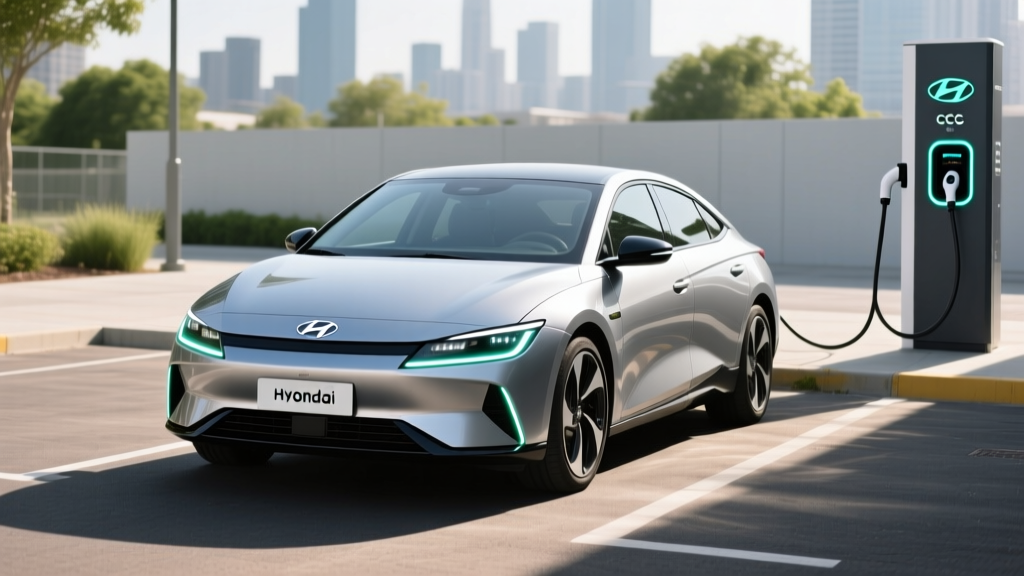
If you've been researching the Hyundai Ioniq 6 and encountered the phrase "Ioniq 6 discontinued," you're not imagining things. Hyundai confirmed that the aerodynamic electric sedan ended production after the 2025 model year, making way for a redesigned successor expected to arrive as a 2027 model. For buyers shopping in 2026, this creates a specific set of questions: Should you hunt for remaining dealer inventory? What does the used market look like? And which current EVs fill the gap the Ioniq 6 leaves behind?
This guide covers everything you need to know about the Ioniq 6's final specifications, its real-world ownership profile, federal tax credit eligibility on remaining new and used units, and the best alternatives available today.
Why Hyundai Discontinued the Ioniq 6
The Ioniq 6 launched in the U.S. for the 2023 model year on Hyundai's E-GMP platform — the same architecture underpinning the Ioniq 5 and Kia EV6. Despite its class-leading efficiency (up to 140 MPGe combined on the SE Long Range RWD trim) and distinctive "Electrified Streamliner" design, the sedan sold at a fraction of the Ioniq 5 crossover's volume. U.S. consumers have decisively shifted toward SUVs and crossovers, and the mid-size electric sedan segment — competing against the Tesla Model 3, Polestar 2, and BMW i4 — proved difficult for Hyundai to sustain.
Hyundai's decision to end Ioniq 6 production after 2025 aligns with a broader platform refresh. The next-generation E-GMP architecture, expected to debut with a redesigned Ioniq lineup for 2027, will likely bring an 800V-to-1000V system upgrade, improved energy density, and NACS native charging. Until that successor arrives, the Ioniq 6 exists only as leftover 2025 dealer stock and a growing used-EV market.
Final Ioniq 6 Specifications at a Glance
The 2025 Ioniq 6 — the final model year — carried over largely unchanged from 2024. Here are the numbers that matter for anyone evaluating remaining inventory or a used purchase:
| Spec | SE Long Range RWD | SEL/Limited AWD |
|---|---|---|
| EPA Range | 361 miles | 316 miles |
| Usable Battery | 77.4 kWh (NMC) | 77.4 kWh (NMC) |
| MPGe (City/Hwy/Combined) | 140 / 111 / 125 | 111 / 94 / 103 |
| kWh/100 mi | 27 | 33 |
| Horsepower | 225 hp | 320 hp |
| 0–60 mph | 6.2 sec | 5.1 sec |
| Drivetrain | RWD (single motor) | AWD (dual motor) |
| Max DC Fast Charge | ~240 kW (peak) | ~240 kW (peak) |
| 10–80% DCFC Time | ~18 min (ideal conditions) | ~18 min (ideal conditions) |
| Level 2 Home Charge | 10.9 kW (~44 mi/hr) | 10.9 kW (~44 mi/hr) |
| Cargo Volume | 12.3 cu ft (trunk) | 12.3 cu ft (trunk) |
| Rear Legroom | 36.0 in | 36.0 in |
| Battery/Powertrain Warranty | 10 years / 100,000 miles | |
| Base MSRP (2025) | $38,650 | $47,150 (Limited) |
Source: fueleconomy.gov and Hyundai Motor America specifications.
Real-World Range: What the EPA Number Doesn't Tell You
EPA Estimate: 361 mi (SE LR RWD) / 316 mi (AWD trims)
Real-World Highway (65–75 mph, 70°F): Expect ~290–310 mi (RWD) / ~255–275 mi (AWD)
Cold Weather (below 32°F, mixed driving): Expect ~220–260 mi (RWD) / ~195–225 mi (AWD)
The Ioniq 6's 0.21 drag coefficient — one of the lowest of any production car — gives it a genuine efficiency advantage at highway speeds. In Edmunds and independent real-world testing, the SE Long Range RWD consistently delivered 4.0–4.3 mi/kWh on mixed routes, translating to roughly 310–330 miles before needing a charge in mild conditions.
However, the NMC battery chemistry is more cold-sensitive than LFP alternatives. Below freezing, expect a 25–35% range reduction depending on cabin heat usage. The Ioniq 6 does include a standard heat pump on most trims, which mitigates some winter loss, but the sedan's low-slung battery pack and exposed frontal area still make it more weather-vulnerable than heavier, boxier crossovers. If you live in the northern U.S. and regularly drive highway distances in winter, budget for 220–240 miles of usable range on the RWD model and plan your charging stops accordingly.
Charging Performance: 800V Architecture Still Shines
| Charging Level | Power / Rate | Time or Miles Added |
|---|---|---|
| Level 1 (120V household) | ~1.4 kW | ~5 mi/hr — emergency use only |
| Level 2 (240V home, 48A) | 10.9 kW | ~44 mi/hr — full charge in ~7.5 hrs |
| DC Fast Charge (peak) | ~240 kW (at 350 kW station) | 10–80% in ~18 min (preconditioned) |
| DC Fast Charge (50 kW station) | 50 kW | 10–80% in ~55 min |
The Ioniq 6's 800V electrical architecture remains one of its strongest selling points, even in 2026. On a 350 kW-capable DC fast charger (such as Electrify America's latest stalls), the Ioniq 6 can accept up to ~240 kW peak. The charge curve holds above 200 kW from roughly 10% to 55% SoC before tapering — meaning you'll add approximately 180 miles of range in the first 15 minutes of a fast-charge session.
Above 80% SoC, charging slows dramatically to protect the NMC cells. A full 10–100% session takes roughly 35–40 minutes, so plan your road-trip stops around 10–80% increments for maximum efficiency. Battery preconditioning activates automatically when you navigate to a compatible charger in the infotainment system — always use this feature in cold weather, as an un-preconditioned battery may only accept 50–80 kW even at a 350 kW station.
For home charging, the 10.9 kW onboard charger is competitive. With a 48-amp Level 2 wallbox (requiring a 60-amp circuit), you'll add roughly 44 miles of range per hour — enough to replenish a full day's driving overnight. Installation costs for a Level 2 home charger typically range from $800 to $2,500 depending on panel capacity and run length; consult a licensed electrician for a site-specific quote.
What Does the Ioniq 6 Cost After Tax Credits?
New (remaining 2025 inventory): The Ioniq 6 qualifies for up to $7,500 if it meets battery component and critical minerals sourcing requirements. Under the updated 2026 rules, the buyer must have an adjusted gross income ≤ $150,000 (single) / $300,000 (joint). The vehicle MSRP cap for sedans is $55,000. The Ioniq 6 Limited AWD at $47,150 clears the cap; fully optioned builds near $52,000 also qualify. Point-of-sale transfer is available, meaning the dealer can apply the credit as an immediate discount. Always verify current eligibility on IRS.gov before purchasing.
Used Ioniq 6: The §25E used clean vehicle credit offers up to $4,000 (30% of sale price, capped at $4,000) on vehicles priced at $25,000 or less, purchased from a licensed dealer. Income caps apply: ≤ $75,000 (single) / $150,000 (joint). As 2023–2024 Ioniq 6 models depreciate into this price range through 2026, the used credit becomes a realistic option.
| Scenario | Sticker / Sale Price | Credit | Effective Cost |
|---|---|---|---|
| New SE LR RWD (§30D eligible) | $38,650 | Up to $7,500 | ~$31,150 |
| New Limited AWD (§30D eligible) | $47,150 | Up to $7,500 | ~$39,650 |
| Used 2023 SE (§25E eligible) | ~$23,000 | Up to $4,000 | ~$19,000 |
Important caveats: Not every remaining new Ioniq 6 will qualify for the full $7,500. Battery sourcing requirements under §30D have tightened annually. Hyundai has sourced battery cells primarily from SK On (U.S. and South Korea production), which has generally met critical mineral thresholds, but you should verify the specific VIN's eligibility using the IRS's online tool at fueleconomy.gov. State and local incentives (e.g., California's CVRP, Colorado's state credit) may stack on top — check your state's energy office for current programs.
Interior, Tech, and Daily Livability
The Ioniq 6's cabin is polarizing by design. The "cocoon" interior features a curved dual 12-inch display setup, ambient lighting with 64 colors, and a minimalist center console. Hyundai's infotainment software (with wireless Apple CarPlay and Android Auto) is responsive, and physical climate controls remain — a welcome choice versus touchscreen-only competitors.
Standout tech:
- Highway Driving Assist 2 (HDA 2) — a competent Level 2 ADAS system with lane-centering, adaptive cruise, and lane-change assist. Note: This is not autonomous driving; hands-on-wheel supervision is required at all times.
- Vehicle-to-Load (V2L) — an interior 120V outlet and exterior adapter allow the Ioniq 6 to power devices up to 3.6 kW, useful for camping or emergency backup.
- Digital Side Mirrors (available on Limited trim in select markets, camera-based system replacing traditional mirrors).
- Over-the-air (OTA) software updates for powertrain calibration, infotainment, and ADAS refinements.
Notable drawbacks:
- Cargo space is limited: 12.3 cu ft of trunk volume is tight for a sedan in this price class. The Tesla Model 3 offers 23 cu ft (with its liftback design), and the Ioniq 5 crossover provides 27.2 cu ft behind the rear seats. If you regularly haul gear, this is a dealbreaker.
- Rear headroom: The sloping roofline cuts into rear headroom (37.3 inches), making taller passengers feel enclosed. Compare to the Model 3's 37.8 inches.
- Visibility: The high trunk lid and thick C-pillars create substantial blind spots. A rearview camera and blind-spot monitoring are standard, but the physical sightlines remain compromised.
- No frunk: Unlike the Ioniq 5, the Ioniq 6 has only a small storage cubby under the hood — not a functional front trunk.
Ioniq 6 vs. Competitors: What to Buy Instead in 2026
With the Ioniq 6 discontinued, here's how the most logical alternatives stack up for 2026 shoppers:
| Spec | 2025 Ioniq 6 SE LR RWD | 2026 Tesla Model 3 LR RWD | 2026 BMW i4 eDrive40 |
|---|---|---|---|
| EPA Range | 361 mi | 363 mi | 307 mi |
| Battery (kWh, chemistry) | 77.4 (NMC) | ~75 (NMC/LFP varies) | 83.9 (NMC) |
| Max DC Fast Charge | ~240 kW | ~250 kW | ~205 kW |
| 10–80% Time | ~18 min | ~18 min | ~31 min |
| MPGe (combined) | 125 | 132 | 97 |
| Cargo | 12.3 cu ft | 23 cu ft | 16.6 cu ft |
| Base MSRP | $38,650 | ~$42,500 | ~$52,200 |
| §30D Credit Eligible | Yes (verify VIN) | Yes (verify VIN) | Limited (MSRP cap) |
| Warranty (battery) | 10 yr / 100k mi | 8 yr / 120k mi | 8 yr / 100k mi |
Buy a remaining Ioniq 6 if: You prioritize efficiency above all else, want the longest warranty in the segment (10/100k), prefer Hyundai's dealer network, and don't need cargo space. Remaining new inventory may be heavily discounted.
Choose the Tesla Model 3 if: You want Supercharger network access (the Ioniq 6 uses a CCS1 adapter for Tesla stalls), need double the cargo volume via the liftback, and value software ecosystem maturity.
Choose the BMW i4 if: Driving dynamics and interior material quality matter more than maximum range, and you're willing to pay a premium for a luxury badge.
Who Should Still Buy the Ioniq 6 in 2026?
The Ioniq 6 occupies a narrow but real sweet spot. It's best suited for:
- Efficiency-focused commuters who drive 40–80 miles daily and want to minimize electricity costs. At 27 kWh/100 mi, the SE RWD costs roughly $0.04–$0.05 per mile to fuel on average U.S. electricity rates ($0.16/kWh) — cheaper than any competitor listed above.
- Road-trip-capable solo drivers or couples who value the 18-minute fast-charge sessions on 350 kW infrastructure. The Ioniq 6's 800V architecture remains among the fastest-charging vehicles under $50,000.
- Value seekers hunting remaining 2025 inventory. Discontinued models often see aggressive dealer discounting. Combined with the $7,500 federal credit (where eligible), a new SE Long Range RWD could land in the low $30,000s — exceptional value for 361 miles of EPA range.
It is not the right choice for families needing cargo versatility, buyers in charging-desert regions where CCS infrastructure lags, or anyone who wants guaranteed long-term software support from a manufacturer that has moved on to its next platform.
Ownership Costs and Long-Term Considerations
Hyundai's 10-year/100,000-mile battery and powertrain warranty is among the most comprehensive in the industry. The warranty guarantees the battery will retain at least 70% of its original capacity during the coverage period. Based on data from Ioniq 5 owners (same E-GMP platform and NMC cells), typical degradation after 60,000 miles hovers around 5–8%, suggesting the Ioniq 6 should comfortably clear the warranty threshold.
Insurance costs for the Ioniq 6 tend to run 10–15% higher than comparable gas sedans, consistent with EV industry averages. Shop quotes before committing — insurers weight repair costs, parts availability, and vehicle MSRP differently.
Depreciation is the wildcard. Discontinued models sometimes depreciate faster due to perceived parts scarcity and reduced consumer confidence. However, the Ioniq 6 shares most mechanical and electrical components with the Ioniq 5 and Kia EV6 (both continuing), which should keep service and parts availability stable through the late 2020s. Hyundai has committed to supporting OTA updates and service parts for at least 10 years after production end.
Frequently Asked Questions
Is the Hyundai Ioniq 6 really discontinued?
Yes. Hyundai ended Ioniq 6 production after the 2025 model year. No 2026 model year Ioniq 6 was produced. A redesigned successor is expected for the 2027 model year on an updated platform, but Hyundai has not confirmed a specific nameplate or launch date.
Can I still buy a new Ioniq 6?
Possibly. Some Hyundai dealerships may still have unregistered 2025 Ioniq 6 units in stock as of early 2026. Availability varies by region and trim. Contact local dealers directly and ask about remaining new inventory. These units carry full factory warranties.
Does a remaining new 2025 Ioniq 6 qualify for the $7,500 federal tax credit?
It can, but eligibility depends on battery sourcing compliance, your income (≤ $150,000 single / $300,000 joint AGI), and the vehicle's MSRP (must be ≤ $55,000 for sedans). Verify the specific VIN at fueleconomy.gov and confirm with your tax professional. The credit can be transferred at point of sale as an immediate price reduction.
How fast does the Ioniq 6 charge at home?
On a 48-amp Level 2 home charger (240V), the Ioniq 6 charges at up to 10.9 kW, adding approximately 44 miles of range per hour. A full charge from empty takes about 7.5 hours. A standard 120V outlet (Level 1) adds only about 5 miles per hour and should be considered emergency/supplemental charging only.
What's the real-world highway range?
Expect roughly 290–310 miles on the SE Long Range RWD at highway speeds (65–75 mph) in mild weather. The AWD trims deliver approximately 255–275 miles. In freezing temperatures, subtract 25–35% from these figures. The Ioniq 6's heat pump helps, but NMC chemistry loses more capacity in cold than LFP batteries do.
Will I have trouble getting the Ioniq 6 serviced since it's discontinued?
Unlikely in the near term. The Ioniq 6 shares its E-GMP platform, battery modules, motors, and many electronic components with the Ioniq 5 and Kia EV6, both of which remain in production. Hyundai is obligated to supply parts for a minimum period, and the shared architecture means most mechanical and electrical parts will remain available for years.
Is the Ioniq 6 self-driving?
No. The Ioniq 6's Highway Driving Assist 2 (HDA 2) is an SAE Level 2 driver-assistance system. It can center the car in its lane, manage speed, and assist with lane changes on divided highways — but the driver must remain fully attentive, keep hands on or near the wheel, and be prepared to take over instantly. This is not autonomous driving.