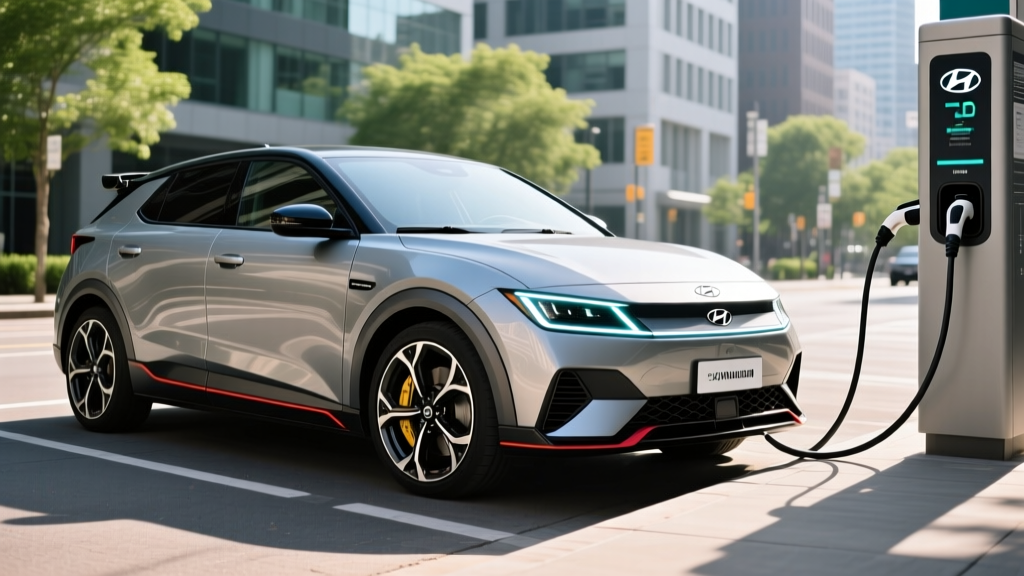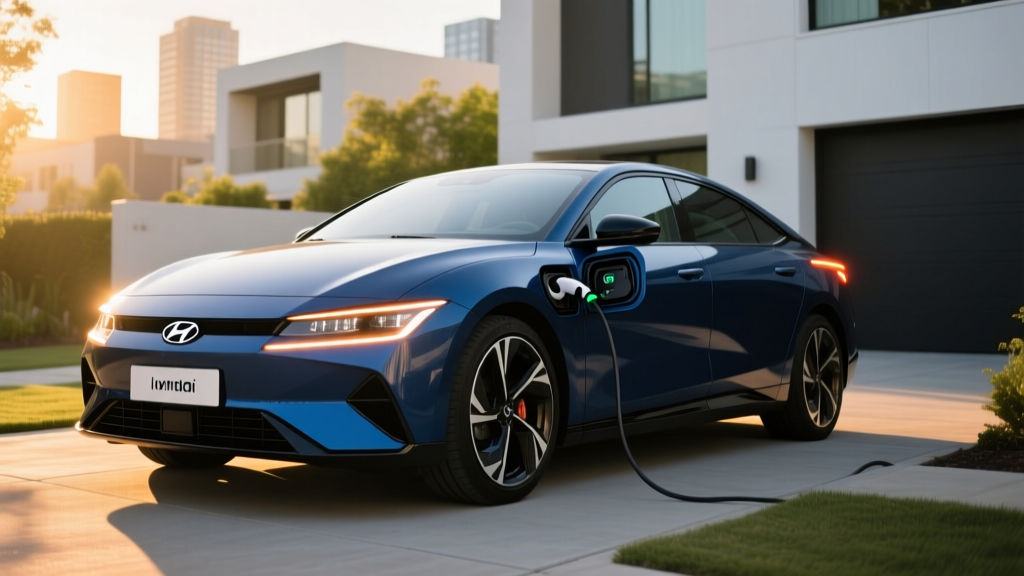
The Hyundai Ioniq 6 has always been an aerodynamic outlier in the midsize electric sedan segment. Its teardrop silhouette yields a drag coefficient of just 0.21 — among the lowest of any production car — and that slippery shape translates directly into efficiency numbers that embarrass larger, boxier rivals. But the styling that enables a 361-mile EPA range also carves into rear headroom and trunk volume, making the Ioniq 6's dimensions a genuine deal-maker or deal-breaker depending on your use case.
This guide breaks down every measurement that matters: exterior footprint, interior passenger space, cargo capacity, battery specs, charging speeds, and real-world ownership economics for the 2026 model year.
Exterior Dimensions and Footprint
The Ioniq 6 sits on Hyundai's Electric Global Modular Platform (E-GMP), shared with the Ioniq 5 and Kia EV6, but stretched into a sedan profile. Here's how the exterior measurements stack up:
| Measurement | 2026 Ioniq 6 |
|---|---|
| Wheelbase | 116.1 in |
| Overall Length | 191.1 in |
| Overall Width (no mirrors) | 74.0 in |
| Overall Height | 58.3 in |
| Ground Clearance | 5.5 in |
| Curb Weight (SE RWD) | ~4,541 lb |
| Curb Weight (Limited AWD) | ~4,894 lb |
| Drag Coefficient (Cd) | 0.21 |
At 191.1 inches long, the Ioniq 6 is roughly midsize-sedan territory — shorter than a Toyota Camry but longer than a Honda Civic. The 116.1-inch wheelbase is generous, pushing the wheels to the corners for interior space and stability. However, the 58.3-inch roof height is notably low; this is a coupe-like sedan, and that roofline defines the cabin experience.
Interior Dimensions: Passenger Space and Cargo
This is where the Ioniq 6's dimensions generate the most buyer debate. The low, aerodynamic roofline creates a cabin that feels more cockpit than lounge, especially in the rear seats.
| Interior Measurement | Front | Rear |
|---|---|---|
| Headroom | 40.2 in | 37.0 in |
| Legroom | 41.7 in | 36.8 in |
| Shoulder Room | 57.2 in | 55.3 in |
| Hip Room | 53.9 in | 53.5 in |
Front-seat occupants get excellent space: 41.7 inches of legroom and 40.2 inches of headroom make the driver's seat comfortable for tall adults on long trips. The center console is wide, the dash is low, and visibility forward is good despite the sloped hood.
Rear-seat space is the compromise. At 37.0 inches of rear headroom, taller passengers (6'0" and above) will notice the roofline pressing down, especially if they sit upright. Legroom at 36.8 inches is adequate but not generous — the Ioniq 5, with its upright hatchback shape, offers more rear comfort. If you regularly carry adults in back, a test sit is essential before committing.
Cargo Volume
The trunk provides 12.3 cubic feet of cargo space — a conventional sedan trunk, accessed through a relatively narrow opening. This is less than the Ioniq 5's 27.2 cu ft behind the rear seats and far less than a Tesla Model 3's 23 cu ft (including its deep rear well). The Ioniq 6's trunk is adequate for weekly groceries and a couple of rolling suitcases, but it will not swallow a stroller or large furniture pieces without folding the rear seats (60/40 split).
A small front trunk (frunk) adds modest storage on RWD models, though AWD models sacrifice frunk space for the front motor. Expect roughly 1.6 cu ft in the frunk on RWD trims — enough for charging cables and a small bag.
Range, Battery, and Efficiency
The Ioniq 6 is available with two battery configurations, and the choice dramatically affects range:
| Spec | Standard Range (SE/SEL) | Long Range (SEL/Limited) |
|---|---|---|
| Battery Capacity (usable) | 54.0 kWh | 77.4 kWh |
| Chemistry | NMC (Nickel Manganese Cobalt) | NMC |
| Drivetrain | RWD (single motor) | RWD or AWD (dual motor) |
| Horsepower | 149 hp | 225 hp (RWD) / 320 hp (AWD) |
| 0–60 mph | ~7.0 sec | ~6.1 sec (RWD) / ~4.5 sec (AWD) |
| EPA Range | 240 mi | 361 mi (RWD) / 316 mi (AWD) |
| EPA Efficiency | 134 MPGe | 140 MPGe (RWD) / 111 MPGe (AWD) |
| kWh/100 mi | 25 | 24 (RWD) / 30 (AWD) |
Hyundai uses NMC (nickel manganese cobalt) chemistry across the Ioniq 6 lineup. NMC offers higher energy density than LFP (lithium iron phosphate), which is how Hyundai packs 77.4 kWh into a relatively compact floor without excessive weight. The trade-off: NMC batteries are generally recommended to charge to 80% for daily use to maximize longevity, while LFP can tolerate routine 100% charges. Hyundai's battery management system includes a robust thermal management loop to mitigate degradation.
Charging Speeds: DC Fast and Home Level 2
The Ioniq 6's 800-volt electrical architecture remains one of its strongest technical advantages. While many competitors operate at 400V, the higher-voltage system allows the Ioniq 6 to accept DC fast-charge rates that few rivals can match at comparable price points.
| Charging Method | Max Rate | Speed / Time |
|---|---|---|
| DC Fast Charge (peak) | ~240 kW | 10–80% in ~18 minutes (Long Range) |
| DC Fast Charge (sustained avg) | ~165 kW | Avg rate over 10–80% session |
| Level 2 Home (240V, 48A) | 10.9 kW | ~37 mi/hr of range added |
| Level 2 Home (240V, 32A) | 7.7 kW | ~26 mi/hr of range added |
| Level 1 (120V, 12A) | 1.4 kW | ~4 mi/hr of range added |
A few practical notes on the charging experience:
- Peak vs. sustained: The 240 kW peak occurs between roughly 10–30% State of Charge (SoC) on a 350 kW-capable station (e.g., Electrify America). Above 55% SoC, the charge curve tapers noticeably — expect 80–100 kW from 55–70%, and roughly 40–50 kW from 80–100%. This is normal lithium-ion behavior, but it means charging from 80–100% adds significant time.
- Preconditioning: Use the Ioniq 6's built-in navigation to route to a DC fast charger. The car will automatically precondition the battery to optimal temperature, which is critical for hitting peak charge rates — especially in cold weather. Arriving at a charger without preconditioning can cut your peak rate by 30–50%.
- NACS adapter: For 2026, Hyundai includes a NACS adapter (or native NACS port on later-production units) to access Tesla Supercharger stations. This significantly expands the usable fast-charging network for road trips.
- Home charging: A 48-amp Level 2 home charger (hardwired, requiring a 60-amp circuit) fully replenishes the Long Range battery from empty in roughly 7.5 hours. Most owners charge overnight and wake up full every morning.
Pricing, Trims, and Federal Tax Credit
The 2026 Ioniq 6 lineup spans four main trims. Pricing below reflects base MSRP before destination charges:
| Trim | Drivetrain | Battery | MSRP | Est. After §30D Credit |
|---|---|---|---|---|
| SE Standard Range | RWD | 54.0 kWh | ~$38,650 | ~$31,150* |
| SE | RWD / AWD | 77.4 kWh | ~$43,500 / $47,000 | ~$36,000 / $39,500* |
| SEL | RWD / AWD | 77.4 kWh | ~$47,100 / $50,600 | ~$39,600 / $43,100* |
| Limited | AWD | 77.4 kWh | ~$53,850 | ~$46,350* |
*Tax credit estimates assume full §30D eligibility. Actual credit depends on your specific situation.
- MSRP cap: Sedans must be under $55,000 MSRP. The Ioniq 6 Limited AWD at ~$53,850 qualifies; adding packages that push MSRP above $55,000 will disqualify it.
- Buyer income cap: Adjusted gross income must not exceed $150,000 (single), $225,000 (head of household), or $300,000 (joint filing).
- Battery sourcing: Critical minerals and battery components must meet phased-in domestic/free-trade-partner sourcing thresholds. Hyundai has been working to shift supply chains to comply — verify current-year eligibility on IRS.gov before purchasing.
- Point-of-sale transfer: You can transfer the credit to the dealer at purchase to reduce the sale price directly, rather than waiting for tax filing.
- Consult a tax professional to confirm your individual eligibility — rules are subject to change and individual tax situations vary.
Tech, Driver Assistance, and Standout Features
The Ioniq 6 comes loaded with Hyundai's latest technology suite. Key highlights include:
- Dual 12.3-inch displays: A wide panoramic screen layout combines the instrument cluster and infotainment, running Hyundai's latest infotainment OS with wireless Apple CarPlay and Android Auto.
- Hyundai SmartSense (standard): Includes forward collision-avoidance assist with pedestrian/cyclist detection, lane keeping assist, blind-spot collision-avoidance, rear cross-traffic alert, and highway driving assist (HDA).
- Highway Driving Assist 2 (HDA2, SEL/Limited): Adds lane-change assist and machine-learning-based driver profile adaptation. This is a solid SAE Level 2 system — it handles steering, acceleration, and braking on highways but requires continuous driver supervision. It is not autonomous driving.
- Digital side mirrors (Limited, market-dependent): Camera-based mirrors that reduce drag and improve visibility in rain, though some drivers find the screen-based view takes adjustment.
- Vehicle-to-load (V2L): The Ioniq 6 can output up to 3.6 kW of AC power from its traction battery through an interior outlet or external adapter — enough to run a laptop, small appliances, or camping gear.
- Over-the-air (OTA) updates: Firmware, navigation, and even some vehicle-control parameters update remotely.
Notable drawbacks: The capacitive touch buttons on the center console (for climate and volume) are a persistent frustration — physical knobs would be far more usable while driving. The rear visibility is compromised by the thick C-pillars and small rear window; a digital rearview mirror or robust backup camera is essential. And the low seating position, while sporty, makes entry and exit harder for mobility-limited passengers compared to a crossover.
Warranty and Ownership Costs
Hyundai backs the Ioniq 6 with one of the strongest warranty packages in the segment:
| Coverage | Term |
|---|---|
| New Vehicle Limited | 5 years / 60,000 miles |
| Powertrain | 10 years / 100,000 miles |
| EV Battery | 10 years / 100,000 miles (capacity ≥ 70%) |
| Corrosion Perforation | 7 years / unlimited miles |
| Roadside Assistance | 5 years / unlimited miles |
The battery warranty guarantees that the high-voltage pack will retain at least 70% of its original capacity over 10 years or 100,000 miles. In practice, Hyundai's NMC packs with active thermal management have shown modest degradation in real-world use — typically 5–10% loss over the first 60,000 miles based on owner-reported data. The 10-year/100,000-mile powertrain warranty covers the electric motors, reduction gear, and onboard charger.
Who the Ioniq 6 Suits Best
- You're a commuter or couple who prioritizes maximum range and efficiency over cargo space
- You value fast DC charging for road trips (18-min 10–80% is a genuine advantage)
- You prefer a sedan's driving dynamics over a crossover's ride height
- You want a distinctive design that stands out in a parking lot
- Your household has Level 2 home charging and most trips are under 300 miles
- You regularly carry rear-seat passengers over 6 feet tall
- You need hatchback cargo versatility (consider the Ioniq 5 or Kia EV6)
- You want a full-size frunk for gear storage
- You prefer physical buttons for climate and audio controls
- Towing is on your radar (the Ioniq 6 is not rated for towing)
How It Compares to Key Rivals
| Spec | Ioniq 6 LR RWD | Tesla Model 3 LR | BMW i4 eDrive40 |
|---|---|---|---|
| EPA Range | 361 mi | 341 mi | 307 mi |
| Battery (kWh) | 77.4 | 75.0 | 81.5 |
| DC Fast Charge (peak kW) | ~240 | ~250 | ~205 |
| 10–80% Time | ~18 min | ~25 min | ~31 min |
| 0–60 mph | 6.1 sec | 4.2 sec | 5.5 sec |
| Cargo (cu ft) | 12.3 | 23.0 | 16.6 |
| Base MSRP | ~$43,500 | ~$47,740 | ~$57,900 |
The Ioniq 6 wins on range and charging speed at a lower price. The Model 3 offers more cargo space, stronger performance, and access to Tesla's native Supercharger network (though Hyundai's NACS adapter narrows this gap). The BMW i4 is more refined and engaging to drive but costs significantly more and charges slower. Per fueleconomy.gov, the Ioniq 6 Long Range RWD leads the trio in combined MPGe.
Frequently Asked Questions
What is the real-world range of the Hyundai Ioniq 6?
The Long Range RWD achieves 361 miles EPA. In real-world highway driving at 70–75 mph, expect 300–320 miles. In cold weather (below 35°F), plan for 250–280 miles. The AWD model's 316-mile EPA rating translates to roughly 260–280 miles on the highway.
How fast does the Ioniq 6 charge at home and on the road?
On a 350 kW DC fast charger, it peaks at ~240 kW and charges from 10–80% in approximately 18 minutes. At home on a 48-amp Level 2 charger (10.9 kW), it adds about 37 miles of range per hour, fully charging the Long Range battery overnight in ~7.5 hours.
Does the 2026 Ioniq 6 qualify for the federal EV tax credit?
It can, but eligibility depends on MSRP (must be under $55,000 for sedans), buyer income (under $150K single / $300K joint), and battery component/critical mineral sourcing rules under IRS §30D. Verify current-year compliance before purchase, as sourcing rules tighten annually.
Is the Ioniq 6 worth buying over the Ioniq 5 or Tesla Model 3?
If you prioritize maximum range and charging speed in a sedan form factor, yes — the Ioniq 6 leads both rivals on EPA range and DC charging speed at a lower entry price. If cargo space and rear-seat headroom are higher priorities, the Ioniq 5 or Model 3 are more practical choices.
What are the biggest pros and cons?
Pros: Class-leading 361-mile range, ultra-fast 18-minute DC charging, striking design, strong standard safety tech, 10-year battery warranty, V2L capability, competitive pricing.
Cons: Tight rear headroom, small 12.3 cu ft trunk, capacitive touch controls, limited rear visibility, no towing capacity, low ground clearance (5.5 in).
What battery chemistry does the Ioniq 6 use?
All Ioniq 6 trims use NMC (nickel manganese cobalt) lithium-ion cells. NMC provides higher energy density than LFP, enabling the compact pack to deliver 77.4 kWh usable. For daily driving, charge to 80% to maximize long-term battery health; use 100% only when you need the full range for a trip.
Sources: fueleconomy.gov (EPA range and efficiency data), IRS.gov (§30D clean vehicle credit rules), Hyundai Motor America official specifications.