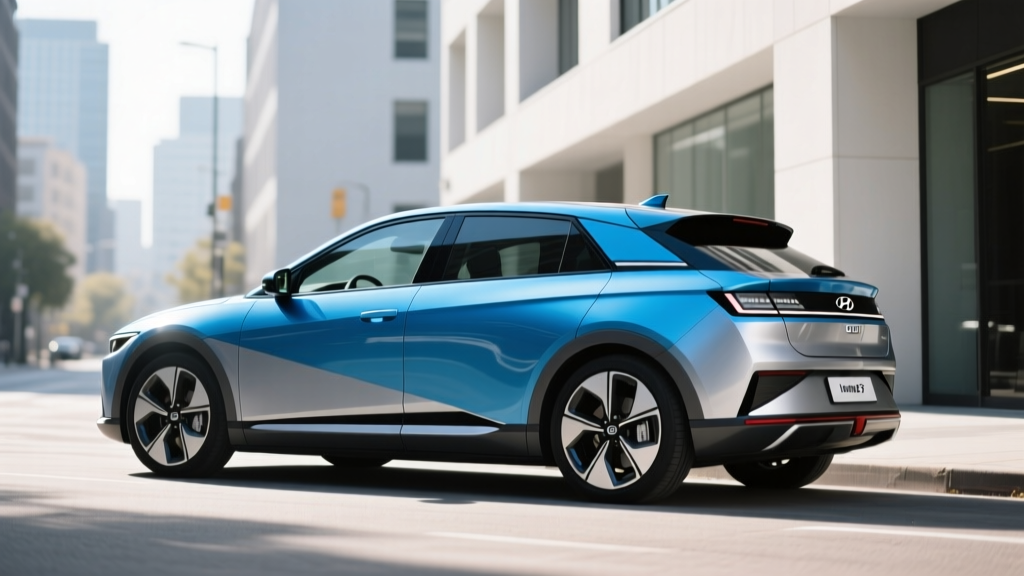
When shoppers research the Hyundai Ioniq 5, range and charging speed dominate the conversation. But one spec quietly shapes everything from efficiency to tire wear to handling dynamics: ioniq 5 weight. At between 4,233 and 4,817 pounds depending on trim and powertrain, the Ioniq 5 sits in a competitive midweight bracket among electric crossovers — heavy enough to plant itself confidently at highway speeds, but light enough to extract strong range from its 84 kWh battery pack.
This review breaks down the Ioniq 5's curb weight by trim, explains how that mass affects real-world driving and efficiency, and covers the full ownership picture: range, charging, pricing, and tax-credit eligibility for the 2026 model year.
Hyundai Ioniq 5 Weight by Trim: Full Breakdown
The Ioniq 5 is offered in four primary trims for 2026: SE, SEL, Limited, and the performance-oriented N. Weight varies based on battery size, drivetrain configuration (RWD vs. dual-motor AWD), and equipment load.
| Trim | Drivetrain | Curb Weight (lbs) | Battery (kWh usable) | Horsepower | EPA Range (mi) |
|---|---|---|---|---|---|
| SE Standard Range (RWD) | RWD | 4,233 | 58.0 (LFP) | 168 | 240 |
| SE (RWD) | RWD | 4,431 | 84.0 (NMC) | 225 | 318 |
| SEL (AWD) | Dual-motor AWD | 4,675 | 84.0 (NMC) | 320 | 290 |
| Limited (AWD) | Dual-motor AWD | 4,817 | 84.0 (NMC) | 320 | 274 |
| Ioniq 5 N | Dual-motor AWD | 4,861 | 84.0 (NMC) | 641 (N Grin Boost) | 221 |
The roughly 630-pound spread between the lightest Standard Range RWD and the heaviest Limited AWD trim matters. That extra mass comes from the front motor, larger battery, and premium features like the panoramic sunroof, ventilated seats, and advanced ADAS hardware. Every additional 100 pounds costs roughly 1–2% in highway efficiency — a relationship we'll quantify below.
How Ioniq 5 Weight Affects Real-World Range
EPA range estimates are measured under controlled laboratory conditions. In everyday driving, weight interacts with speed, terrain, and temperature to produce real-world results that often diverge from the sticker.
EPA estimate: 318 miles (SE RWD, long-range battery)
Highway (70–80 mph): Expect ~250–270 miles — heavier AWD trims closer to 225–245 mi
City/suburban mixed: ~285–305 miles (regen braking recovers energy from stops)
Cold weather (below 32°F): Subtract 20–30% — as low as 190–220 mi on AWD trims without consistent preconditioning
Mountain/high-altitude: Climbing reduces range sharply; descending regen partially recovers it
The Ioniq 5's efficiency, as rated by the EPA on fueleconomy.gov, is 114 MPGe combined for the RWD long-range model, translating to roughly 29 kWh/100 miles. The heavier Limited AWD drops to 101 MPGe combined (~33 kWh/100 mi). That 4 kWh/100 mi gap over a 12,000-mile driving year means about 480 extra kWh consumed annually on the AWD trim — roughly $70–$90 in added electricity cost depending on your rate.
Weight isn't the only variable. The AWD dual-motor system adds parasitic drag from the front motor even when it's disengaged, and the Limited's 20-inch alloy wheels carry heavier, higher-rolling-resistance tires than the SE's 18-inch aero wheels. Together, these compound the mass penalty.
Charging Speed: DC Fast Charge & Home Level 2
The Ioniq 5's 800-volt E-GMP architecture remains one of its strongest advantages. While many competitors peak at 150–175 kW, the Ioniq 5 sustains high charge rates longer thanks to superior thermal management.
| Charge Level | Power / Rate | Time / Speed | Connector |
|---|---|---|---|
| DC Fast Charge (peak) | 240 kW (long-range) / 180 kW (Standard Range) | 10–80% in ~18 min (long-range) | NACS (Tesla Supercharger compatible via adapter included; native NACS port on 2025+ builds) |
| DC Fast Charge (sustained avg.) | ~175 kW average 10–80% | Charge curve tapers sharply above 80% — expect 80–100% to take an additional 18–22 min | NACS / CCS1 via adapter |
| Level 2 (home/public AC) | 10.9 kW onboard charger | ~29 mi/hr of range; 0–100% in ~9 hours | J1772 / NACS |
| Level 1 (120V outlet) | ~1.4 kW | ~3–4 mi/hr — emergency/trickle only | Standard household |
Charging-curve reality check: The Ioniq 5's 240 kW peak is achievable only with a preconditioned battery and a 350 kW-capable charger (Electrify America, select Tesla V4 Superchargers). From 10–55% SoC, the Ioniq 5 holds close to peak rate. From 55–80%, it tapers to roughly 120–150 kW. This is why the 10–80% time of ~18 minutes is so competitive — the average rate across the session stays high. Above 80%, the taper is aggressive to protect NMC cell longevity, so plan your road-trip stops to 80% and move on.
For home charging, a 48-amp Level 2 wallbox on a 60-amp circuit delivers the Ioniq 5's full 10.9 kW AC rate. Expect installation costs of $800–$2,000 depending on panel proximity and local permitting, assuming your electrical panel has capacity. A 200-amp panel upgrade adds $1,500–$3,000 if needed.
Performance: 0–60, Horsepower & Driving Dynamics
The Ioniq 5's weight distribution is nearly 50/50 front-to-rear on RWD trims, thanks to the under-floor battery pack lowering the center of gravity. The result is composed, predictable handling that belies the curb weight.
| Trim | 0–60 mph | Horsepower | Torque (lb-ft) | Towing Capacity |
|---|---|---|---|---|
| SE Standard Range (RWD) | 8.2 sec | 168 | 258 | Not rated |
| SE / SEL (RWD long-range) | 7.0 sec | 225 | 258 | Not rated (RWD) |
| SEL / Limited (AWD) | 4.5 sec | 320 | 446 | 2,300 lbs (with tow prep) |
| Ioniq 5 N | 3.25 sec | 641 (N Grin Boost, 10-sec burst) | 569 | Not rated |
The AWD trims' 4.5-second 0–60 time puts the Ioniq 5 in sports-sedan territory despite its 4,700+ pound mass. Instant electric torque masks weight off the line, but you'll feel those pounds in sustained cornering and during emergency lane changes. The Ioniq 5 N's electronically controlled suspension and N-specific chassis bracing mitigate this impressively, though at the cost of ride comfort and range.
Braking distances are also weight-dependent. In independent testing, the AWD Limited with 20-inch wheels stops from 60 mph in roughly 115–120 feet — competitive for the class but not class-leading. The heavy battery mass demands quality tires; budget for premium rubber at replacement time.
Pricing, Trims & Federal Tax Credit Eligibility
The 2026 Ioniq 5 is assembled at Hyundai's Metaplant in Ellabell, Georgia — a crucial detail for federal tax credit eligibility under IRS §30D rules. Because it's built in the U.S., it clears the North American final-assembly requirement. However, battery-component and critical-mineral sourcing rules, MSRP caps, and buyer income limits all apply.
| Trim | Base MSRP | As-Tested (typical options) | §30D Credit Eligible? | Effective Price (after credit) |
|---|---|---|---|---|
| SE Standard Range | $42,600 | $43,500 | Up to $7,500 (verify sourcing) | ~$35,100–$42,600 |
| SE Long Range (RWD) | $46,650 | $48,000 | Up to $7,500 (verify sourcing) | ~$39,150–$46,650 |
| SEL (AWD) | $51,150 | $53,500 | Up to $7,500 (verify sourcing) | ~$43,650–$51,150 |
| Limited (AWD) | $57,250 | $60,500 | Up to $7,500 (verify sourcing) | ~$49,750–$57,250 |
| Ioniq 5 N | $66,800 | $68,500 | Eligible (under SUV MSRP cap of $80,000) | ~$59,300–$66,800 |
- MSRP cap: $55,000 for sedans/wagons; $80,000 for SUVs/trucks/vans — the Ioniq 5 is classified as an SUV by the IRS, so all trims clear this cap.
- Buyer income limits (MAGI): $150,000 single / $225,000 head of household / $300,000 married filing jointly.
- Battery sourcing: Battery components must meet escalating domestic-content thresholds; critical minerals must be sourced from the U.S. or FTA partners. Hyundai has been progressively shifting supply chains — verify current-year compliance on the IRS eligible vehicle list before purchasing.
- Point-of-sale transfer: You can transfer the credit to the dealer at purchase for an immediate price reduction, rather than waiting to claim it on your tax return.
- Leasing loophole: If you lease, the lessor claims the commercial EV credit (§45W) and may pass savings through as a capitalized-cost reduction — this bypasses income/MSRP/sourcing limits entirely.
Interior Space, Cargo & Technology
The Ioniq 5's flat floor (no transmission tunnel) and long 118.1-inch wheelbase create interior volume that punches above its weight class.
- Front legroom: 41.7 inches
- Rear legroom: 39.4 inches
- Cargo (rear seats up): 27.2 cu ft
- Cargo (rear seats folded): 59.3 cu ft
- Frunk (front trunk): 0.85 cu ft (AWD) / 2.0 cu ft (RWD) — useful for charging cables, not luggage
The Ioniq 5's tech suite centers on dual 12.3-inch displays (instrument cluster + infotainment), wireless Apple CarPlay and Android Auto, and Hyundai's Digital Key 2 (phone-as-key via NFC/UWB). The available augmented-reality head-up display overlays navigation arrows onto the windshield view — genuinely useful for highway interchanges.
Driver assistance falls under Hyundai SmartSense, which includes adaptive cruise control with stop-and-go, lane-keeping assist, blind-spot monitoring, and rear cross-traffic collision-avoidance. This is SAE Level 2 driver assistance — you must keep your hands on the wheel and eyes on the road. It is not autonomous driving.
Notable drawbacks: The Ioniq 5 still uses capacitive-touch buttons for climate control on some trims, which are frustrating to use while driving. Rear-window visibility is compromised by the thick C-pillar and spoiler design. And the frunk on AWD models is barely large enough for a charging cable bag — a missed opportunity given the flat hood area.
Battery Chemistry, Warranty & Longevity
Hyundai equips the Standard Range Ioniq 5 with an LFP (lithium iron phosphate) battery, while long-range trims use NMC (nickel manganese cobalt) chemistry. The distinction matters for ownership:
| Factor | LFP (Standard Range) | NMC (Long Range / AWD / N) |
|---|---|---|
| Energy density | Lower — why Std Range has smaller battery | Higher — enables 84 kWh in same pack footprint |
| Cycle life | 3,000+ cycles to 80% SoH | 1,500–2,000 cycles to 80% SoH |
| Charging to 100% | Safe to charge to 100% regularly | Best kept at 80% daily; 100% for trips only |
| Cold-weather performance | More range loss in cold (~30–35%) | Slightly better cold performance (~20–30% loss) |
| Cost | Cheaper to produce | More expensive (cobalt/nickel) |
Hyundai backs the Ioniq 5 battery with a 10-year/100,000-mile warranty covering defects and capacity loss below 70% of original capacity. The powertrain (motors, reduction gear, onboard charger) carries the same 10-year/100,000-mile coverage. This is among the strongest warranties in the EV segment and a key ownership advantage over competitors offering 8-year/100,000-mile coverage.
Based on industry degradation data and the Ioniq 5's robust thermal management (battery heat pump standard on long-range trims), owners can expect roughly 8–12% capacity loss over the first 100,000 miles — well within the warranty threshold.
Pros, Cons & Who Should Buy the Ioniq 5
- Class-leading 800V DC fast charging (~18 min 10–80%)
- U.S.-built — strong §30D tax credit eligibility
- Spacious flat-floor interior with generous rear legroom
- 10-year/100,000-mile battery & powertrain warranty
- Competitive starting price for the segment
- V2L (vehicle-to-load) powers devices/camping gear up to 3.6 kW
- No front trunk to speak of on AWD trims
- Rear visibility hindered by thick C-pillars
- Capacitive-touch climate controls frustrate some drivers
- AWD trims lose ~30–45 mi of range vs RWD
- Standard Range LFP battery suffers more cold-weather range loss
- No rear wiper (dealer accessory or aftermarket only on some years)
- Daily commuters (15–50 mi round trip): SE RWD with home Level 2 charging — lowest cost per mile, sufficient range, weekly charging.
- Small families: SEL AWD — dual-motor safety in inclement weather, ample rear-seat space for car seats, 2,300-lb towing for light trailers.
- Road-trippers: Long-range RWD or AWD with NACS access to Tesla Supercharger network — 18-minute DC stops keep trip times competitive with gas.
- Performance enthusiasts: Ioniq 5 N — track-capable with simulated gear shifts and 641-hp bursts, but expect 150–180 mi real-world range when driven hard.
- Not ideal for: High-mileage rural drivers without home charging access, or buyers needing 3-row seating or 5,000+ lb towing.
Ioniq 5 vs Key Competitors: Weight & Efficiency Compared
| Vehicle | Curb Weight (lbs) | EPA Range (mi) | kWh/100mi | Starting MSRP |
|---|---|---|---|---|
| Hyundai Ioniq 5 SE RWD | 4,431 | 318 | 29 | $46,650 |
| Tesla Model Y LR (AWD) | 4,398 | 320 | 28 | $44,990 |
| Ford Mustang Mach-E Premium (AWD) | 4,738 | 290 | 33 | $49,995 |
| Kia EV6 GT-Line (AWD) | 4,696 | 282 | 33 | $52,900 |
| VW ID.4 Pro S (AWD) | 4,883 | 263 | 35 | $49,595 |
The Ioniq 5 strikes a strong balance: it's lighter than the Mach-E and ID.4, which translates directly to better efficiency (fewer kWh per mile). It trades a razor-thin weight advantage to the Model Y, but counters with 800V charging architecture that outpaces Tesla's ~250 kW peak. Against its platform sibling the EV6, the Ioniq 5 is slightly lighter and offers marginally more rear headroom, though the EV6's lower roofline yields a sportier silhouette.
Frequently Asked Questions
What is the real-world range of the Hyundai Ioniq 5?
The EPA rates the long-range RWD at 318 miles. In real-world highway driving at 70–80 mph, expect 250–270 miles. In cold weather (below freezing), plan for 190–220 miles unless you consistently precondition the battery while plugged in. City driving with regenerative braking returns closer to the EPA number — roughly 285–305 miles.
How fast does the Ioniq 5 charge at home and on DC fast chargers?
On a 350 kW DC fast charger, the long-range Ioniq 5 peaks at 240 kW and charges from 10–80% in approximately 18 minutes. At home on a 48-amp Level 2 charger, it adds about 29 miles of range per hour, fully charging in roughly 9 hours. The 800-volt architecture is what enables these class-leading DC speeds.
How much does the Ioniq 5 cost after the federal tax credit?
With the full $7,500 §30D credit applied at point of sale, the SE Standard Range drops to ~$35,100 and the SEL AWD to ~$43,650. Eligibility depends on your income (MAGI caps apply), the vehicle's battery sourcing compliance, and MSRP limits. Leasing may unlock savings regardless of income through the commercial-credit pathway. Always verify current eligibility on IRS.gov before committing.
Does the Hyundai Ioniq 5 qualify for the federal EV tax credit?
Yes — the Ioniq 5 is assembled in Georgia, meeting the North American final-assembly requirement. All trims fall under the $80,000 SUV MSRP cap. Battery-component and critical-mineral sourcing compliance has been improving as Hyundai shifts supply chains, but you should confirm the specific model year's status on the IRS eligible-vehicle list at time of purchase.
Is the Ioniq 5 worth buying over the Tesla Model Y or Ford Mach-E?
Choose the Ioniq 5 if you prioritize ultra-fast DC charging (800V architecture), a 10-year battery warranty, and a more distinctive design. Choose the Model Y if you need maximum Supercharger network access without adapters, slightly better efficiency, and over-the-air feature updates. Choose the Mach-E if you prefer a more car-like driving feel and don't mind slightly heavier curb weight and slower charging.
How does the Ioniq 5's weight affect tire wear and maintenance?
At 4,400–4,860 lbs, the Ioniq 5 wears tires faster than a comparable gas crossover. Expect 25,000–35,000 miles from the factory tires depending on driving style and rotation discipline. Budget $800–$1,400 for a set of four EV-rated tires (higher load index, low rolling resistance, noise-reducing foam). Brake pads last significantly longer than gas cars thanks to regenerative braking — often 100,000+ miles.