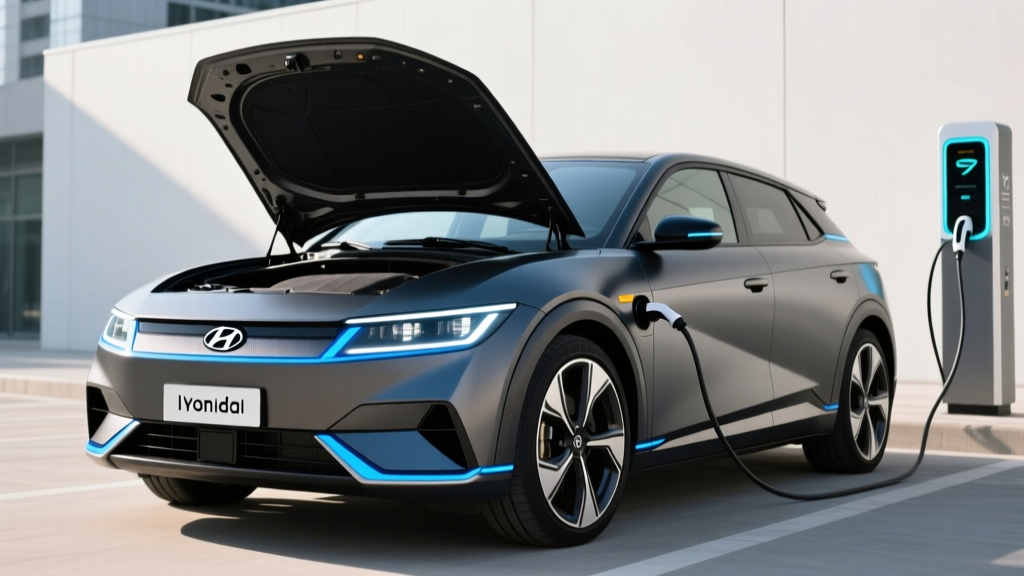
The Hyundai Ioniq 5 has been a benchmark electric crossover since its debut, but as buyers dig into spec sheets, one question keeps surfacing: how does the Hyundai Ioniq 5 weight affect its range, efficiency, and everyday drivability? Curb weight in an EV isn't just a trivia number — it dictates tire wear, braking distances, energy consumption at highway speeds, and even how quickly the battery degrades over time. In this 2026 model-year review, we unpack every critical spec alongside the mass that makes the Ioniq 5 what it is.
Hyundai Ioniq 5 Weight and Core Specifications
The 2026 Hyundai Ioniq 5 carries over the E-GMP (Electric Global Modular Platform) architecture with minor software and packaging updates. Curb weight varies by trim and drivetrain, ranging from roughly 4,431 lbs (SE/SEL Standard Range RWD) to 4,817 lbs (Limited AWD). The high-performance Ioniq 5 N tips the scales at approximately 5,102 lbs, owing to its reinforced structure and larger battery.
| Spec | SE/SEL Std Range RWD | SE/SEL Long Range RWD | SEL/Limited AWD | Ioniq 5 N |
|---|---|---|---|---|
| Curb Weight | ~4,431 lbs | ~4,641 lbs | ~4,817 lbs | ~5,102 lbs |
| Battery (usable) | 58 kWh (NMC) | 77.4 kWh (NMC) | 77.4 kWh (NMC) | 84 kWh (NMC) |
| EPA Range | 244 mi | 318 mi | 274 mi | 221 mi |
| Horsepower | 168 hp | 225 hp | 320 hp | 641 hp (650 w/ NGS) |
| 0–60 mph | ~7.5 sec | ~6.7 sec | ~4.5 sec | ~3.25 sec |
| Drivetrain | RWD single motor | RWD single motor | Dual-motor AWD | Dual-motor AWD |
| MPGe (combined) | 114 MPGe | 117 MPGe | 103 MPGe | 85 MPGe |
| Base MSRP | ~$42,600 | ~$47,200 | ~$52,100 | ~$67,500 |
For context, the Ioniq 5's weight sits squarely in the middle of its class. The Tesla Model Y Long Range AWD weighs approximately 4,387 lbs, while the Ford Mustang Mach-E Extended Range AWD comes in near 4,860 lbs. The Ioniq 5's 800V architecture and heat pump (standard on most trims) help offset the energy penalty of that mass, especially in cold climates.
Real-World Range vs. EPA Estimates
Weight plays a direct role in these real-world numbers. Heavier EVs require more energy to accelerate and sustain highway speeds, and the Ioniq 5 AWD's extra mass compounds with drivetrain friction losses. However, Hyundai's thermal management system — which includes a battery heater and heat pump on SEL and Limited trims — partially mitigates cold-weather degradation. If you precondition the battery while plugged in (via the Bluelink app), you can recover a significant portion of winter range loss by drawing heating energy from the grid rather than the pack.
For the Standard Range RWD, the 244-mile EPA figure is best suited to commuters with predictable daily loops under 100 miles. Road-trippers should look to the Long Range variants.
Charging Speed: 800V Architecture Advantage
The Ioniq 5's 800V electrical architecture remains one of its strongest selling points. While most competitors in this price range use 400V systems that peak at 125–155 kW, the Ioniq 5 can accept up to 240 kW at a compatible DC fast charger (350 kW stations like Electrify America or Ionity).
| Charging Level | Max Power | Speed / Time |
|---|---|---|
| Level 1 (120V household) | ~1.4 kW | ~4 mi/hr |
| Level 2 (240V, 48A home charger) | ~10.9 kW | ~35 mi/hr; full charge in ~8 hr (77.4 kWh) |
| DC Fast Charge (800V, 350 kW station) | Peak 240 kW | 10–80% in ~18 min (Long Range) |
| DC Fast Charge (50 kW station) | 50 kW | 10–80% in ~55 min |
A few real-world caveats: the 18-minute 10–80% claim requires a 350 kW charger, battery preconditioning (which the car initiates automatically when a fast charger is set as your navigation destination), and ambient temperatures above roughly 50°F. In colder weather without preconditioning, expect 25–35 minutes for the same 10–80% session. Above 80% SoC, the charge curve tapers sharply — going from 80–100% can add another 20+ minutes. Plan to charge to 80% on road trips and move on; that's where the math favors you.
At home on a Level 2 wallbox, the Ioniq 5's onboard charger maxes at 10.9 kW. That's adequate for overnight replenishment but slower than the Tesla Model Y's 11.5 kW or the Rivian R1S's 11.5 kW capability. Most owners will find 30–40 miles of overnight charge sufficient for daily needs.
Performance, Efficiency, and How Weight Shapes the Drive
The 2026 Ioniq 5 lineup spans a wide performance envelope. The base Standard Range RWD delivers 168 hp and a relaxed 0–60 time of about 7.5 seconds — perfectly adequate for city and suburban driving but not thrilling. The Long Range RWD bumps output to 225 hp and drops the sprint to roughly 6.7 seconds. Where the weight-to-power ratio really transforms is the dual-motor AWD: 320 hp propels the ~4,817-lb crossover to 60 mph in about 4.5 seconds, which genuinely surprises passengers expecting a docile family hauler.
The Ioniq 5 N is a different animal entirely. With 641 hp (650 with N Grin Shift engaged for 10-second bursts), it rockets to 60 in roughly 3.25 seconds despite its 5,102-lb curb weight. Hyundai achieves this through aggressive torque vectoring, an electronically limited top speed of 161 mph, and an 84 kWh battery with enhanced cooling for track use. Efficiency takes a back seat here: 85 MPGe combined means you'll visit chargers more often.
Efficiency figures for the mainstream trims are competitive. The Long Range RWD achieves 117 MPGe combined, which translates to roughly 29 kWh per 100 miles. That's slightly behind the Tesla Model Y Long Range (about 122 MPGe) but ahead of the Ford Mustang Mach-E Extended Range RWD (around 111 MPGe). The Ioniq 5's weight is a factor, but its slippery 0.288 drag coefficient and standard heat pump keep it in the hunt.
Pricing, Trims, and Federal Tax Credit Eligibility
The 2026 Ioniq 5 lineup starts at approximately $42,600 for the SE Standard Range and climbs to around $57,000 for a fully equipped Limited AWD. The Ioniq 5 N sits at roughly $67,500 before options. Hyundai now builds the Ioniq 5 at its Metaplant America facility in Georgia, which has significant implications for federal tax credit eligibility.
| Trim | Base MSRP | Est. §30D Credit | Effective Price |
|---|---|---|---|
| SE Standard Range RWD | $42,600 | Up to $7,500* | ~$35,100 |
| SEL Long Range RWD | $47,200 | Up to $7,500* | ~$39,700 |
| SEL Long Range AWD | $52,100 | Up to $7,500* | ~$44,600 |
| Limited AWD | $57,000 | Up to $7,500* | ~$49,500 |
| Ioniq 5 N | $67,500 | Ineligible (MSRP cap) | $67,500 |
*Per IRS §30D rules, the full $7,500 credit requires: buyer AGI below $150K (single) / $300K (joint), vehicle MSRP under $80,000 (SUVs), and compliance with critical-mineral and battery-component sourcing requirements that shift annually. As of 2026, Hyundai's U.S.-built Ioniq 5 trims under the MSRP cap are expected to qualify for the full credit, but battery-sourcing rules tighten each year. Confirm eligibility at the point of sale and consult a tax professional. The credit can now be transferred to the dealer at purchase, reducing your out-of-pocket cost immediately.
Interior Space, Cargo, and Daily Practicality
The Ioniq 5's flat-floor E-GMP platform delivers impressive interior volume for its footprint. Passenger space includes 41.7 inches of front legroom and 39.4 inches of rear legroom — enough for adults to sit comfortably behind tall front-seat occupants. Headroom is generous at 39.6 inches front and 38.7 inches rear.
Cargo volume behind the second row measures 27.2 cubic feet, expanding to 59.3 cubic feet with the rear seats folded. The front trunk (frunk) adds up to 2.1 cubic feet on AWD models and 2.7 cubic feet on RWD — enough for charging cables and a small bag but not a meaningful grocery run. Compared to the Tesla Model Y's 30.2 cu ft rear and 11.7 cu ft frunk, the Ioniq 5 gives up some cargo versatility, particularly up front.
Towing capacity is rated at 2,300 lbs with the factory tow hitch on AWD trims (1,650 lbs on RWD). That's sufficient for a small utility trailer or a pair of dirt bikes but not a camper. The Ioniq 5 N is not rated for towing.
Technology, Safety, and Driver Assistance
Hyundai equips the 2026 Ioniq 5 with dual 12.3-inch displays (instrument cluster and infotainment) running the latest Hyundai software with wireless Apple CarPlay and Android Auto. The center console slides fore and aft by up to 5.5 inches — a signature Ioniq 5 feature that improves front-seat walk-through and access to the wireless charging pad. Higher trims offer an augmented-reality head-up display, a digital side-mirror system (market-dependent), and Hyundai's Vehicle-to-Load (V2L) capability, which provides up to 3.6 kW of AC power from an outlet in the rear seat or via an external adapter — handy for camping or emergency backup.
The Hyundai SmartSense ADAS suite is standard across all trims and includes:
- Forward Collision-Avoidance Assist with pedestrian and cyclist detection
- Blind-Spot Collision-Avoidance Assist
- Lane Keeping Assist and Lane Following Assist
- Intelligent Speed Limit Assist
- Rear Cross-Traffic Collision-Avoidance Assist
- Highway Driving Assist 2 (HDA2) with lane-change assist on SEL and above
The Ioniq 5 has earned strong safety marks, including a IIHS Top Safety Pick+ designation in prior model years and a 5-Star overall rating from NHTSA. Check current-year ratings as testing protocols evolve.
Pros, Cons, and Who Should Buy
Pros
- 800V architecture delivers class-leading 18-min 10–80% DC charging
- Spacious, flat-floor cabin with sliding console and strong rear legroom
- V2L capability (3.6 kW) for camping, tools, or emergency power
- Standard heat pump on most trims reduces cold-weather range loss
- U.S.-built, expected to qualify for full $7,500 §30D credit on eligible trims
- Competitive real-world efficiency at 29 kWh/100 mi (Long Range RWD)
Cons
- Frunk is small (2.1–2.7 cu ft) compared to Model Y
- No rear wiper on earlier builds (check 2026 running changes)
- AWD range drops to 274 mi EPA — noticeable on road trips
- Infotainment still uses capacitive touch controls that can frustrate
- Ioniq 5 N exceeds MSRP cap, losing §30D eligibility
- Level 2 home charging at 10.9 kW is slightly behind some rivals
Who the Ioniq 5 Suits Best
Choose the Ioniq 5 if: You want the fastest-charging crossover in its price class, value distinctive retro-modern design, need V2L for outdoor or emergency use, and can charge at home overnight. The Long Range RWD is the sweet spot for commuters and occasional road-trippers.
Look elsewhere if: Maximum cargo and frunk space are top priorities (consider Model Y), you need over 300 miles of EPA range (Chevy Equus EV or Model Y Long Range), or you want hands-free highway driving like GM's Super Cruise or Ford's BlueCruise.
Frequently Asked Questions
What is the real-world range of the Hyundai Ioniq 5?
The Long Range RWD carries a 318-mile EPA estimate. Expect 260–285 miles in real-world highway driving at moderate temperatures, and 210–240 miles in sub-freezing conditions without preconditioning. AWD trims deliver roughly 230–250 miles real-world.
How fast does the Ioniq 5 charge at home and on the road?
On a 350 kW DC fast charger, the Ioniq 5 peaks at 240 kW and charges from 10–80% in approximately 18 minutes (with preconditioning). At home on a 48-amp Level 2 charger (10.9 kW), a full charge takes about 8 hours for the 77.4 kWh battery.
How much does the Ioniq 5 cost after the federal tax credit?
With the potential $7,500 §30D point-of-sale credit, the SEL Long Range RWD drops from ~$47,200 to approximately $39,700. Eligibility depends on buyer income (under $150K single / $300K joint), MSRP caps, and battery-sourcing compliance. The Ioniq 5 N is ineligible due to its MSRP exceeding the cap.
Does the Ioniq 5 qualify for the federal EV tax credit?
U.S.-built Ioniq 5 trims under the $80,000 SUV MSRP cap are expected to qualify for the full $7,500 credit in 2026, subject to critical-mineral and battery-component sourcing rules that tighten annually. Verify at the dealership and consult a tax professional. Per IRS guidance, the credit can be transferred to the dealer at purchase.
Is the Ioniq 5 worth buying vs. the Tesla Model Y or Ford Mach-E?
The Ioniq 5 wins on DC charging speed (240 kW vs. ~250 kW peak for Model Y but on a more reliable CCS/Electrify America network, and 150 kW for Mach-E). The Model Y offers more cargo space and slightly better efficiency. The Mach-E provides a sportier driving feel. If fast road-trip charging and distinctive design matter most, the Ioniq 5 is a compelling choice.
How does the Ioniq 5's weight affect tire wear and maintenance?
At 4,431–5,102 lbs depending on trim, the Ioniq 5 is heavier than comparable gas crossovers. Expect EV-specific tires to last 25,000–40,000 miles depending on driving style and rotation schedule. The regenerative braking system reduces brake pad wear significantly — many owners report original brake pads beyond 80,000 miles.
What is the Ioniq 5's battery warranty?
Hyundai covers the high-voltage battery for 10 years or 100,000 miles (whichever comes first), with a capacity retention threshold typically around 70%. The powertrain is covered for 10 years/100,000 miles as well, and the new-vehicle limited warranty is 5 years/60,000 miles — among the strongest in the EV segment.
The Bottom Line
The Hyundai Ioniq 5's curb weight of 4,431 to 5,102 lbs is neither the lightest nor the heaviest in its class, but Hyundai's engineering — particularly the 800V charging system, heat pump, and efficient NMC battery packaging — makes that mass largely a non-issue for daily driving. Where weight matters most is in AWD range reduction and the Ioniq 5 N's efficiency penalty. For the majority of buyers, the Long Range RWD at ~$39,700 after the federal credit represents one of the best value-to-charging-speed ratios in the 2026 EV market. Confirm your tax credit eligibility, budget for a Level 2 home charger installation ($500–$1,500 depending on your panel), and you'll have a crossover that charges faster than almost anything else at this price point.