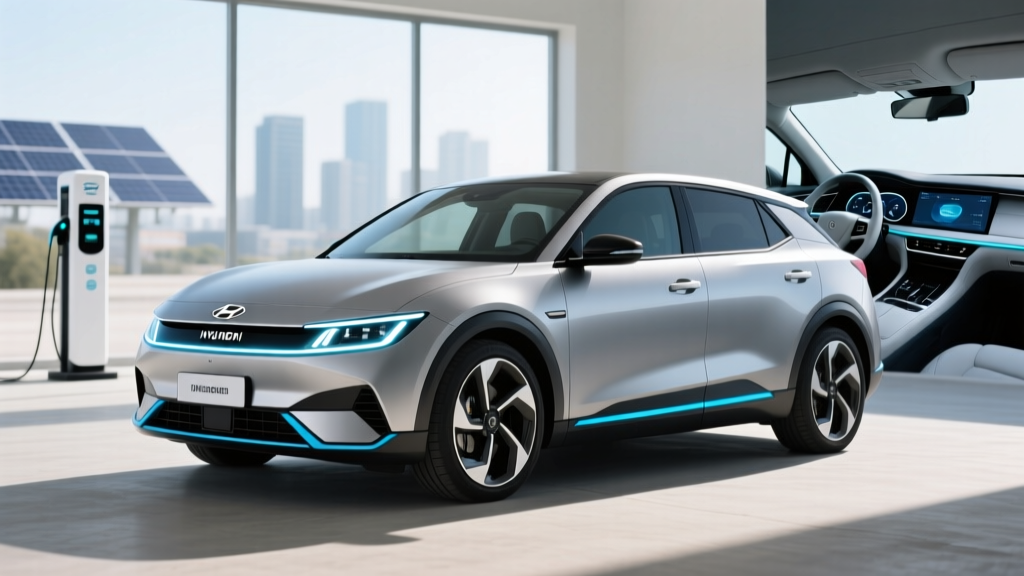
The Hyundai Ioniq 5 remains one of the most compelling mainstream electric crossovers on the market, and for 2026, Hyundai has refined the lineup with updated battery options and the continued adoption of the Tesla NACS charge port. But with four distinct trim levels—SE Standard Range, SE, SEL, and Limited—plus the choice between rear-wheel drive and all-wheel drive, figuring out which configuration delivers the best value requires a close look at the numbers. This guide breaks down every 2026 Hyundai Ioniq 5 trim level by range, charging speed, performance, pricing, and tax credit eligibility so you can match a configuration to your actual driving needs.
2026 Hyundai Ioniq 5 Trim Levels at a Glance
Hyundai structures the Ioniq 5 around two battery packs and two drivetrains. The Standard Range model uses a smaller battery paired exclusively with rear-wheel drive, while the SE, SEL, and Limited trims offer either the larger RWD configuration or a dual-motor AWD setup. Here is how the core specifications stack up across the lineup:
| Spec | SE Standard Range (RWD) | SE / SEL (RWD) | SE / SEL (AWD) | Limited (AWD) |
|---|---|---|---|---|
| Battery (usable) | ~58 kWh (LFP) | ~77.4 kWh (NMC) | ~77.4 kWh (NMC) | ~77.4 kWh (NMC) |
| EPA Range | 245 mi | 318 mi | 290 mi | 266 mi |
| Horsepower | 168 hp | 225 hp | 320 hp | 320 hp |
| 0-60 mph | ~7.4 sec | ~6.9 sec | ~4.5 sec | ~4.5 sec |
| Max DC Fast Charge | ~150 kW | ~240 kW | ~240 kW | ~240 kW |
| 10-80% DCFC Time | ~24 min | ~18 min | ~18 min | ~18 min |
| Base MSRP | $42,600 | $47,100 | $51,100 | $58,200 |
Note: MSRP figures exclude the $1,495 destination charge. Pricing reflects 2026 model-year estimates based on Hyundai's published configuration data. Always verify final pricing with your dealer.
Real-World Range: What the EPA Numbers Actually Mean
The long-range RWD Ioniq 5 carries an EPA-estimated 318 miles of range. In real-world highway driving at 70-75 mph, expect approximately 265-285 miles before needing to charge. In cold weather (below 30°F), range can drop an additional 15-25%, bringing usable highway range to roughly 220-245 miles for the long-range RWD model. The AWD trims see a proportional reduction from their lower EPA baselines.
The Ioniq 5's 800-volt E-GMP platform is engineered for efficiency, but physics still governs real-world outcomes. The long-range RWD models achieve an EPA-rated 117 MPGe combined (approximately 29 kWh/100 mi), which is competitive with the Tesla Model Y Long Range and significantly better than the Ford Mustang Mach-E Extended Range RWD. According to fueleconomy.gov, the AWD variants drop to around 101-110 MPGe combined depending on wheel size.
The Standard Range model's LFP chemistry trades energy density for longevity and cost. Its 245-mile EPA rating is adequate for daily commuting and urban errands, but road-trippers will find themselves stopping more often. If your typical week involves fewer than 40 miles of daily driving with home charging access, the Standard Range is a rational, budget-friendly pick.
Charging Speed and the NACS Advantage
For 2026, the Ioniq 5 ships with the NACS (Tesla-style) charge port as standard equipment, granting native access to Tesla's Supercharger network without an adapter. This is a significant practical advantage over CCS-equipped competitors that still require a plug adapter for Supercharger access.
| Charge Level | Power / Rate | Miles Added per Hour | Notes |
|---|---|---|---|
| Level 1 (120V household) | ~1.4 kW | ~3-4 mi/hr | Emergency/trickle only |
| Level 2 (240V home) | 10.9 kW | ~30-36 mi/hr | Full charge overnight (~7-8 hrs for long-range) |
| DC Fast Charge (long-range) | Peak 240 kW | ~180+ mi in 18 min (10-80%) | 800V architecture sustains high power to ~60% SoC |
| DC Fast Charge (Std Range) | Peak ~150 kW | ~120 mi in 24 min (10-80%) | LFP chemistry charges more linearly but at lower peak |
The Ioniq 5's 800-volt architecture is its charging secret weapon. While many rivals peak at 150-175 kW on DC fast chargers, the long-range Ioniq 5 can sustain above 200 kW through the critical 20-60% state-of-charge window before tapering. On a 350 kW Electrify America or Tesla V4 Supercharger stall, the 10-80% session takes approximately 18 minutes in ideal battery-temperature conditions.
Cold-weather charging caveat: If the battery is cold-soaked (below ~50°F) and you haven't preconditioned via the navigation-routed charging system, peak charge rates can be cut by 40-50% for the first several minutes. Always use the Ioniq 5's "Set as Destination" preconditioning feature when navigating to a fast charger in cool weather.
Performance and Drivetrain Breakdown
The Ioniq 5 is not positioned as a performance EV—that role belongs to the Ioniq 5 N. But the AWD dual-motor configuration is genuinely quick. The 320 hp and 446 lb-ft of torque in AWD models delivers a 0-60 mph time of approximately 4.5 seconds, which is brisk enough for confident highway merging and passing. The RWD long-range model, at 225 hp, feels adequate rather than exciting, with a 0-60 time around 6.9 seconds.
Ride quality is where the Ioniq 5 earns strong marks. The E-GMP platform's low center of gravity and well-tuned suspension absorb road imperfections effectively, and the cabin remains quiet at highway speeds. The AWD system is a torque-vectoring setup that can disconnect the front motor under light-load cruising to improve efficiency—a feature Hyundai calls "disconnector AWD."
Towing: The Ioniq 5 AWD is rated for 2,300 lbs of towing capacity (with trailer brakes), sufficient for a small utility trailer or a pair of dirt bikes. The RWD models are rated at 1,650 lbs. Neither figure is class-leading—the Rivian R1S and even the Ford F-150 Lightning dwarf these numbers—but light towing is within reach.
Interior Space, Tech, and Standout Features
The Ioniq 5's retro-futuristic interior remains one of its strongest selling points. The flat floor (enabled by the skateboard battery platform) creates an airy, spacious cabin that feels larger than its exterior dimensions suggest.
- Front headroom: 39.6 inches
- Rear legroom: 39.4 inches (class-leading; more than the Model Y)
- Cargo volume (rear seats up): 27.2 cu ft
- Cargo volume (rear seats folded): 59.3 cu ft
- Front trunk (frunk): 0.85 cu ft (RWD) / 0.68 cu ft (AWD) — enough for the charge cable and a small bag
Tech highlights by trim:
- SE / SE Standard Range: Dual 12.3-inch displays (cluster + infotainment), wireless Apple CarPlay and Android Auto, Hyundai Digital Key (NFC), 6-speaker audio
- SEL: Adds wireless phone charging, leatherette seats, power liftgate, Highway Driving Assist 2 (HDA2 with lane-change assist)
- Limited: Adds augmented-reality head-up display, Bose premium audio (8 speakers), ventilated front seats, heated rear seats, Highway Driving Assist 2 with Auto Lane Change, Remote Smart Parking Assist, and a vehicle-to-load (V2L) adapter for powering external devices up to 3.6 kW
The V2L feature (available on SEL and Limited via the internal outlet or external adapter) is a genuine differentiator. It allows you to power camping equipment, a tailgate setup, or even a home appliance during an outage—something most competitors still don't offer without aftermarket hardware.
Hyundai's Highway Driving Assist 2 is an SAE Level 2 driver-assistance system. It combines adaptive cruise control with lane-centering and can assist with lane changes on divided highways. The driver must keep hands on the wheel and eyes on the road at all times. This is not autonomous or "self-driving" capability.
Pricing, Trim Breakdown, and Federal Tax Credit Eligibility
The 2026 Ioniq 5 lineup spans roughly $42,600 to $58,200 before destination. Here is how each trim positions itself:
| Trim | Base MSRP | With Destination | Est. After §30D Credit* |
|---|---|---|---|
| SE Standard Range (RWD) | $42,600 | $44,095 | ~$36,595 |
| SE Long Range (RWD) | $47,100 | $48,595 | ~$41,095 |
| SEL Long Range (RWD) | $50,600 | $52,095 | ~$44,595 |
| SE Long Range (AWD) | $51,100 | $52,595 | ~$45,095 |
| Limited (AWD) | $58,200 | $59,695 | ~$52,195 |
*Estimated §30D credit assumes full $7,500 eligibility. Actual credit depends on battery-component and critical-mineral sourcing requirements, buyer income limits, and MSRP caps per IRS guidelines. The credit can now be transferred to the dealer as a point-of-sale rebate, reducing your out-of-pocket cost at purchase. Consult a tax professional for your specific situation.
Federal tax credit checklist (§30D, 2026 rules):
- Vehicle MSRP must not exceed $80,000 for SUVs/crossovers — all Ioniq 5 trims qualify
- Buyer adjusted gross income must not exceed: $300,000 (joint), $225,000 (head of household), $150,000 (single)
- Battery components must meet phased-in North American manufacturing thresholds
- Critical minerals must meet sourcing requirements from FTA countries
- Vehicle must undergo final assembly in North America (the Ioniq 5 for the US market is assembled at Hyundai's Ellabell, Georgia plant)
- Credit is applied per vehicle VIN; check the specific VIN on the IRS qualified vehicles list before purchasing
The Ioniq 5's Georgia assembly is a crucial detail: because it's built in the US, it meets the final-assembly requirement that disqualifies several imported EVs from the credit. However, the battery-sourcing rules tighten annually, and eligibility for the full $7,500 versus a partial $3,750 can shift. Always verify your specific vehicle's eligibility at the point of sale.
How the Ioniq 5 Compares to Key Rivals
The Ioniq 5 competes in the most crowded EV crossover segment. Here is how it stacks up against the three most common cross-shops:
| Attribute | Hyundai Ioniq 5 SEL AWD | Tesla Model Y LR AWD | Ford Mach-E Ext. Range AWD | VW ID.4 AWD Pro S |
|---|---|---|---|---|
| EPA Range | 290 mi | 311 mi | 290 mi | 263 mi |
| Peak DC Fast Charge | 240 kW | 250 kW | 150 kW | 175 kW |
| 10-80% DCFC | ~18 min | ~20 min | ~36 min | ~28 min |
| 0-60 mph | 4.5 sec | 4.8 sec | 5.1 sec | 5.4 sec |
| Charge Port | NACS (native) | NACS (native) | CCS1 (adapter for NACS) | CCS1 (adapter for NACS) |
| Rear Legroom | 39.4 in | 36.5 in | 38.9 in | 37.6 in |
The Ioniq 5's edge lies in its combination of fast DC charging, spacious rear seating, and native NACS access. The Model Y edges it on range and has the Supercharger ecosystem advantage, but the Ioniq 5's ride quality and interior materials are a step above Tesla's minimalist cabin. The Mach-E and ID.4 both suffer from slower DC charging speeds, which adds real time to road-trip stops.
Pros, Cons, and Who Should Buy the Ioniq 5
- Class-leading DC fast-charge speed (18 min, 10-80%)
- Native NACS port — no adapter for Superchargers
- Spacious rear seat and flat-floor cabin design
- US-assembled (Georgia) — strong §30D credit eligibility
- V2L capability for camping, power backup, tailgating
- Competitive 8-yr/100,000-mi battery warranty
- Distinctive design that stands out in a crowded segment
- Frunk is tiny — barely fits the charge cable
- No front wiper on rear window; visibility in rain suffers
- AWD range drops noticeably vs. RWD (290 vs. 318 mi)
- Limited trim pushes past $58K before options
- Rear wiper was added for 2025 but still a single-speed design
- Infotainment can lag; no physical volume knob (touch-sensitive)
- Standard Range LFP model limited to ~150 kW DC fast charging
Best for:
- Commuters with home charging: The RWD Long Range SE or SEL delivers 318 miles of EPA range, charges overnight on Level 2, and keeps the purchase price near $47-51K before credits.
- Families needing rear-seat space: The 39.4 inches of rear legroom is genuinely generous. Rear-facing child seats fit without pushing the front passenger into the dash.
- Road-trippers who value charging speed: The 18-minute 10-80% session is among the fastest in the segment, minimizing downtime on long drives.
Consider alternatives if:
- You need maximum cargo space (the Model Y offers more total volume)
- You want a large frunk for under-hood storage
- You need serious towing capacity (look at the F-150 Lightning or Rivian R1S)
- You prefer a single-pedal driving experience (the Ioniq 5's regen is adjustable but doesn't come to a complete stop in its strongest setting without using i-Pedal mode)
Battery Warranty and Long-Term Ownership
Hyundai backs the Ioniq 5's high-voltage battery with an 8-year/100,000-mile warranty (whichever comes first), covering defects and capacity loss below 70% of original capacity. The powertrain components (motor, reduction gear, onboard charger) share the same coverage. The basic new-vehicle warranty is 5 years/60,000 miles.
The long-range models use NMC (nickel-manganese-cobalt) chemistry, which offers higher energy density but is more sensitive to repeated 100% charges and high-heat exposure. For daily driving, Hyundai recommends setting the charge limit to 80% and only charging to 100% before long trips. The Standard Range model's LFP (lithium iron phosphate) battery tolerates regular 100% charges better and typically exhibits slower degradation over time, though at the cost of lower range and slower peak charging.
Independent fleet data and owner reports suggest the Ioniq 5's battery management system is conservative and effective, with typical degradation of 5-8% over the first 60,000 miles. This is in line with industry averages for liquid-cooled NMC packs. For more on battery longevity strategies, consult NHTSA's EV resources and your owner's manual's battery-care section.
Frequently Asked Questions
What is the real-world range of the Hyundai Ioniq 5?
The long-range RWD model is EPA-rated at 318 miles, but real-world highway driving at 70+ mph typically yields 265-285 miles. In freezing temperatures, expect 220-245 miles. The AWD models start at 290 miles EPA and see proportional real-world reductions. The Standard Range model's 245-mile EPA rating translates to roughly 200-215 miles in mixed highway driving.
How fast does the Ioniq 5 charge at home and on the road?
On a Level 2 home charger (240V, 48A), the Ioniq 5 accepts up to 10.9 kW, adding roughly 30-36 miles of range per hour. A full charge from empty takes 7-8 hours for the long-range battery. On a DC fast charger, the long-range models peak at 240 kW and can go from 10-80% in about 18 minutes under ideal conditions. The Standard Range model peaks at roughly 150 kW.
Does the 2026 Hyundai Ioniq 5 qualify for the $7,500 federal tax credit?
It is eligible, but the full credit is not guaranteed for every buyer or every VIN. The Ioniq 5 is assembled in Georgia (meeting the final-assembly requirement), and all trims fall under the $80,000 SUV MSRP cap. However, eligibility depends on your income (under $150K single / $300K joint), the battery's critical-mineral and component sourcing compliance for the current year, and purchasing before any phase-out thresholds. The credit can be applied as a point-of-sale rebate at the dealer. Always verify your specific vehicle's VIN on the IRS qualified list and consult a tax professional.
Is the Ioniq 5 worth buying over the Tesla Model Y?
It depends on your priorities. The Ioniq 5 wins on interior quality, rear-seat space, ride comfort, and DC charging speed. The Model Y wins on total range, Supercharger network maturity (though the Ioniq 5 now has native access), cargo volume, and over-the-air software updates. If you value comfort and charging speed for road trips, the Ioniq 5 is the stronger pick. If maximum range and cargo space are paramount, the Model Y has the edge.
What is the best Hyundai Ioniq 5 trim level for most buyers?
For most buyers with home charging and a mix of commuting and occasional road trips, the SE Long Range RWD at $47,100 offers the best value: 318 miles of EPA range, the fastest DC charging, and eligibility for the full federal credit. Add AWD if you live in a snowy climate and accept the 28-mile range penalty. The SEL is worth the upgrade if you want HDA2 and a power liftgate; the Limited is a luxury play that pushes pricing into premium-brand territory.