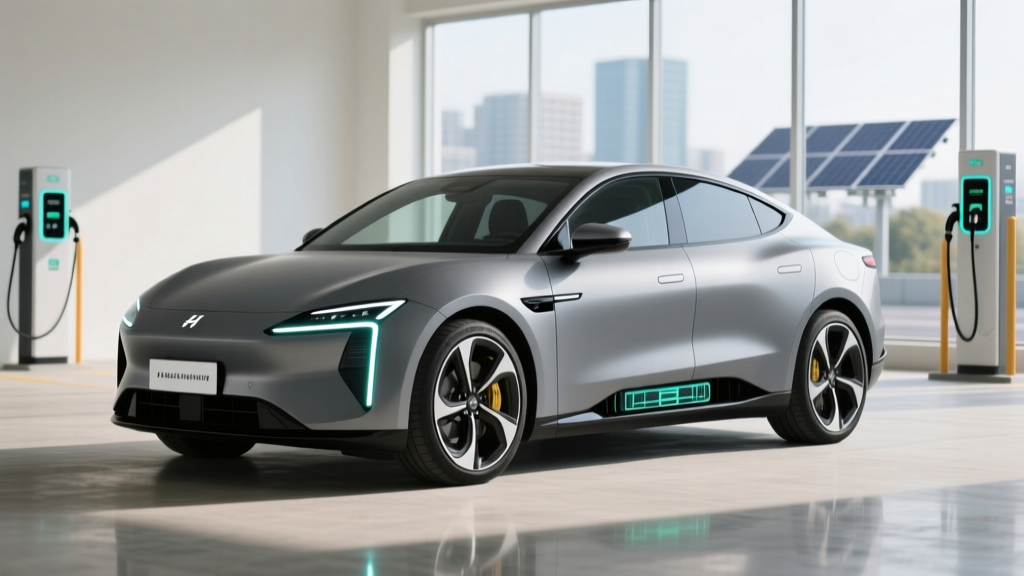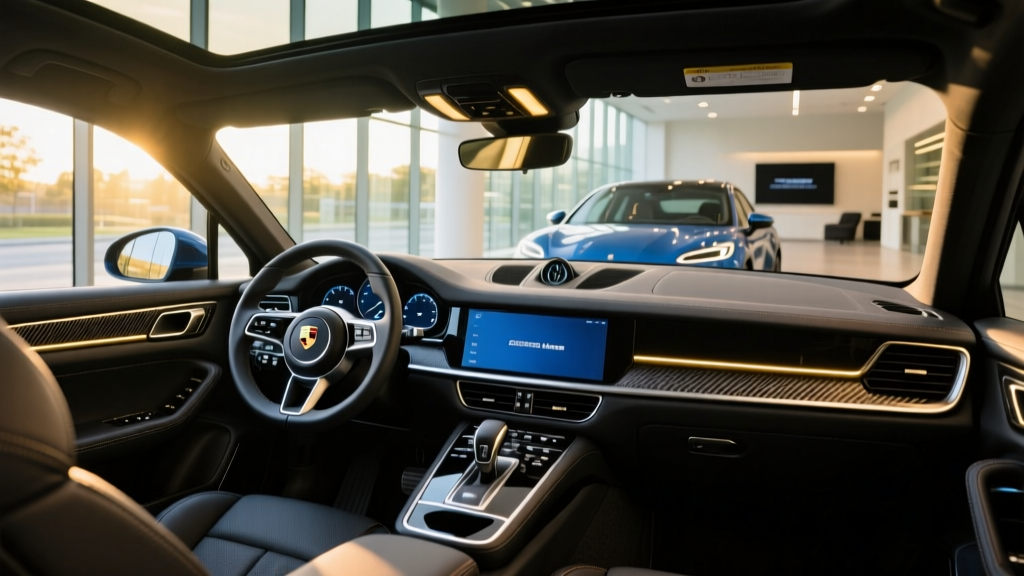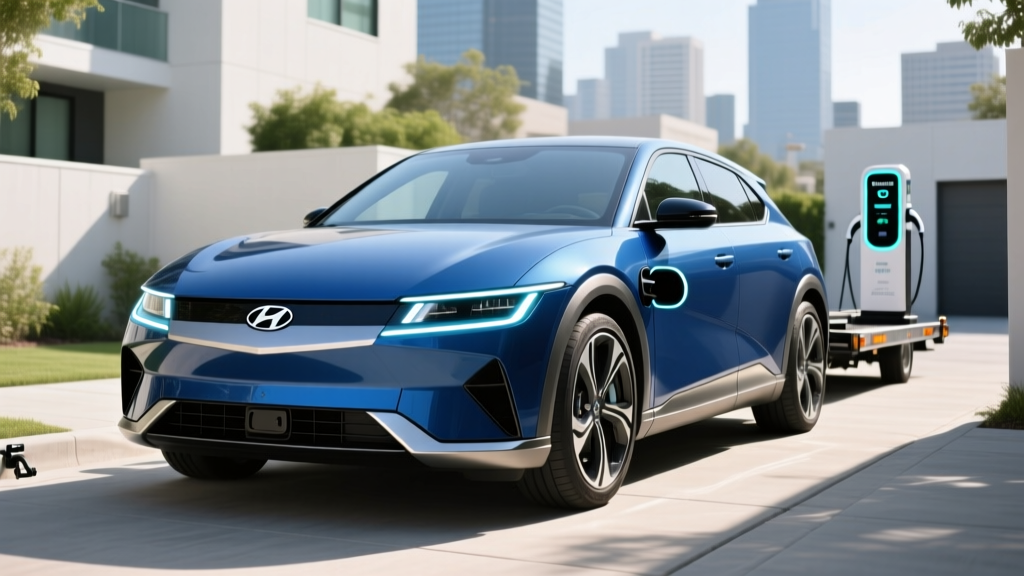
The Hyundai Ioniq 5 has been one of the most compelling electric crossovers since its debut, thanks to its retro-futuristic styling, 800V ultra-fast charging architecture, and spacious cabin. But for buyers who need to haul more than just groceries—whether that's a small boat, a pair of dirt bikes, or a compact camping trailer—the critical question is: what is the Ioniq 5's tow capacity, and how does towing affect its range and usability?
In this comprehensive review, we cover the 2026 Hyundai Ioniq 5's towing specs alongside every figure that matters to real buyers: EPA range, real-world efficiency, DC fast-charge speeds, battery chemistry, pricing, and federal tax credit eligibility. If you're weighing the Ioniq 5 against rivals like the Tesla Model Y, Ford Mustang Mach-E, or Kia EV6, this is your data-driven buyer's guide.
2026 Ioniq 5 Tow Capacity: What You Need to Know
The 2026 Hyundai Ioniq 5 carries a maximum tow rating of 2,300 pounds when equipped with the factory-installed tow hitch and the AWD (dual-motor) powertrain. The RWD (single-motor) variant is rated slightly lower at 1,650 pounds. These figures are braked tow ratings—meaning they assume a trailer with its own braking system.
What can you actually tow at 2,300 lbs? Here's a practical breakdown:
- Small utility trailer (loaded): 1,000–1,800 lbs
- Pop-up camper (lightweight models): 1,200–2,000 lbs
- Jet ski on single-axle trailer: 1,200–1,800 lbs
- Pair of dirt bikes on trailer: 800–1,200 lbs
- Small aluminum boat (12–14 ft) on trailer: 1,500–2,200 lbs
If you need to tow a full-size travel trailer, enclosed car hauler, or anything above 3,000 lbs, the Ioniq 5 is not the right tool. You'd need to look at the Hyundai Ioniq 9 (rated up to 5,000 lbs), Rivian R1S, or the Ford F-150 Lightning. But for light-duty weekend towing, the Ioniq 5 AWD is genuinely capable.
Range, Battery, and Efficiency Specs
The 2026 Ioniq 5 is available with two battery pack sizes across its trim lineup. The Standard Range model uses a smaller pack for a lower entry price, while the Long Range variants maximize distance between charges.
| Spec | Standard Range (RWD) | Long Range (RWD) | Long Range (AWD) |
|---|---|---|---|
| Battery Capacity (usable) | 63.0 kWh | 84.0 kWh | 84.0 kWh |
| Battery Chemistry | NMC (Nickel Manganese Cobalt) | NMC (4th-gen) | NMC (4th-gen) |
| EPA Est. Range | 240 mi | 318 mi | 290 mi |
| EPA MPGe (combined) | 114 MPGe | 117 MPGe | 110 MPGe |
| Efficiency (kWh/100 mi) | 29 kWh | 28 kWh | 30 kWh |
- Highway-only at 70 mph: Expect ~260–275 miles
- City-heavy commuting: You may match or slightly exceed 318 miles thanks to regenerative braking
- Cold weather (below 32°F): Plan for 220–260 miles (a 20–30% reduction) without preconditioning
- Cold weather + highway: ~200–230 miles is realistic
Hyundai's fourth-generation NMC chemistry offers a strong balance of energy density and longevity. Unlike LFP (lithium iron phosphate) batteries found in some Tesla and Ford models, NMC delivers higher energy density—meaning more range in a lighter, more compact pack. The trade-off is that LFP batteries tolerate regular 100% charging better, while Hyundai recommends charging NMC packs to 80% for daily use and 100% only before long trips. According to fueleconomy.gov, the Ioniq 5's efficiency places it among the top-performing electric crossovers in its class.
Charging Speed: 800V Architecture in Practice
The Ioniq 5's E-GMP platform supports 800V DC fast charging—one of the few mainstream EVs (alongside the Kia EV6, Porsche Taycan, and Lucid Air) with this capability. Most competing EVs use 400V systems, which limits their peak charge rates.
| Charging Method | Power | Speed / Time |
|---|---|---|
| DC Fast Charge (peak) | Up to 240 kW (Long Range) | 10–80% in ~18 minutes |
| DC Fast Charge (Standard Range) | Up to 175 kW | 10–80% in ~22 minutes |
| Level 2 Home (240V / 48A) | 10.9 kW | ~38 miles of range per hour |
| Level 1 (120V / 12A) | 1.4 kW | ~4–5 miles of range per hour |
Understanding the charge curve: The "240 kW" peak rate is not sustained across the entire session. The Ioniq 5 hits peak rate between roughly 10–40% State of Charge (SoC), then gradually tapers. From 80–100%, charging slows dramatically to protect battery health—adding the final 20% can take as long as the first 70%. For road trips, plan to charge from 10–80% and move on rather than waiting for a full top-up.
The Ioniq 5 uses the CCS1 connector for DC fast charging and the J1772 connector for Level 2 AC charging. As of 2026, Hyundai has not yet adopted the Tesla NACS port natively, but adapters are available for accessing Tesla Supercharger stations.
For home charging, a 48-amp Level 2 wallbox (requiring a 60-amp dedicated circuit) delivers a full overnight charge in roughly 7–8 hours for the Long Range model. Installation costs typically range from $500 to $2,000 depending on your electrical panel's capacity and the distance from panel to charger location. Always consult a licensed electrician for a site assessment.
Performance and Drivetrain
The Ioniq 5 offers two powertrain configurations. The single-motor RWD prioritizes efficiency and value, while the dual-motor AWD delivers substantially more power and all-weather confidence—plus the higher tow rating.
| Spec | RWD (Single Motor) | AWD (Dual Motor) |
|---|---|---|
| Horsepower | 168 hp (Std Range) / 225 hp (Long Range) | 320 hp |
| Torque | 258 lb-ft | 446 lb-ft |
| 0–60 mph | 7.0 sec (Long Range) | 4.5 sec |
| Drivetrain | Rear-Wheel Drive | All-Wheel Drive (Dual Motor) |
| Max Tow Capacity | 1,650 lbs | 2,300 lbs |
The AWD model's 4.5-second 0–60 time is genuinely quick for a family crossover and makes highway merging effortless even under load. The RWD Long Range at 7.0 seconds is adequate for daily driving but won't win any stoplight sprints. Both versions benefit from instant electric torque, which makes the Ioniq 5 feel more responsive than its 0–60 time alone might suggest.
One-pedal driving is available via Hyundai's i-Pedal mode, which uses aggressive regenerative braking to bring the car to a complete stop without touching the brake pedal. The steering-wheel-mounted paddle shifters let you adjust regen intensity on the fly across four levels (0–3, plus i-Pedal).
Pricing, Trims, and Federal Tax Credit Eligibility
The 2026 Ioniq 5 is offered in four primary trims for the US market. Hyundai builds the Ioniq 5 at its Metaplant America facility in Ellabell, Georgia—a detail that directly impacts federal tax credit eligibility.
| Trim | Drivetrain | MSRP | Est. After §30D Credit |
|---|---|---|---|
| SE Standard Range | RWD | $42,600 | ~$35,100* |
| SE Long Range | AWD | $47,850 | ~$40,350* |
| SEL Long Range | AWD | $50,400 | ~$42,900* |
| Limited Long Range | AWD | $55,700 | ~$48,200* |
*Estimated prices after the $7,500 federal EV tax credit (IRS §30D). Actual eligibility depends on individual circumstances. Destination charges not included.
Because the Ioniq 5 is assembled in Georgia (not imported), it clears one of the biggest hurdles for the §30D credit. However, qualifying is not automatic. Here's what the IRS requires for 2026:
- MSRP cap: The vehicle's MSRP must not exceed $80,000 for SUVs/crossovers (all Ioniq 5 trims qualify)
- Buyer income cap: Modified adjusted gross income must not exceed $150,000 (single), $225,000 (head of household), or $300,000 (joint filing)
- Battery sourcing: A percentage of critical minerals and battery components must be sourced from the US or free-trade-agreement countries—Hyundai has been progressively shifting its supply chain to meet these thresholds, but verify current-year compliance on the IRS qualified vehicles list before purchasing
- Point-of-sale transfer: As of 2024, buyers can transfer the credit to the dealer at purchase, reducing the purchase price by $7,500 at the point of sale rather than waiting to claim it on their tax return
Interior, Cargo, and Technology
The Ioniq 5's cabin remains one of its strongest selling points. The flat floor (enabled by the dedicated E-GMP EV platform) and long 118.1-inch wheelbase create interior volume that punches well above its compact-crossover footprint.
| Dimension | Measurement |
|---|---|
| Front Legroom | 41.7 in |
| Rear Legroom | 39.4 in |
| Cargo Volume (behind 2nd row) | 27.2 cu ft |
| Cargo Volume (2nd row folded) | 59.3 cu ft |
| Front Trunk (Frunk) | 0.85 cu ft (AWD) / 2.0 cu ft (RWD) |
The dual 12.3-inch displays (instrument cluster and infotainment) run Hyundai's latest interface with wireless Apple CarPlay and Android Auto. The center console slides forward and back—a unique feature that makes it easier to exit through the passenger side in tight parking spots. Physical climate control buttons below the screen are a welcome usability win.
Driver assistance (SAE Level 2): The Ioniq 5 comes equipped with Hyundai SmartSense, which includes adaptive cruise control with stop-and-go, lane-keeping assist, blind-spot monitoring, and rear cross-traffic avoidance. The available Highway Driving Assist 2 (HDA 2) adds lane-centering and semi-autonomous highway driving. This is not self-driving—the driver must keep hands on the wheel and remain fully engaged at all times.
V2L (Vehicle-to-Load): The Ioniq 5's V2L feature lets you power external devices—laptops, camping equipment, power tools, or even a small appliance—directly from the car's battery. An interior V2L outlet provides up to 3.6 kW of output, which is enough to run a microwave, CPAP machine, or multiple laptops simultaneously. This is a standout feature for campers and outdoor enthusiasts.
Warranty and Long-Term Ownership
Hyundai backs the Ioniq 5 with one of the strongest warranty packages in the EV segment:
- Battery warranty: 10 years / 100,000 miles (capacity retention guaranteed above 70%)
- Powertrain warranty: 10 years / 100,000 miles
- New vehicle limited warranty: 5 years / 60,000 miles
- Roadside assistance: 5 years / unlimited miles
- Complimentary maintenance: 3 years / 36,000 miles
The 10-year/100,000-mile battery warranty is a significant confidence builder. Hyundai guarantees the pack will retain at least 70% of its original capacity during the warranty period. Based on data from earlier NMC-equipped Hyundai/Kia EVs, real-world degradation has generally been modest—most owners report 90%+ capacity retention after 50,000 miles with proper charging habits (avoiding frequent 100% charges and extreme heat exposure).
Ioniq 5 vs. Key Competitors
How does the Ioniq 5 stack up against other electric crossovers in its price range? Here's a head-to-head comparison on the metrics that matter most to buyers:
| Spec | Hyundai Ioniq 5 AWD | Tesla Model Y LR AWD | Kia EV6 GT-Line AWD | Ford Mustang Mach-E ER AWD |
|---|---|---|---|---|
| EPA Range | 290 mi | 320 mi | 282 mi | 290 mi |
| Max DC Charge | 240 kW | 250 kW | 240 kW | 150 kW |
| 10–80% DCFC Time | ~18 min | ~20 min | ~18 min | ~35 min |
| 0–60 mph | 4.5 sec | 4.8 sec | 4.5 sec | 5.1 sec |
| Tow Capacity | 2,300 lbs | 3,500 lbs | 2,700 lbs | 2,200 lbs |
| Cargo (rear up) | 27.2 cu ft | 30.2 cu ft | 24.4 cu ft | 29.7 cu ft |
| Starting MSRP (AWD) | $47,850 | $48,990 | $51,900 | $48,995 |
| Battery Warranty | 10 yr / 100k mi | 8 yr / 120k mi | 10 yr / 100k mi | 8 yr / 100k mi |
The Model Y's 3,500-lb tow rating and Supercharger network access remain strong advantages for heavy towing and cross-country road trips. But the Ioniq 5 counters with faster peak charging (in real-world sustained sessions), a more comfortable ride, a more intuitive infotainment system, and a longer powertrain warranty. The Kia EV6 is mechanically similar (same E-GMP platform) but offers slightly less range and cargo space at a higher price.
✅ Pros
- 800V ultra-fast charging (18 min 10–80%)
- Spacious cabin with excellent rear legroom
- V2L power output for camping/tools
- Strong 10-year powertrain warranty
- US-built (Georgia) — strong §30D credit eligibility
- Comfortable, composed ride quality
- Physical buttons + sliding console are practical
❌ Cons
- 2,300-lb tow rating trails Model Y (3,500 lbs)
- No native NACS port (requires adapter for Superchargers)
- Frunk is tiny on AWD models (0.85 cu ft)
- Rear visibility is compromised by thick C-pillars
- No front wiper on rear window
- Range drops significantly when towing (30–50%)
Who Should Buy the Ioniq 5?
🎯 Decision Framework
Choose the Ioniq 5 AWD if:
- You need light-duty towing (up to 2,300 lbs) for a small boat, jet ski, or utility trailer
- You prioritize fast DC charging for road trips
- You want a roomy cabin with excellent rear-seat comfort
- You value V2L capability for camping or job-site use
- You want a long factory warranty with US-built tax credit eligibility
Look elsewhere if:
- You need to tow over 3,000 lbs (consider Model Y, Ioniq 9, or Rivian R1S)
- You rely heavily on the Tesla Supercharger network without wanting an adapter
- You need maximum cargo volume (Model Y offers ~3 cu ft more)
- You live in an area with very limited CCS charging infrastructure
Frequently Asked Questions
Can the Hyundai Ioniq 5 tow a camper?
Yes, but only lightweight ones. The Ioniq 5 AWD's 2,300-lb rating can handle most pop-up campers and teardrop trailers (typically 1,200–2,000 lbs). It cannot tow a full-size travel trailer or hard-sided camper, which usually weigh 3,500+ lbs. Always check your specific trailer's GVWR and factor in cargo, water, and propane weight.
How much range do I lose when towing with the Ioniq 5?
Expect a 30–50% range reduction when towing near the maximum rating at highway speeds. The AWD Long Range model's 290-mile EPA range drops to approximately 145–200 miles with a 2,000-lb trailer at 65 mph. Flat terrain and lower speeds reduce the penalty; hills, headwinds, and cold temperatures increase it. The Ioniq 5's 18-minute 10–80% fast-charge time helps minimize downtime on towing road trips.
Does the 2026 Ioniq 5 qualify for the $7,500 federal tax credit?
The Ioniq 5 is built in Georgia, which satisfies the North American assembly requirement for the §30D credit. All trims fall under the $80,000 MSRP cap for SUVs. However, eligibility also depends on your income (capped at $150K–$300K depending on filing status) and the battery's critical-mineral and component sourcing. Hyundai has been working to meet these thresholds through its US battery supply chain, but always verify current eligibility on the IRS qualified vehicles list before purchasing.
What is the real-world range of the Ioniq 5 Long Range AWD?
The EPA rates it at 290 miles. In real-world mixed driving, most owners report 260–280 miles. Highway-only driving at 75 mph yields roughly 245–265 miles. In cold weather (below freezing), expect 210–245 miles without preconditioning. The Ioniq 5's heat pump helps limit cold-weather losses compared to EVs without thermal management.
How fast does the Ioniq 5 charge at home?
With a 48-amp Level 2 home charger (10.9 kW), the Long Range Ioniq 5 gains roughly 38 miles of range per hour, or a full 10–100% charge in about 7.5 hours. This means a nightly plug-in easily covers even heavy daily driving. A standard 120V outlet (Level 1) adds only 4–5 miles per hour—suitable only as a backup or for very low-mileage drivers.
Is the Ioniq 5 a good EV for road trips?
Yes, especially the Long Range variants. The 240 kW peak DC fast-charge capability means you can add ~170 miles of range in a 15-minute stop. CCS fast-charging infrastructure along major US highways has expanded significantly, and with a NACS adapter, you can also access Tesla Superchargers. Plan for 20–30 minute stops every 2–2.5 hours on the highway, which aligns well with natural rest breaks.
Sources: fueleconomy.gov (EPA range and efficiency data), irs.gov (§30D federal EV tax credit rules), Hyundai Motor America official specifications.