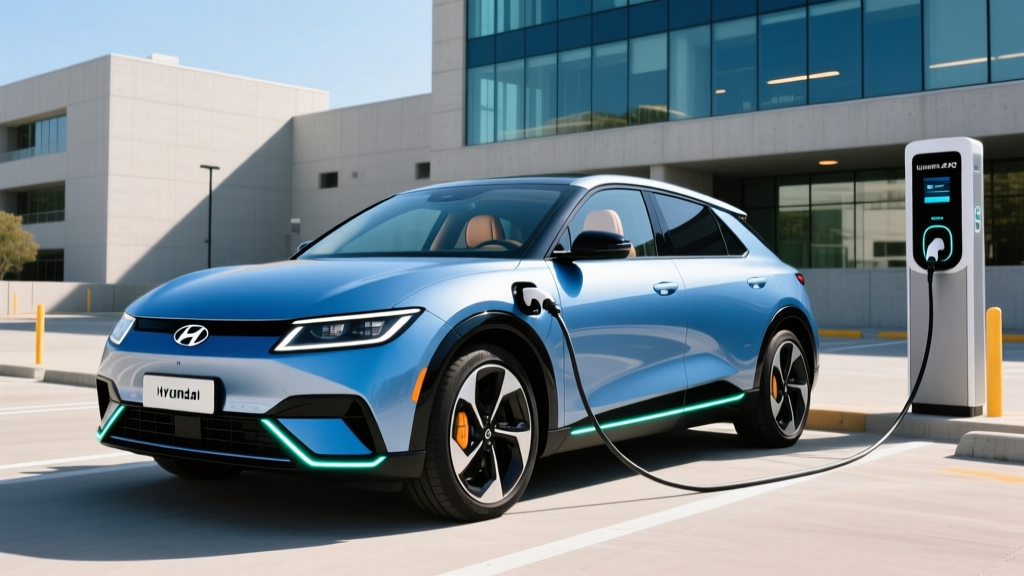
The Hyundai Ioniq 5 has been the most credible rival of Tesla's Model Y since its launch, and the 2026 model year only tightens the competition. With its 800-volt architecture enabling some of the fastest DC charging in the segment, a usable 318-mile EPA range, and a practical crossover body, the Ioniq 5 forces a genuine question for cross-shoppers: does Tesla's Supercharger network and software edge outweigh Hyundai's charging speed, ride comfort, and physical controls?
After spending significant time with the Ioniq 5 across multiple model years — including cold-weather highway runs and repeated DC fast-charge sessions — here is the data-driven breakdown of what this EV actually delivers versus what the sticker promises.
2026 Ioniq 5 Specifications at a Glance
| Spec | Value |
|---|---|
| EPA Range | 290 mi (AWD) / 318 mi (RWD) |
| Battery (usable) | 84.0 kWh, NMC (Nickel Manganese Cobalt) |
| Max DC Fast Charge | ~240 kW peak (800V architecture) |
| 10–80% DC Charge | ~18 minutes (optimal conditions) |
| Level 2 Home Charge | 10.9 kW onboard charger (~44 mi/hr) |
| 0–60 mph | 4.5 sec (AWD) / 7.2 sec (RWD) |
| Horsepower | 320 hp (AWD) / 225 hp (RWD) |
| Drivetrain | Dual-motor AWD or single-motor RWD |
| Efficiency | 110 MPGe combined (AWD) |
| Cargo (rear seats up) | 27.2 cu ft |
| Cargo (rear seats folded) | 59.3 cu ft |
| Frunk | 0.85 cu ft (AWD) / 2.1 cu ft (RWD) |
| Base MSRP (SE RWD) | $43,975 |
| As-Tested (Limited AWD) | $55,775 |
| Battery Warranty | 10 years / 100,000 miles |
| Federal Tax Credit (§30D) | Up to $7,500 (eligibility varies) |
Real-World Range: What the EPA Number Doesn't Tell You
The Ioniq 5's 84 kWh usable NMC pack delivers competitive but not class-leading range. The Tesla Model Y Long Range AWD posts 320 miles EPA on a similarly sized battery, owing partly to its lighter weight and slightly lower drag coefficient. Where the Ioniq 5 fights back is efficiency in stop-and-go city driving, where regenerative braking levels (adjustable via steering-wheel paddles) let you approach one-pedal driving and recapture meaningful energy.
According to fueleconomy.gov, the AWD Ioniq 5 returns 110 MPGe combined (30 kWh/100 mi). That translates to roughly $0.04–$0.06 per mile on residential electricity at $0.14/kWh — dramatically cheaper than a 28 MPG gas crossover at current fuel prices.
Charging Speed: The 800V Advantage in Practice
This is where the Ioniq 5 separates itself from nearly every rival of Tesla in the mainstream market. Hyundai's E-GMP platform runs on an 800-volt architecture (Tesla uses ~400V), which enables substantially faster DC charging when paired with a capable station.
| Charging Level | Power / Rate | Miles Added per Hour | Notes |
|---|---|---|---|
| Level 1 (120V household) | ~1.4 kW | ~5 mi/hr | Emergency/trickle only |
| Level 2 (240V home) | 10.9 kW | ~44 mi/hr | Full charge in ~8 hours |
| DC Fast (350 kW station) | ~240 kW peak | ~900+ mi/hr (peak) | 10–80% in ~18 min |
| DC Fast (150 kW station) | ~150 kW sustained | ~600 mi/hr | 10–80% in ~25 min |
| DC Fast (50 kW station) | ~50 kW | ~200 mi/hr | 10–80% in ~65 min |
The headline 18-minute 10–80% time requires a 350 kW-capable CCS charger (Electrify America, EVgo, or similar) and a battery preconditioned to optimal temperature. In practice, the Ioniq 5 sustains above 200 kW from roughly 10–55% SoC, then tapers progressively. The 80–100% top-off is slow — as with all EVs — so plan to leave at 80% on road trips for the best time efficiency.
A critical 2026 update: Hyundai now equips the Ioniq 5 with a native NACS (Tesla-style) charge port on North American models, granting access to Tesla's Supercharger network without an adapter. This eliminates one of the last major arguments Tesla held over its competitors. For existing CCS owners, Hyundai includes a NACS-to-CCS adapter.
For home charging, the 10.9 kW onboard charger is strong. On a 48-amp Level 2 circuit (standard NEMA 14-50 or hardwired), you'll recover about 44 miles of range per hour — meaning a typical overnight session from 20% to 80% takes roughly 5–6 hours. Budget $500–$1,500 for professional Level 2 installation depending on your panel capacity and run distance.
Performance and Driving Impressions
The dual-motor AWD Ioniq 5 produces 320 horsepower and 446 lb-ft of torque, launching to 60 mph in 4.5 seconds. That's quick enough to merge confidently and overtake without drama, though it trails the Tesla Model Y Long Range (4.8 sec) and Performance (3.5 sec) depending on trim. The single-motor RWD at 225 hp and 7.2 seconds to 60 mph is adequate for commuting but feels leisurely by EV standards.
Where the Ioniq 5 genuinely outclasses the Model Y is ride quality. Hyundai tuned the suspension for compliance over sportiness, and the result is a crossover that absorbs broken pavement, expansion joints, and speed bumps without the crashy harshness that has plagued Tesla's setup. Steering is light and numb — this is not a driver's car — but for the daily commute and family hauling, the comfort advantage is substantial.
NVH (noise, vibration, harshness) levels are also notably better than the Tesla. Wind noise at highway speed is well-suppressed, and the cabin remains a quiet place for conversation and podcasts alike.
Interior, Tech, and Daily Practicality
The Ioniq 5's cabin leans into a retro-futuristic design with a flat floor (thanks to the dedicated EV platform), dual 12.3-inch displays, and physical buttons for climate and volume — a welcome contrast to Tesla's everything-on-the-touchscreen approach. The sliding center console is a clever touch, letting you reconfigure the cabin for tight parking spots or pass-through access.
Infotainment: Hyundai's system supports wireless Apple CarPlay and Android Auto on all trims, along with native navigation with over-the-air updates. The interface is responsive and logical, though it lacks the fluid polish of Tesla's software. Voice commands work for basic functions but aren't conversational.
Driver Assistance: Hyundai's Highway Driving Assist 2 (HDA2) is a solid Level 2 system offering adaptive cruise with stop-and-go, lane-centering, and lane-change assist on mapped highways. It's competent but requires hands-on-wheel engagement at all times. It does not pretend to be autonomous — unlike Tesla's FSD (Supervised) marketing, Hyundai is straightforward about HDA2's limitations. Per IIHS, the Ioniq 5 continues to earn top safety marks when equipped with HDA2.
Space: Rear legroom is generous at 39.4 inches — competitive with the Model Y — and the flat floor means a comfortable middle-seat position. Cargo volume of 27.2 cu ft behind the rear seats is adequate for weekly groceries and luggage for a weekend trip, though the Model Y offers slightly more. The frunk is disappointingly small on AWD models (0.85 cu ft — barely fits a charging cable bag) due to HVAC components; RWD models get 2.1 cu ft.
Notable Drawbacks: The Ioniq 5 lacks a rear wiper (a persistent complaint for rainy/snowy climates), and the camera-based digital mirror system on the Limited trim can struggle in low-light conditions. Towing capacity maxes out at just 1,650 lbs with a factory hitch — not suitable for anything beyond a small utility trailer.
Pricing, Trims, and Federal Tax Credit Eligibility
The 2026 Ioniq 5 lineup starts at $43,975 for the SE RWD and climbs to $55,775 for the Limited AWD. Here's how the trims break down:
| Trim | MSRP | Est. After §30D Credit | Key Features |
|---|---|---|---|
| SE Standard Range RWD | $43,975 | $36,475* | 58 kWh battery, ~220 mi range, 19" wheels |
| SE Long Range RWD | $47,475 | $39,975* | 84 kWh, 318 mi, heated seats, HDA2 |
| SEL AWD | $51,275 | $43,775* | AWD, 20" wheels, power liftgate |
| Limited AWD | $55,775 | $48,275* | Ventilated seats, HUD, premium audio, HDA2+ |
*Tax credit estimates assume full $7,500 eligibility under IRS §30D. Actual credit depends on buyer income, battery component sourcing, and MSRP caps. The Ioniq 5 qualifies as an SUV under the §30D MSRP cap of $80,000. Buyer income must not exceed $150,000 (single) / $300,000 (joint) per IRS guidelines. Battery sourcing requirements under the Inflation Reduction Act continue to tighten annually — verify current-year eligibility on the IRS Clean Vehicle Credit portal before purchase. The credit can now be transferred to the dealer at point of sale, reducing your out-of-pocket cost at signing.
How It Compares: Ioniq 5 vs. Tesla Model Y vs. Key Rivals
| Spec | 2026 Ioniq 5 AWD | 2026 Model Y LR AWD | 2026 Kia EV6 AWD | 2026 Chevy Equinox EV RS AWD |
|---|---|---|---|---|
| EPA Range | 290 mi | 320 mi | 282 mi | 285 mi |
| Battery (usable) | 84 kWh | ~78 kWh | 77.4 kWh | 85 kWh |
| Peak DC Charge | ~240 kW | ~250 kW | ~240 kW | ~150 kW |
| 10–80% Time | ~18 min | ~25 min | ~18 min | ~30 min |
| 0–60 mph | 4.5 sec | 4.8 sec | 4.5 sec | 5.9 sec |
| Starting MSRP (AWD) | $51,275 | $48,990 | $50,700 | $45,900 |
| Battery Warranty | 10 yr / 100k mi | 8 yr / 120k mi | 10 yr / 100k mi | 8 yr / 100k mi |
The Tesla Model Y retains advantages in range efficiency, Supercharger network seamlessness (though the Ioniq 5's NACS port now opens that door), and software/OTA maturity. The Ioniq 5 counters with faster peak charging, a more comfortable ride, physical controls, CarPlay support, and a longer powertrain warranty.
The Kia EV6 shares the E-GMP platform and 800V charging but wears a more polarizing design and sacrifices some cargo volume. The Chevrolet Equinox EV undercuts on price but charges at half the speed, making road trips meaningfully longer.
Who Should Buy the 2026 Ioniq 5?
- Prioritize ride comfort and cabin quietness over sporty handling
- Want the fastest DC charging available without paying luxury-EV prices
- Prefer physical buttons and CarPlay/Android Auto over a minimalist touchscreen
- Commute daily and road-trip 3–5 times per year
- Value a 10-year/100,000-mile battery warranty for long-term peace of mind
- Need maximum cargo space or 7-seat capacity (consider the Ioniq 9 or Model X)
- Tow more than 1,650 lbs regularly
- Want the longest possible range per charge (Model Y LR wins)
- Prefer Tesla's software ecosystem and OTA feature pipeline
Pros and Cons at a Glance
- 800V architecture delivers best-in-class 18-min 10–80% DC charging
- NACS port grants native Supercharger access in 2026
- Compliant ride quality and quiet cabin
- Physical climate/volume controls and wireless CarPlay
- 10-year/100,000-mile battery warranty
- Strong federal tax credit eligibility (verify per IRS §30D)
- Real-world highway range falls 30–40 miles short of EPA sticker
- Tiny frunk, especially on AWD models
- No rear wiper
- 1,650-lb towing limit restricts utility
- AWD starting price exceeds $51,000 before options
- Steering feel is numb; not engaging for spirited driving
Frequently Asked Questions
What is the real-world range of the 2026 Hyundai Ioniq 5?
The EPA rates the RWD Long Range at 318 miles and the AWD Long Range at 290 miles. In real-world highway driving at 70+ mph, expect 275–290 miles (RWD) or 250–265 miles (AWD). Cold weather below freezing can reduce range by an additional 15–25%. For trip planning, budget conservatively around 230 usable miles in the AWD model before seeking a charger.
How fast does the Ioniq 5 charge at home and on the road?
At home on a 240V Level 2 charger (48A), the Ioniq 5 charges at 10.9 kW, adding roughly 44 miles of range per hour — a full overnight charge covers most commutes for days. On DC fast chargers, the 800V system peaks at ~240 kW on 350 kW stations, achieving 10–80% in approximately 18 minutes. On more common 150 kW stations, expect 10–80% in about 25 minutes.
How much does the Ioniq 5 cost after the federal tax credit?
If you qualify for the full $7,500 §30D credit, the SE Long Range RWD drops from $47,475 to approximately $39,975. Eligibility requires buyer income below $150,000 (single) or $300,000 (joint), an MSRP under $80,000 (SUV cap), and meeting battery-sourcing requirements that tighten annually. The credit can be applied at point of sale through the dealer, reducing your purchase price directly. Always confirm current eligibility on IRS.gov before committing.
Is the Ioniq 5 worth buying over the Tesla Model Y?
It depends on your priorities. The Model Y wins on EPA range (320 vs. 290 miles AWD), software sophistication, and Supercharger seamlessness. The Ioniq 5 wins on ride comfort, cabin quietness, faster DC charging (18 vs. ~25 min 10–80%), physical controls, CarPlay support, and a longer battery warranty. With the 2026 NACS port granting Supercharger access, the Ioniq 5 eliminates Tesla's biggest moat and becomes a genuinely compelling alternative for buyers who value comfort and practicality over software minimalism.
Does the 2026 Ioniq 5 qualify for the $7,500 federal EV tax credit?
The Ioniq 5 qualifies as an SUV under §30D (MSRP cap: $80,000), and all trims fall well under that limit. However, full $7,500 credit eligibility depends on meeting critical-mineral and battery-component sourcing thresholds (which phase in more strictly each year), plus buyer income caps. Hyundai has worked to shift battery sourcing to qualify, but you should verify current-year eligibility on the IRS Clean Vehicle Credit portal. State incentives may stack on top — check your local energy office for additional rebates.
What battery does the Ioniq 5 use, and how long will it last?
The Long Range models use an 84 kWh usable NMC (nickel manganese cobalt) lithium-ion battery. Hyundai warrants the pack for 10 years or 100,000 miles against defects and excessive degradation (typically defined as falling below 70% state of health). Real-world data from earlier model years shows approximately 5–8% degradation over the first 100,000 miles with normal charging habits — meaning you can expect the battery to retain roughly 90%+ capacity well beyond the warranty period if you avoid habitual 100% charges and frequent DC fast charging in extreme heat.