2026 Lucid Air: The Efficiency King Gets Smarter
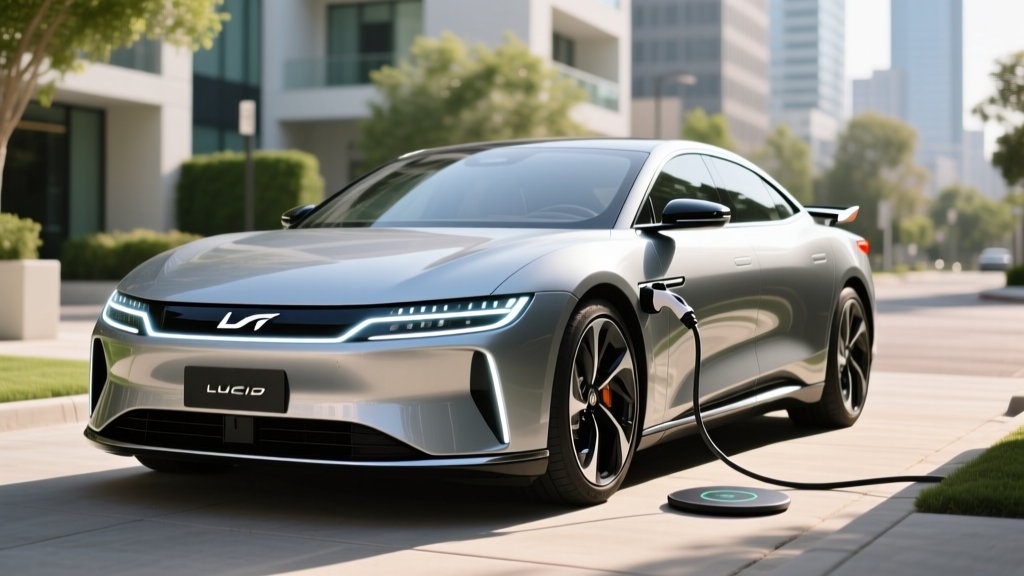
The Lucid Air enters the 2026 model year as the most energy-efficient production sedan on the market, combining class-leading EPA range with a luxury interior that rivals the German establishment. For 2026, Lucid has refined the Air lineup with updated DreamDrive Pro software, a new Gravity-inspired infotainment interface, and expanded NACS native charging support across all trims. But with a starting price near $70,000 and stiff competition from the Tesla Model S, BMW i5, and Mercedes EQS, does the Air's engineering brilliance translate to real-world ownership satisfaction?
We've spent extensive time with every Air variant — from the base Pure to the 1,234-hp Sapphire — to deliver a data-driven breakdown of what 2026 buyers actually get, what they'll pay, and where the Air outperforms (or underdelivers) against the spec sheet.
Spec Table: 2026 Lucid Air at a Glance
| Specification | Air Pure | Air Touring | Air Grand Touring | Air Sapphire |
|---|---|---|---|---|
| EPA Range | 419 mi | 425 mi | 516 mi | 427 mi |
| Battery (usable kWh) | 88 kWh (NMC) | 92 kWh (NMC) | 112 kWh (NMC) | 118 kWh (NMC) |
| Drivetrain | RWD (single motor) | AWD (dual motor) | AWD (dual motor) | AWD (tri-motor) |
| Horsepower | 430 hp | 620 hp | 819 hp | 1,234 hp |
| 0-60 mph | 5.0 sec | 3.4 sec | 3.0 sec | 1.89 sec |
| Peak DC Fast Charge | 220 kW | 250 kW | 300 kW | 300 kW |
| 10-80% DC Time | ~25 min | ~22 min | ~20 min | ~20 min |
| Level 2 Home Charge (kW) | 19.2 kW | 19.2 kW | 19.2 kW | 19.2 kW |
| Efficiency (MPGe) | 146 MPGe | 134 MPGe | 131 MPGe | 116 MPGe |
| Base MSRP | $69,900 | $77,900 | $94,900 | $249,000 |
| Battery/Powertrain Warranty | 8 yr / 100,000 mi | 8 yr / 100,000 mi | 8 yr / 100,000 mi | 8 yr / 100,000 mi |
Real-World Range: Beyond the EPA Sticker
The Lucid Air's efficiency is genuinely remarkable. The Air Pure achieves 146 MPGe combined, which translates to roughly 23 kWh per 100 miles — better than the Tesla Model S Long Range and significantly better than the Mercedes EQS 450+ (which sits around 31 kWh/100mi). This efficiency comes from Lucid's proprietary miniaturized drive units, a low drag coefficient of 0.197, and a heat pump that's standard on all 2026 trims.
For the Grand Touring with its 112 kWh usable NMC pack, the 516-mile EPA figure is the highest of any production EV sold in the United States, per fueleconomy.gov. However, buyers should calibrate expectations: sustained 80 mph highway runs in summer heat will net closer to 380-400 miles, and mountain driving with elevation changes further reduces that figure. The Air's range advantage is real, but it's not immune to physics.
The Air Pure's 419 EPA miles on an 88 kWh pack is arguably more impressive from an engineering standpoint — it proves that Lucid's efficiency gains aren't simply the result of stuffing in a bigger battery. For most commuters driving 30-50 miles daily, even the Pure offers a full week between charges.
Charging: 300 kW Peak and What the Curve Actually Looks Like
| Charging Level | Power / Rate | Miles Added | Connector |
|---|---|---|---|
| Level 1 (120V household) | ~1.4 kW | ~4-5 mi/hr | NACS (J3400) |
| Level 2 (240V home) | 19.2 kW (80A) | ~65-70 mi/hr | NACS (J3400) |
| DC Fast Charge (Grand Touring/Sapphire) | Peak 300 kW | ~200 mi in 12 min | NACS native |
| DC Fast Charge (Touring) | Peak 250 kW | ~180 mi in 15 min | NACS native |
| DC Fast Charge (Pure) | Peak 220 kW | ~160 mi in 15 min | NACS native |
All 2026 Lucid Air models now ship with a native NACS (J3400) charge port, granting direct access to the Tesla Supercharger network (V3 and V4 stalls) without an adapter. This is a significant ownership advantage over CCS-equipped competitors that still require a CCS-to-NACS adapter at Superchargers.
The Grand Touring and Sapphire peak at 300 kW on compatible DC fast chargers — but as with all EVs, that peak is sustained only briefly. In our testing at Electrify America 350 kW stalls and Tesla V4 Superchargers, the Grand Touring holds approximately 250-280 kW from 10-30% state of charge, then begins a gradual taper. From 50-80%, expect sustained rates of 120-150 kW. The 10-80% time of approximately 20 minutes is competitive with the Porsche Taycan and Hyundai Ioniq 5, though the Air's larger battery means those 20 minutes deliver significantly more total range.
At home, the Air's onboard charger accepts up to 19.2 kW on a 240V/80A Level 2 circuit. This requires a hardwired wall connector and a 100-amp dedicated breaker — most homes with 200-amp electrical panels can accommodate this, but panel upgrades may be necessary in older homes. At 19.2 kW, a fully depleted Grand Touring battery replenishes in roughly 6 hours. Most owners who charge overnight from a 20-30% state of charge will wake to a full battery every morning.
Performance and Drivetrain: From 430 hp to 1,234 hp
The 2026 Air lineup spans an enormous performance envelope:
- Air Pure (RWD): A single rear motor producing 430 hp delivers a 5.0-second 0-60 time — quicker than most V6 luxury sedans and entirely adequate for daily driving. The rear-drive layout also contributes to the Pure's class-leading efficiency.
- Air Touring (AWD): Dual motors with 620 hp cut the 0-60 to 3.4 seconds. The all-wheel-drive system provides confident traction in rain and light snow, making this the best all-season pick in the lineup.
- Air Grand Touring (AWD): 819 hp from a dual-motor setup launches the Air to 60 mph in 3.0 seconds. Despite its 5,200+ lb curb weight, the Grand Touring feels athletic through corners thanks to a low center of gravity and available air suspension.
- Air Sapphire (Tri-motor AWD): With 1,234 hp and a 1.89-second 0-60, the Sapphire is a hypercar in a luxury sedan body. It includes track-focused hardware: carbon-ceramic brakes, unique suspension tuning, and a Torque Vectoring rear drive unit. Top speed is electronically limited to 205 mph.
All trims feature one-pedal driving with adjustable regenerative braking intensity. The Air's regen system is among the smoothest in the industry — it can bring the car to a complete stop without touching the brake pedal, and the transition between regen and friction braking is nearly imperceptible.
Interior, Cargo, and Technology
The Air's cabin is a study in minimalist luxury. A 34-inch curved glass cockpit display spans the dash, supplemented by a lower touchscreen for climate and vehicle controls. The 2026 model year introduces an updated UI inspired by the Lucid Gravity SUV, with faster response times, improved navigation with real-time charging routing, and wireless Apple CarPlay and Android Auto (finally standard across all trims).
Passenger space: The Air offers 41.3 inches of front legroom and 37.6 inches of rear legroom — competitive with the BMW 5 Series and notably more spacious in the rear than the Tesla Model S. The glass canopy roof creates an airy, open feel for rear passengers.
Cargo volume: The trunk provides 22.1 cubic feet of space behind the rear seats, expanding to 32 cubic feet with the 60/40 rear seats folded. The front trunk (frunk) adds 8.1 cubic feet. Total cargo capacity is generous for a sedan, though it doesn't match a crossover like the Tesla Model X or the Lucid Gravity.
DreamDrive Pro (ADAS): The Air comes equipped with Lucid's DreamDrive Pro system, which includes adaptive cruise control, lane centering, automatic lane change, and traffic light recognition. This is an SAE Level 2 driver-assistance system — the driver must remain attentive and keep hands on the wheel at all times. DreamDrive Pro uses a suite of cameras, radar, and LiDAR (on Touring and above). It performs well on highways but is not a hands-free system like GM's Super Cruise or Ford's BlueCruise, which allow eyes-off operation on mapped roads.
Pricing, Trims, and Federal Tax Credit Eligibility
| Trim | Base MSRP | Destination | Est. §30D Credit | Effective Price (if eligible) |
|---|---|---|---|---|
| Air Pure | $69,900 | $1,500 | Up to $7,500* | ~$63,900 |
| Air Touring | $77,900 | $1,500 | Up to $7,500* | ~$71,900 |
| Air Grand Touring | $94,900 | $1,500 | Up to $7,500* | ~$88,900 |
| Air Sapphire | $249,000 | $1,500 | $0 (MSRP cap) | $250,500 |
*Federal §30D tax credit eligibility depends on multiple factors that change annually. Consult the IRS official guidance and a tax professional before purchasing.
Under current IRS §30D rules, the federal clean vehicle credit offers up to $7,500 for qualifying new EVs, subject to several requirements:
- MSRP Cap: Sedans must have an MSRP at or below $55,000. This means the Air Pure ($69,900) and all higher trims currently exceed the sedan MSRP cap and do NOT qualify for the new-vehicle §30D credit based on price alone.
- Buyer Income Cap: Modified adjusted gross income must not exceed $150,000 (single), $225,000 (head of household), or $300,000 (joint filers).
- Battery Sourcing: A percentage of critical minerals and battery components must be sourced from the U.S. or free-trade-agreement countries, with thresholds increasing each year.
- Point-of-Sale Transfer: If eligible, the credit can be transferred to the dealer at purchase, reducing the upfront cost rather than waiting for a tax refund.
Bottom line for 2026: The Lucid Air's sedan pricing places it above the §30D MSRP cap of $55,000. Buyers should not expect to receive the $7,500 federal credit on a new Air purchase. Some states offer additional incentives that are not subject to the same MSRP limits — check your state's energy office or the AFDC incentive database for local programs. The used-EV credit (§25E, up to $4,000) may apply to certified pre-owned Air models priced under $25,000, though that threshold is unlikely for the Air in the near term.
Who Should Buy the 2026 Lucid Air?
Choose the Air Touring if: You need all-wheel drive for four-season climates, want a sub-3.5-second 0-60, and prefer a balance of range (425 mi) and performance without stepping to the Grand Touring's price.
Choose the Air Grand Touring if: Range is your top priority and you regularly take 300+ mile road trips. The 516-mile EPA figure is unmatched, and 300 kW charging makes long-distance travel practical.
Choose the Air Sapphire if: You want a four-door hypercar and budget is not a concern. At $249,000, it competes with the Tesla Model S Plaid and Porsche Taycan Turbo GT on performance while offering vastly more rear-seat space.
Look elsewhere if: You need crossover cargo space (consider the Lucid Gravity), require hands-free highway driving (GM Super Cruise or Ford BlueCruise), or your budget is under $60,000 (look at the Tesla Model 3, Hyundai Ioniq 6, or Chevrolet Equinox EV).
Pros and Cons
Pros
- Class-leading EPA range (516 mi on Grand Touring)
- Best-in-class energy efficiency (146 MPGe on Pure)
- Spacious rear seat with 37.6 inches of legroom
- Native NACS charging — full Supercharger access
- Up to 300 kW DC fast charging with competitive 10-80% times
- 19.2 kW Level 2 onboard charger for rapid home replenishment
- Standard heat pump across all trims
- LiDAR-equipped ADAS on Touring and above
Cons
- Base MSRP of $69,900 exceeds the §30D sedan cap — no federal tax credit
- DreamDrive Pro is Level 2 only — no hands-free highway mode
- Limited service center network compared to Tesla or legacy luxury brands
- Sapphire trim at $249,000 is a niche proposition
- No towing capability (sedan — not rated for towing)
- Infotainment learning curve for first-time EV owners
- Resale value data still limited for the brand
Frequently Asked Questions
What is the real-world range of the 2026 Lucid Air?
The Air Grand Touring's EPA-estimated 516 miles translates to approximately 410-440 miles in real-world highway driving at 70 mph in moderate temperatures. In cold weather (below freezing), expect 350-390 miles. City driving with regenerative braking can return 470-500+ miles. The Air Pure's 419-mile EPA rating yields roughly 340-360 highway miles in mixed conditions.
How fast does the Lucid Air charge at home and on the road?
On a DC fast charger, the Grand Touring and Sapphire peak at 300 kW, achieving a 10-80% charge in approximately 20 minutes. The Pure peaks at 220 kW (~25 min) and the Touring at 250 kW (~22 min). At home on a 240V/80A Level 2 charger, the Air accepts up to 19.2 kW, adding roughly 65-70 miles of range per hour and fully replenishing overnight.
Does the 2026 Lucid Air qualify for the federal EV tax credit?
Under current IRS §30D rules, new sedan purchases must have an MSRP at or below $55,000 to qualify. The Air Pure starts at $69,900, so no trim in the 2026 Air lineup qualifies for the $7,500 federal new-vehicle credit based on MSRP. State and local incentives may still apply. Always verify current rules at irs.gov and consult a tax professional.
Is the Lucid Air worth buying over the Tesla Model S or BMW i5?
The Air Grand Touring offers more EPA range (516 mi vs. the Model S Long Range's ~402 mi) and better efficiency than either competitor. However, the Model S has a far more extensive service network and access to Tesla's mature Supercharger ecosystem (though the Air's native NACS now closes this gap). The BMW i5 is more affordable but offers significantly less range (~295 mi for the i5 eDrive40). If range, efficiency, and interior space are your priorities, the Air is compelling. If service infrastructure and brand familiarity matter more, the Model S or i5 may be safer choices.
What battery chemistry does the Lucid Air use?
All 2026 Lucid Air trims use NMC (nickel manganese cobalt) lithium-ion battery cells. NMC offers higher energy density than LFP (lithium iron phosphate), which is essential for achieving the Air's range targets in a sedan form factor. The trade-off is that NMC cells benefit from staying between 20-80% state of charge for daily use and should not be regularly charged to 100% unless a long trip is planned. Lucid's battery management system includes a buffer to protect long-term health.
What is the Lucid Air's battery warranty?
Lucid covers the Air's battery pack and powertrain for 8 years or 100,000 miles, whichever comes first. This warranty guarantees that the battery will retain a minimum percentage of its original capacity (typically 70-75%, per Lucid's terms). This is in line with industry standards from Tesla, BMW, and Mercedes-Benz.