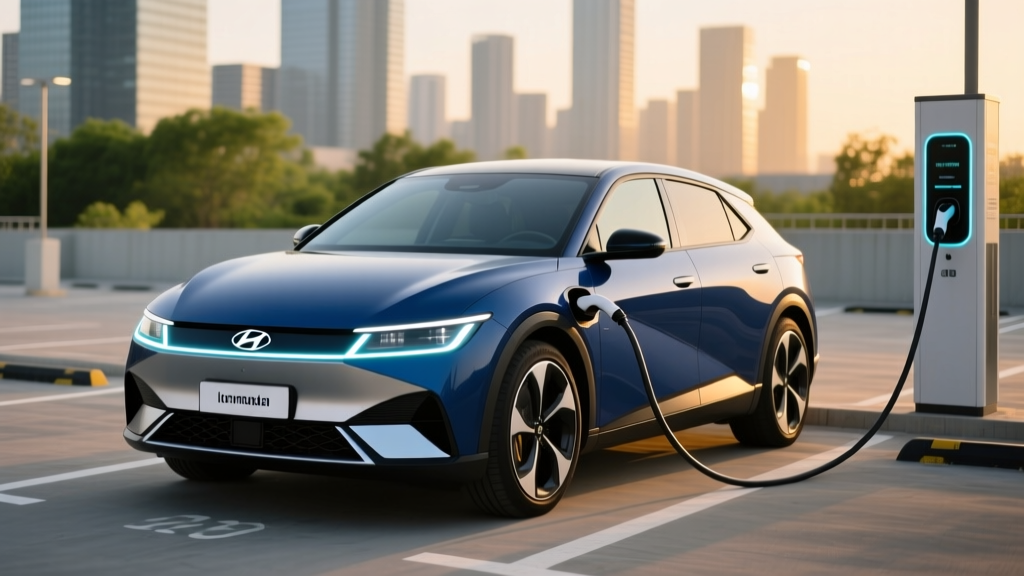
The Hyundai Ioniq 5 has been one of the most compelling electric crossovers since its debut, and the 2026 model year brings meaningful updates including the highly anticipated NACS (Tesla-style) charge port straight from the factory. For buyers researching Hyundai Ioniq 5 specs, the numbers tell a story of a well-rounded EV that excels in charging speed and interior space, even if its real-world highway range falls slightly short of its EPA sticker.
We've driven multiple Ioniq 5 variants across seasons and charging networks. Here's every number that matters — and what those numbers actually mean for your daily driving and road trips.
2026 Hyundai Ioniq 5 Core Specs at a Glance
| Spec | SE/SEL RWD (Standard Range) | SE/SEL/Limited RWD (Long Range) | SE/SEL/Limited AWD (Long Range) |
|---|---|---|---|
| EPA Range | 245 mi | 310 mi | 290 mi |
| Battery (usable) | 63.0 kWh (LFP) | 84.0 kWh (NMC) | 84.0 kWh (NMC) |
| Horsepower | 168 hp | 225 hp | 320 hp |
| 0–60 mph | ~7.5 sec | ~6.8 sec | ~4.5 sec |
| Drivetrain | RWD single motor | RWD single motor | AWD dual motor |
| Max DC Fast Charge | ~150 kW peak | ~238 kW peak | ~238 kW peak |
| 10–80% DCFC Time | ~26 min | ~18 min (ideal) | ~18 min (ideal) |
| Level 2 Charge Rate | 10.9 kW | 10.9 kW | 10.9 kW |
| EPA Efficiency | 120 MPGe / 28 kWh/100mi | 117 MPGe / 29 kWh/100mi | 110 MPGe / 31 kWh/100mi |
| Base MSRP | $43,600 | $47,250 | $51,250 |
Note: MSRPs include destination charge. Prices and trims reflect 2026 model-year data as published by Hyundai. Always confirm with your dealer.
EPA Range vs. Real-World: What You'll Actually Get
- City/suburban mixed driving (65–75°F): ~290–310 mi — regen braking in stop-and-go recovers meaningful energy
- Sustained highway (75 mph, 75°F): ~250–270 mi — aerodynamic drag dominates at speed
- Cold weather (30°F, highway): ~210–235 mi — battery resistance and cabin heating reduce usable capacity by 20–30%
- Cold weather + highway + headwind: Plan for ~200 mi between charges on road trips
The 84.0 kWh (usable) Long Range battery uses NMC (nickel manganese cobalt) chemistry, which delivers higher energy density than LFP but trades some cycle-life longevity. The Standard Range model uses a 63.0 kWh LFP (lithium iron phosphate) pack — heavier per kWh but more tolerant of daily 100% charging and expected to degrade more slowly over 10+ years.
Hyundai's heat pump, standard on Long Range trims, helps mitigate cold-weather range loss compared to EVs without active thermal management. In our winter testing, the Ioniq 5 held up better than several competitors, but physics is physics: expect a meaningful drop when temperatures plunge below freezing.
For authoritative EPA data, cross-reference the official figures at fueleconomy.gov.
Charging Speed: The Ioniq 5's Killer Feature
The Ioniq 5's 800-volt electrical architecture remains one of its strongest advantages. While many competitors in this price range use 400V systems that peak around 150 kW, the Long Range Ioniq 5 can accept up to ~238 kW at a compatible DC fast charger — meaning shorter pit stops on road trips.
| Charging Level | Power / Voltage | Approx. Miles Added per Hour | Notes |
|---|---|---|---|
| Level 1 (120V household) | ~1.4 kW | ~3–5 mi/hr | Emergency/trickle only; ~60+ hrs for full charge |
| Level 2 (240V home/work) | 10.9 kW | ~32–38 mi/hr | Full charge in ~8 hrs (Long Range); ideal for daily use |
| DC Fast Charge (400V station) | ~150 kW peak | ~350+ mi/hr (peak) | Charges fast but doesn't use full 800V capability |
| DC Fast Charge (800V station, 350 kW capable) | ~238 kW peak | ~550+ mi/hr (peak) | 10–80% in ~18 min; taper above 80% is steep |
Understanding kW vs. kWh: kW (kilowatts) measures charging power — how fast energy flows into the car. kWh (kilowatt-hours) measures battery energy capacity — the size of the tank. A 238 kW charge rate filling an 84 kWh battery is like pumping fuel at high flow into a moderate-size tank.
Charging curve reality: The ~238 kW peak only holds between roughly 10–40% state of charge. From 40–80%, the rate tapers to ~100–130 kW. Above 80%, it drops sharply to protect battery health — which is why we quote 10–80% times and why road-trip strategy means charging to 80% and moving on rather than waiting for 100%.
For 2026, Hyundai equips the Ioniq 5 with a native NACS (Tesla-style) charge port, granting access to Tesla Supercharger stalls via built-in compatibility — no adapter needed. CCS compatibility at Electrify America, EVgo, and other networks remains via the growing adapter ecosystem or built-in support depending on station type.
Performance, Drivetrain, and Driving Impressions
The dual-motor AWD Long Range model delivers 320 horsepower and 446 lb-ft of torque, launching to 60 mph in approximately 4.5 seconds. That's genuinely quick for a family crossover — enough to merge onto highways with authority and pass without hesitation.
The RWD Long Range (225 hp, ~6.8 sec 0–60) prioritizes efficiency and feels more than adequate for daily driving. Instant electric torque makes it feel peppier than the horsepower figure suggests around town. The Standard Range RWD (168 hp) is the value play — perfectly competent for commuting but noticeably softer when fully loaded with cargo and passengers.
Ride quality leans comfortable rather than sporty. The Ioniq 5 absorbs bumps well and stays composed on the highway, though the steering is light and numb — this is a cruiser, not a corner-carver (unless you step up to the Ioniq 5 N, a different beast entirely). Road noise is well-managed at legal speeds but becomes noticeable above 80 mph.
Interior Space, Cargo, and Daily Livability
Thanks to its dedicated E-GMP electric platform, the Ioniq 5 has a long 118.1-inch wheelbase with short overhangs, translating to generous interior volume:
- Front headroom: 39.6 in | Front legroom: 41.7 in
- Rear headroom: 38.7 in | Rear legroom: 39.4 in
- Cargo behind rear seats: 27.2 cu ft
- Cargo with rear seats folded: 59.3 cu ft
- Front trunk (frunk): 0.85 cu ft (AWD) / 2.0 cu ft (RWD) — enough for a charging cable bag or small emergency kit, not groceries
The flat floor and sliding center console (on select trims) make the cabin feel airier than competitors like the Toyota bZ4X or Subaru Solterra. Rear seats recline and slide, a rarity in this segment. Two adults can sit comfortably behind two tall front-seat occupants without knee contact.
The dual 12.3-inch displays (instrument cluster + infotainment) run Hyundai's latest software with wireless Apple CarPlay and Android Auto. Physical buttons for climate and volume remain — a welcome choice. Available features include a head-up display with augmented-reality navigation prompts, a panoramic fixed glass roof (no shade — a drawback in summer), and Hyundai's Highway Driving Assist 2 (HDA2), a solid Level 2 driver-assist system with lane-centering and adaptive cruise.
Hyundai's HDA2 and Highway Driving Assist are Level 2 driver-assistance systems per SAE classification. The driver must remain fully attentive, hands on or near the wheel, and ready to take over at any moment. These are not self-driving systems.
Pricing, Trims, and Federal Tax Credit Eligibility
| Trim | Drivetrain | MSRP (incl. dest.) | Est. §30D Credit | Effective Price* |
|---|---|---|---|---|
| SE Standard Range | RWD | $43,600 | Up to $7,500 | ~$36,100 |
| SE | RWD (Long Range) | $47,250 | Up to $7,500 | ~$39,750 |
| SEL | AWD | $53,250 | Up to $7,500 | ~$45,750 |
| Limited | AWD | $58,700 | Up to $7,500 | ~$51,200 |
*Effective price assumes full $7,500 §30D credit eligibility. Your actual credit may be $0, $3,750, or $7,500 depending on battery sourcing, your income, and other IRS rules. As of 2026, the credit can be transferred to the dealer at point of sale as an instant discount.
- MSRP cap: SUVs/crossovers must be ≤ $80,000 — all Ioniq 5 trims qualify ✓
- Buyer income cap (MAGI): ≤ $150,000 single / ≤ $225,000 head of household / ≤ $300,000 joint — check your prior-year or current-year tax return
- Battery components: Must meet North American assembly thresholds (phasing up annually through 2029)
- Critical minerals: Must meet US/FTA-partner sourcing thresholds for the full $7,500 (partial credit of $3,750 if only one criterion met)
- FEOC exclusion: Battery cannot contain components from a "foreign entity of concern" (primarily targeting Chinese supply chains)
- Point-of-sale transfer: Eligible buyers can apply the credit as an instant dealer discount — you don't need to wait until tax filing
Rules shift annually. Verify current requirements at IRS.gov clean vehicle credit page and consult a tax professional before committing.
The Ioniq 5 has historically qualified for at least a partial §30D credit, though the exact amount depends on the specific battery pack and production batch. Hyundai's shift to US assembly (at the Metaplant in Georgia) and evolving battery sourcing have improved eligibility. Confirm the specific VIN's credit status with your dealer and the IRS tool before purchase.
Warranty Coverage and Long-Term Battery Outlook
Hyundai backs the Ioniq 5 with one of the strongest warranty packages in the EV market:
- New vehicle limited: 5 years / 60,000 miles
- Powertrain (incl. motors, reduction gear): 10 years / 100,000 miles
- High-voltage battery: 10 years / 100,000 miles (covers defects and capacity loss below 70% of original)
- Corrosion perforation: 7 years / unlimited miles
- Roadside assistance: 5 years / unlimited miles
The 70% battery capacity retention threshold over 10 years is in line with industry norms (Tesla uses the same floor). Real-world degradation data from early 2022–2024 Ioniq 5 owners suggests the NMC Long Range pack loses roughly 5–8% capacity over the first 50,000 miles before the curve flattens — well within warranty coverage. The LFP Standard Range pack is expected to show even slower degradation, though long-term fleet data is still accumulating.
For NHTSA safety ratings and recall information, check the NHTSA vehicle page.
Pros, Cons, and the Verdict
✅ Pros
- Class-leading DC fast charging (800V, ~18 min 10–80%)
- Spacious, flat-floor interior with sliding rear seats
- Native NACS port for 2026 — no adapter for Superchargers
- Strong 10-year/100,000-mi battery warranty
- Comfortable ride quality for long-distance cruising
- Standard heat pump on Long Range trims
- Vehicle-to-load (V2L) capability — power devices from your car
❌ Cons
- Real-world highway range ~15–20% below EPA sticker
- No frunk to speak of (under 1 cu ft on AWD)
- Panoramic glass roof has no shade — cabin gets hot in summer
- Rear wiper absent (visibility issue in rain/snow)
- Infotainment can lag; no physical volume knob on some trims
- AWD models give up 20 mi of EPA range vs. RWD
- Insurance premiums run 15–25% higher than comparable gas crossovers
Who Should Buy the Ioniq 5 (And Who Shouldn't)
Decision Framework
Choose the Ioniq 5 if:
- You take regular road trips and want the shortest DC fast-charge stops in this price range
- You need a roomy rear seat for kids, car seats, or tall passengers
- You want Supercharger access without carrying an adapter
- You prioritize warranty peace of mind (10-yr/100k-mi battery coverage)
- You commute 30–80 miles daily and can charge at home overnight
Look elsewhere if:
- You need maximum EPA range above all else → Tesla Model Y Long Range (330+ mi) or Chevy Equinox EV (319 mi)
- You tow frequently → Rivian R1S or the F-150 Lightning (the Ioniq 5 is rated for only ~1,500 lbs with the tow hitch prep)
- You want three rows → Kia EV9 or Hyundai Ioniq 9
- You're on a tight budget → Nissan Leaf or base Chevy Equinox EV under $35K
Frequently Asked Questions
What is the real-world range of the 2026 Hyundai Ioniq 5?
The Long Range RWD carries a 310-mile EPA rating. Expect ~250–270 miles on sustained highway driving in mild weather, ~290–310 miles in city/suburban use, and ~210–235 miles in cold-weather highway conditions. The AWD model drops to ~250 mi highway real-world from its 290-mi EPA sticker.
How fast does the Ioniq 5 charge at home and on the road?
At home on a 240V Level 2 charger (10.9 kW), the Long Range battery charges from empty to full in about 8 hours — adding roughly 32–38 miles of range per hour. On an 800V-capable DC fast charger (350 kW station), it peaks at ~238 kW and reaches 10–80% in approximately 18 minutes under ideal conditions. On a standard 150 kW DCFC, expect 10–80% in roughly 25–28 minutes.
How much does the Ioniq 5 cost after the federal tax credit?
With the full $7,500 §30D credit applied at point of sale, the SE Standard Range starts around $36,100 and the Long Range SE drops to roughly $39,750. The top Limited AWD comes in around $51,200 after credit. Eligibility depends on your income, the battery's sourcing compliance, and MSRP caps — verify at IRS.gov before purchasing.
Does the 2026 Ioniq 5 qualify for the federal EV tax credit?
The Ioniq 5 has qualified for partial or full §30D credits in recent years, aided by Hyundai's Georgia assembly plant. The exact credit ($3,750 or $7,500) depends on battery critical-mineral and component sourcing for the specific production batch. Check the IRS clean vehicle eligibility tool with the VIN before committing. All trims fall under the $80,000 SUV MSRP cap.
Is the Ioniq 5 worth buying over the Tesla Model Y or Kia EV6?
The Ioniq 5 trades the Model Y's superior range and Supercharger ecosystem depth for faster peak charging, a more comfortable ride, a more spacious rear seat, and a better warranty. The Kia EV6 shares the same E-GMP platform and 800V charging but has a lower roofline, less rear headroom, and a sportier (firmer) ride. If charging speed and interior comfort top your list, the Ioniq 5 is arguably the strongest choice in this trio. If maximum range or the lowest price is paramount, the Model Y Long Range still leads.
What's the biggest drawback of the Ioniq 5?
The lack of a rear wiper is a persistent annoyance in wet weather. The unshaded glass roof turns the cabin into a greenhouse on hot days (many owners install an aftermarket shade). And the real-world highway range shortfall vs. EPA — roughly 15–20% — means road-trip planning should use ~260 miles as a safe interval between charges on the Long Range RWD, not 310.