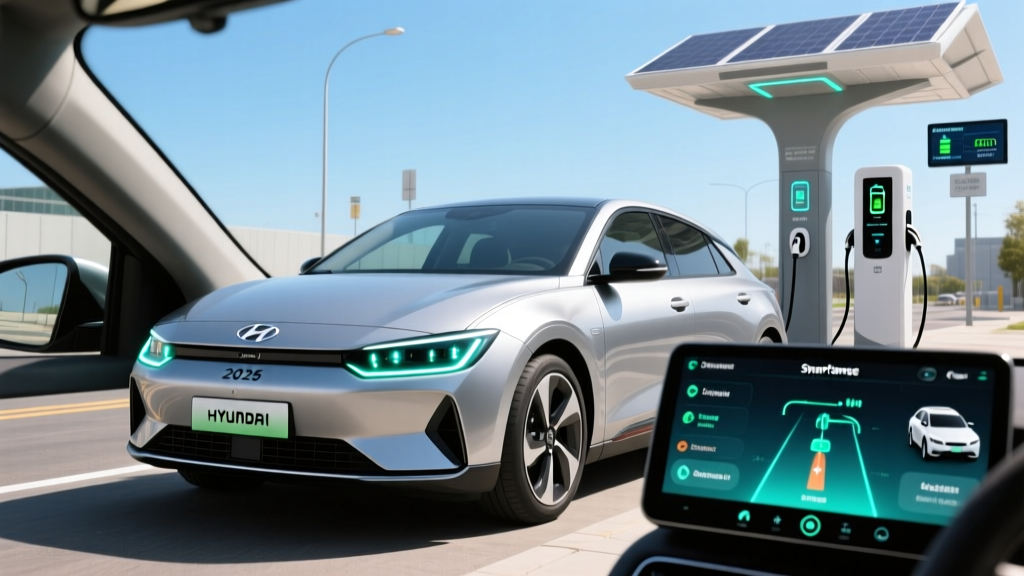
The Hyundai Ioniq 5 remains one of the most compelling electric crossovers on the market, blending retro-futuristic styling with an 800-volt architecture that delivers class-leading DC fast-charging speeds. But a growing number of shoppers are searching for "Ioniq 5 self drive" — and that's where expectations need a reality check. Hyundai's SmartSense driver-assistance suite is genuinely capable highway companionship, but it is not a self-driving system. Let's break down exactly what the Ioniq 5 can and cannot do behind the wheel, alongside the hard numbers on range, charging, pricing, and ownership that matter most to EV buyers in 2026.
Hyundai Ioniq 5 at a Glance: 2026 Specs
| Specification | SE / SEL Standard Range | SE / SEL / Limited Long Range RWD | SEL / Limited Long Range AWD |
|---|---|---|---|
| EPA Range | 245 mi | 303 mi | 270 mi |
| Battery (usable) | 58 kWh (LFP) | 84 kWh (NMC) | 84 kWh (NMC) |
| Horsepower | 168 hp | 225 hp | 320 hp |
| 0-60 mph | ~7.5 sec | ~6.7 sec | ~4.5 sec |
| Drivetrain | RWD | RWD | Dual-Motor AWD |
| Max DC Fast Charge | ~150 kW | ~240 kW | ~240 kW |
| 10-80% DC Time | ~25 min | ~18 min | ~18 min |
| Level 2 Home Charge | 7.2 kW (~24 mi/hr) | 10.9 kW (~36 mi/hr) | 10.9 kW (~36 mi/hr) |
| MPGe (combined) | 110 MPGe | 114 MPGe | 101 MPGe |
| Base MSRP (2026) | $42,600 | $46,650 | $50,150 |
Source: fueleconomy.gov and Hyundai USA specifications. Prices include destination charge.
Does the Ioniq 5 Have Self-Driving Capability?
The Hyundai Ioniq 5's SmartSense and Highway Driving Assist 2 (HDA 2) are Level 2 driver-assistance systems. The vehicle can manage steering, acceleration, and braking on highways under specific conditions, but the driver must remain fully engaged with hands on or near the wheel and eyes on the road at all times. This is not autonomous or "self-driving" — only Level 4 services like Waymo operate without a human driver. (SAE J3016 reference)
The Ioniq 5's driver-assistance suite is branded Hyundai SmartSense, and higher trims add Highway Driving Assist 2 (HDA 2). Here's what you actually get:
- Navigation-Based Smart Cruise Control (NSCC): Uses GPS and map data to automatically slow for curves and toll zones on highways. Maintains your set speed and following distance in traffic.
- Lane Following Assist (LFA): Actively centers the vehicle in its lane using camera-based lane detection. Works on highways and well-marked urban roads.
- Highway Driving Assist 2 (HDA 2 — SEL and above): Combines NSCC and LFA with lane-change assist. The car can execute a lane change when you activate the turn signal, provided the adjacent lane is clear. Also includes machine-learning-based driver pattern recognition.
- Remote Smart Parking Assist (RSPA): The Ioniq 5 can pull itself into or out of a tight parking space while you stand outside the vehicle using the key fob. This is the closest the Ioniq 5 gets to "self-driving" — but it's a low-speed, supervised parking maneuver, not open-road autonomy.
- It does not navigate city streets, stoplights, or stop signs autonomously.
- It does not allow hands-off or eyes-off driving. Capacitive steering wheel sensors require periodic touch confirmation.
- It does not merge onto highways or take exits without driver initiation.
- It does not function in construction zones or where lane markings are absent or conflicting.
- Performance degrades in heavy rain, snow, or direct low-angle sun that blinds cameras.
Compared to Tesla Autopilot/FSD (Supervised) and GM Super Cruise: HDA 2 is competent but conservative. It lacks Tesla's city-street FSD capability (which itself requires constant supervision) and GM's hands-off Super Cruise on mapped divided highways. Hyundai's approach prioritizes safety predictability over feature boldness — a trade-off some buyers will appreciate and others will find limiting.
Real-World Range: Beyond the EPA Sticker
Real-World Expectation: ~250-275 miles highway at 70-75 mph; ~210-240 miles in freezing weather (below 32°F); ~280-300 miles mixed city/suburban driving with regen braking.
The 303-mile EPA figure for the Long Range RWD is among the best in the midsize electric crossover segment. But EPA testing cycles are weighted toward lower-speed, mixed driving. In our experience and consistent third-party testing, highway-heavy road trips at sustained 70+ mph speeds typically yield 83-90% of the EPA number. Cold weather compounds this — lithium-ion batteries lose efficiency in freezing temperatures, and cabin heating (even with the Ioniq 5's standard heat pump) draws significant energy.
The Standard Range model's 245-mile EPA rating drops to roughly 180-200 miles on a cold-weather highway run. That's adequate for commuting but requires planning for road trips exceeding 150 miles one-way in winter.
Efficiency note: The Long Range RWD achieves 114 MPGe combined (29 kWh/100 mi), making it one of the most efficient vehicles in its class. The AWD model drops to 101 MPGe (33 kWh/100 mi) — a meaningful difference if you drive 15,000+ miles annually.
Charging Speed: The Ioniq 5's Biggest Advantage
| Charging Level | Power / Rate | Miles Added Per Hour | Notes |
|---|---|---|---|
| Level 1 (120V household) | 1.4 kW | ~4-5 mi/hr | Emergency/trickle only; ~60+ hrs for full charge |
| Level 2 (240V home, 48A) | 10.9 kW | ~36 mi/hr | Full charge overnight in ~8-9 hrs (84 kWh battery) |
| DC Fast Charge (peak) | ~240 kW | N/A | 10-80% in ~18 min (Long Range); requires 350 kW-capable station |
| DC Fast Charge (typical 150 kW) | ~150 kW | N/A | 10-80% in ~25 min; more common at Electrify America / EVgo |
The Ioniq 5's 800-volt E-GMP architecture is the feature that sets it apart from nearly every competitor under $60,000. While most rivals (Tesla Model Y, Ford Mustang Mach-E, VW ID.4) use 400-volt systems that peak around 150-170 kW, the Ioniq 5 can accept up to ~240 kW at a capable 350 kW charger.
Charging-curve reality check: The Ioniq 5 does not sustain 240 kW for the entire session. Peak rate occurs between roughly 10-55% State of Charge (SoC). From 55-80%, the rate tapers to approximately 120-150 kW. Above 80%, charging slows dramatically to protect battery health — expect 80-100% to take as long as 10-80%. This is normal for all EVs, but it's why we quote 10-80% times rather than "full charge" figures.
Connector: The 2026 Ioniq 5 uses the NACS (Tesla-style) charge port, giving native access to Tesla Superchargers without an adapter. This was a significant shift Hyundai made for the 2025 model year and continues into 2026. CCS adapters are available for legacy Electrify America and other CCS-only stations.
Pricing, Trims, and Federal Tax Credit Eligibility
| Trim | MSRP (2026) | Est. After §30D Credit | Key Features |
|---|---|---|---|
| SE Standard Range | $42,600 | ~$35,100* | Base ADAS, 12.3" dual screens, cloth seats |
| SE Long Range RWD | $46,650 | ~$39,150* | 303-mi range, HDA 2, heated front seats |
| SEL AWD | $52,650 | ~$45,150* | AWD, power liftgate, leatherette, wireless charging |
| Limited AWD | $58,200 | ~$50,700* | HUD, ventilated seats, panoramic roof, premium audio |
*Estimated prices assume full $7,500 §30D federal tax credit eligibility. Actual credit varies.
- MSRP Cap: SUVs/crossovers must be ≤$80,000 MSRP. All Ioniq 5 trims qualify.
- Buyer Income Cap: AGI must not exceed $150,000 (single) / $300,000 (joint) / $225,000 (head of household).
- Battery Sourcing: Critical minerals and battery components must meet escalating domestic-content thresholds. As of 2026, the Ioniq 5's battery sourcing qualifies for the full $7,500 — but confirm via the official DOE/FuelEconomy listing before purchasing, as sourcing rules can change mid-year.
- Point-of-Sale Transfer: You can transfer the credit to the dealer at purchase for an immediate price reduction, rather than waiting to claim it on your tax return. This is available for the Ioniq 5.
- Tax Liability: The credit is non-refundable. You must owe at least $7,500 in federal income tax to benefit fully.
Source: IRS.gov §30D Clean Vehicle Credit. Consult a tax professional for personal eligibility.
Interior, Cargo, and Daily Livability
The Ioniq 5's flat-floor E-GMP platform creates an unusually spacious cabin for a compact/midsize crossover. Key dimensions:
- Cargo volume (rear seats up): 27.2 cu ft
- Cargo volume (rear seats folded): 59.3 cu ft
- Front trunk (frunk): 0.85 cu ft (RWD) / 0.42 cu ft (AWD) — enough for a charging cable bag, not a suitcase
- Rear legroom: 39.4 inches — generous for the class, outpacing the VW ID.4 and rivaling the Tesla Model Y
- Front headroom: 39.6 inches
The dual 12.3-inch curved display cluster runs Hyundai's latest infotainment with wireless Apple CarPlay and Android Auto. Physical climate controls remain (a welcome choice over touch-only interfaces). The center console slides fore and aft up to 5.5 inches — a unique feature that aids rear-seat access in tight parking spots.
Notable drawbacks: Rear wiper is absent (a common Hyundai/Kia EV complaint — hydrophobic glass coating is the workaround). The frunk is disappointingly small compared to the Ford Mach-E or Rivian R1S. And the panoramic fixed glass roof on the Limited trim has no shade, which can make the cabin hot in summer despite UV tinting.
Warranty and Long-Term Ownership
- Battery warranty: 10 years / 100,000 miles (whichever comes first), covering capacity loss below 70% of original state of health
- Powertrain warranty: 10 years / 100,000 miles
- New vehicle limited warranty: 5 years / 60,000 miles
- Roadside assistance: 5 years / unlimited miles
- Complimentary maintenance: 3 years / 36,000 miles
Hyundai's battery warranty is among the strongest in the industry, matching Kia and surpassing Tesla's 8-year/120,000-mile coverage (though Tesla's capacity retention threshold is also 70%). For the NMC Long Range battery, real-world degradation data from 2022-2024 model-year Ioniq 5s suggests approximately 5-8% capacity loss over the first 60,000 miles — well within the warranty buffer. The LFP Standard Range battery is expected to show even less degradation due to LFP chemistry's superior cycle life, though long-term fleet data is still maturing.
Pros and Cons
- Class-leading 800V DC fast charging (~18 min 10-80%)
- 303-mile EPA range on Long Range RWD
- Spacious flat-floor interior with generous rear legroom
- NACS port = native Tesla Supercharger access
- 10-year/100,000-mile battery warranty
- Vehicle-to-load (V2L) capability — power devices from the car
- Standard heat pump on all trims (cold-weather efficiency)
- HDA 2 is not hands-free — requires constant driver supervision
- No rear wiper (visibility issue in rain/snow)
- Tiny frunk — barely fits a charge cable
- Panoramic roof lacks a physical shade (Limited trim)
- AWD range drops to 270 mi EPA
- Ride quality can be firm over broken pavement (18-20" wheels)
- No Apple CarPlay/Android Auto on the navigation-level infotainment without wireless adapter in some early builds
Who Should Buy the Hyundai Ioniq 5?
Choose the Ioniq 5 if:
- You road-trip regularly and want the fastest possible DC charging in this price range.
- You value a spacious, quiet cabin with physical controls alongside modern tech.
- You want NACS native access to the Tesla Supercharger network without adapters.
- You want a long battery warranty and proven E-GMP platform reliability.
Look elsewhere if:
- You want hands-free highway driving — consider GM's Super Cruise-equipped vehicles (Cadillac Lyriq, Chevy Blazer EV).
- You need three rows or 300+ miles of range with AWD — the Kia EV9 or Tesla Model Y Long Range AWD (320+ mi) may suit better.
- You tow frequently — the Ioniq 5 is not rated for towing in the US market.
Frequently Asked Questions
Can the Hyundai Ioniq 5 drive itself?
No. The Ioniq 5's Highway Driving Assist 2 is an SAE Level 2 system that can manage steering, acceleration, and braking on divided highways — but the driver must remain fully engaged with hands on or near the wheel and eyes on the road at all times. It cannot navigate city streets, stoplights, or construction zones autonomously.
What is the real-world range of the Ioniq 5?
The Long Range RWD is EPA-rated at 303 miles. Expect 250-275 miles on highway road trips at 70+ mph, and 210-240 miles in freezing weather. The Standard Range model's 245-mile EPA rating drops to roughly 180-200 miles in cold highway conditions.
How fast does the Ioniq 5 charge?
On a 350 kW-capable DC fast charger, the Long Range Ioniq 5 peaks at ~240 kW and charges from 10-80% in approximately 18 minutes. At a more common 150 kW station, expect 10-80% in about 25 minutes. Home Level 2 charging at 10.9 kW adds roughly 36 miles of range per hour.
Does the 2026 Ioniq 5 qualify for the $7,500 federal tax credit?
The Ioniq 5 qualifies for the full $7,500 §30D credit as of early 2026, provided the buyer meets income caps ($150K single / $300K joint) and the vehicle's MSRP is under $80,000 (all trims qualify). The credit can be transferred to the dealer at point of sale. Always verify current eligibility on fueleconomy.gov before purchasing, as battery-sourcing rules can change.
Is the Ioniq 5 worth buying vs. the Tesla Model Y or Ford Mach-E?
The Ioniq 5 wins on charging speed (800V architecture, 18-min 10-80%) and interior space relative to its footprint. The Tesla Model Y offers a more mature Supercharger ecosystem (though the Ioniq 5 now has native NACS access), more cargo volume, and slightly longer AWD range. The Ford Mach-E is sportier to drive but charges slower and has a smaller battery. If DC charging speed and cabin comfort are your priorities, the Ioniq 5 is the strongest pick in this segment.
What battery chemistry does the Ioniq 5 use?
The Standard Range (58 kWh) uses LFP (lithium iron phosphate) chemistry, which offers longer cycle life and lower degradation but less energy density. The Long Range (84 kWh) uses NMC (nickel manganese cobalt) chemistry for higher energy density and range. Both are liquid-cooled with active thermal management.