Quick Verdict: The Ioniq 5 SEL AWD Hits the Mid-Size EV Sweet Spot
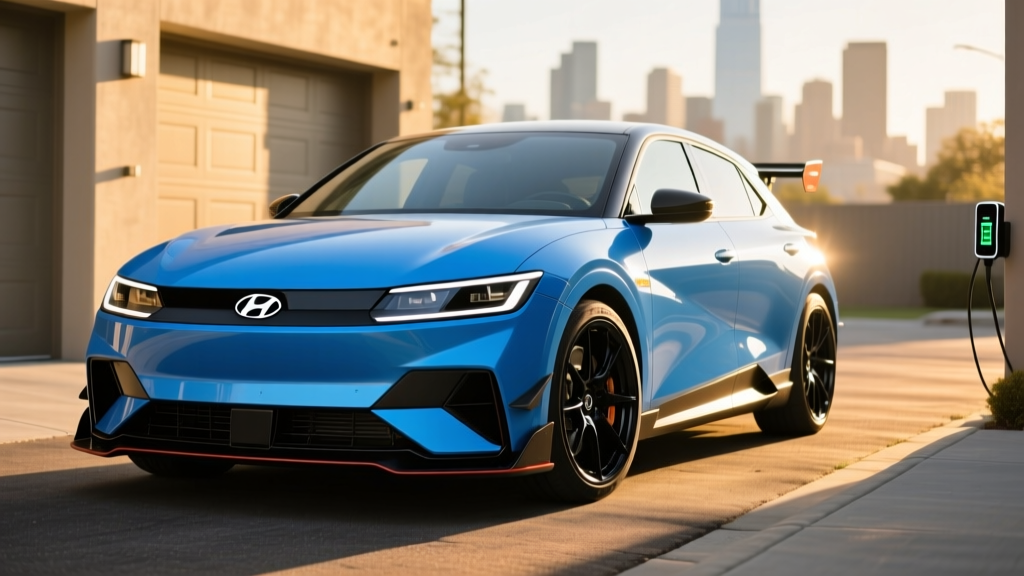
The 2026 Hyundai Ioniq 5 SEL AWD occupies a rare position in the electric crossover market: it pairs dual-motor all-wheel drive with a sub-$55,000 price tag, 800-volt ultra-fast charging architecture, and genuinely usable cargo space. For buyers researching a Hyundai Ioniq 5 SEL AWD lease, the numbers tell a compelling story — 320 horsepower, a 290-mile EPA range estimate, and DC fast charging that peaks at 239 kW. But lease math depends on residual values, money factors, and whether the federal EV tax credit can be passed through the lessor. This review breaks down every spec that matters before you sign.
Range, Battery, and Real-World Efficiency
The 2026 Ioniq 5 SEL AWD carries a 77.4 kWh usable lithium-ion battery pack using NMC (nickel-manganese-cobalt) cell chemistry. Hyundai pairs this with dual electric motors producing a combined 320 horsepower and 446 lb-ft of torque.
Real-World Expectation: Plan for 245–265 miles on mixed highway driving at 70+ mph. In sub-freezing winter conditions, expect 200–230 miles depending on cabin heat usage and whether you precondition the battery. City driving with regenerative braking can push closer to or slightly above the EPA sticker.
The EPA rates the Ioniq 5 AWD at 110 MPGe combined, which translates to roughly 30 kWh per 100 miles. That's competitive with the Ford Mustang Mach-E AWD (101 MPGe) and slightly behind the Tesla Model Y Long Range AWD (122 MPGe). Efficiency drops noticeably at sustained highway speeds above 75 mph — a trait common to all boxy crossover EVs due to aerodynamic drag.
| Spec | Value |
|---|---|
| EPA Range | 290 miles |
| Battery (Usable) | 77.4 kWh, NMC chemistry |
| Drivetrain | Dual-motor AWD |
| Horsepower / Torque | 320 hp / 446 lb-ft |
| 0–60 mph | 4.5 seconds |
| Max DC Fast Charge | 239 kW (peak) |
| 10–80% DC Charge Time | ~18 minutes (ideal conditions) |
| Level 2 Home Charge Rate | 10.9 kW (48A) |
| Efficiency | 110 MPGe / 30 kWh/100 mi |
| Cargo Volume (rear seats up) | 27.2 cu ft |
| Cargo Volume (rear seats folded) | 59.3 cu ft |
| Rear Legroom | 39.4 inches |
| Towing Capacity | 2,300 lbs (with trailer brake) |
| Base MSRP (SEL AWD) | $52,200 |
| Battery Warranty | 10 years / 100,000 miles |
Charging Speed: 800V Architecture Makes a Difference
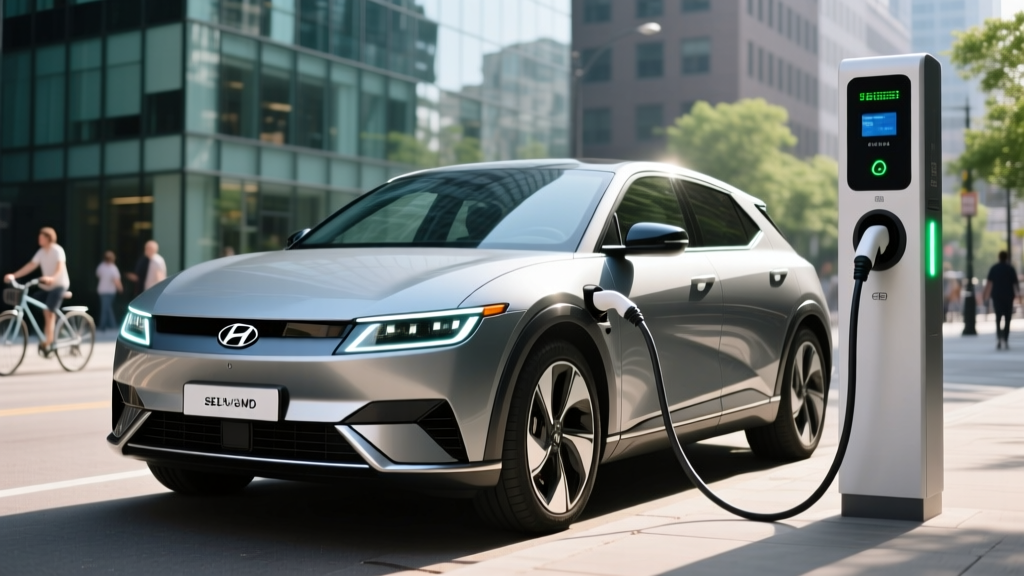
The Ioniq 5's headline advantage is its 800-volt electrical architecture, which enables DC fast-charge rates that most competitors in this price bracket simply can't match. Here's the full charging picture:
| Charge Level | Power | Speed (Approx.) | Connector |
|---|---|---|---|
| Level 1 (120V household) | 1.4 kW | ~4 miles per hour | J1772 / NACS adapter |
| Level 2 (240V home) | 10.9 kW | ~34 miles per hour (~7.5 hrs 10–100%) | J1772 / NACS |
| DC Fast Charge (peak) | 239 kW | 10–80% in ~18 min | CCS / NACS (2025+ models) |
| DC Fast Charge (sustained avg.) | ~150–170 kW avg. | 10–80% real-world ~22 min | CCS / NACS |
Charging curve reality check: The 239 kW figure is a peak, not a sustained rate. The Ioniq 5 holds its highest charge rate between roughly 10% and 45% State of Charge, then tapers progressively. From 80% to 100%, charging slows dramatically — this is normal for NMC battery chemistry to protect long-term cell health. On a road trip, plan your stops around the 10–80% window to minimize time at the charger.
Starting with the 2025 model year, Hyundai transitioned the Ioniq 5 to the North American Charging Standard (NACS) port, giving it native access to Tesla's Supercharger network without an adapter. This is a significant practical advantage over CCS-only vehicles as the industry consolidates around NACS through 2026.
Lease Pricing, Trims, and the Federal Tax Credit Question
Understanding what a Hyundai Ioniq 5 SEL AWD lease actually costs requires untangling MSRP, incentives, and how lessors handle the federal credit.
| Trim | MSRP | §30D Credit Eligible? | Effective Price (if eligible) |
|---|---|---|---|
| SE Standard Range RWD | $42,600 | Yes (if sourcing rules met) | ~$35,100 |
| SE AWD | $47,600 | Yes | ~$40,100 |
| SEL AWD | $52,200 | Yes | ~$44,700 |
| Limited AWD | $58,200 | Yes | ~$50,700 |
The IRS §30D federal tax credit offers up to $7,500 for qualifying new EVs. The 2026 Ioniq 5 (built at Hyundai's Metaplant in Georgia) meets the MSRP cap ($80,000 for SUVs), but eligibility depends on:
- Buyer income caps: Modified AGI ≤ $150,000 (single), $225,000 (head of household), $300,000 (joint)
- Battery component sourcing: Increasing percentages of battery components and critical minerals must be sourced from the U.S. or free-trade-agreement countries — thresholds tighten each year
- Point-of-sale transfer: You can elect to transfer the credit to the dealer at purchase, reducing the drive-off price immediately
- Lease treatment: Under §30D, the lessor (financing company) technically claims the commercial clean vehicle credit — many lessors pass savings to the lessee via reduced monthly payments or capitalized cost reduction, but this is not guaranteed. Always confirm with the dealer's finance office.
Typical lease scenario (2026 SEL AWD): Expect a 36-month lease with $3,500–$4,500 due at signing and monthly payments in the $450–$550 range, depending on money factor, residual value (typically 52–57% for 36 months), and whether the lessor applies the tax credit to the capitalized cost. Compare this to a purchase at $52,200 less $7,500 = $44,700 effective, plus state incentives where available.
Interior Space, Tech, and Daily Livability
The Ioniq 5's flat-floor E-GMP platform creates an unusually spacious cabin for its footprint. The SEL AWD trim includes:
- Dual 12.3-inch displays — one for the instrument cluster, one for infotainment with wireless Apple CarPlay and Android Auto
- Hyundai SmartSense suite — adaptive cruise control with stop-and-go, lane-keeping assist, blind-spot monitoring, rear cross-traffic collision avoidance
- Highway Driving Assist 2 (HDA2) — a competent Level 2 driver-assist system with lane-centering on divided highways. Note: this requires active driver supervision and is not autonomous driving.
- Vehicle-to-Load (V2L) — the Ioniq 5 can supply up to 3.6 kW of AC power from its battery to external devices via an interior outlet or exterior adapter, useful for camping gear, power tools, or emergency backup
- Heat pump (standard on AWD trims) — reduces cabin-heating energy draw in cold weather, helping preserve range
Cargo space is generous: 27.2 cubic feet behind the rear seats, expanding to 59.3 cu ft with the 60/40 split rear seats folded. The front trunk (frunk) adds 0.85 cu ft on AWD models — enough for charging cables and small items, but far smaller than the frunk on a Ford Mustang Mach-E or Tesla Model Y.
Notable drawbacks: The rear windshield wiper is absent (a common complaint in rain/snow), rear visibility is compromised by thick C-pillars, and the infotainment system relies on capacitive touch buttons for climate controls that can be distracting while driving. The SEL trim also lacks the premium features of the Limited — no ventilated rear seats, no digital side mirrors, no Highway Driving Assist with lane-change assist.
How It Compares: Ioniq 5 SEL AWD vs. the Competition
| Spec | Hyundai Ioniq 5 SEL AWD | Tesla Model Y LR AWD | Ford Mach-E Premium AWD |
|---|---|---|---|
| EPA Range | 290 mi | 320 mi | 290 mi |
| Battery | 77.4 kWh (NMC) | ~78 kWh (NMC) | 91 kWh (NMC) |
| Max DC Charge | 239 kW | 250 kW | 150 kW |
| 10–80% Time | ~18 min | ~20 min | ~38 min |
| 0–60 mph | 4.5 sec | 4.8 sec | 5.1 sec |
| AWD MSRP | $52,200 | $48,990 | $51,875 |
| Cargo (rear up) | 27.2 cu ft | 30.2 cu ft | 29.7 cu ft |
| Battery Warranty | 10 yr / 100k mi | 8 yr / 120k mi | 8 yr / 100k mi |
Choose the Tesla Model Y if: Maximum range and Supercharger-native access are your top priorities, and you're comfortable with Tesla's minimal interior and panel-gap variability.
Choose the Ford Mach-E if: You want the largest battery buffer for range confidence, prefer a more car-like driving feel, and don't mind slower DC charging speeds.
Who Is the Ioniq 5 SEL AWD Best For?
The 2026 Hyundai Ioniq 5 SEL AWD is ideal for:
- Daily commuters covering 40–80 miles round-trip who can charge at home overnight on Level 2 — the 290-mile range provides a comfortable multi-day buffer
- Small families needing rear-seat space for child seats (39.4 inches of rear legroom is generous) and cargo room for strollers and groceries
- Road-trippers willing to plan 18–22 minute DC fast-charge stops every 200–240 miles on the interstate, especially along corridors with reliable 350 kW chargers
- Cold-climate buyers who benefit from the standard heat pump and battery preconditioning for winter fast charging
It's less suited for buyers who need three-row seating, want 350+ miles of range without stopping, or regularly tow more than 2,300 pounds.
Pros and Cons
- Class-leading 239 kW DC fast charging with NACS native port
- 10-year / 100,000-mile battery warranty (best in segment)
- Spacious flat-floor cabin with excellent rear legroom
- V2L power output for camping and emergencies
- Strong 320 hp dual-motor acceleration (4.5 sec 0–60)
- Standard heat pump on AWD trims
- Competitive MSRP under $53K for a dual-motor AWD EV
- No rear windshield wiper
- Tiny frunk (0.85 cu ft) compared to rivals
- Capacitive-touch climate controls are distracting
- Real-world highway range drops to ~245–265 mi
- SEL trim lacks some premium driver-assist features
- Rear visibility hindered by thick C-pillars
- Towing limited to 2,300 lbs
Frequently Asked Questions
What is the real-world range of the Ioniq 5 SEL AWD?
The EPA rates it at 290 miles, but real-world mixed highway driving at 70+ mph typically yields 245–265 miles. In winter conditions below freezing, expect 200–230 miles. Preconditioning the battery and using seat heaters instead of cabin heat can help recover 10–20 miles in cold weather.
How fast does the Ioniq 5 charge at home and on DC fast chargers?
At home on a 240V Level 2 charger (10.9 kW), you'll add roughly 34 miles of range per hour — a full overnight charge from 10% to 100% takes about 7.5 hours. On a DC fast charger rated at 350 kW, the Ioniq 5 peaks at 239 kW and charges from 10% to 80% in approximately 18 minutes under ideal conditions, though real-world averages are closer to 22 minutes accounting for taper above 60%.
Does the 2026 Ioniq 5 qualify for the $7,500 federal tax credit?
The Ioniq 5 is assembled in Georgia and falls under the $80,000 SUV MSRP cap, making it potentially eligible for the full $7,500 §30D credit. However, eligibility depends on your income (AGI caps apply), the battery's critical-mineral and component sourcing meeting 2026 thresholds, and whether you purchase or lease. For leases, the lessor claims a related commercial credit — confirm with your dealer whether the savings are passed through to your lease terms.
Is the Ioniq 5 SEL AWD worth leasing vs. buying?
Leasing makes sense if you want lower monthly payments, plan to upgrade in 3 years, and your lessor passes the tax credit through to the capitalized cost. Buying makes more sense if you qualify for the full $7,500 credit at point-of-sale, plan to keep the vehicle 5+ years (the 10-year battery warranty adds value), and drive under 12,000 miles annually. Always compare the total lease cost (sum of payments + drive-off + disposition fee) against the purchase price minus incentives.
Is Hyundai's Highway Driving Assist 2 self-driving?
No. HDA2 is an SAE Level 2 driver-assistance system. It provides adaptive cruise control and lane-centering on highways, but you must keep your hands on the wheel and eyes on the road at all times. It does not handle city streets, construction zones, or complex merges autonomously.
What's the battery warranty coverage?
Hyundai covers the Ioniq 5's high-voltage battery for 10 years or 100,000 miles (whichever comes first) against capacity loss below 70% of original capacity. The electric powertrain components are covered for the same 10-year/100,000-mile term. This is among the longest EV battery warranties available, exceeding Tesla's 8-year/120,000-mile coverage.
How does the Ioniq 5 perform in IIHS safety testing?
The IIHS has rated the Ioniq 5 as a Top Safety Pick+ in prior model years, with top marks in crashworthiness categories. Always verify the current model year's rating on iihs.org before purchasing, as testing criteria and headlight evaluations update annually.