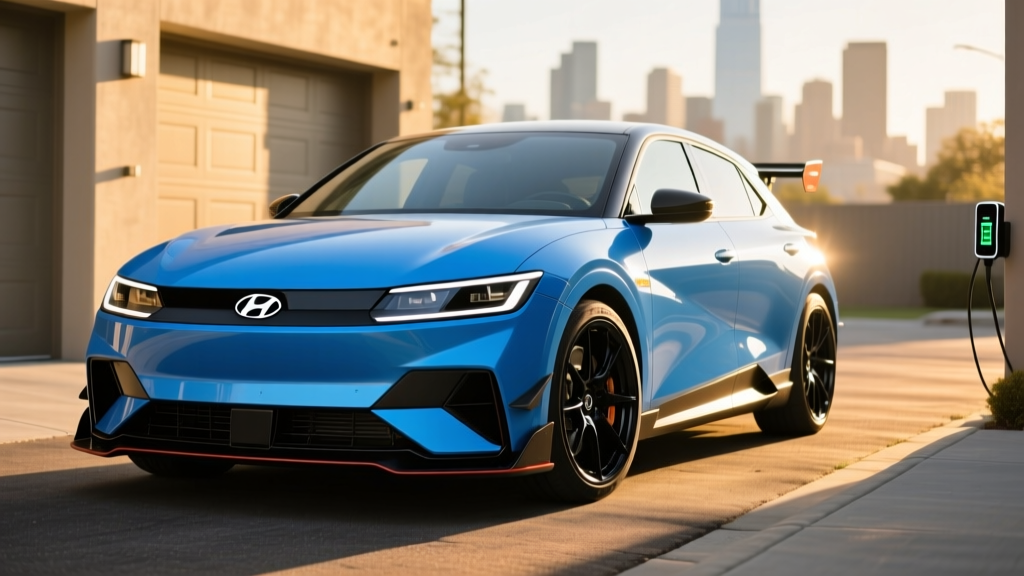
The 2024 Hyundai Ioniq 5 N is not a rational purchase. It is a 4,861-pound electric hot hatch that fakes gear shifts, pumps synthetic engine noise through its speakers, and sprints to 60 mph in 3.25 seconds — all while offering barely 221 miles of EPA-rated range. It exists to answer a single question: can an EV built by Hyundai's N performance division genuinely rival a BMW M3 or a Tesla Model 3 Performance on a track, without sacrificing daily-driver credibility?
After dissecting its specs, charging behavior, and ownership economics, the answer is yes — with significant caveats about range, efficiency, and federal tax credit eligibility that every prospective buyer needs to understand before signing.
2024 Hyundai Ioniq 5 N: Key Specifications at a Glance
| Spec | Value |
|---|---|
| EPA Range | 221 miles |
| Battery (usable) | 84.0 kWh, NMC lithium-ion |
| Drivetrain | Dual-motor AWD |
| Horsepower | 601 hp (641 hp w/ N Grin Boost, 10 sec) |
| Torque | 545 lb-ft (568 lb-ft w/ NGB) |
| 0–60 mph | 3.25 seconds (with N Grin Boost) |
| Top Speed | 161 mph |
| DC Fast Charge Peak | 238 kW (800V architecture) |
| 10–80% DC Time | ~18 minutes |
| Level 2 Charge Rate | 10.9 kW (~37 mi/hr) |
| MPGe (combined) | 84 MPGe |
| Efficiency | 40 kWh/100 mi |
| Cargo (rear seats up) | 27.2 cu ft |
| Cargo (rear seats folded) | 59.3 cu ft |
| Base MSRP | $66,100 |
| Battery Warranty | 8 years / 100,000 miles |
Real-World Range: What 221 EPA Miles Actually Means
Real-World Highway (70 mph, moderate weather): ~180–195 miles
Cold Weather (below 32°F, highway): ~140–165 miles
Track Use (aggressive driving): Under 100 miles
The Ioniq 5 N's 221-mile EPA rating is the lowest of any Ioniq 5 variant, and there is a clear engineering reason for it. The N model sacrifices range for performance: it runs stickier Pirelli P Zero tires with higher rolling resistance, carries roughly 200 pounds more weight than the standard dual-motor Ioniq 5 (due to reinforced body structure, larger brakes, and the N-specific cooling system), and uses a performance-tuned drivetrain that prioritizes power delivery over efficiency.
At 40 kWh per 100 miles combined, the Ioniq 5 N is roughly 33% less efficient than the standard Ioniq 5 AWD (which achieves about 30 kWh/100 mi and 290 miles of range). On a 70-mph highway loop in 65°F weather, expect to see roughly 180–195 miles before the battery hits 10%. Drop the ambient temperature below freezing, and lithium-ion chemistry slows ion movement, reducing usable capacity by 15–25% — bringing real range down to 140–165 miles.
For track days, range becomes almost irrelevant as a daily metric. Sustained high-speed laps with aggressive regen and acceleration cycles will drain the 84 kWh battery in well under 100 miles. Hyundai includes an N-specific thermal management system with enhanced battery cooling to prevent power derating during extended track sessions — a feature absent from the standard Ioniq 5.
Charging Speed: 800V Architecture Delivers Real-World Gains
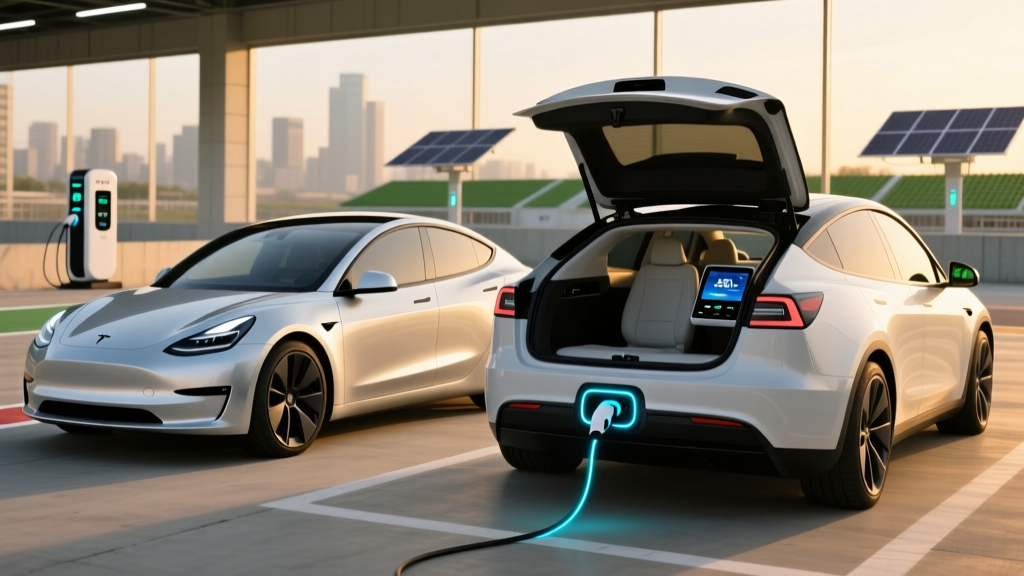
The Ioniq 5 N inherits Hyundai Motor Group's E-GMP 800-volt electrical architecture, which remains one of the fastest-charging platforms available in any production EV under $100,000. Here is the full charging picture:
| Charging Method | Power / Rate | Time / Miles Added |
|---|---|---|
| DC Fast Charge (350 kW station) | Peak 238 kW | 10–80% in ~18 min |
| DC Fast Charge (150 kW station) | ~150 kW sustained | 10–80% in ~28 min |
| Level 2 Home (240V, 48A) | 10.9 kW | ~37 miles per hour; full charge in ~8.5 hr |
| Level 1 (120V, 12A) | ~1.4 kW | ~5 miles per hour; full charge in ~60 hr |
The 238 kW peak charge rate is sustained only in the 10–55% state-of-charge (SoC) window. Above 55%, the charge curve tapers progressively: expect roughly 150 kW through 70%, then a steep drop to under 80 kW above 80%. This is standard lithium-ion charge-curve behavior designed to protect cell longevity, but it means the final 20% of charging adds significant time. On a road trip, charging from 10–80% in 18 minutes is excellent; charging from 10–100% will take closer to 40 minutes.
The Ioniq 5 N uses the CCS1 connector (Combined Charging System) for DC fast charging. As of the 2024 model year, it does not ship with a NACS (Tesla) port. Hyundai has committed to adopting NACS on future models, and adapters are expected, but for now, Ioniq 5 N owners rely on Electrify America, EVgo, ChargePoint, and other CCS-compatible networks. Per Hyundai's current partnership, new Ioniq 5 N buyers receive two years of complimentary Electrify America charging (up to 1,000 kWh).
For home Level 2 charging, the onboard 10.9 kW charger means a full 0–100% charge takes roughly 8.5 hours on a 48-amp hardwired Level 2 station. Most owners who drive daily and plug in overnight will rarely need a full charge — topping from 30% to 80% takes under four hours at Level 2.
Performance: 641 Horsepower and Simulated Gear Shifts
The dual-motor AWD powertrain produces 601 horsepower and 545 lb-ft of torque in standard N mode. Engaging N Grin Boost (NGB) — activated by a dedicated button on the steering wheel — temporarily raises output to 641 hp and 568 lb-ft for up to 10 seconds. This is the mode that delivers the published 3.25-second 0–60 mph time.
The feature that distinguishes the Ioniq 5 N from every other performance EV is N e-Shift. This system simulates an 8-speed dual-clutch transmission: the car artificially interrupts torque delivery to mimic shift shock, holds "revs" at a simulated redline, and even produces a synthetic engine sound (called N Active Sound+) through interior and exterior speakers. It is entirely theatrical — there are no physical gears — but the effect is remarkably convincing and makes the car feel more engaging than the single-ratio reduction gear that all EVs actually use.
Drivers who find this gimmicky can disable N e-Shift and drive the car as a conventional single-speed EV. The choice is genuinely useful: N e-Shift for canyon roads and track days, standard EV mode for commuting.
Braking hardware is substantial: 15.8-inch front rotors with 4-piston calipers handle the vehicle's mass under repeated high-speed stops. Regenerative braking offers adjustable levels, including an N-specific pedal mode that allows one-pedal driving with up to 0.65g of deceleration. The car also supports N Pedal mode, which prioritizes regen response over acceleration smoothness for aggressive driving.
Interior, Cargo, and Daily Livability
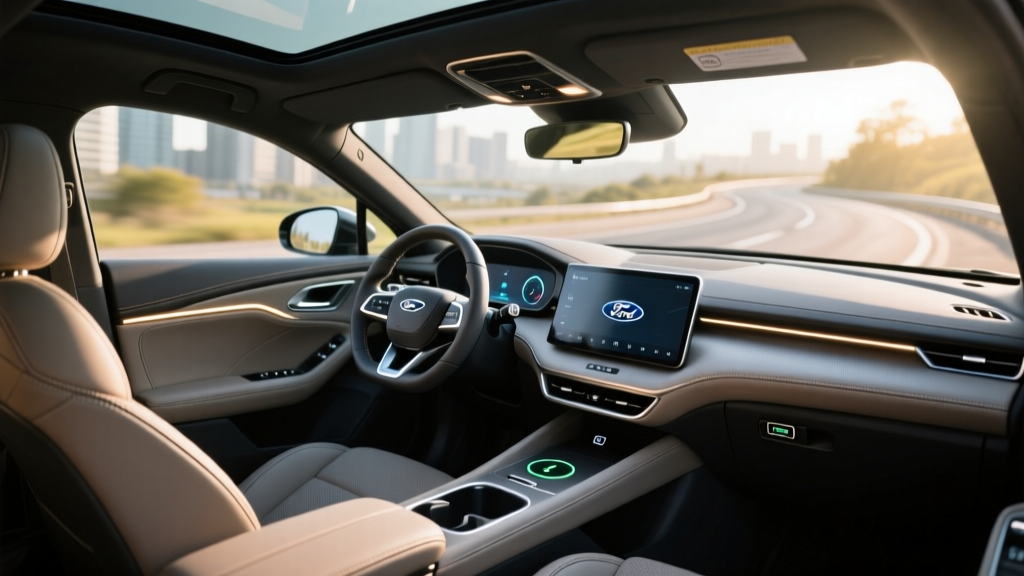
The Ioniq 5 N's cabin is shared with the standard Ioniq 5 but upgraded with N-specific elements: heavily bolstered sport seats with N badging, a dedicated N steering wheel with two customizable N buttons, aluminum pedals, and Performance Blue accent stitching. The dual 12.3-inch display layout (instrument cluster + infotainment) runs Hyundai's latest software with wireless Apple CarPlay and Android Auto.
Passenger space remains generous thanks to the E-GMP platform's flat floor and long 118.1-inch wheelbase:
- Front legroom: 41.7 inches
- Rear legroom: 39.4 inches
- Front headroom: 39.6 inches
- Rear headroom: 38.4 inches
Cargo volume is 27.2 cubic feet behind the rear seats and 59.3 cubic feet with the 60/40 split rear seats folded. The front trunk (frunk) is modest at 0.85 cubic feet — essentially a small compartment for charging cables, not meaningful storage. This is a compromise versus the standard Ioniq 5, which offers a slightly larger frunk, because the N model's additional cooling hardware occupies space under the hood.
Notable drawbacks for daily use include a firm ride quality (the N-tuned adaptive suspension is noticeably stiffer than the standard Ioniq 5), increased road noise from the performance tires, and the absence of a rear wiper — a common complaint across all Ioniq 5 variants that becomes more irritating in rain.
Pricing, Trims, and Federal Tax Credit Reality
The 2024 Hyundai Ioniq 5 N is offered in a single, fully loaded trim:
| Item | Cost |
|---|---|
| Base MSRP (Ioniq 5 N) | $66,100 |
| Destination charge | $1,150 |
| Ecotronic Matte w/ N Performance package (optional) | $0 (included at launch) |
| Total as-tested (typical) | ~$67,250 |
Does the Ioniq 5 N Qualify for the Federal EV Tax Credit?
This is where the math gets complicated. Under current IRS §30D rules, the Ioniq 5 N faces multiple eligibility barriers:
- MSRP cap: The §30D credit caps eligible vehicles at $55,000 for sedans and $80,000 for SUVs/trucks/vans. The Ioniq 5 is classified by the IRS as a sedan (not an SUV, despite its crossover styling), which means the $55,000 cap applies. At $66,100, the Ioniq 5 N exceeds this cap and does not qualify for the $7,500 federal credit.
- Buyer income cap: Even if the MSRP cap were met, the credit phases out for buyers with modified adjusted gross income above $150,000 (single) or $300,000 (joint).
- Battery sourcing: The §30D credit requires that a percentage of critical minerals and battery components are sourced from the U.S. or free-trade-agreement countries. Hyundai's South Korean-built batteries have faced sourcing challenges under these rules.
The Ioniq 5 N is assembled in Ulsan, South Korea, not at Hyundai's Metaplant in Georgia (which builds the standard Ioniq 5 for the U.S. market starting in late 2024). Foreign assembly is an additional disqualifier for the §30D new-vehicle credit. Buyers should consult IRS.gov's clean vehicle credit page and speak with a tax professional before assuming eligibility.
Some Hyundai dealers may offer lease structures that pass through the $7,500 commercial clean vehicle credit (§45W) as a lease incentive — a workaround that has been available on other Hyundai EVs. Ask your dealer specifically about lease credit pass-through.
Efficiency, Warranty, and Ownership Costs
At 84 MPGe combined (40 kWh/100 mi), the Ioniq 5 N is among the least efficient EVs in its price range. For comparison, the standard Ioniq 5 AWD achieves roughly 110 MPGe combined, and a Tesla Model 3 Performance achieves 113 MPGe. At the national average electricity rate of $0.17/kWh (per EIA data), the Ioniq 5 N costs approximately $6.80 per 100 miles to charge at home. A comparable BMW M3 costs roughly $18–22 per 100 miles on premium gasoline.
Hyundai's warranty coverage is a genuine ownership advantage:
- Battery: 8 years / 100,000 miles (capacity retention above 70%)
- Powertrain: 10 years / 100,000 miles
- New vehicle (bumper-to-bumper): 5 years / 60,000 miles
- Roadside assistance: 5 years / unlimited miles
The 84 kWh NMC (nickel-manganese-cobalt) battery pack uses Hyundai's proven cell chemistry. NMC offers higher energy density than LFP (lithium iron phosphate), which is why it's used in performance applications, but it is more sensitive to sustained high-SoC storage and extreme heat. For longevity, Hyundai recommends keeping SoC between 20–80% for daily use and only charging to 100% before long trips. The battery thermal management system actively cools and heats the pack to maintain optimal operating temperature, which is especially critical given the N model's track-use design intent.
Driver Assistance and Safety Technology
The Ioniq 5 N includes Hyundai SmartSense, the brand's suite of Level 2 driver-assistance features. Per SAE International definitions, Level 2 means the driver must remain fully engaged — hands on the wheel, eyes on the road — at all times. This is not autonomous driving.
Included SmartSense features:
- Adaptive cruise control with stop-and-go
- Lane-keeping assist and lane-centering
- Forward collision-avoidance assist with pedestrian detection
- Blind-spot collision-avoidance assist
- Rear cross-traffic collision-avoidance assist
- Highway Driving Assist (HDA) — combines adaptive cruise with lane-centering on mapped highways
Notably absent compared to the standard Ioniq 5 Limited trim: Highway Driving Assist 2 (HDA2, which adds automated lane changes) is not available on the N model, and there is no hands-free driving system comparable to GM's Super Cruise or Ford's BlueCruise. The N model's performance focus means Hyundai prioritized chassis and powertrain engineering over the latest ADAS hardware.
The Ioniq 5 (non-N variant) earned a 5-star overall safety rating from NHTSA and a Top Safety Pick+ rating from IIHS. The N model shares the same body structure and has not been separately crash-tested as of this writing.
Who Should Buy the 2024 Hyundai Ioniq 5 N?
- You want a genuine dual-purpose EV: daily driver and legitimate track car
- Simulated gear shifts and synthetic sound appeal to your sense of driving engagement
- You have reliable home Level 2 charging and don't regularly drive more than 150 miles between charges
- You value Hyundai's 10-year powertrain warranty and competitive build quality
- Range is your top priority (the standard Ioniq 5 AWD offers 290 miles for $20,000 less)
- You need federal tax credit eligibility — this car doesn't qualify at its MSRP
- You prioritize ride comfort over performance (the N suspension is firm)
- You frequently take road trips exceeding 300 miles and don't want to plan charging stops carefully
The Ioniq 5 N's closest competitors include the Tesla Model 3 Performance ($52,990, 315-mile range, 2.99-second 0–60), the BMW i4 M50 ($67,795, 245-mile range, 3.7-second 0–60), and the Porsche Taycan GTS ($105,000+, 246-mile range, 3.5-second 0–60). The Model 3 Performance is faster and goes further but cannot match the Ioniq 5 N's chassis engagement or simulated-shift theater. The i4 M50 is more refined but less playful. The Taycan is in a different price bracket entirely.
Frequently Asked Questions
What is the real-world range of the 2024 Hyundai Ioniq 5 N?
Expect roughly 180–195 miles in moderate highway driving, dropping to 140–165 miles in cold weather below 32°F. The EPA rates it at 221 miles, but real-world conditions — especially highway speeds above 70 mph and cold temperatures — reduce usable range by 10–30%. Track driving will deplete the battery in under 100 miles.
How fast does the Ioniq 5 N charge?
On a 350 kW DC fast charger, it peaks at 238 kW and charges from 10–80% in approximately 18 minutes. At home on a Level 2 (240V, 48A) charger, it adds roughly 37 miles of range per hour, reaching a full charge in about 8.5 hours.
Does the 2024 Hyundai Ioniq 5 N qualify for the federal EV tax credit?
No, under current IRS §30D rules. The Ioniq 5 is classified as a sedan with a $55,000 MSRP cap for credit eligibility, and the Ioniq 5 N's $66,100 price exceeds this. Additionally, the vehicle is assembled in South Korea. Some dealers may offer a lease incentive that passes through the commercial credit — ask your dealer.
Is the Ioniq 5 N worth buying versus a Tesla Model 3 Performance?
It depends on priorities. The Model 3 Performance is faster to 60 mph (2.99 vs. 3.25 seconds), offers 94 more miles of EPA range, costs roughly $13,000 less, and qualifies for the $7,500 federal credit. The Ioniq 5 N counters with far superior track-day engagement (simulated shifts, N-tuned suspension, enhanced cooling), a more distinctive interior, and Hyundai's longer warranty. If driving fun matters more than range and value, the Ioniq 5 N wins.
What are the biggest pros and cons of the Ioniq 5 N?
- Genuine track capability with sustained power delivery
- N e-Shift makes EV driving feel engaging and analog
- Class-leading 238 kW DC fast charging
- 10-year / 100,000-mile powertrain warranty
- Spacious interior with flat floor
- 221-mile EPA range is low for the price
- 40 kWh/100 mi — poor efficiency
- Does not qualify for $7,500 federal tax credit
- Firm ride and elevated road noise
- CCS port only; no native NACS (Tesla) connector
Can you daily-drive the Ioniq 5 N?
Yes, with planning. If you charge at home overnight and your daily commute is under 80 miles round-trip, the range is manageable. The firm ride and road noise are noticeable on long highway commutes, but the cabin is well-insulated and the seats are supportive. The practical limitation is road trips: with 180–195 real highway miles, you will stop to DC fast-charge more frequently than in a standard-range EV.