Quick Verdict: The Model Y in 2026 and the $500 Referral Question
If you've been searching for "Tesla referral program $500," you're likely trying to stack every available discount on a new Model Y. Here's the reality as of 2026: Tesla's referral program periodically offers $500 off a new vehicle purchase (or equivalent Tesla Credits) when you order through an existing owner's referral link. However, availability is inconsistent — Tesla has paused, reinstated, and restructured the program multiple times since 2023. Always verify the current offer on Tesla's referral page before placing an order.
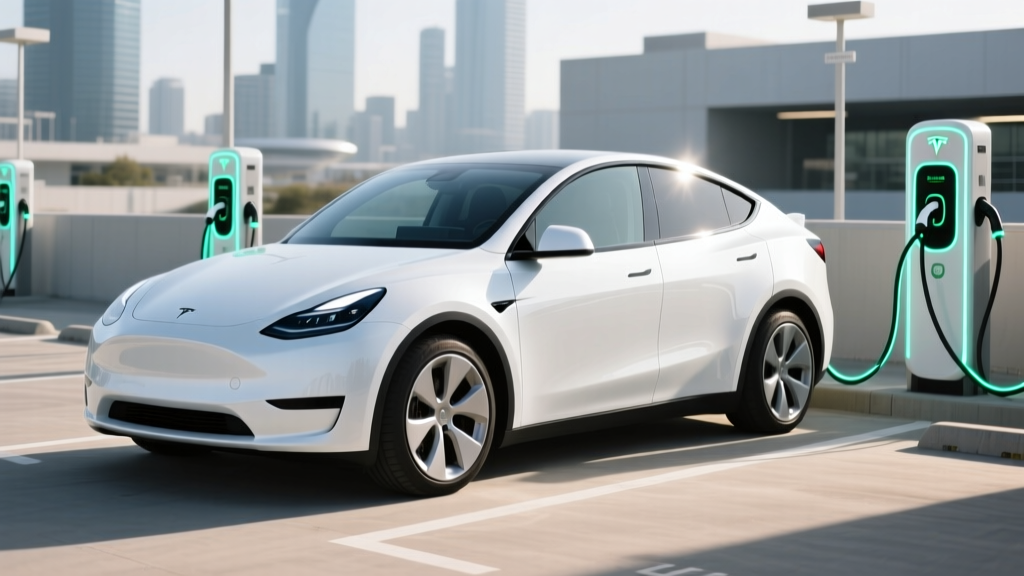
That said, the 2026 Tesla Model Y remains the best-selling EV in the U.S. for good reason. With up to 310 miles of EPA-estimated range, 250 kW peak DC fast charging, and access to the Supercharger network, it's a benchmark compact electric SUV. Below, we break down every spec that matters — range, charging, pricing, tax credits, and how that $500 referral credit fits into the total cost picture.
Range, Battery, and Real-World Efficiency
| Spec | Long Range AWD | Performance | Rear-Wheel Drive |
|---|---|---|---|
| EPA Range | 310 mi | 285 mi | 260 mi |
| Battery (usable, est.) | ~75 kWh | ~75 kWh | ~60 kWh (LFP) |
| Chemistry | NMC (Nickel Manganese Cobalt) | NMC | LFP (Lithium Iron Phosphate) |
| MPGe (combined) | 117 MPGe | 111 MPGe | 123 MPGe |
| Efficiency (kWh/100 mi) | 28 kWh/100mi | 30 kWh/100mi | 27 kWh/100mi |
Real-World Range Reality: The 310-mile EPA sticker on the Long Range AWD is achievable in mild-weather city and suburban driving. On sustained highway trips at 70-75 mph, expect roughly 260-280 miles before needing a charge. In freezing temperatures (below 32°F), range can drop 20-30%, putting real-world winter highway range closer to 210-240 miles. The LFP-equipped RWD model, while cheaper, has a smaller battery and will see more pronounced cold-weather range loss.
Tesla's thermal management system — which includes a heat pump on all 2026 Model Y trims — helps mitigate cold-weather losses compared to earlier model years. The LFP battery in the RWD trim trades energy density for longevity and lower cost. LFP cells degrade more slowly over time and can be charged to 100% daily without long-term harm, whereas NMC batteries benefit from staying between 20-80% for routine use.
Charging Speed: DC Fast, Level 2, and the Supercharger Advantage
| Charging Method | Power | Speed / Time |
|---|---|---|
| DC Fast Charge (peak) | 250 kW (Long Range/Performance) | 10-80% in ~22 min |
| DC Fast Charge (RWD) | ~170 kW | 10-80% in ~28 min |
| Level 2 (240V, 48A) | 11.5 kW | ~37 mi/hr, full charge ~7-8 hr |
| Level 1 (120V) | ~1.4 kW | ~3-4 mi/hr |
The Model Y Long Range and Performance trims peak at 250 kW on V3 Superchargers, but sustained charging matters more than peak numbers. The charge curve tapers significantly above 60% State of Charge (SoC), dropping below 100 kW around 75%. This means the 10-80% time of roughly 22 minutes is realistic, but charging from 80-100% adds another 25-30 minutes — so plan accordingly on road trips.
For home charging, Tesla's Wall Connector at 48 amps delivers up to 11.5 kW, adding about 37 miles of range per hour. Most owners charging overnight on Level 2 never need public charging for daily use. Installation of a 240V/60A circuit typically costs $500-$2,000 depending on panel proximity and local permitting. If your home electrical panel is maxed out at 100A, a panel upgrade to 200A can add $1,500-$3,500 to the total.
All 2026 Model Y vehicles sold in North America come equipped with the NACS (North American Charging Standard) connector natively. This gives direct access to over 20,000 Tesla Superchargers and, increasingly, third-party networks adopting NACS (including select Electrify America and EVgo stations).
Performance, Drivetrain, and Driving Dynamics
| Spec | Long Range AWD | Performance | RWD |
|---|---|---|---|
| 0-60 mph | 4.8 sec | 3.5 sec | 6.6 sec |
| Horsepower | ~384 hp | ~456 hp | ~295 hp |
| Drivetrain | Dual-Motor AWD | Dual-Motor AWD | Single-Motor RWD |
| Top Speed | 135 mph | 155 mph | 135 mph |
The dual-motor AWD trims provide confident all-weather traction and strong acceleration. The Performance trim's 3.5-second 0-60 time rivals many sports sedans, though the standard Long Range at 4.8 seconds is more than adequate for merging and passing. The RWD model, while the slowest, still offers the instant torque response characteristic of electric motors and is the lightest variant, contributing to its slightly better efficiency.
Regenerative braking on the Model Y is aggressive in "Hold" mode, enabling near one-pedal driving in most conditions. The 2026 refresh retains the adaptive suspension on Performance trims, which improves ride quality over the pre-2025 "Juniper" update models.
Pricing, Tax Credits, and the $500 Referral Impact
| Trim | Base MSRP | Est. Federal Credit (§30D) | Referral Credit | Est. Net Price |
|---|---|---|---|---|
| Rear-Wheel Drive | $44,990 | $0 - $7,500* | -$500 (if active) | $36,990 - $44,990 |
| Long Range AWD | $49,990 | $0 - $7,500* | -$500 (if active) | $41,990 - $49,990 |
| Performance | $53,990 | $0 - $7,500* | -$500 (if active) | $45,990 - $53,990 |
*Federal Tax Credit Caveats: The IRS §30D credit is not a flat $7,500 for every buyer. Eligibility depends on:
- MSRP Cap: SUVs must be priced at or below $80,000 (all Model Y trims qualify).
- Income Cap: Modified AGI must not exceed $150,000 (single), $225,000 (head of household), or $300,000 (joint).
- Battery Sourcing: Critical minerals and battery components must meet escalating domestic-content thresholds. As of 2026, the sourcing rules are the strictest yet, and partial credit ($3,750) is possible if only one requirement is met.
- Point-of-Sale Transfer: Eligible buyers can transfer the credit to the dealer at purchase, reducing the out-of-pocket price immediately rather than waiting for a tax refund.
The Tesla referral program $500 credit, when active, stacks on top of any federal, state, or utility incentives. However, because Tesla adjusts pricing and referral terms frequently, always confirm the referral offer is live at the time of your order. Some referral cycles have offered Tesla Credits (redeemable for merchandise, charging, or FSD subscriptions) rather than a direct purchase discount.
Interior, Cargo, and Technology
The 2026 Model Y's refreshed interior (post-Juniper update) features improved materials, ventilated front seats, ambient lighting, and a rear-seat touchscreen. The minimalist cabin centers on a 15.4-inch front display handling all infotainment, climate, and vehicle controls.
| Dimension | Measurement |
|---|---|
| Cargo Volume (rear seats up) | 30.2 cu ft |
| Cargo Volume (rear seats folded) | 72.1 cu ft |
| Front Legroom | 41.8 in |
| Rear Legroom | 37.0 in |
| Front Headroom | 39.7 in |
| Frunk (front trunk) | 4.1 cu ft |
Standout Tech:
- Tesla Autopilot (standard): SAE Level 2 driver-assist with Traffic-Aware Cruise Control and Autosteer. Enhanced Autopilot and Full Self-Driving (Supervised) are optional add-ons — but all require continuous driver engagement.
- Over-the-air updates continually add features, improve efficiency maps, and refine the UI.
- Sentry Mode and Dashcam use the vehicle's cameras for security recording.
- Tesla app integration for remote preconditioning, charging management, and location tracking.
Notable Drawbacks: The all-touchscreen interface still requires menu-diving for basic climate and mirror adjustments. The Model Y lacks Apple CarPlay and Android Auto — Tesla's proprietary system is the only option. Road noise on coarse pavement remains an area where competitors like the Hyundai Ioniq 5 and Ford Mustang Mach-E have an edge in refinement.
Automation Level Reminder: Tesla Autopilot and FSD (Supervised) are SAE Level 2 driver-assistance systems. They do NOT make the Model Y a self-driving vehicle. The driver must remain alert, keep hands on the wheel (or demonstrate engagement), and be ready to take over at any moment. True driverless operation (SAE Level 4) is currently limited to geofenced robotaxi services like Waymo.
Warranty and Long-Term Ownership
| Coverage | Term |
|---|---|
| Basic Vehicle Warranty | 4 years / 50,000 miles |
| Battery & Drive Unit (Long Range/Perf.) | 8 years / 120,000 miles |
| Battery & Drive Unit (RWD) | 8 years / 100,000 miles |
| Battery Capacity Retention Threshold | 70% over warranty period |
Tesla's battery warranty guarantees at least 70% capacity retention over the warranty period. If your battery degrades below that threshold, Tesla will repair or replace it. In practice, Tesla's own impact reports have shown average battery degradation of roughly 12% after 200,000 miles across their fleet — suggesting most owners will not hit the warranty threshold under normal use.
The LFP battery in the RWD trim is expected to have an even longer cycle life, with some data suggesting less than 10% degradation after 3,000+ charge cycles. However, replacement cost for an out-of-warranty Model Y battery pack is estimated at $12,000-$16,000 — a figure worth considering for high-mileage owners planning to keep the vehicle beyond 10 years.
Pros and Cons: The Honest Take
Pros
- Supercharger network access (fastest, most reliable public charging in the U.S.)
- Strong efficiency — 27-30 kWh/100mi is among the best in the segment
- OTA updates keep the vehicle current years after purchase
- Spacious cargo area with practical frunk
- Competitive pricing in the electric SUV segment
- LFP option (RWD) offers excellent battery longevity
Cons
- No Apple CarPlay or Android Auto
- Touchscreen-only controls can be distracting
- Road noise on rough surfaces
- Referral program availability is inconsistent
- FSD (Supervised) remains expensive at $8,000/$199/mo without full autonomy
- Rear visibility is limited (no rear wiper on pre-2026 models; 2026 refresh adds one)
Who the Model Y Suits Best
Choose the Model Y Long Range AWD if: You need a daily commuter and road-trip vehicle with the longest range, AWD for winter, and the broadest Supercharger access. Ideal for families of 3-4 who take weekend trips of 200+ miles.
Choose the RWD if: You want the lowest entry price, primarily drive in mild climates, and value long-term battery durability (LFP). Best for commuters with reliable home charging and trips under 180 miles.
Choose the Performance if: Acceleration and handling matter to you, and you're willing to trade ~25 miles of range for a 3.5-second 0-60 time and adaptive suspension.
Look elsewhere if: You need three rows of seating (consider the Kia EV9), want Apple CarPlay, or frequently tow more than 3,500 lbs (the Model Y maxes out at 3,500 lbs towing capacity).
Frequently Asked Questions
Is the Tesla referral program $500 credit still active?
Tesla's referral program terms change frequently. As of early 2026, referral rewards have alternated between $500 off a new purchase, Tesla Credits, and free Supercharging miles. Check tesla.com/referral for the current offer before ordering.
What is the real-world range of the 2026 Model Y?
The EPA rates the Long Range AWD at 310 miles, but real-world highway driving yields approximately 260-280 miles. In cold weather, expect 210-240 miles. The RWD model's 260-mile EPA rating translates to roughly 200-220 miles in mixed real-world use.
How fast does the Model Y charge at home and on road trips?
At home on a 240V Level 2 charger (48A), the Model Y adds about 37 miles of range per hour, fully charging overnight in 7-8 hours. On a V3 Supercharger, the Long Range peaks at 250 kW and charges from 10-80% in roughly 22 minutes.
Does the 2026 Model Y qualify for the $7,500 federal EV tax credit?
It may — partially or fully — depending on your income, the battery's critical-mineral and component sourcing at time of purchase, and the MSRP cap (all Model Y trims are under the $80,000 SUV threshold). Consult the IRS §30D guidelines and a tax professional for your specific situation.
Is the Model Y worth buying over the Hyundai Ioniq 5 or Ford Mustang Mach-E?
The Model Y wins on efficiency, Supercharger network access, and cargo space. The Ioniq 5 offers 800V architecture (faster peak charging on compatible stations), Apple CarPlay, and a more comfortable ride. The Mach-E provides a more traditional interior layout and available CarPlay. If Supercharger reliability is your top priority, the Model Y still holds the edge.
How much does it cost to charge a Model Y at home vs. gas?
At the U.S. average electricity rate of ~$0.16/kWh, fully charging a 75 kWh Model Y battery costs roughly $12, yielding about 4.8 cents per mile. A comparable gas SUV at 25 MPG and $3.40/gallon costs about 13.6 cents per mile — nearly three times more per mile driven.