Hyundai Ioniq 5 Seatbelt Recall: The Quick Briefing
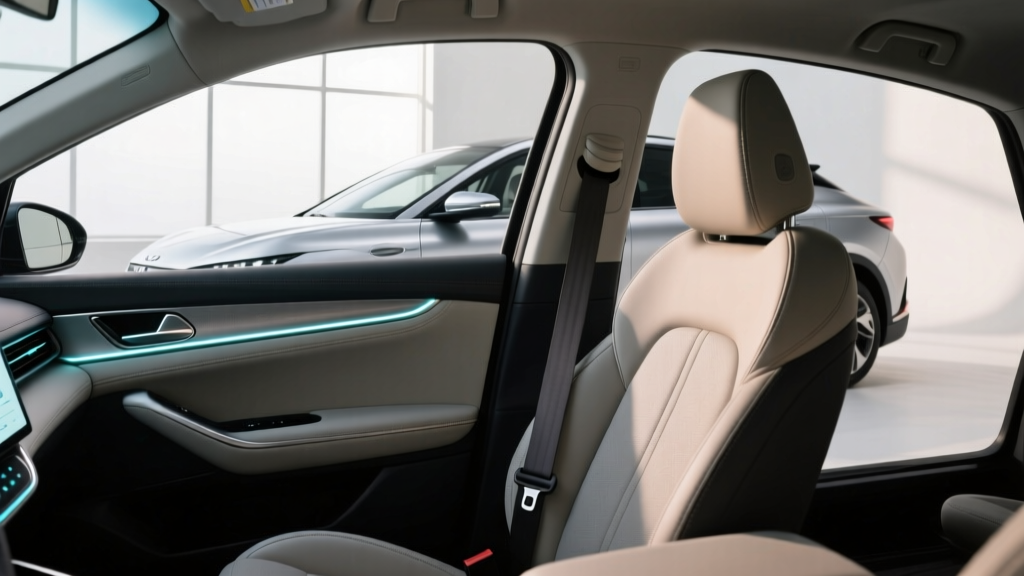
If you've seen the headline that Hyundai is recalling certain Ioniq 5 vehicles for loose seatbelts, you're likely wondering whether your EV is affected and what the fix entails. This recall, flagged by the National Highway Traffic Safety Administration (NHTSA), targets specific 2024–2026 model-year Ioniq 5 units where the second-row seatbelt assembly may not meet federal retention standards under load. In plain terms: certain rear-seat belt anchor bolts may not have been torqued to specification during assembly, which could reduce restraint effectiveness in a collision.
Before we break down the recall logistics, here's the broader picture: the Ioniq 5 remains one of the most capable midsize electric crossovers on the market. The seatbelt issue is a manufacturing-quality fix — not a fundamental design flaw — and Hyundai is covering all repair costs. Below, we cover the recall details and deliver the full spec-driven review you need to evaluate the Ioniq 5 as a purchase.
Recall Scope: Which Ioniq 5 Vehicles Are Affected?
According to NHTSA filings, the recall applies to a subset of Ioniq 5 vehicles built within a specific production window. Not every Ioniq 5 on the road is included — Hyundai has identified the affected VIN ranges through factory torque-log audits.
- Visit nhtsa.gov/recalls and enter your 17-digit VIN to confirm whether your vehicle is included.
- Contact your local Hyundai dealer to schedule the inspection and re-torque procedure — it takes approximately 30–45 minutes and is performed at no cost.
- If you purchased a used Ioniq 5 from the affected build window, the recall follows the VIN, not the original owner. You are still entitled to the free repair.
The remedy involves inspecting the second-row outboard seatbelt anchor bolts and re-torquing or replacing hardware as needed. Hyundai has stated that no injuries have been attributed to this condition, but the fix is mandatory to ensure compliance with FMVSS 210 (Seat Belt Assembly Anchorages) standards.
2026 Hyundai Ioniq 5: Full EV Spec Sheet
Recall context aside, the Ioniq 5 continues to compete at the top of the midsize electric crossover segment. Here are the numbers that matter for buyers evaluating the 2026 model year.
| Attribute | Standard Range RWD | Long Range RWD | Long Range AWD |
|---|---|---|---|
| EPA Range | 240 mi | 303 mi | 270 mi |
| Battery (usable) | 58 kWh (NMC) | 77.4 kWh (NMC) | 77.4 kWh (NMC) |
| Horsepower | 168 hp | 225 hp | 320 hp |
| 0–60 mph | 7.4 sec | 6.8 sec | 4.5 sec |
| Drivetrain | Rear-Wheel Drive | Rear-Wheel Drive | Dual-Motor AWD |
| Max DC Fast Charge | 175 kW | 238 kW | 238 kW |
| 10–80% DCFC Time | ~24 min | ~18 min | ~18 min |
| Level 2 Rate (11 kW) | ~35 mi/hr | ~44 mi/hr | ~44 mi/hr |
| MPGe (combined) | 110 MPGe | 114 MPGe | 101 MPGe |
| kWh/100 mi | 30 | 29 | 33 |
| Base MSRP | $42,600 | $47,350 | $51,350 |
Source: fueleconomy.gov and Hyundai Motor America specifications. Prices exclude $1,395 destination charge.
Real-World Range: What the EPA Number Doesn't Tell You
- City/mixed driving (55–65°F): Expect 255–270 miles. Regenerative braking recovers energy in stop-and-go traffic.
- Sustained highway (75 mph): Expect 220–240 miles. Aerodynamic drag increases consumption significantly above 70 mph.
- Cold weather (20–35°F): Expect 180–210 miles. Battery heating and cabin HVAC draw reduce usable capacity by 20–30%.
The Ioniq 5's 77.4 kWh NMC battery pack uses a liquid thermal management system that actively preconditions the pack during navigation-routed charging. This means if you set a DC fast charger as your destination, the car warms the battery en route, enabling the advertised 18-minute 10–80% charge even in cooler temperatures. Without preconditioning, cold-weather charging speeds can drop by 40% or more — a nuance many new EV owners discover the hard way.
For daily commuting under 60 miles round-trip, even the Standard Range model provides ample buffer. Road-trippers should plan around the Long Range trims, where 220+ real-world highway miles between stops aligns well with the typical 250–300 mile spacing of major DC fast-charging corridors.
Charging Speed: DC Fast, Level 2, and Home Setup
The Ioniq 5's 800-volt architecture remains one of its strongest competitive advantages. While many rivals in this price range are limited to 150 kW peak charging, the Long Range Ioniq 5 pulls up to 238 kW at compatible chargers — translating to roughly 18 minutes from 10% to 80% State of Charge.
| Charging Level | Power | Miles Added per Hour | Typical Use Case |
|---|---|---|---|
| Level 1 (120V) | ~1.4 kW | ~4–5 mi/hr | Overnight trickle, emergencies |
| Level 2 (240V, 48A) | 11 kW | ~40–44 mi/hr | Home daily charging (7–8 hr full) |
| DC Fast Charge | Up to 238 kW | ~700+ mi/hr (peak) | Road trips, 10–80% in ~18 min |
Important charge-curve note: The 238 kW peak is sustained roughly between 10–55% SoC. Above 80%, the rate tapers significantly to protect battery longevity — a 10–80% charge takes about 18 minutes, but 80–100% can add another 25+ minutes. For road trips, the optimal strategy is to charge to 80% and move on.
For home Level 2 charging, the Ioniq 5 accepts up to 11 kW on a 240V/48A circuit. A full home installation (Level 2 charger, dedicated 60A circuit, electrical permit) typically runs $1,200–$2,500 depending on panel proximity and local labor rates. If your home has a 200A electrical panel with available capacity, expect the lower end. Older homes with 100A service may require a panel upgrade, adding $1,500–$3,000.
Pricing, Tax Credits, and Ownership Economics
The 2026 Ioniq 5 starts at $42,600 for the Standard Range SE and climbs to approximately $57,000 for a fully loaded Limited AWD. But the sticker price is only part of the equation — the federal EV tax credit under IRS §30D can meaningfully reduce your effective cost.
| Requirement | Threshold |
|---|---|
| Vehicle MSRP Cap (SUVs/Crossovers) | ≤ $80,000 |
| Buyer Income Cap (Modified AGI) | ≤ $150K single / $225K HOH / $300K joint |
| Battery Critical Minerals | Must meet annual % sourced from US/FTA partners |
| Battery Component Manufacturing | Must meet annual % manufactured in North America |
| Point-of-Sale Transfer | Available — apply credit at dealer at purchase |
Source: IRS.gov §30D Clean Vehicle Credits. Eligibility rules update annually — verify current-year battery-sourcing percentages before purchase.
The Ioniq 5 qualifies as an SUV under the IRS classification (MSRP cap of $80,000), so all trims clear the price threshold. However, battery-sourcing and component-manufacturing requirements have tightened each year since the Inflation Reduction Act. As of 2026, buyers should confirm with their dealer that the specific VIN they are purchasing meets current-year critical-mineral and North American assembly thresholds. Hyundai assembles many Ioniq 5 units at its Metaplant in Georgia, which supports domestic-manufacturing compliance, but the critical-minerals prong depends on evolving supply-chain certification.
If eligible, the full credit can be applied at point of sale, reducing your out-of-pocket cost by up to $7,500. A Long Range SE AWD at $51,350 could effectively drop to ~$43,850 — competitive with well-equipped gas crossovers once you factor in fuel savings.
Interior, Cargo, and Daily Livability
The Ioniq 5's flat floor and long 118.1-inch wheelbase create interior volume that punches above its class. Here are the concrete dimensions:
- Front legroom: 41.7 inches
- Rear legroom: 39.4 inches
- Cargo (behind rear seats): 27.2 cu ft
- Cargo (rear seats folded): 59.3 cu ft
- Frunk (front trunk): 0.85 cu ft (Long Range) / 2.0 cu ft (Standard Range RWD)
The dual 12.3-inch displays (instrument cluster and infotainment) run Hyundai's latest connected navigation with over-the-air updates. Wireless Apple CarPlay and Android Auto are standard across all trims. The center console slides fore and aft — a practical feature for curbside passenger exit in tight parking spots.
Driver assistance: The Ioniq 5 ships with Hyundai SmartSense, which includes adaptive cruise control with stop-and-go, lane-keeping assist, blind-spot monitoring, and rear cross-traffic collision avoidance. This is an SAE Level 2 system — the driver must remain engaged with hands on the wheel and eyes on the road at all times. It is not autonomous driving.
Notable drawbacks: The rear wiper is absent on earlier build versions (a frequent complaint in rainy climates). The frunk on Long Range AWD models is minimal — barely large enough for a charging cable bag. And while the infotainment system is responsive, Hyundai's reliance on touch-capacitive climate controls rather than physical knobs draws criticism from buyers who prefer tactile feedback while driving.
Battery Warranty and Long-Term Ownership
Hyundai backs the Ioniq 5's battery and powertrain with a 10-year/100,000-mile warranty — one of the strongest in the segment. The warranty covers battery capacity loss below 70% of original state of health (SoH). For context, independent fleet data suggests modern NMC packs with active thermal management typically retain 85–90% capacity after 100,000 miles under normal use.
The vehicle's 5-year/60,000-mile new-vehicle limited warranty and complimentary maintenance program (3 years/36,000 miles) round out a competitive ownership package. Insurance premiums for the Ioniq 5 average 10–15% above equivalent gas crossovers, reflecting higher repair costs for EV-specific components — factor this into your total cost of ownership calculation.
Pros and Cons at a Glance
- 800V architecture — 238 kW peak charging crushes most competitors
- 10-yr/100k-mi battery warranty (industry-leading)
- Spacious flat-floor interior with generous rear legroom
- Strong 320 hp AWD performance (4.5 sec 0–60)
- Vehicle-to-load (V2L) powers devices up to 3.6 kW
- Georgia-built — supports domestic tax-credit compliance
- Seatbelt recall on certain 2024–2026 builds (free fix, but inconvenient)
- Small frunk on Long Range AWD models
- No rear wiper on some build dates
- Real-world cold-weather range drops 20–30%
- Insurance costs run 10–15% above gas equivalents
- Touch-capacitive climate controls lack tactile feedback
Who Should Buy the Ioniq 5 — And Who Should Look Elsewhere?
- Choose the Ioniq 5 if: You prioritize fast DC charging for road trips, want a spacious family crossover with strong warranty coverage, and have access to home Level 2 charging.
- Look at the Tesla Model Y if: Supercharger network access is your top priority and you prefer OTA-heavy software integration.
- Look at the Ford Mustang Mach-E if: You want sportier handling dynamics and don't mind slightly slower peak charging (~150 kW).
- Look at the Kia EV6 if: You want the same 800V platform in a sleeker fastback body — the EV6 is mechanically similar but trades some rear headroom for style.
For commuters covering 30–60 miles daily with home charging, the Long Range RWD offers the best efficiency-to-price ratio. For families who road-trip 2–3 times per year, the AWD's added traction and the 238 kW charging speed make the Ioniq 5 one of the least stressful EVs for long-distance travel.
Frequently Asked Questions
Is the Hyundai Ioniq 5 seatbelt recall dangerous?
Hyundai and NHTSA have not reported injuries related to this condition. The recall is a preventive compliance measure — the second-row seatbelt anchor bolts may not have been torqued to specification. The free dealer repair resolves the issue in under an hour.
How do I check if my Ioniq 5 is part of the recall?
Enter your VIN at nhtsa.gov/recalls or contact any Hyundai dealer. The recall follows the vehicle, so it applies whether you're the original owner or bought it used.
Does the 2026 Ioniq 5 qualify for the $7,500 federal tax credit?
The Ioniq 5 clears the $80,000 MSRP cap for SUVs. Full credit eligibility depends on your income (≤ $300K joint / $150K single), and current-year battery-sourcing and North American manufacturing thresholds. Verify with your dealer that the specific VIN meets 2026 critical-mineral requirements before relying on the credit.
What's the real-world range of the Ioniq 5 on a road trip?
The Long Range AWD (270 mi EPA) delivers approximately 220–240 miles at sustained 75 mph highway speeds. In cold weather (below 35°F), expect 180–210 miles. Plan charging stops at 200-mile intervals for a comfortable buffer.
How fast does the Ioniq 5 charge at home?
On a 240V Level 2 home charger (48A/11 kW), the Long Range model adds approximately 44 miles of range per hour, or a full charge in roughly 7–8 hours. This is sufficient for overnight replenishment for nearly all daily driving needs.
Is the Ioniq 5 worth buying despite the recall?
Yes — with the caveat that you complete the free recall repair. The seatbelt issue is a manufacturing-quality fix, not a design defect. The Ioniq 5's 800V charging speed, 10-year battery warranty, and spacious interior keep it among the top choices in the midsize electric crossover segment for 2026.