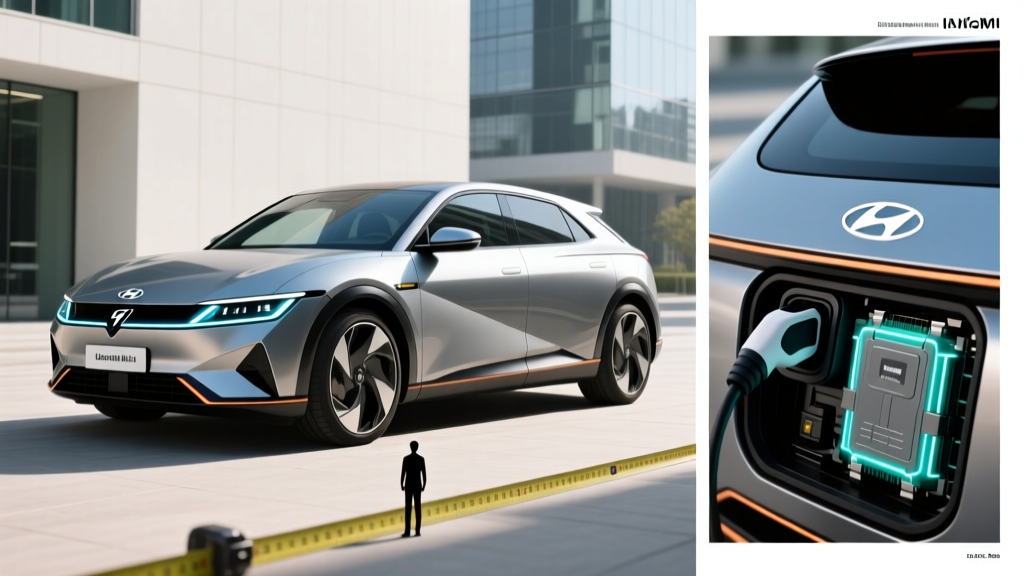
If you're measuring your garage or comparing crossover footprints, the Hyundai Ioniq 5 length comes in at 182.7 inches — placing it squarely in the compact electric SUV segment alongside the Tesla Model Y and Ford Mustang Mach-E. But dimensions only tell part of the story. This review covers everything from real-world range and 800V charging speeds to interior space, pricing after federal tax credits, and how the 2026 Ioniq 5 stacks up against its rivals.
Hyundai Ioniq 5 Dimensions: Length, Width, and Interior Space
The Ioniq 5's retro-futuristic styling sits on Hyundai's E-GMP skateboard platform with a generous 118.1-inch wheelbase — longer than many midsize SUVs. That wheelbase translates directly into cabin room, even though the overall Hyundai Ioniq 5 length of 182.7 inches keeps it maneuverable in urban settings.
| Dimension | Measurement |
|---|---|
| Overall Length | 182.7 in |
| Overall Width (excl. mirrors) | 74.4 in |
| Overall Height | 63.0 in |
| Wheelbase | 118.1 in |
| Front Legroom | 41.7 in |
| Rear Legroom | 39.4 in |
| Cargo Volume (rear seats up) | 27.2 cu ft |
| Cargo Volume (rear seats folded) | 59.3 cu ft |
| Frunk (front trunk) | 0.85 cu ft (RWD) / 0.53 cu ft (AWD) |
| Curb Weight | 4,243 – 4,663 lbs (trim dependent) |
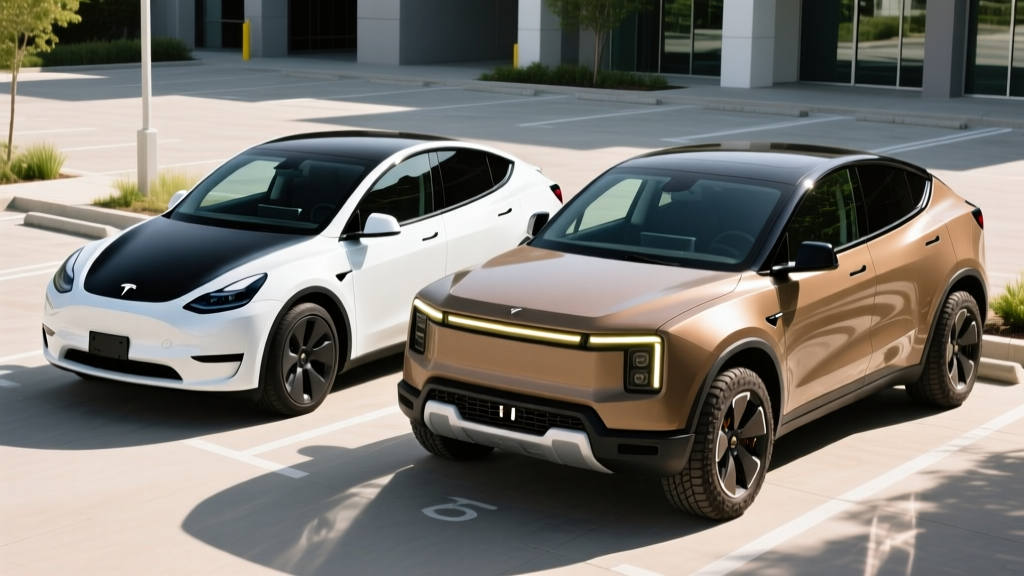
Compared to the Tesla Model Y (187.0 in long, 75.6 cu ft max cargo), the Ioniq 5 is about 4 inches shorter overall and gives up some maximum cargo volume. However, rear-seat legroom is competitive, and the flat floor from the dedicated EV platform makes the cabin feel more spacious than the exterior dimensions suggest. The frunk is small — useful for charging cables and a soft bag, but don't plan on storing a cooler up front.
Range, Battery, and Efficiency: Real-World Expectations
The 2026 Ioniq 5 continues with two battery options and both rear-wheel-drive (RWD) and all-wheel-drive (AWD) configurations. The high-volume choice is the Long Range model with a 77.4 kWh usable battery pack using NMC (nickel-manganese-cobalt) lithium-ion chemistry, chosen for its higher energy density versus LFP.
SE/SEL Long Range RWD: EPA-estimated 318 miles. In real-world highway driving at 70-75 mph, expect approximately 265-285 miles. In cold weather (below 30°F), range can drop 20-30%, yielding roughly 220-255 miles on a full charge.
Long Range AWD: EPA-estimated 290 miles. Real-world highway: ~245-265 miles. Cold weather: ~200-235 miles.
Standard Range RWD: EPA-estimated 245 miles (58.0 kWh battery). Real-world highway: ~205-220 miles.
| Trim/Config | Battery (usable kWh) | Chemistry | EPA Range | MPGe (combined) | kWh/100 mi |
|---|---|---|---|---|---|
| SE Standard Range RWD | 58.0 | NMC | 245 mi | 110 MPGe | 30 |
| SE/SEL Long Range RWD | 77.4 | NMC | 318 mi | 114 MPGe | 29 |
| SE/SEL/Limited Long Range AWD | 77.4 | NMC | 290 mi | 101 MPGe | 33 |
The Long Range RWD's 114 MPGe combined rating is excellent for the segment. If efficiency is your priority, the RWD configuration is the clear pick — you gain nearly 30 miles of EPA range and slightly lower per-mile energy cost over AWD. The heat pump (standard on all trims) helps mitigate cold-weather range loss, though physics still wins in sub-freezing temperatures.
Charging Speed: 800V Architecture Makes a Difference
The Ioniq 5's headline technical advantage is its 800V electrical architecture, shared with the Kia EV6 and Genesis GV60. Most competitors still use 400V systems. Higher voltage allows faster DC fast charging without excessive current — meaning the Ioniq 5 can sustain high charge rates longer before thermal throttling kicks in.
| Charging Level | Max Rate | Speed / Time |
|---|---|---|
| Level 1 (120V household) | ~1.4 kW | ~4-5 miles per hour |
| Level 2 (240V home/public) | 10.9 kW (onboard charger) | ~36 miles per hour; full charge in ~7-8 hrs |
| DC Fast Charge (350 kW station) | Peak ~240 kW | 10-80% in ~18 minutes (Long Range) |
| DC Fast Charge (150 kW station) | ~150 kW sustained | 10-80% in ~25-28 minutes |
A few important notes from real-world charging experience: The 18-minute 10-80% claim holds up at Electrify America 350 kW dispensers when the battery is properly preconditioned (use the car's navigation-based battery conditioning feature, especially in cold weather). On 150 kW chargers — more common in many areas — expect roughly 25-28 minutes for the same 10-80% session. Above 80% state of charge, the charge curve tapers significantly to protect battery health, so plan your stops around that 80% mark on road trips.
The Ioniq 5 uses the CCS1 connector for DC fast charging on non-Tesla networks. An NACS adapter is available for access to Tesla Supercharger V3 and V4 stations (150-250 kW), though charging speed at Superchargers is limited by the adapter's throughput and the station's output.
Performance and Drivetrain
| Configuration | Horsepower | Torque (lb-ft) | 0-60 mph | Drivetrain |
|---|---|---|---|---|
| Standard Range RWD | 168 hp | 258 | ~7.5 sec | Rear-wheel drive |
| Long Range RWD | 225 hp | 258 | ~6.7 sec | Rear-wheel drive |
| Long Range AWD | 320 hp | 446 | ~4.5 sec | Dual-motor AWD |
The dual-motor AWD model's 4.5-second 0-60 time puts it in genuinely quick territory — hot-hatch quick, not supercar quick, but more than adequate for merging and passing. The RWD models prioritize efficiency over acceleration, and the 225-hp Long Range RWD is the sweet spot for most buyers: responsive enough for daily driving while maximizing range.
Towing capacity is rated at 1,650 lbs for AWD models and 1,650 lbs for Long Range RWD (with the factory tow hitch option). That's enough for a small utility trailer or a couple of dirt bikes, but this is not a tow rig — if you need to pull a camper, look at the Rivian R1S or Ford F-150 Lightning.
Pricing, Trims, and Federal Tax Credit Eligibility
The 2026 Ioniq 5 lineup spans four trims: SE (Standard Range and Long Range), SEL, Limited, and the performance-oriented N variant. Hyundai shifted U.S. production to its Metaplant in Georgia, which affects federal tax credit eligibility under current IRS §30D rules.
| Trim | MSRP (incl. destination) | Est. Price After §30D Credit* |
|---|---|---|
| SE Standard Range RWD | ~$42,600 | ~$35,100 |
| SE Long Range RWD | ~$46,100 | ~$38,600 |
| SEL Long Range AWD | ~$50,500 | ~$43,000 |
| Limited Long Range AWD | ~$55,200 | ~$47,700 |
| Ioniq 5 N (AWD) | ~$67,500 | Not eligible (MSRP cap) |
*Tax credit estimates assume full $7,500 eligibility. Actual credit depends on your tax liability, income, and vehicle battery-sourcing compliance. Always verify with a tax professional.
- MSRP cap: SUVs/crossovers must be ≤ $80,000 (all Ioniq 5 trims qualify except the N variant)
- Buyer income cap: Modified AGI ≤ $150,000 (single) / $300,000 (joint) / $225,000 (head of household)
- Battery sourcing: Critical minerals and battery components must meet phased-in domestic/free-trade-agreement sourcing thresholds — these tighten annually
- Point-of-sale transfer: You can apply the credit at purchase to reduce the sale price, or claim it on your tax return
- Final assembly: Must occur in North America (Ioniq 5 is assembled in Georgia — qualifies)
Because battery-sourcing requirements change, confirm the specific trim's eligibility on fueleconomy.gov before purchasing.
Technology, Safety, and Driver Assistance
The Ioniq 5 comes equipped with Hyundai's SmartSense suite as standard across all trims. This includes forward collision-avoidance assist with pedestrian and cyclist detection, blind-spot collision-avoidance, rear cross-traffic collision-avoidance, lane-keeping assist, and highway driving assist (HDA). HDA combines adaptive cruise control with lane centering — it's an SAE Level 2 driver-assist system, meaning you must keep your hands on the wheel and eyes on the road at all times. This is not autonomous driving.
The infotainment system features dual 12.3-inch displays (instrument cluster and center touchscreen) running Hyundai's latest software. Wireless Apple CarPlay and Android Auto are standard. Higher trims add a head-up display with augmented-reality navigation, a premium Bose audio system, and Hyundai Digital Key (phone-as-key via NFC/UWB).
One standout feature: Vehicle-to-Load (V2L). The Ioniq 5 can output up to 3.6 kW of AC power via an adapter plugged into the charge port or a dedicated interior V2L outlet (on select trims). This lets you power laptops, a mini-fridge at a campsite, or even essential home appliances during an outage — a genuinely useful feature that most competitors still don't offer.
Safety ratings are strong: the Ioniq 5 earned an IIHS Top Safety Pick+ designation and a 5-star overall rating from NHTSA.
Warranty Coverage
| Coverage | Term |
|---|---|
| New Vehicle Limited | 5 years / 60,000 miles |
| Powertrain | 10 years / 100,000 miles |
| EV Battery (capacity retention) | 10 years / 100,000 miles (≥70% capacity guaranteed) |
| Corrosion Perforation | 7 years / unlimited miles |
| Roadside Assistance | 5 years / unlimited miles |
Hyundai's 10-year/100,000-mile battery warranty with a 70% capacity retention threshold is among the best in the industry. For context, if your battery degrades to below 70% of its original capacity within the warranty period, Hyundai will repair or replace it. In practice, NMC batteries in Hyundai's thermal-managed packs have shown strong longevity — early Ioniq 5 owners report minimal degradation in the first 30,000-50,000 miles.
Pros, Cons, and Who Should Buy the Ioniq 5
- 800V architecture enables class-leading DC fast charging (10-80% in ~18 min)
- Competitive 318-mile EPA range (Long Range RWD)
- Spacious interior with flat floor and generous rear legroom
- V2L capability for camping, worksite, or emergency power
- Industry-leading 10-yr/100,000-mi battery and powertrain warranty
- Strong safety ratings (IIHS TSP+, NHTSA 5-star)
- U.S.-assembled — qualifies for federal tax credit (subject to sourcing rules)
- Frunk is tiny — barely fits a charging cable bag
- Less max cargo volume than Tesla Model Y (59.3 vs 75.6 cu ft)
- No rear wiper (visibility issue in rain/snow on some model years)
- CCS1 native connector — NACS Supercharger access requires adapter
- Infotainment can be sluggish compared to Tesla or Rivian interfaces
- AWD towing capacity limited to 1,650 lbs
- Rear seat headroom tight for passengers over 6'2"
- Daily commuters (20-80 mi round trip): The Long Range RWD at 318 miles EPA means charging once or twice a week on Level 2 at home. Ideal.
- Small families: Two car seats fit easily in the back with room for a stroller in the 27.2 cu ft cargo area. Road trips work with 18-minute DC fast-charge stops.
- Tech-oriented buyers: V2L, 800V charging, and AR head-up display appeal to gadget-minded owners.
- Not ideal for: Large families needing 3 rows, heavy towers, or those in extreme-cold climates without garage charging (consider a PHEV or a longer-range option like the Rivian R1S).
How the Ioniq 5 Compares to Key Competitors
The Ioniq 5 competes in the most crowded EV crossover segment. Here's how its dimensions and specs compare:
| Spec | Hyundai Ioniq 5 LR RWD | Tesla Model Y LR | Ford Mustang Mach-E ER RWD | Kia EV6 LR RWD |
|---|---|---|---|---|
| Length | 182.7 in | 187.0 in | 186.7 in | 184.3 in |
| EPA Range | 318 mi | 320 mi | 320 mi | 310 mi |
| Battery (usable kWh) | 77.4 | ~75.0 | 88.0 | 77.4 |
| Peak DC Charge | ~240 kW | ~250 kW | ~150 kW | ~240 kW |
| 10-80% DC Time | ~18 min | ~22 min | ~36 min | ~18 min |
| Cargo (seats up) | 27.2 cu ft | 30.2 cu ft | 29.7 cu ft | 24.4 cu ft |
| Base MSRP | ~$46,100 | ~$46,630 | ~$45,995 | ~$45,500 |
The Ioniq 5 and its platform-mate, the Kia EV6, share the 800V charging advantage over the Mach-E (which uses a 400V architecture and charges noticeably slower). The Model Y remains the cargo-capacity king and benefits from native NACS/Supercharger access, but the Ioniq 5 matches or beats it on charging speed and warranty coverage. If interior length and cargo volume are your top priorities, the Model Y wins. If charging speed, warranty, and V2L matter more, the Ioniq 5 has a strong case.
Frequently Asked Questions
What is the real-world range of the Hyundai Ioniq 5?
The Long Range RWD carries a 318-mile EPA estimate. In real-world highway driving at 70-75 mph, expect 265-285 miles. In cold weather below 30°F, plan for 220-255 miles. The AWD version drops to roughly 245-265 miles highway and 200-235 miles in cold conditions.
How fast does the Ioniq 5 charge at home and on the road?
At home on a 240V Level 2 charger (10.9 kW), you'll add about 36 miles per hour, with a full charge taking 7-8 hours. On a 350 kW DC fast charger, the 800V system enables a 10-80% charge in approximately 18 minutes. On more common 150 kW chargers, expect 25-28 minutes for the same session.
How much does the Ioniq 5 cost after the federal tax credit?
If you qualify for the full $7,500 §30D credit, the Long Range RWD SE drops from ~$46,100 MSRP to roughly $38,600. The SEL AWD comes to about $43,000. Eligibility depends on your income (≤$150K single / ≤$300K joint), the vehicle's battery sourcing compliance, and MSRP caps. The credit can be applied at point of sale. Verify current eligibility on fueleconomy.gov.
Does the Hyundai Ioniq 5 qualify for the federal EV tax credit?
Yes — the Ioniq 5 is assembled in Georgia (meeting the North American final-assembly requirement) and its MSRP falls under the $80,000 SUV cap. However, eligibility for the full $7,500 depends on battery-critical-mineral and component sourcing requirements that tighten annually, plus your personal income. Confirm your specific situation with a tax professional before purchasing.
Is the Ioniq 5 worth buying over the Tesla Model Y or Kia EV6?
Choose the Ioniq 5 if you value class-leading DC fast-charge speed, a 10-year battery warranty, V2L capability, and a distinctive design. Choose the Model Y if maximum cargo space and native Supercharger network access are your priorities. Choose the EV6 if you prefer its styling and slightly lower starting price — it's mechanically identical to the Ioniq 5 underneath. All three are strong picks; the right answer depends on which trade-offs matter to you.
What is the Hyundai Ioniq 5's ground clearance and is it good in snow?
Ground clearance is 6.1 inches — adequate for light snow but not off-road territory. The AWD model with winter tires performs well in moderate snow and ice. Regenerative braking settings can be adjusted for slippery conditions. If you regularly face deep snow or unplowed roads, a higher-clearance EV like the Rivian R1S or Subaru Solterra may be a better fit.