Quick Verdict: Is the Ioniq 5 Worth Leasing in 2026?
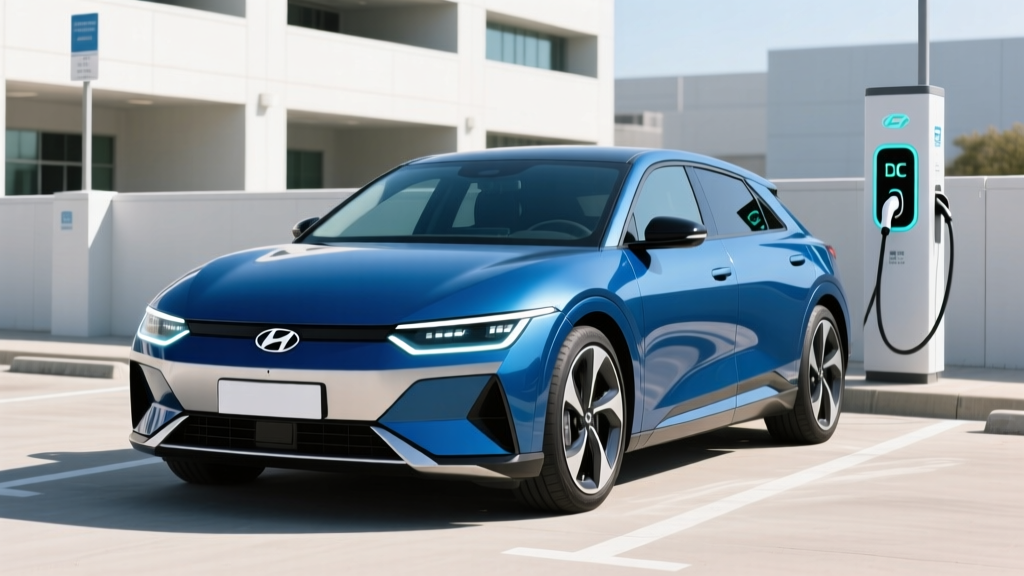
The Hyundai Ioniq 5 remains one of the most compelling electric crossovers on the market, combining retro-futuristic styling with serious charging infrastructure capability. Its 800V architecture enables DC fast charging at up to 240 kW, translating to a 10-80% charge in roughly 18 minutes—among the fastest in its class. For 2026, Hyundai has refined the lineup with improved battery efficiency and expanded NACS (Tesla Supercharger) compatibility on new builds.
Leasing an Ioniq 5 can be particularly attractive because Hyundai often passes through the $7,500 federal tax credit as a lease incentive, even for buyers who wouldn't qualify under the IRS §30D income caps that apply to purchases. However, actual lease deals vary by region, dealer, and current manufacturer incentives.
EPA Range vs. Real-World Driving: What to Actually Expect
EPA Estimated: 245 miles (Standard Range RWD) | 318 miles (Long Range RWD) | 290 miles (Long Range AWD)
Real-World Expectation: Highway driving at 70+ mph typically yields 250-275 miles in the Long Range RWD. Cold weather (below 30°F) can reduce range by 20-30%, dropping the Long Range AWD to roughly 200-220 miles in winter conditions. City driving with regenerative braking often exceeds EPA estimates.
The Ioniq 5's range is competitive within the electric crossover segment, though it trails the Tesla Model Y Long Range (330 miles EPA) and slightly behind the Chevrolet Equinox EV (319 miles EPA). Where the Ioniq 5 excels is charging speed—more on that below.
Battery Specs, Chemistry, and Longevity
| Specification | Standard Range | Long Range |
|---|---|---|
| Battery Capacity (usable) | 58 kWh | 77.4 kWh |
| Chemistry | NMC (Nickel Manganese Cobalt) | NMC |
| Voltage Architecture | 800V | 800V |
| Battery Warranty | 10 years / 100,000 miles | |
| Capacity Retention Guarantee | 70% minimum over warranty period | |
Hyundai uses NMC chemistry across the Ioniq 5 lineup rather than LFP (lithium iron phosphate). NMC offers higher energy density, enabling the Long Range model's 318-mile EPA rating in a relatively compact battery pack. The trade-off is that NMC batteries generally prefer not to sit at 100% state of charge for extended periods—daily charging to 80-90% is optimal for longevity.
The 800V electrical architecture is the Ioniq 5's technical differentiator. Most competitors in this price range (Model Y, Ford Mustang Mach-E, Volkswagen ID.4) use 400V systems. Higher voltage enables faster charging at compatible DC fast chargers without requiring excessive current, which reduces heat and stress on the battery.
Charging Speed: DC Fast, Level 2, and Home Setup
| Charging Level | Power | Charge Time / Rate |
|---|---|---|
| DC Fast Charging (peak) | 240 kW | 10-80% in ~18 minutes (at 350 kW charger) |
| DC Fast Charging (50 kW station) | 50 kW | 10-80% in ~70 minutes |
| Level 2 (240V, 48A home charger) | 11.5 kW | ~27 miles per hour of charging; full charge in ~7 hours |
| Level 1 (120V household outlet) | 1.4 kW | ~4 miles per hour; full charge in ~55 hours |
Charging curve reality: The 240 kW peak rate only applies when the battery is preconditioned and at a low state of charge (typically 10-40%). Above 80%, charging slows significantly to protect battery health—expect the 80-100% portion to take an additional 15-20 minutes. For road trips, plan to charge from 10-80% and move on rather than waiting for a full charge.
NACS compatibility note: Starting with 2025 model year vehicles, Hyundai began equipping the Ioniq 5 with the North American Charging Standard (NACS) port, providing native access to Tesla Superchargers without an adapter. If you're considering a used 2022-2024 model with CCS, you'll need Hyundai's official CCS-to-NACS adapter for Supercharger access.
Performance and Drivetrain Options
| Trim / Drivetrain | Horsepower | Torque (lb-ft) | 0-60 mph | Top Speed |
|---|---|---|---|---|
| SE / SEL Standard Range RWD | 168 hp | 258 | 7.3 sec | 115 mph |
| SE / SEL / Limited Long Range RWD | 225 hp | 258 | 6.3 sec | 115 mph |
| SE / SEL / Limited Long Range AWD | 320 hp | 446 | 4.5 sec | 115 mph |
The Long Range AWD variant delivers genuinely quick acceleration—4.5 seconds to 60 mph is sports-sedan territory, and the instant electric torque makes the Ioniq 5 feel even quicker in real-world driving. The RWD models prioritize efficiency and range, which is the right trade-off for most commuters.
All Ioniq 5 models feature one-pedal driving capability through adjustable regenerative braking (levels 0-3, plus i-Pedal mode for full one-pedal operation). The heat pump, standard on Long Range trims, improves cold-weather efficiency and helps preserve range when using cabin heating.
Interior Space, Cargo, and Technology
Passenger volume: 106.5 cubic feet total, with 41.7 inches of front legroom and 39.4 inches of rear legroom. The flat floor (no transmission tunnel) makes the rear seat genuinely comfortable for three adults.
Cargo capacity: 27.2 cubic feet behind the rear seats, expanding to 59.3 cubic feet with the rear seats folded. The front trunk (frunk) adds 0.85 cubic feet on AWD models and 2.0 cubic feet on RWD models—enough for charging cables and small items.
Infotainment: Dual 12.3-inch displays (instrument cluster and touchscreen) running Hyundai's latest interface with wireless Apple CarPlay and Android Auto. The system is responsive, though some users prefer physical climate controls over the touch-capacitive buttons.
Driver assistance: Hyundai SmartSense is standard across all trims, including forward collision avoidance, blind-spot monitoring, rear cross-traffic alert, and lane-keeping assist. Highway Driving Assist 2 (HDA2) provides adaptive cruise control with lane centering on divided highways—it's a Level 2 driver-assist system requiring active driver supervision, not a self-driving feature.
Notable features: Vehicle-to-load (V2L) capability allows the Ioniq 5 to power external devices (laptops, camping equipment, or even a home during an outage) through an interior outlet and exterior adapter, delivering up to 3.6 kW of power.
Pricing, Trims, and Federal Tax Credit Eligibility
| Trim | Base MSRP | Typical Lease (36 mo) | Federal Credit Eligibility |
|---|---|---|---|
| SE Standard Range RWD | $42,600 | $349-$429/mo | Check sourcing requirements |
| SEL Long Range RWD | $47,850 | $399-$479/mo | Check sourcing requirements |
| Limited Long Range AWD | $58,200 | $489-$589/mo | Check sourcing requirements |
Federal tax credit (§30D) complexity: The Ioniq 5 is assembled in Ellabell, Georgia (Hyundai's Metaplant America facility), which satisfies the North American final assembly requirement. However, eligibility for the full $7,500 credit depends on critical mineral and battery component sourcing requirements that phase in annually. For 2026, verify current eligibility on fueleconomy.gov before purchasing.
Income caps for purchase: Modified adjusted gross income cannot exceed $150,000 (single), $225,000 (head of household), or $300,000 (joint). MSRP cap for SUVs: $80,000.
Leasing loophole: When you lease, the tax credit technically goes to the lessor (Hyundai Motor Finance), but Hyundai has historically passed this benefit to lessees as a capitalized cost reduction. This means income caps and some sourcing requirements may not apply to leases—confirm current lease incentive structure with your dealer. Always review IRS guidance at irs.gov or consult a tax professional.
Efficiency and Operating Costs
| Model | MPGe (Combined) | kWh/100 mi | Cost per Mile* |
|---|---|---|---|
| Standard Range RWD | 28 | $0.036 | |
| Long Range RWD | 114 MPGe | 29 | $0.038 |
| Long Range AWD | 101 MPGe | 33 | $0.043 |
*Based on $0.13/kWh national average electricity cost. Actual costs vary by utility rate and charging mix (home vs. public DC fast charging).
For comparison, a gasoline crossover averaging 28 MPG at $3.50/gallon costs approximately $0.125 per mile in fuel alone. Home charging the Ioniq 5 typically saves $1,200-$1,800 annually versus gas, depending on mileage and local electricity rates.
Pros and Cons: The Honest Assessment
Pros
- Ultra-fast 800V DC charging (18 min 10-80%)
- Spacious, flat-floor interior with excellent rear legroom
- V2L capability for camping or emergency power
- Strong warranty (10yr/100k battery, 5yr/60k bumper-to-bumper)
- Competitive lease pricing with tax credit pass-through
- NACS port on 2025+ models for Supercharger access
Cons
- Real-world highway range falls short of EPA by 15-20%
- Cold weather significantly impacts range (20-30% loss)
- Frunk is small compared to Tesla Model Y
- Touch-capacitive climate controls can be distracting
- Rear visibility is compromised by thick C-pillars
- Public DC charging costs can approach gas prices in some markets
Who Should Lease the Ioniq 5 (and Who Shouldn't)
Best for: Daily commuters with home charging access who value fast public charging for occasional road trips. The Ioniq 5 excels as a primary vehicle for suburban families needing space for kids and gear, with the AWD option providing confident all-weather capability.
Consider alternatives if: You regularly drive 300+ miles between charging stops (the Tesla Model Y Long Range offers more range). If you lack home charging and rely solely on public infrastructure, the Ioniq 5's fast charging helps, but charging costs will be higher than anticipated.
Towing note: The Ioniq 5 is rated for 1,650 pounds (braked trailer)—adequate for a small utility trailer or bike rack, but not for boats or campers. If towing is a priority, consider the Ford F-150 Lightning or Rivian R1T.
Competitive Comparison: Ioniq 5 vs. Key Rivals
| Attribute | Hyundai Ioniq 5 LR AWD | Tesla Model Y LR AWD | Ford Mustang Mach-E ER AWD |
|---|---|---|---|
| EPA Range | 290 mi | 330 mi | 290 mi |
| DC Fast Charge (peak) | 240 kW | 250 kW | 150 kW |
| 10-80% Charge Time | ~18 min | ~20 min | ~35 min |
| 0-60 mph | 4.5 sec | 4.8 sec | 5.1 sec |
| Cargo (rear seats up) | 27.2 cu ft | 30.2 cu ft | 29.7 cu ft |
| Base MSRP (AWD) | $52,200 | $48,990 | $51,995 |
The Ioniq 5 trades some range and cargo space for faster charging and a more distinctive design. The Model Y remains the efficiency and Supercharger-network leader, while the Mach-E offers a more traditional driving feel. All three are strong choices—the Ioniq 5 wins if charging speed and interior comfort are your priorities.
Frequently Asked Questions
What is the real-world range of the Hyundai Ioniq 5?
In mixed driving conditions, expect 250-275 miles from the Long Range RWD model. Highway driving at sustained speeds above 70 mph reduces range to 230-250 miles. Cold weather (below freezing) can drop range by 20-30%, so winter drivers should plan for 200-220 miles from the Long Range AWD.
How fast does the Ioniq 5 charge at home and on the road?
At a 350 kW DC fast charger, the Ioniq 5 peaks at 240 kW and charges from 10-80% in approximately 18 minutes. At home with a 48-amp Level 2 charger (11.5 kW), you'll add about 27 miles of range per hour, fully charging the Long Range battery in roughly 7 hours.
Does the Ioniq 5 qualify for the $7,500 federal tax credit?
The Ioniq 5 is assembled in Georgia, meeting the North American assembly requirement. However, full credit eligibility depends on battery component and critical mineral sourcing rules that change annually. Check fueleconomy.gov for current status. Leasing may bypass some requirements—confirm with your dealer and consult IRS rules at irs.gov.
Is the Ioniq 5 better than the Tesla Model Y?
It depends on priorities. The Model Y offers more range (330 vs. 290 miles AWD), more cargo space, and access to the mature Supercharger network (though Ioniq 5 now has NACS compatibility). The Ioniq 5 charges faster at non-Tesla DC stations, has a more comfortable ride, and offers V2L capability. Test-drive both before deciding.
What are typical Ioniq 5 lease deals in 2026?
Lease pricing varies significantly by region and current incentives. As of early 2026, expect $349-$589/month for 36-month leases with $2,500-$3,999 due at signing, depending on trim and whether Hyundai is passing through the federal tax credit as a lease incentive. Always compare the total lease cost (monthly payment × term + upfront costs) rather than just the monthly figure.
How long will the Ioniq 5 battery last?
Hyundai warranties the battery for 10 years or 100,000 miles, guaranteeing at least 70% capacity retention. Real-world data from early 2022 models shows minimal degradation (3-5%) in the first two years with normal charging habits. Expect the battery to remain functional well beyond the warranty period, though range will gradually decrease over time.
Can the Ioniq 5 use Tesla Superchargers?
2025 and newer Ioniq 5 models have the NACS port and can use Tesla Superchargers natively. For 2022-2024 models with CCS ports, Hyundai offers an official CCS-to-NACS adapter (approximately $200-$300) that enables Supercharger access. Always verify adapter compatibility with your specific model year.
Final Recommendation
The 2026 Hyundai Ioniq 5 earns its place as a top electric crossover through genuine technical advantages (800V charging, spacious interior, V2L) rather than marketing hype. Leasing can be particularly attractive if Hyundai continues passing through federal incentives, effectively reducing the capitalized cost by $7,500. For buyers with home charging access and road-trip needs that align with the 250-275 mile real-world range, the Ioniq 5 delivers a well-rounded ownership experience with industry-leading warranty coverage.