2026 Toyota bZ4X: Lease Incentives, Real-World Range, and Ownership Costs
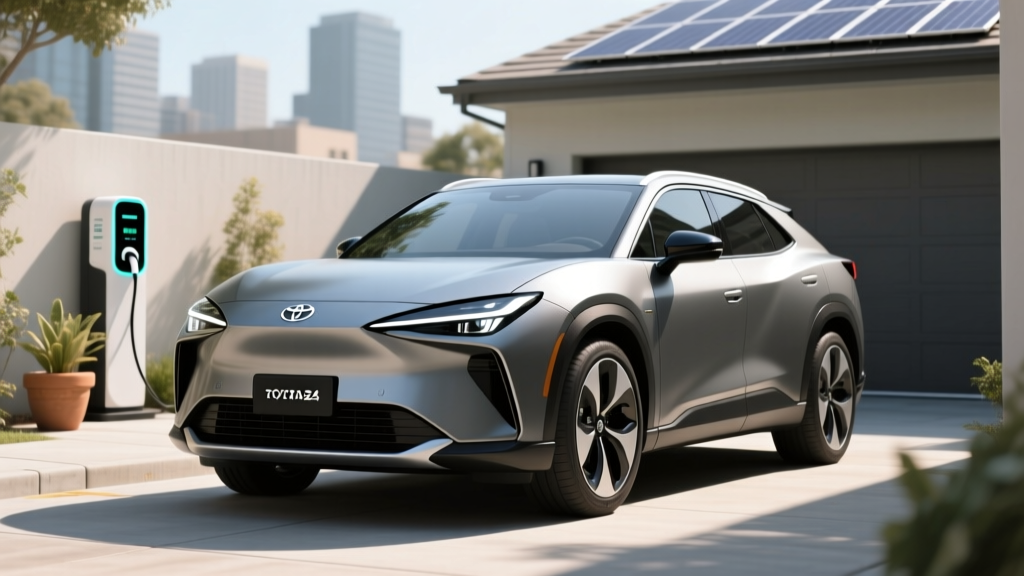
The Toyota bZ4X enters the 2026 model year as a pragmatic compact electric SUV aimed squarely at buyers transitioning from a RAV4 or similar crossover. With EPA range figures between 236 and 252 miles depending on drivetrain, a starting MSRP around $38,465, and the potential to stack federal tax credits with aggressive lease incentives, the bZ4X occupies a competitive space in a segment crowded by the Hyundai Ioniq 5, Kia EV6, Ford Mustang Mach-E, and Tesla Model Y. This review breaks down every spec, cost, and incentive you need to evaluate before signing a lease or purchase agreement.
2026 Toyota bZ4X Key Specifications
| Spec | XLE FWD | XLE AWD | Limited AWD |
|---|---|---|---|
| EPA Range | 252 mi | 236 mi | 236 mi |
| Battery (usable) | 71.4 kWh (NMC lithium-ion) | ||
| Horsepower | 201 hp | 214 hp | 214 hp |
| 0-60 mph | ~7.1 sec | ~5.8 sec | ~5.8 sec |
| Max DC Fast Charge | 150 kW | 150 kW | 150 kW |
| 10-80% DC Time | ~30 minutes | ||
| Level 2 Rate | 7.2 kW (~25 mi/hr) | ||
| MPGe (combined) | 131 MPGe | 114 MPGe | 112 MPGe |
| Base MSRP | $38,465 | $40,465 | $44,465 |
Real-World Range: What the EPA Sticker Doesn't Tell You
EPA Estimate: 252 miles (XLE FWD) / 236 miles (AWD trims)
Real-World Expectation: In mixed driving at moderate temperatures (60-80°F), expect 220-240 miles from the FWD and 205-225 miles from AWD models. Sustained highway driving at 75+ mph reduces range by roughly 10-15%. In freezing conditions (below 32°F), cabin heating and battery thermal demands can drop range by 20-30%, putting AWD trims closer to 165-185 miles per charge on cold winter commutes.
The bZ4X's 71.4 kWh usable battery uses NMC (nickel-manganese-cobalt) chemistry, which offers higher energy density than LFP but is more sensitive to sustained high states of charge. Toyota includes a battery management buffer, meaning total pack capacity exceeds the usable figure. The bZ4X lacks a heat pump on base trims in some markets, which contributes to the steeper cold-weather range loss compared to competitors like the Ioniq 5 that include heat pumps standard. For a daily commuter covering 40-60 miles round trip, even the AWD's real-world 210 miles provides a comfortable buffer. Road trippers should plan charging stops every 180-200 miles to avoid range stress.
Charging Speed: DC Fast Charge and Home Level 2
| Charging Level | Power | Speed (miles added) | Notes |
|---|---|---|---|
| Level 1 (120V household) | ~1.4 kW | ~4-5 mi/hr | Emergency/trickle only; ~50 hours for full charge |
| Level 2 (240V home/public) | 7.2 kW | ~25 mi/hr | Full charge in ~10 hours; ideal overnight |
| DC Fast Charge | Peak 150 kW | ~150 mi in 30 min (10-80%) | Curve tapers significantly above 80%; peak sustained only to ~50% SoC |
The bZ4X's 150 kW peak DC fast-charging rate is functional but trails segment leaders. The Hyundai Ioniq 5 and Kia EV6, built on 800V architectures, peak at 235-240 kW and achieve 10-80% in roughly 18 minutes. The bZ4X's 30-minute 10-80% time means road trips require slightly longer stops. The charge curve is the critical detail: the bZ4X holds near-peak power to approximately 40-50% state of charge, then progressively tapers. Charging from 80-100% on DC is painfully slow, as with most EVs — plan to charge only to 80% on road trips for efficiency.
For home charging, a Level 2 wallbox at 7.2 kW replenishes the pack in roughly 10 hours. Most owners charging overnight from 20-80% daily will add roughly 150 miles in 6 hours — more than enough for typical commutes. Toyota provides a complimentary charging credit with Electrify America (typically one year of complimentary sessions or a kWh allotment; confirm current terms with your dealer). Home Level 2 installation typically costs $800-$2,000 depending on panel proximity and local permit requirements — consult a licensed electrician for a site-specific quote.
Pricing, Trims, and Toyota bZ4X Lease Incentives
The 2026 bZ4X is offered in three main configurations: XLE FWD, XLE AWD, and Limited AWD. Here's how pricing stacks up before and after potential incentives:
| Trim | Base MSRP | Est. Federal Credit (§30D) | Effective Price (if eligible) | Typical Lease (36 mo) |
|---|---|---|---|---|
| XLE FWD | $38,465 | Up to $7,500* | ~$30,965 | ~$299-$399/mo** |
| XLE AWD | $40,465 | Up to $7,500* | ~$32,965 | ~$349-$449/mo** |
| Limited AWD | $44,465 | Up to $7,500* | ~$36,965 | ~$399-$529/mo** |
* §30D eligibility requires meeting buyer income caps, MSRP caps (SUVs: $80,000), and critical mineral/battery component sourcing thresholds. Confirm current-year rules at IRS.gov.
** Lease payments vary by region, dealer, credit tier, money factor, and residual. Toyota Financial Services frequently offers lease cash incentives on the bZ4X — check Toyota.com for current regional offers.
Understanding Toyota bZ4X Lease Incentives
Toyota has historically offered aggressive lease incentives on the bZ4X to drive adoption, including lease cash (a manufacturer-to-dealer subsidy that reduces the capitalized cost), money factor buy-downs, and loyalty bonuses for existing Toyota owners. In 2025-2026, regional lease cash offers of $5,000-$7,500 have been common, sometimes stackable with the federal tax credit.
A critical nuance: under the Inflation Reduction Act, the §30D federal tax credit can be transferred to the dealer at point of sale as a purchase price reduction — but on a lease, the credit technically goes to the lessor (Toyota Financial Services), not the lessee. The lessor may pass the savings through as a capitalized cost reduction, which lowers your monthly payment, but this is not guaranteed. Always ask the dealer to itemize whether the lease quote includes the federal credit passthrough and any manufacturer lease cash.
Additionally, some states and utilities offer rebates for EV leases (e.g., California's CVRP, Colorado's state credit, various utility company incentives). These vary by jurisdiction — check your state energy office and local utility for current programs.
Performance, Efficiency, and Driving Dynamics
The bZ4X is tuned for comfort, not sportiness. The front-wheel-drive XLE produces 201 hp from a single front motor, reaching 0-60 mph in approximately 7.1 seconds — adequate for merging and passing but noticeably relaxed compared to the dual-motor AWD's 214 hp and 5.8-second sprint. The AWD system uses independent front and rear motors with an X-MODE drive setting for light off-road traction and slippery conditions, though ground clearance remains modest at 8.1 inches.
Efficiency is where the FWD model shines. The XLE FWD achieves an EPA-rated 131 MPGe combined (25 kWh/100 mi), making it one of the more efficient compact electric SUVs. The AWD trims drop to 112-114 MPGe combined (29-30 kWh/100 mi), a meaningful difference for high-mileage drivers. Regenerative braking is adjustable via paddle shifters, though the bZ4X does not offer true one-pedal driving to a complete stop — it will creep at very low speeds, requiring the brake pedal for full stops.
Interior Space, Cargo, and Technology
Passenger volume is competitive with the segment: 101.3 cubic feet of passenger space with 42.1 inches of front legroom and 35.3 inches of rear legroom. The rear seat is comfortable for two adults on longer trips, though the transmission tunnel hump (a packaging artifact) slightly compromises the middle seat. Cargo volume measures 27.7 cubic feet behind the rear seats and 56.9 cubic feet with the rear seats folded — a few cubic feet behind the Ioniq 5's 27.2/59.3 and the Model Y's 30.2/76.2 figures.
Notably, the bZ4X does not have a front trunk (frunk), which eliminates roughly 2-3 cubic feet of secure storage that competitors offer. The 12.3-inch infotainment touchscreen on the Limited (8-inch on XLE) runs Toyota's latest Audio Multimedia system with wireless Apple CarPlay and Android Auto, native navigation with EV route planning, and over-the-air updates. A 7-inch digital gauge cluster sits above the steering wheel, positioned to reduce eye movement.
Toyota Safety Sense 3.0 is standard across all trims, including Pre-Collision System with Pedestrian Detection, Lane Tracing Assist, Full-Speed Range Dynamic Radar Cruise Control, and Road Sign Assist. These are SAE Level 2 driver-assist features — they require continuous driver supervision and do not constitute self-driving capability. Available features on the Limited include a 360-degree camera, heated and ventilated front seats, a panoramic fixed glass roof, and a radiant heater system that warms the driver's lower body more efficiently than cabin air heating (helping preserve range in cold weather).
Battery Warranty, Degradation, and Long-Term Ownership
Toyota backs the bZ4X's battery and electric powertrain with an 8-year/100,000-mile warranty (10 years/150,000 miles in California Air Resources Board states). The warranty covers battery capacity below 70% of original — meaning if your 71.4 kWh pack degrades to below ~50 kWh within the warranty period, Toyota will repair or replace it at no cost.
NMC batteries in vehicles with active thermal management typically degrade 1.5-2.5% per year under normal use. At a 2% annual rate, you'd expect roughly 88% capacity retention after 6 years and 80% after 10 years — well above the warranty threshold. Best practices for longevity include:
- Limiting daily charging to 80% for routine use (the bZ4X lets you set a charge limit in the vehicle settings)
- Avoiding frequent DC fast charging when Level 2 is available
- Minimizing prolonged exposure to extreme heat (above 95°F) at high states of charge
- Using preconditioning before fast charging in cold weather
Full battery replacement cost, should it be needed out of warranty, is estimated at $12,000-$18,000 including labor based on current NMC pack pricing trends — though prices continue to decline year over year.
bZ4X vs. Key Competitors: Is It Worth Buying?
| Spec | Toyota bZ4X XLE AWD | Hyundai Ioniq 5 SE AWD | Kia EV6 GT-Line AWD | Tesla Model Y Long Range |
|---|---|---|---|---|
| EPA Range | 236 mi | 290 mi | 282 mi | 320 mi |
| Battery | 71.4 kWh NMC | 77.4 kWh NMC | 77.4 kWh NMC | ~75 kWh NMC |
| Peak DC Charge | 150 kW | 240 kW | 240 kW | 250 kW |
| 10-80% Time | ~30 min | ~18 min | ~18 min | ~25 min |
| 0-60 mph | 5.8 sec | 5.1 sec | 4.5 sec | 4.8 sec |
| Base MSRP (AWD) | $40,465 | $48,400 | $48,700 | $44,990 |
| Cargo (behind rear) | 27.7 cu ft | 27.2 cu ft | 24.4 cu ft | 30.2 cu ft |
The bZ4X's clearest advantage is price. At $40,465 for the AWD XLE, it undercuts the Ioniq 5 and EV6 by $8,000+ and the Model Y by roughly $4,500. After the §30D credit (if eligible), the bZ4X AWD can land near $33,000 — territory no competitor matches. The trade-offs are range (236 vs. 282-320 miles), charging speed (30 vs. 18-25 minutes), and performance.
Choose the bZ4X if your budget is firm below $35,000 after incentives, your daily driving is under 80 miles, you primarily charge at home, and you value Toyota's reliability reputation and dealer network. Choose the Ioniq 5 or EV6 if road-trip charging speed is a priority. Choose the Model Y if maximum range and Supercharger network access matter most.
Pros and Cons
Pros
- Competitive base pricing; strong lease incentives available
- Standard Toyota Safety Sense 3.0 across all trims
- Comfortable ride quality and quiet cabin
- AWD X-MODE for light off-road and snow traction
- Strong 8yr/100k-mi battery warranty (10yr/150k in CARB states)
- Efficient FWD model at 131 MPGe combined
- Toyota dealer network for service accessibility
Cons
- Range (236-252 mi) trails most competitors
- 150 kW DC charging is slower than 800V rivals (18-min 10-80%)
- No front trunk (frunk)
- No true one-pedal driving to a full stop
- Cold-weather range loss is significant without standard heat pump on all trims
- Infotainment system is functional but less polished than Hyundai/Tesla
- Limited trim and battery options (no extended-range pack available)
Frequently Asked Questions
What is the real-world range of the Toyota bZ4X?
The EPA rates the FWD at 252 miles and AWD at 236 miles. In real-world mixed driving at moderate temperatures, expect 220-240 miles (FWD) and 205-225 miles (AWD). Highway driving at 75+ mph and freezing temperatures can reduce these figures by 15-30%.
How fast does the bZ4X charge at home and on DC fast chargers?
On a Level 2 home charger at 7.2 kW, the bZ4X gains approximately 25 miles of range per hour, fully charging in about 10 hours. On a DC fast charger, it peaks at 150 kW and charges from 10-80% in approximately 30 minutes. Charging above 80% slows considerably.
Does the Toyota bZ4X qualify for the federal EV tax credit?
The bZ4X may qualify for up to $7,500 under IRS §30D, but eligibility depends on the buyer's modified adjusted gross income (single: $150,000; joint: $300,000), the vehicle's MSRP (under $80,000 for SUVs — the bZ4X qualifies), and whether the battery meets critical mineral and component sourcing thresholds for the current tax year. The credit can be transferred to the dealer at point of sale for a purchase price reduction. Always verify current-year rules at IRS.gov and consult a tax professional.
How do Toyota bZ4X lease incentives work?
Toyota frequently offers manufacturer lease cash (a dealer subsidy reducing the capitalized cost), money factor buy-downs, and loyalty bonuses. On a lease, the federal §30D tax credit goes to the lessor (Toyota Financial Services) and may or may not be passed through as a cap cost reduction. Ask your dealer to itemize all incentives in the lease quote. Regional offers vary — check Toyota.com for current deals in your area.
Is the bZ4X worth buying over the Ioniq 5 or Model Y?
It depends on priorities. The bZ4X wins on price — it's $4,500-$8,000 cheaper than competitors before incentives. It loses on range (30-70 fewer EPA miles), charging speed (12-15 minutes slower 10-80%), and tech polish. If your commute is short, you charge at home, and budget is paramount, the bZ4X is a strong value. If you road-trip frequently or need maximum range, the Ioniq 5, EV6, or Model Y serve better.
What is the bZ4X's battery warranty?
Toyota provides an 8-year/100,000-mile battery and powertrain warranty nationwide, extended to 10 years/150,000 miles in CARB states (California and states adopting California emissions standards). The warranty covers capacity loss below 70% of the original battery capacity.
Does the bZ4X have a frunk?
No. The bZ4X does not include a front trunk. All cargo space is in the rear: 27.7 cubic feet behind the rear seats, 56.9 cubic feet with seats folded.
Can the bZ4X tow?
The AWD bZ4X has a maximum towing capacity of 2,200 pounds when properly equipped — enough for a small utility trailer or a pair of dirt bikes, but not a camper or boat. FWD models are not rated for towing. This is below the Model Y's 3,500-pound rating.
Sources: EPA range and efficiency data via fueleconomy.gov; federal tax credit rules via IRS.gov §30D; vehicle specifications from Toyota Motor North America press materials. Pricing and incentive figures reflect 2026 model year data and are subject to change. Confirm all details with your local Toyota dealer and a qualified tax professional before purchasing or leasing.