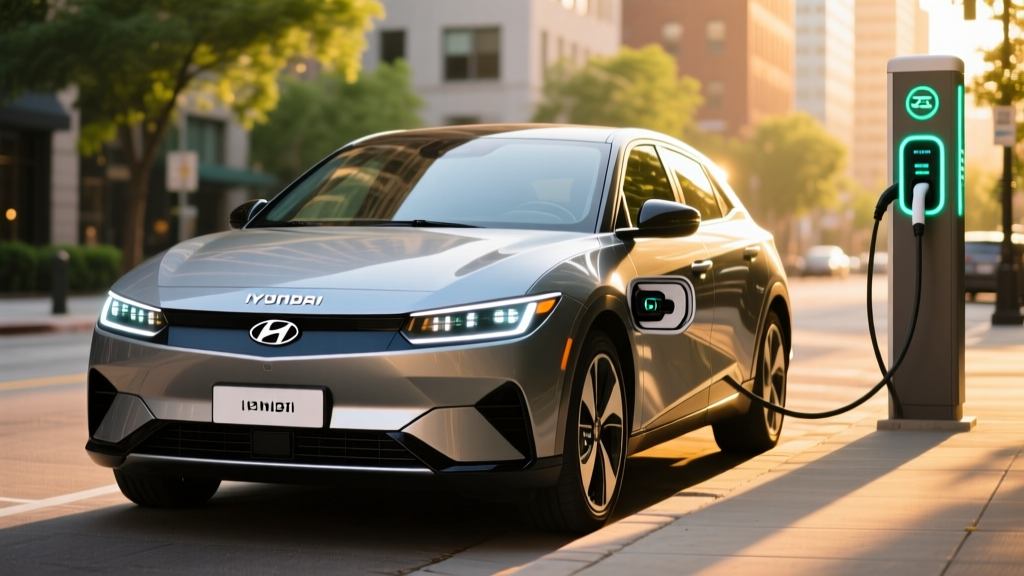
The Hyundai Ioniq 5 remains one of the most compelling electric crossovers on the market as we move through the 2026 model year. With its 800V architecture, retro-futuristic styling, and competitive pricing, it consistently ranks near the top of EV shoppers' shortlists. But with lease incentives shifting monthly and federal tax credit rules tightening on battery sourcing, finding the right Hyundai Ioniq 5 lease deal requires understanding exactly what you're getting — and what the real ownership costs look like beyond the showroom sticker.
This review breaks down the 2026 Ioniq 5's specs, real-world range, charging performance, and total cost picture so you can evaluate any lease offer with confidence.
2026 Ioniq 5 at a Glance: Key Specs
| Spec | SE/SEL RWD | SEL/Limited AWD | Ioniq 5 N |
|---|---|---|---|
| EPA Range | 303 miles | 260 miles | 221 miles |
| Battery (usable) | 77.4 kWh (NMC) | 77.4 kWh (NMC) | 84.0 kWh (NMC) |
| Horsepower | 168 hp | 320 hp | 641 hp (N Grin Boost) |
| 0-60 mph | 7.0 sec | 4.5 sec | 3.4 sec |
| Drivetrain | RWD | Dual-motor AWD | Dual-motor AWD |
| Max DC Fast Charge | ~240 kW | ~240 kW | ~250 kW |
| 10-80% DC Charge | ~18 min | ~18 min | ~18 min |
| Level 2 (240V) Rate | 10.9 kW (~44 mi/hr) | 10.9 kW (~44 mi/hr) | 10.9 kW (~44 mi/hr) |
| MPGe (combined) | 117 MPGe | 101 MPGe | 85 MPGe |
| Base MSRP (2026) | ~$42,600 | ~$47,700 | ~$66,200 |
Range Reality: EPA vs. Real-World Driving
EPA Estimated Range: 303 miles (SE RWD) / 260 miles (AWD trims)
Real-World Expectation: On highway-heavy road trips at 70-75 mph, expect roughly 250-270 miles from the RWD and 215-235 miles from AWD models. In freezing temperatures (below 30°F), range can drop an additional 20-30%, bringing the RWD down to approximately 200-220 miles on the highway in winter conditions.
The Ioniq 5's NMC lithium-ion pack delivers strong energy density, and the RWD model's 117 MPGe combined rating (approximately 29 kWh/100 miles, per fueleconomy.gov) is competitive with the Tesla Model Y and Ford Mustang Mach-E. The AWD trims sacrifice roughly 40 miles of range for the added traction and 320 hp — a worthwhile trade for buyers in snow-belt states.
One factor working in the Ioniq 5's favor is its standard heat pump on most trims, which reduces cold-weather range loss compared to EVs relying on resistive cabin heating. Still, no EV is immune to physics: if your commute involves sustained 80 mph highway driving in January, plan your charging stops conservatively.
Charging Performance: Where the 800V Architecture Pays Off
The Ioniq 5's 800V electrical architecture remains one of its biggest differentiators. Most competing EVs in this price range use 400V systems, which limits their peak DC fast-charge rates. The Ioniq 5 can accept up to approximately 240 kW on a compatible 350 kW DC fast charger.
| Charging Level | Power | Speed / Time |
|---|---|---|
| Level 1 (120V household) | ~1.4 kW | ~5 miles per hour |
| Level 2 (240V home/public) | 10.9 kW | ~44 miles per hour (full charge ~8 hrs) |
| DC Fast (350 kW station) | Peak ~240 kW | 10-80% in ~18 minutes |
| DC Fast (150 kW station) | Peak ~150 kW | 10-80% in ~25 minutes |
| DC Fast (50 kW station) | ~50 kW | 10-80% in ~55 minutes |
Charging curve reality: The 240 kW peak rate is not sustained for the entire session. The Ioniq 5 holds strong charge speeds from 10-55% SoC, then tapers progressively. From 80-100%, expect charging to slow significantly — a characteristic of all lithium-ion batteries to protect longevity. For road trips, plan your stops around 10-80% sessions for the best time efficiency.
For home Level 2 charging, the 10.9 kW onboard charger means a full overnight recharge in about 8 hours on a 48-amp circuit. Most owners will rarely need a full 0-100% charge at home; a nightly top-up from 30-80% takes roughly 3.5 hours and is gentler on long-term battery health.
As of the 2026 model year, the Ioniq 5 uses the NACS (Tesla-style) charge port in the U.S. market, giving native access to the Tesla Supercharger network without an adapter — a significant convenience advantage over the CCS connector used on earlier model years.
Pricing, Lease Deals & Federal Tax Credit Eligibility
Understanding the true cost of an Ioniq 5 requires navigating MSRP, lease incentives, and the federal §30D tax credit simultaneously. Here's how the pricing landscape looks for 2026:
| Trim | Base MSRP | Est. with §30D Credit | Typical Lease (36 mo) |
|---|---|---|---|
| SE Standard Range | ~$42,600 | ~$35,100* | $299-$379/mo |
| SEL AWD | ~$47,700 | ~$40,200* | $349-$429/mo |
| Limited AWD | ~$53,200 | ~$45,700* | $399-$499/mo |
| Ioniq 5 N | ~$66,200 | Not eligible (>$80K MSRP cap) | $699+/mo |
*After $7,500 federal tax credit, assuming full eligibility. Point-of-sale transfer available at participating dealers.
Does the Ioniq 5 Qualify for the Federal EV Tax Credit?
The 2026 Hyundai Ioniq 5 (non-N trims) is eligible for the full $7,500 federal tax credit under IRS §30D — but only if you meet all current requirements. Key eligibility criteria as of 2026:
- MSRP Cap: Vehicle MSRP must not exceed $80,000 (SUVs/crossovers). All Ioniq 5 trims except the N qualify.
- Buyer Income Limits: Modified AGI must not exceed $150,000 (single), $225,000 (head of household), or $300,000 (joint filers).
- Battery Sourcing: A percentage of critical minerals and battery components must be sourced from the U.S. or free-trade-agreement countries. Hyundai has worked to shift Ioniq 5 battery supply chains, and qualifying units are assembled at the Metaplant in Georgia.
- Point-of-Sale Transfer: Buyers can transfer the credit to the dealer at purchase, reducing the purchase price by $7,500 upfront — no need to wait until tax filing.
For current sourcing requirements and eligibility verification, always check the official IRS qualified vehicles list before signing any paperwork. Rules can shift with supply-chain changes.
Lease Deals: The Smart Play?
One of the most attractive aspects of the Ioniq 5 in 2026 is the lease landscape. Hyundai and its financing arm frequently offer subsidized lease rates, and dealers in competitive markets often stack manufacturer incentives with local utility rebates. Typical 36-month lease deals for the SEL AWD hover between $349-$429/month with $2,500-$3,999 due at signing, depending on your region and credit tier.
An important nuance: under the commercial vehicle credit (§45W), leased EVs can sometimes pass through a $7,500 credit to the lessee even when purchase-path sourcing rules would disqualify the vehicle. However, this "lease loophole" depends on the lessor's tax position and how they structure the deal. Ask your dealer explicitly how the credit is being applied to your lease.
Interior, Cargo & Daily Livability
The Ioniq 5's "Living Space" interior philosophy translates to genuinely useful dimensions. The flat floor (thanks to the dedicated E-GMP EV platform) and long 118.1-inch wheelbase create cabin space that punches above its class:
- Cargo volume: 27.2 cu ft behind rear seats; 59.3 cu ft with rear seats folded
- Front trunk (frunk): 0.85 cu ft (RWD) / 2.0 cu ft (AWD) — enough for charging cables or a small bag
- Rear legroom: 39.4 inches — among the best in the compact EV crossover segment
- Front headroom: 40.2 inches
The dual 12.3-inch panoramic display handles infotainment and instrument cluster duties through Hyundai's latest software, which supports wireless Apple CarPlay and Android Auto, over-the-air updates, and digital key functionality. The center console slides fore and aft up to 5.5 inches — a small detail that makes a real difference for front-seat accessibility and storage flexibility.
On the driver-assist front, the Ioniq 5 comes equipped with Highway Driving Assist 2 (HDA2), Hyundai's Level 2 system combining adaptive cruise control with lane-centering and lane-change assist. It's competent and predictable, but it is not a self-driving system — your hands must remain on the wheel and your eyes on the road at all times.
Warranty & Battery Longevity
Hyundai's warranty coverage is one of the strongest in the industry and a key reason buyers feel confident about long-term EV ownership:
- Battery & Powertrain: 10 years / 100,000 miles (whichever comes first)
- New Vehicle Limited: 5 years / 60,000 miles
- Anti-Perforation: 7 years / unlimited miles
- Roadside Assistance: 5 years / unlimited miles
The battery warranty guarantees that the pack will retain at least 70% of its original capacity during the coverage period. Real-world data from Ioniq 5 owners (now several model years into ownership) suggests NMC degradation is modest — typically 5-8% loss over the first 60,000 miles when following recommended charging practices (avoiding frequent 100% charges and prolonged storage at extreme SoC levels).
According to Hyundai's official warranty page, coverage is fully transferable to subsequent owners, which supports strong resale values.
Pros and Cons
Pros
- Class-leading 18-minute 10-80% DC fast charging on 350 kW stations
- NACS port standard — native Supercharger network access
- Spacious interior with best-in-class rear legroom
- Strong 10-year/100,000-mile battery warranty
- Competitive pricing with $7,500 federal credit eligibility
- Vehicle-to-load (V2L) capability powers devices up to 3.6 kW
Cons
- AWD range drops to 260 miles — below some competitors
- No front trunk (frunk) on RWD; minimal on AWD
- Rear wiper absent on early builds (check model year)
- Infotainment learning curve for first-time Hyundai EV owners
- Insurance premiums can run 15-25% higher than gas equivalents
- Ioniq 5 N is thrilling but range-limited (221 mi) and credit-ineligible
Who Should Lease the Ioniq 5?
Choose the Ioniq 5 if:
- You prioritize fast DC charging for regular road trips
- You need a family-friendly crossover with generous rear-seat space
- You want Supercharger access without carrying an adapter
- You value a long powertrain warranty for peace of mind
Look elsewhere if:
- Maximum range is your top priority (consider the Tesla Model Y Long Range at 330+ mi)
- You need serious towing capacity (the Rivian R1S or Ford F-150 Lightning serve better)
- You want a performance EV and don't care about range (the Ioniq 5 N is excellent, but the Tesla Model 3 Performance offers more range)
Frequently Asked Questions
What is the real-world range of the 2026 Hyundai Ioniq 5?
The EPA rates the RWD model at 303 miles and AWD at 260 miles. In real-world highway driving at 70-75 mph, expect about 250-270 miles (RWD) or 215-235 miles (AWD). Cold weather below freezing can reduce these figures by an additional 20-30%.
How fast does the Ioniq 5 charge at home and on the road?
On a 350 kW DC fast charger, the Ioniq 5 charges from 10-80% in approximately 18 minutes, peaking at around 240 kW. At home on a Level 2 (240V/48A) charger, it adds roughly 44 miles of range per hour, with a full charge taking about 8 hours.
Does the 2026 Ioniq 5 qualify for the $7,500 federal tax credit?
Yes — non-N trims qualify for the full $7,500 credit under §30D, provided the buyer meets income limits ($150K single / $300K joint), the MSRP is under $80,000, and battery sourcing requirements are met. Hyundai's Georgia-built Ioniq 5 models currently qualify. Always verify on the IRS qualified vehicles list.
Is leasing the Ioniq 5 better than buying?
Leasing can be advantageous if you want lower monthly payments and plan to upgrade in 3 years. Some lease structures allow the lessor to pass through a $7,500 credit even when purchase eligibility is uncertain. However, buying makes more sense if you plan to keep the vehicle 7+ years and want to capture the full depreciation curve and warranty coverage.
How does the Ioniq 5 compare to the Tesla Model Y?
The Model Y Long Range offers more EPA range (~330 mi) and slightly more cargo space. The Ioniq 5 counters with faster peak DC charging, a more comfortable ride, V2L capability, and a longer warranty. Both use NACS connectors for Supercharger access. The decision often comes down to whether you prefer Tesla's software ecosystem or Hyundai's more traditional automotive experience.
What's the biggest drawback of the Ioniq 5?
The most common complaint is the AWD model's 260-mile EPA range, which falls short of rivals like the Model Y and EV6 (AWD). For road-trip-heavy owners in cold climates, this can mean more frequent charging stops. The small frunk is another missed opportunity for front storage.