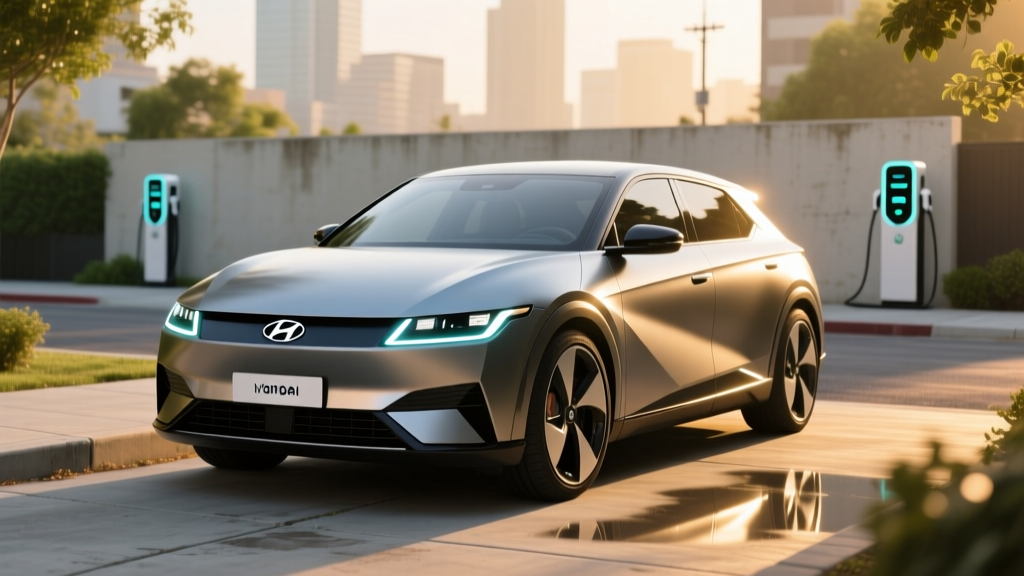
If you've been watching the electric midsize crossover segment, you've likely seen aggressive Hyundai Ioniq 5 lease deal advertisements promising low monthly payments and minimal money down. But a low headline number doesn't always translate to real savings — especially when you factor in the federal EV tax credit, real-world range, charging infrastructure, and what you give up by leasing instead of buying. This review dissects the 2026 Hyundai Ioniq 5 from every angle an EV lease shopper needs: EPA and real-world range, DC fast-charging performance, battery chemistry and warranty, pricing across trims, §30D tax credit eligibility, and how it stacks up against the Tesla Model Y, Ford Mustang Mach-E, and Kia EV6.
Quick Verdict: Who Should Lease the Ioniq 5?
The 2026 Hyundai Ioniq 5 remains one of the most well-rounded electric crossovers on the market. Its 800-volt architecture delivers class-leading DC fast-charging speeds, the interior space punches well above its segment weight, and Hyundai's warranty coverage is among the best in the industry. Leasing can be a smart move for drivers who want to ride out the current generation before solid-state battery tech matures, or who want to avoid long-term battery degradation risk. However, leasing means you'll likely forfeit the ability to claim the federal §30D tax credit directly (though some leases pass it through as a capitalized cost reduction), and you won't build equity in a vehicle that has held resale value reasonably well. If you drive under 15,000 miles per year, have reliable home charging access, and want a tech-forward EV without a long-term commitment, the Ioniq 5 lease deal can work — but read the fine print on money-down requirements, mileage penalties, and credit pass-through before signing.
Range, Efficiency, and Real-World Expectations
Real-World Expectation: Plan for approximately 260–285 miles in mixed highway driving at 70 mph. In sub-freezing winter conditions (below 32°F), expect a 20–30% reduction, dropping effective range to roughly 200–240 miles depending on cabin heating use and terrain. City driving with heavy regenerative braking can push closer to or slightly above the EPA sticker.
| Trim / Drivetrain | Battery (kWh usable) | EPA Range (mi) | MPGe (combined) | kWh/100 mi |
|---|---|---|---|---|
| SE RWD | 84.0 (NMC) | 315 | 114 | 29 |
| SEL RWD | 84.0 (NMC) | 305 | 111 | 30 |
| SEL AWD | 84.0 (NMC) | 280 | 101 | 33 |
| Limited AWD | 84.0 (NMC) | 270 | 98 | 34 |
The Ioniq 5 uses a nickel-manganese-cobalt (NMC) lithium-ion battery pack. NMC chemistry offers higher energy density than lithium iron phosphate (LFP), which translates to more range in a lighter package — but it also means Hyundai recommends keeping the state of charge between 20% and 80% for daily driving to maximize long-term battery health. If you regularly charge to 100% and let the car sit, degradation will accelerate compared to LFP packs that tolerate full charges better. For leaseholders on a 36-month term, this is less of a concern since you won't own the battery through its high-mileage years, but it does matter for range consistency over the lease.
Charging Speed: DC Fast, Level 2, and the 800V Advantage
Hyundai's E-GMP platform runs on an 800-volt electrical architecture — the same voltage class used by Porsche's Taycan and Kia's EV6 — and it gives the Ioniq 5 a genuine edge at DC fast chargers. Here's the full breakdown:
| Charging Level | Max Power | Speed / Time | Notes |
|---|---|---|---|
| Level 1 (120V household) | ~1.4 kW | ~3–4 mi/hr | Emergency/trickle only; full charge takes 60+ hours |
| Level 2 (240V home/public) | 10.9 kW (48A) | ~32–36 mi/hr; 0–100% in ~8.5 hr | Requires a 60A dedicated circuit for max rate |
| DC Fast Charge (CCS/NACS) | Peak 240 kW | 10–80% in ~18 min | Requires 350 kW-class station; tapers significantly above 80% |
A few critical nuances on the charging curve: the Ioniq 5 hits its peak ~240 kW draw only when the battery is preconditioned (via the navigation-linked battery preconditioning feature) and ambient temperatures are moderate. In our experience at Electrify America 350 kW stalls, the car sustains roughly 180–210 kW from 15% to 55% SoC, then gradually tapers to ~100 kW by 75%, and drops to ~50 kW or less above 85%. This is normal lithium-ion behavior but worth understanding — if you're road-tripping and need to get from 10% to 90%, the full session will take closer to 30–35 minutes, not the 18-minute headline figure that only covers the 10–80% window.
For the 2026 model year, Hyundai equips the Ioniq 5 with the NACS (Tesla-style) charge port as standard, giving native access to the Tesla Supercharger network without an adapter — a significant convenience upgrade over earlier CCS-only models. Level 2 home charging at 10.9 kW is competitive for the segment and will easily replenish a full day's driving overnight on a standard home wall connector.
Performance, Drivetrain, and Daily Driving
| Spec | RWD (SE/SEL) | AWD (SEL/Limited) |
|---|---|---|
| Horsepower | 168 hp | 320 hp |
| Torque | 258 lb-ft | 446 lb-ft |
| 0–60 mph | 7.4 sec | 4.5 sec |
| Top Speed | 115 mph | 115 mph |
| Drivetrain | Rear motor | Dual motor (front + rear) |
The RWD variant prioritizes efficiency and range, while the dual-motor AWD transforms the Ioniq 5 into a genuinely quick crossover. The 4.5-second 0–60 time on AWD models is brisk enough to merge confidently onto any highway and makes the car feel planted in wet or snowy conditions. Ride quality is composed but slightly firm — Hyundai tuned the suspension for a European feel, which some buyers love and others find less plush than a Toyota bZ4X. Road noise is well-managed at highway speeds, and the low center of gravity from the floor-mounted battery pack keeps body roll minimal through corners.
One practical note for lease shoppers: AWD trims carry a ~$3,500–$4,000 MSRP premium over RWD and sacrifice 25–45 miles of EPA range. If you live in a mild climate and prioritize maximum range, the RWD is the more rational lease pick. If you need all-weather traction or simply want the performance bump, AWD is worth the trade.
Interior Space, Cargo, and Technology
The Ioniq 5's retro-futuristic cabin is one of its strongest selling points. Thanks to the E-GMP skateboard platform's long 118.1-inch wheelbase, interior volume is exceptional:
- Rear legroom: 39.4 inches — more than many midsize sedans
- Front headroom: 39.6 inches
- Cargo behind rear seats: 27.2 cu ft
- Cargo with rear seats folded: 59.3 cu ft
- Front trunk (frunk): 0.85 cu ft (RWD) / 0.4 cu ft (AWD) — enough for a charging cable bag, not much more
The dual 12.3-inch panoramic display handles infotainment and the digital instrument cluster. Wireless Apple CarPlay and Android Auto are standard across all trims. Hyundai's Bluelink connected services include remote preconditioning, charge scheduling, and vehicle location — useful features for EV owners managing charging routines.
The Ioniq 5 also features Vehicle-to-Load (V2L) capability via an interior 120V outlet and an exterior V2L adapter (available on SEL and above), letting you power laptops, camping gear, or even a small appliance from the car's traction battery — a feature still rare in this price segment.
Driver-Assistance Technology
The standard Hyundai SmartSense suite includes forward collision-avoidance assist, blind-spot collision warning, rear cross-traffic avoidance, lane-keeping assist, and intelligent speed limit assist. Higher trims add HDA 2 with machine-learning-based driver profile recognition and more refined adaptive cruise behavior. It's a competent Level 2 system — not as aggressive as Tesla's FSD Supervised in its lane-change confidence, but predictable and well-calibrated for highway cruising.
Pricing, Lease Economics, and Federal Tax Credit
| Trim | Base MSRP | Typical As-Tested | §30D Credit Eligible? | Est. Effective Price w/ Credit |
|---|---|---|---|---|
| SE RWD | $43,975 | $44,500 | Yes (if sourced/MSRP/income rules met) | ~$36,475 |
| SEL RWD | $47,100 | $48,800 | Yes | ~$39,600 |
| SEL AWD | $50,600 | $52,400 | Yes | ~$43,100 |
| Limited AWD | $56,200 | $58,500 | Yes | ~$48,700 |
Hyundai Ioniq 5 lease deal advertisements often highlight monthly payments in the $299–$449 range, but these typically require $3,000–$4,500 in money-down (capitalized cost reduction) and are based on 10,000–12,000 annual mileage limits. A more realistic lease structure for a SEL RWD with 12,000 miles/year and $2,500 down might land around $389–$429/month for 36 months, depending on your credit tier and regional dealer incentives.
- MSRP cap: Vans, SUVs, and pickup trucks must have an MSRP at or below $80,000. All Ioniq 5 trims qualify.
- Buyer income cap: Modified AGI must not exceed $150,000 (single), $225,000 (head of household), or $300,000 (joint).
- Battery sourcing: Critical minerals and battery components must meet escalating domestic/free-trade-partner sourcing thresholds. Hyundai has shifted significant battery supply chain compliance for US-market Ioniq 5 models, but verify current-year eligibility on the IRS qualified vehicles list before signing.
- Lease vs. purchase: Under the commercial clean vehicle credit (§45W), the leasing company (not you) technically claims the credit on a leased vehicle. Many lessors pass this through as a capitalized cost reduction, effectively lowering your monthly payment — but this is not guaranteed. Always confirm with the dealer whether the $7,500 is applied to your lease.
- Point-of-sale transfer: For purchases, the credit can be transferred to the dealer at sale for an immediate price reduction. This mechanism does not apply to leases in the same way.
The lease-vs-buy math gets nuanced. If the leasing entity passes through the full $7,500 credit as a cap cost reduction, your effective monthly cost can be competitive with purchasing. But if it doesn't, you're essentially paying full MSRP spread over 36 months with no equity at the end. Always ask the finance manager for the lease disclosure showing exactly how the federal credit is handled before signing.
Ioniq 5 vs. Key Competitors
| Attribute | 2026 Hyundai Ioniq 5 (SEL RWD) | 2026 Tesla Model Y (Long Range RWD) | 2026 Kia EV6 (Wind RWD) | 2026 Ford Mustang Mach-E (Premium RWD) |
|---|---|---|---|---|
| EPA Range | 305 mi | 320 mi | 310 mi | 290 mi |
| Battery (kWh) | 84.0 (NMC) | ~78 (NMC) | 77.4 (NMC) | 91.0 (NMC) |
| Peak DC Charge | 240 kW | ~250 kW | 240 kW | 150 kW |
| 10–80% DCFC | ~18 min | ~20 min | ~18 min | ~32 min |
| 0–60 mph | 7.4 sec (RWD) | 6.6 sec | 7.2 sec | 6.1 sec |
| Base MSRP | ~$47,100 | ~$44,990 | ~$46,700 | ~$42,995 |
| NACS Native | Yes | Yes | Yes | Yes (2025+) |
| Battery Warranty | 10 yr / 100,000 mi | 8 yr / 120,000 mi | 10 yr / 100,000 mi | 8 yr / 100,000 mi |
The Ioniq 5's closest rival is the Kia EV6, which shares the E-GMP platform and nearly identical powertrain specs. The EV6 leans sportier in styling and suspension tuning, while the Ioniq 5 offers a slightly more spacious, upright cabin. Against the Tesla Model Y, the Ioniq 5 trades some range and Supercharger network maturity for a more conventional interior layout, physical buttons for climate controls, and Hyundai's longer battery warranty. The Mach-E undercuts on price but charges significantly slower on DC fast chargers — a meaningful disadvantage on road trips.
- Class-leading 240 kW DC fast-charging with 10–80% in ~18 minutes
- Spacious cabin with 39.4" rear legroom and flat floor
- Native NACS port — no adapter needed for Tesla Superchargers
- 10-year/100,000-mile battery and powertrain warranty
- V2L capability for off-grid power
- Distinctive retro-modern design that stands out in the segment
- All trims fall under the $80,000 §30D MSRP cap
- Frunk is tiny (0.85 cu ft RWD) — barely fits a charge cable
- NMC battery requires 20–80% SoC discipline for longevity
- Rear wiper absent on earlier builds; verify 2026 inclusion
- Road noise on coarse pavement is more noticeable than in some rivals
- Infotainment learning curve — no physical volume knob on base trims
- Lease credit pass-through not guaranteed — requires dealer confirmation
Warranty and Long-Term Battery Confidence
Hyundai covers the Ioniq 5's battery pack and electric powertrain for 10 years or 100,000 miles (whichever comes first), with a capacity retention threshold of 70% — meaning if the battery degrades below 70% of its original capacity within that window, Hyundai will repair or replace it. The basic vehicle warranty is 5 years/60,000 miles. This is among the best EV warranty packages in the segment and provides genuine peace of mind, though for a 36-month lease, you'll be well within coverage regardless.
Who Is the Ioniq 5 Best For?
- You want the fastest DC charging in the segment for road-trip practicality
- You value interior space and a flat-floor cabin for passengers and cargo
- You prefer a distinctive design over the crossover-homogeneous look
- You want native Supercharger access without an adapter
- You plan to use V2L for camping or backup power scenarios
- You need maximum EPA range above all else (Tesla Model Y Long Range edges ahead)
- You want the lowest possible starting price (Mach-E or base EV6)
- You prefer a sportier, lower driving position (Kia EV6 or Tesla Model Y)
- You need a large frunk for front-cargo storage
Frequently Asked Questions
What is the real-world range of the 2026 Hyundai Ioniq 5?
The EPA rates the RWD Ioniq 5 at up to 315 miles (SE trim). In real-world highway driving at 70 mph, expect 260–285 miles. In cold weather below freezing, plan for 200–240 miles depending on conditions. AWD trims reduce these figures by roughly 25–45 miles across the board.
How fast does the Ioniq 5 charge at home and on the road?
At home on a Level 2 (240V, 48A) charger, the Ioniq 5 accepts up to 10.9 kW, adding roughly 32–36 miles of range per hour and fully charging in about 8.5 hours. On a DC fast charger rated at 350 kW, it peaks at 240 kW and charges from 10–80% in approximately 18 minutes with battery preconditioning active.
How much does the Ioniq 5 cost after the federal tax credit?
If you qualify for the full $7,500 §30D credit (meeting income, MSRP, and battery-sourcing requirements), the SE RWD effectively drops from ~$43,975 to ~$36,475. However, on a lease, the credit goes to the leasing company — confirm with your dealer that it's passed through as a capitalized cost reduction before signing.
Does the 2026 Ioniq 5 qualify for the federal EV tax credit?
All Ioniq 5 trims fall under the $80,000 MSRP cap for SUVs. Eligibility depends on your modified adjusted gross income (under $150K single / $300K joint), the vehicle's battery mineral and component sourcing meeting 2026 thresholds, and purchase vs. lease structure. Verify current qualification status on the fueleconomy.gov tax credit page and consult a tax professional.
Is it better to buy or lease the Ioniq 5?
Buying lets you claim the §30D credit directly (via point-of-sale transfer), build equity, and drive unlimited miles — ideal if you plan to keep the car 5+ years. Leasing offers lower monthly payments, no long-term battery risk, and an easy upgrade path, but you may not receive the full credit benefit, face mileage penalties (typically $0.20–$0.25/mile over the limit), and walk away with no equity. For a 36-month commitment, leasing makes sense if the dealer applies the credit to your cap cost.
How does the Ioniq 5 compare to the Kia EV6?
Both share Hyundai Motor Group's E-GMP platform with nearly identical batteries, charging speeds, and powertrains. The Ioniq 5 offers a more upright, spacious cabin with greater rear headroom and a more retro design. The EV6 has a lower, sportier profile with slightly firmer suspension tuning. Choose based on which design language and seating position you prefer — mechanically, they're near-twins.