Quick Verdict: Is Leasing the 2025 Ioniq 5 the Smart Move?
The 2025 Hyundai Ioniq 5 arrives with a meaningful refresh: a larger 84.0 kWh battery (up from 77.4 kWh), the addition of Tesla Supercharger access via the NACS port, and a rugged new XRT trim. For shoppers weighing purchase against a 2025 Hyundai Ioniq 5 lease, the math is compelling — lease payments often undercut loan payments by $100–$200/month, and Hyundai frequently passes the $7,500 federal EV credit through as a lease bonus even when buyers wouldn't qualify under strict §30D income or sourcing rules.
But before you sign, you need the real numbers: what range you'll actually see on the highway in January, how fast it charges when the battery is cold, and whether the tech holds up against the Tesla Model Y and Ford Mustang Mach-E. This review gives you the data to decide.
| Spec | SE/SEL RWD | SEL/Limited AWD | XRT AWD |
|---|---|---|---|
| EPA Range | 318 mi | 290 mi | 259 mi |
| Battery (usable) | 84.0 kWh, NMC lithium-ion | ||
| Drivetrain | RWD, single motor | AWD, dual motor | AWD, dual motor |
| Horsepower | 168 hp | 320 hp | 320 hp |
| 0–60 mph | ~7.0 sec | ~4.5 sec | ~4.5 sec |
| Max DC Fast Charge | ~240 kW (800V architecture) | ||
| 10–80% DC Time | ~18 minutes (ideal conditions) | ||
| Level 2 Home Charge | 10.9 kW (~44 mi/hr) | ||
| EPA Efficiency (RWD) | 132 MPGe city / 98 hwy / 114 combined | ||
| Base MSRP | $42,600 | $47,100 | $52,200 |
| Battery Warranty | 8 years / 100,000 miles | ||
Real-World Range: What You'll Actually Drive
Real-World Expectation: ~250–280 miles highway in mild weather; ~200–230 miles in sub-30°F conditions
The EPA number on the window sticker is a blended cycle. In practice, the Ioniq 5's boxy shape and 2.35 drag coefficient create real highway penalties. On a 70-mph cruise in 65°F weather, expect roughly 265–280 miles from the RWD model before you're hunting for a charger. The AWD trims drop to around 240–255 miles under the same conditions.
Cold weather is the bigger variable. Lithium-ion batteries lose efficiency below freezing, and cabin heating draws heavily from the pack. In sustained 20°F driving, plan for 25–30% range reduction — that 318-mile RWD model becomes a ~225-mile car. The Ioniq 5's standard heat pump (on AWD trims) mitigates this somewhat, but it doesn't eliminate the physics. If you commute in Minnesota winters, size your route expectations around 200 miles to stay comfortable.
For context, fueleconomy.gov lists the RWD Ioniq 5 at 114 MPGe combined (29 kWh/100mi), which is competitive with the Model Y Long Range (122 MPGe) but trails the more aerodynamic Hyundai Ioniq 6 (140 MPGe combined).
Charging: 800V Architecture Pays Off at the Plug
The Ioniq 5's standout engineering feature is its 800V electrical architecture — shared with the Porsche Taycan and Kia EV6 — which enables dramatically faster DC charging than the 400V systems in most competitors.
| Charging Level | Power (kW) | Speed Added | Notes |
|---|---|---|---|
| Level 1 (120V household) | ~1.4 kW | ~5 mi/hr | Emergency/trickle only |
| Level 2 (240V home) | 10.9 kW | ~44 mi/hr | Full charge in ~8 hours |
| DC Fast (350 kW station) | Peak ~240 kW | ~18 min (10–80%) | Requires preconditioning |
| DC Fast (150 kW station) | ~150 kW | ~25 min (10–80%) | More common public speed |
| Tesla Supercharger (NACS) | Up to ~250 kW | Varies by stall | New for 2025 via adapter |
The charge curve matters more than peak kW. The Ioniq 5 peaks near 240 kW only between roughly 10–45% state of charge, then tapers progressively. From 80–100%, charging slows to under 50 kW — this is normal battery protection behavior, not a defect. For road trips, the 10–80% window is what counts, and 18 minutes is genuinely excellent. You'll spend more time in the restroom and grabbing coffee than waiting.
Preconditioning is critical. Use the route-to-charger navigation feature to warm the battery before arriving at a DC fast charger. Without it, a cold battery may accept only 80–120 kW initially, stretching your 10–80% time to 30+ minutes. The Ioniq 5's navigation system triggers preconditioning automatically when you set a fast charger as your destination.
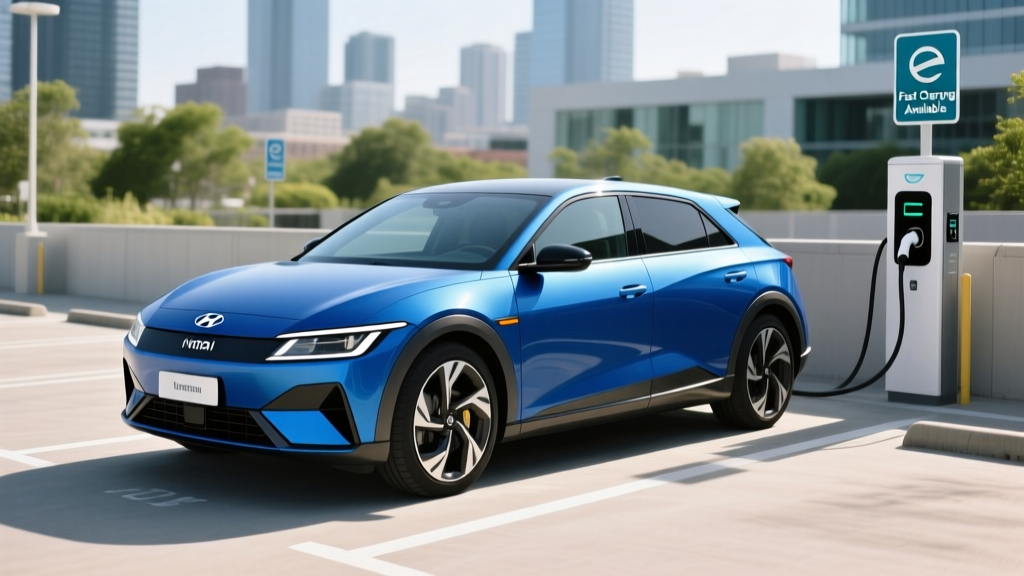
For 2025, Hyundai added a native NACS (Tesla-style) charge port, eliminating the need for a CCS-to-NACS adapter at Superchargers. This opens access to Tesla's 17,000+ Supercharger stalls — a significant reliability advantage over Electrify America and other third-party networks.
Performance and Drivetrain
The RWD model's 168 hp and 7.0-second 0–60 time feel adequate for commuting but won't thrill anyone coming from a sport sedan. The AWD dual-motor setup (320 hp, 4.5 seconds to 60) transforms the car — it's genuinely quick off the line and confident in merging situations.
The XRT trim adds 0.6 inches of ground clearance (7.2 inches total), all-terrain tires, and enhanced underbody protection. It's not a serious off-roader, but it handles gravel roads and light snow with more confidence than the standard model. The trade-off: those all-terrain tires reduce range to 259 miles EPA and increase road noise noticeably above 65 mph.
Regenerative braking offers four levels (including i-Pedal one-pedal mode). The paddle-shift adjustment is intuitive, and the blended braking feel is among the smoothest in the segment — no abrupt transitions between regen and friction brakes.
Pricing, Lease Math, and Tax Credits
Here's where the lease question gets interesting. The 2025 Ioniq 5 lineup starts at $42,600 (SE RWD) and climbs to $56,100 (Limited AWD with all options). But purchase price isn't the number that matters for leasing.
| Trim | MSRP | Est. Monthly Lease (36 mo, $3,500 down)* | §30D Credit Eligible? |
|---|---|---|---|
| SE RWD | $42,600 | ~$429 | Yes (if income/sourcing met) |
| SEL RWD | $45,100 | ~$459 | Yes (if income/sourcing met) |
| SEL AWD | $49,600 | ~$519 | Yes (if income/sourcing met) |
| XRT AWD | $52,200 | ~$549 | Yes (if income/sourcing met) |
| Limited AWD | $56,100 | ~$589 | Yes (if income/sourcing met) |
*Lease estimates are illustrative based on typical Hyundai Motor Finance residuals and money factors as of early 2025. Actual terms vary by dealer, region, and credit tier.
The §30D Tax Credit Advantage for Leases
Under IRS §30D rules, the full $7,500 federal credit for purchase requires meeting all of these:
- Buyer income caps: $150K single / $225K head of household / $300K joint filers
- MSRP caps: $55,000 for SUVs/crossovers (Ioniq 5 qualifies)
- Battery sourcing: Critical minerals and battery components must meet phased-in domestic/free-trade requirements (Hyundai's Georgia plant sourcing is expected to qualify most 2025 builds, but confirm with your dealer)
- Point-of-sale transfer: Available starting 2024, allowing the credit to reduce the purchase price at the dealership
The lease loophole: When you lease (rather than buy), the $7,500 credit goes to the lessor (Hyundai Motor Finance) under §45W commercial vehicle rules, and they typically pass it through as a capitalized cost reduction — effectively lowering your monthly payment. This works regardless of your personal income and sidesteps the battery-sourcing requirements. This is the primary reason many Ioniq 5 shoppers should seriously consider leasing in 2025.
Interior, Tech, and Daily Livability
The Ioniq 5's retro-futuristic interior remains one of the segment's most distinctive. The dual 12.3-inch displays (instrument cluster and infotainment) run Hyundai's latest ccNC software, which is responsive and logically organized. Wireless Apple CarPlay and Android Auto are standard across all trims.
Space is generous: 106.5 cubic feet of passenger volume with 41.7 inches of rear legroom — more than the Model Y (39.8 inches) and competitive with midsize sedans. Cargo volume is 27.2 cu ft behind the rear seats and 59.3 cu ft with them folded. The front trunk (frunk) adds 0.85 cu ft on AWD models and 2.0 cu ft on RWD — enough for charging cables and a small bag.
Vehicle-to-load (V2L) is standard: an interior 120V outlet and an exterior adapter let you power appliances, tools, or even trickle-charge another EV at up to 3.6 kW. It's a genuine differentiator for camping, tailgating, or emergency backup power.
Driver assistance: Hyundai SmartSense includes adaptive cruise with stop-and-go, lane-centering, blind-spot monitoring, and rear cross-traffic alert. Highway Driving Assist 2 (HDA2) adds lane-change assistance and hands-on-wheel detection. This is a solid SAE Level 2 system — competent for highway cruising but requiring full driver attention. It is not autonomous driving.
Pros
- 800V charging delivers 10–80% in ~18 min at 350 kW stations
- Native NACS port opens Tesla Supercharger network
- Spacious cabin with class-leading rear legroom
- V2L capability for camping and backup power
- Lease structure often captures $7,500 credit regardless of buyer income
- 10-year/100,000-mile powertrain warranty
Cons
- No rear wiper (2025 still omits it — visibility suffers in rain)
- Highway range falls noticeably short of EPA sticker
- Touch-capacitive climate controls are distracting while driving
- XRT all-terrain tires increase cabin noise
- No Apple CarPlay/Android Auto on the larger navigation display (wired only on base screen)
Who Should Lease the 2025 Ioniq 5?
Best for: Suburban commuters with home Level 2 charging who want a comfortable, spacious daily driver with excellent fast-charging for occasional road trips. The lease structure makes it especially attractive for buyers who exceed the §30D income caps or want to avoid long-term battery degradation risk.
Consider alternatives if: You regularly drive 300+ miles between charging stops (the Ioniq 6 or Chevy Equinox EV offer more range), you need three rows (Kia EV9), or you prioritize autonomous-feeling highway assist (Tesla Model Y with Autopilot is more polished, though still Level 2).
Competitor Comparison
| Spec | Ioniq 5 AWD | Tesla Model Y LR | Ford Mach-E ER AWD |
|---|---|---|---|
| EPA Range | 290 mi | 320 mi | 290 mi |
| Max DC Charge | ~240 kW | ~250 kW | ~150 kW |
| 10–80% Time | ~18 min | ~22 min | ~35 min |
| 0–60 mph | 4.5 sec | 4.8 sec | 4.8 sec |
| Base MSRP (AWD) | $49,600 | $48,990 | $51,875 |
| Battery Warranty | 8/100K | 8/120K | 8/100K |
The Ioniq 5 wins on DC charging speed and interior space. The Model Y wins on range, Supercharger-native reliability (no adapter needed), and over-the-air update maturity. The Mach-E is a strong driver's car but its slower charging is a real road-trip penalty. For a detailed breakdown, see our IIHS safety ratings — the Ioniq 5 earns Top Safety Pick+ status.
Frequently Asked Questions
What is the real-world range of the 2025 Hyundai Ioniq 5?
Expect 250–280 miles on the highway in mild weather for the RWD model (EPA 318 mi), and 240–255 miles for AWD. In sub-30°F winter conditions, reduce those figures by 25–30%. The RWD model with the 84 kWh battery is the range leader in the lineup.
How fast does the Ioniq 5 charge at home and on the road?
On a Level 2 home charger (10.9 kW), it adds roughly 44 miles per hour and fully charges overnight in ~8 hours. On a 350 kW DC fast charger with battery preconditioning, it hits 10–80% in approximately 18 minutes. On a more common 150 kW public charger, expect ~25 minutes for 10–80%.
Does the 2025 Ioniq 5 qualify for the $7,500 federal tax credit?
For purchases, eligibility depends on your income (under $150K/$225K/$300K by filing status), the vehicle's MSRP (under $55K for SUVs — the Ioniq 5 qualifies), and battery component/critical-mineral sourcing rules per IRS §30D. For leases, the credit typically passes through as a cap-cost reduction regardless of your personal income. Confirm with your dealer and consult a tax professional for your specific situation.
Is leasing the Ioniq 5 better than buying in 2025?
Leasing is often the better financial move because (1) the $7,500 credit passes through without income/sourcing restrictions, (2) monthly payments are lower, (3) you avoid long-term battery degradation risk, and (4) you can upgrade to a newer model with better range/charging in 3 years. Buying makes more sense if you drive very high miles (lease penalties apply) or want to keep the car 7+ years.
What are the biggest drawbacks of the 2025 Ioniq 5?
The lack of a rear wiper remains inexplicable and hurts wet-weather visibility. Highway range falls 10–15% below the EPA sticker. The touch-capacitive climate controls are distracting. And the XRT trim's all-terrain tires generate noticeable road noise. None are deal-breakers, but they're real ownership friction points.
Can I use Tesla Superchargers with the 2025 Ioniq 5?
Yes. The 2025 model has a native NACS charge port, so you can plug directly into any Tesla Supercharger stall without an adapter. This is a significant advantage over the 2022–2024 models, which required a CCS-to-NACS adapter for Supercharger access.
Sources: fueleconomy.gov, IRS §30D Clean Vehicle Credits, Hyundai USA official specifications. Pricing and credit rules reflect 2025 model year and are subject to change. Verify all figures with your dealer and tax advisor before purchasing or leasing.