Quick Answer: Is a GMC Electric Van Right for Your Fleet?
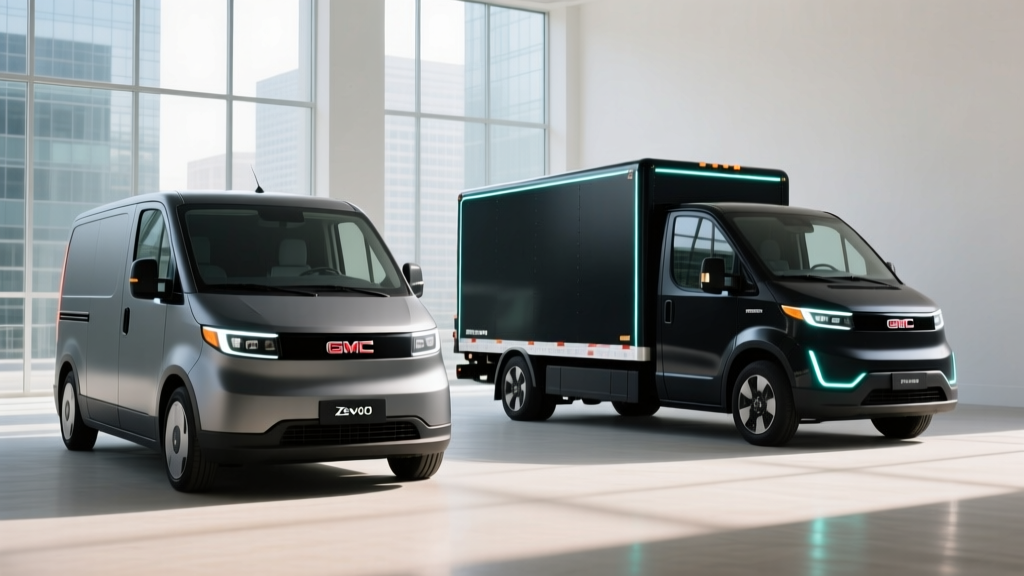
The GMC electric van lineup — sold under the BrightDrop Zevo nameplate (formerly BrightDrop EV600/EV410) — targets commercial last-mile delivery. As of the 2026 model year, the Zevo 600 offers an EPA-estimated 272 miles of range from a 165 kWh Ultium (NMC) battery, while the smaller Zevo 400 delivers approximately 250 miles from a ~140 kWh pack. Peak DC fast charging reaches 120 kW, adding roughly 160 miles in 45 minutes (10–80%). Base pricing starts near $84,000 for the Zevo 400 and $95,000 for the Zevo 600 before any federal commercial clean vehicle credits (IRS §45W, up to $7,500 for vehicles under 14,000 lbs GVWR). For fleets running 80–150 urban miles daily, the Zevo series eliminates fuel costs and cuts maintenance dramatically — but requires depot Level 2 charging infrastructure and isn't suited for routes exceeding 200 miles without mid-day charging.
The GMC Electric Van Lineup: Zevo 400 vs. Zevo 600
General Motors restructured its commercial EV division, consolidating the BrightDrop brand under GMC's commercial umbrella. For 2026, two primary models are available for fleet order:
| Spec | Zevo 400 | Zevo 600 |
|---|---|---|
| Cargo Volume | 410 cu ft | 615 cu ft |
| Battery (usable) | ~140 kWh (NMC Ultium) | 165 kWh (NMC Ultium) |
| EPA Range | ~250 mi | 272 mi |
| Peak DC Charge Rate | 120 kW | 120 kW |
| 10–80% DC Charge | ~50 min | ~55 min |
| Level 2 Charge (AC) | 11.5 kW (~14 hrs full) | 11.5 kW (~17 hrs full) |
| Motor / Drivetrain | FWD, ~200 hp | FWD, ~200 hp |
| 0–30 mph | ~4.0 sec | ~4.5 sec |
| GVWR | 9,990 lbs | 9,990 lbs |
| Payload Capacity | ~2,500 lbs | ~2,200 lbs |
| Starting MSRP (est.) | $84,000 | $95,000 |
| Battery Warranty | 8 yr / 100,000 mi | 8 yr / 100,000 mi |
Both models ride on GM's Ultium platform with front-wheel drive — a deliberate choice for maximizing cargo floor space and simplifying drivetrain maintenance. The 200 hp electric motor delivers instant torque, which matters when merging onto highways fully loaded.
Real-World Range Reality Check
The Zevo 600's EPA-estimated 272 miles assumes moderate-speed urban/suburban driving with climate control at moderate settings. In practice:
- Urban stop-and-go (30–45 mph avg): Expect ~240–260 miles — regenerative braking recovers significant energy
- Highway-heavy routes (65+ mph): Expect ~190–215 miles — aerodynamic drag on a box van is severe
- Cold weather (below 30°F): Expect 15–25% range reduction (~200–230 mi for the Zevo 600) due to battery resistance and cabin/cargo heating demands
- Fully loaded (near GVWR): Subtract ~5–10% from any estimate above
Fleet operators should plan routes using a 200-mile practical maximum for the Zevo 600 and 175 miles for the Zevo 400, leaving buffer for detours, HVAC use, and seasonal variation.
Charging Infrastructure: What Your Depot Needs
The single biggest barrier to GMC electric van adoption isn't the vehicle — it's the charging setup. Here's what fleet operators need to budget for:
| Component | Cost Range | Notes |
|---|---|---|
| Level 2 Charger (11.5–19.2 kW AC) | $1,500–$4,000 | Commercial-rated units; dual-port options available |
| Electrical Panel / Transformer Upgrade | $5,000–$25,000 | Multi-stall depots often need 480V 3-phase service |
| Wiring & Conduit (per stall, 50–100 ft run) | $2,000–$8,000 | Distance from panel is the major cost variable |
| Permits & Engineering | $2,000–$10,000 | Utility interconnection agreements for 5+ chargers |
| Smart Charging Software | $500–$2,000/yr | Load management to avoid demand-charge spikes |
| Total Per-Stall Estimate | $11,000–$49,000 | Wide range reflects existing electrical capacity |
For overnight depot charging, Level 2 is sufficient. A fully depleted Zevo 600 (165 kWh) charging at 11.5 kW takes roughly 17 hours — meaning a van returning at 6 PM with 30% battery remaining will be fully charged by 7 AM. At 19.2 kW (requires compatible onboard charger and 80A circuit), that drops to ~10 hours.
DC fast charging at 120 kW is available via CCS1 connectors at public stations or depot-installed DC units (which add $30,000–$80,000 per charger). A 10–80% session takes approximately 55 minutes — practical for mid-day top-ups but not a daily strategy, given the cost premium of public DC charging and the battery-wear implications of frequent high-rate sessions.
Cost Comparison: GMC Electric Van vs. Gas Cargo Van
The purchase price of a Zevo 600 stings compared to a gasoline Ford Transit or Ram ProMaster — but fleet total cost of ownership (TCO) tells a different story over five years.
| Cost Category | GMC BrightDrop Zevo 600 | Ford Transit 250 (Gas, 3.5L V6) |
|---|---|---|
| Purchase Price (base) | $95,000 | $48,000 |
| Federal Tax Credit (§45W) | −$7,500 | $0 |
| Net Acquisition | $87,500 | $48,000 |
| Fuel / Energy (100k mi) | $4,800 (depot L2 @ $0.13/kWh) | $18,750 (14 MPG avg, $3.50/gal) |
| Maintenance (5 yr) | $2,500 | $8,500 |
| Brake Replacement | $0–$400 (regen saves pads) | $1,800 |
| Insurance (est. avg) | $14,000 | $11,000 |
| Depot Charging Install (amortized) | $6,000 | $0 |
| 5-Year Total | $114,800 | $88,050 |
| Cost Per Mile | $1.15 | $0.88 |
At face value, the Zevo 600 still costs more over five years — but this comparison doesn't capture several factors that shift the math for specific fleets:
- Higher annual mileage amplifies savings. At 30,000 miles/year instead of 20,000, fuel savings alone reach $28,000 over five years, nearly closing the gap.
- State and utility incentives. Many states (California's HVIP, New York's NYTVIP) offer $20,000–$60,000 per commercial EV — which can flip the TCO advantage decisively to the Zevo.
- Maintenance predictability. No oil changes, no transmission fluid, no spark plugs, no exhaust system. Fewer unscheduled downtime events.
- Emissions compliance. Cities with clean-air-zone mandates (and corporate ESG targets) may require electrification regardless of cost.
Federal Tax Credits and Incentives for Commercial EVs
Commercial fleets don't use the consumer §30D credit. Instead, the §45W Commercial Clean Vehicle Credit applies:
- Up to $7,500 for vehicles with GVWR under 14,000 lbs (both Zevo models qualify)
- Up to $40,000 for vehicles over 14,000 lbs (not applicable to current Zevo lineup)
- The credit equals the lesser of: 15% of your tax basis (30% if you don't use depreciation), or the incremental cost vs. a comparable gas vehicle
- No MSRP cap, no buyer income cap, no battery-sourcing restrictions (unlike §30D)
- Can be transferred to the dealer at point of sale (effective 2024+)
Consult a tax professional — the interaction between §45W, bonus depreciation, and state incentives is complex and varies by fleet structure.
Common Misconceptions About Electric Cargo Vans
| Myth | Fact |
|---|---|
| "Electric vans can't handle cold weather." | Range drops 15–25% below 30°F — real, but manageable for urban routes under 150 miles. The Ultium pack's active thermal management mitigates worst-case scenarios. Preconditioning while plugged in preserves range. |
| "Batteries will need replacing in 5 years." | GM warranties the Ultium battery for 8 years/100,000 miles against dropping below ~60–70% capacity. Industry data from earlier commercial EVs shows ~10–15% degradation at 150,000 miles with proper charging habits (avoiding routine 100% charges and DC fast charging). |
| "Charging takes too long for delivery routes." | Overnight depot charging covers 90%+ of last-mile routes. For the rare mid-day top-up, 120 kW DC charging adds ~100 miles in 30 minutes — enough for most route extensions. |
| "Payload capacity is too low because of battery weight." | The Zevo 600 carries ~2,200 lbs payload — less than a gas Transit 250 (~3,200 lbs) but sufficient for most parcel and grocery delivery. Volume (615 cu ft) is the more relevant metric for light, bulky packages. |
| "Electric vans are unreliable." | Early-production BrightDrop vehicles (2023–2024) had software and build-quality issues. The 2026 Zevo reflects multiple production iterations, and the simpler EV drivetrain has far fewer failure-prone components than an ICE van. |
Decision Framework: Should Your Fleet Go Electric?
If / Then: Is the GMC Zevo Right for You?
- IF your daily routes are under 150 miles and return to a central depot → THEN the Zevo 600 is a strong fit; overnight L2 charging covers your needs entirely.
- IF your routes regularly exceed 200 miles or lack predictable end locations → THEN wait for higher-capacity models or consider a PHEV/gas van for long-haul routes while electrifying short ones.
- IF you operate in a state with significant commercial EV incentives (CA, NY, NJ, CO) → THEN the effective acquisition cost drops by $20,000–$60,000, making TCO favorable within 3 years.
- IF your depot lacks electrical capacity for multiple chargers → THEN budget $25,000–$100,000+ for panel/transformer upgrades before committing to vehicles. Engage your utility early — interconnection studies can take 6–12 months.
- IF you're a small operator (1–3 vans) without depot charging → THEN public charging dependency makes EV ownership impractical today; revisit when depot access or residential commercial parking with charging is available.
- IF payload weight (not volume) is your primary constraint → THEN the ~1,000-lb payload penalty vs. gas vans may be a dealbreaker; verify against your typical load.
What First-Time Fleet EV Buyers Must Know
Transitioning from gas vans to the GMC BrightDrop Zevo involves operational changes beyond the vehicle itself:
- Start with a pilot. Order 1–2 vehicles and run them on your most predictable routes for 90 days before scaling. Track actual energy consumption (kWh/mile) against your utility rate structure.
- Understand demand charges. Commercial electricity bills include demand charges based on peak kW draw. Simultaneously charging 5 vans at 11.5 kW each creates a 57.5 kW spike — smart charging software that staggers sessions can save thousands monthly.
- Driver training matters. Regenerative braking and one-pedal driving require acclimation. Drivers who embrace regen report less fatigue; those who don't waste energy and brake-pad life.
- Plan for charging downtime in scheduling. Unlike a 5-minute gas fill-up, even DC fast charging requires 30–55 minutes. Build route schedules that return vehicles to the depot with time to charge before the next shift.
- Monitor battery State of Health (SoH). The Zevo's telematics system reports SoH — track it monthly. Charging to 80–90% rather than 100% daily, and minimizing DC fast charging, extends long-term battery life.
Can I buy a GMC BrightDrop Zevo as an individual, not a fleet?
Currently, GM prioritizes commercial fleet orders. Individual purchases are possible through select commercial dealers but aren't the primary sales channel. If you're an owner-operator or sole proprietor with a registered business, you can typically place an order through a BrightDrop-certified dealer.
Does the GMC electric van qualify for the $7,500 consumer tax credit?
No. The Zevo is classified as a commercial vehicle and falls under the §45W Commercial Clean Vehicle Credit, not the consumer §30D credit. The §45W credit offers up to $7,500 for vehicles under 14,000 lbs GVWR but has different qualification mechanics (incremental cost basis, depreciation interaction).
What connector does the BrightDrop Zevo use?
The Zevo uses the CCS1 connector for DC fast charging and a J1772 inlet for Level 2 AC charging. As of 2026, GM has not announced a NACS (Tesla-style) adapter for the BrightDrop line, though one may follow given GM's broader NACS commitment for its consumer vehicles.
How does the Zevo compare to the Ford E-Transit?
The Ford E-Transit offers a lower starting price (~$55,000) but significantly less range (EPA 126 miles for the standard roof). For fleets running under 100 miles daily, the E-Transit is a cost-effective choice. For routes of 150–250 miles, the Zevo 600's 272-mile range eliminates range anxiety and mid-day charging needs.
What's the real maintenance savings vs. a gas van?
Fleet operators report 50–70% maintenance cost reduction. Eliminated items: oil changes (~$200–400/yr), transmission fluid, exhaust system repairs, spark plugs, and frequent brake pad replacement (regenerative braking extends pad life to 150,000+ miles in many cases). Remaining maintenance: tire rotation/replacement, cabin air filter, brake fluid checks, windshield washer fluid, and suspension components.