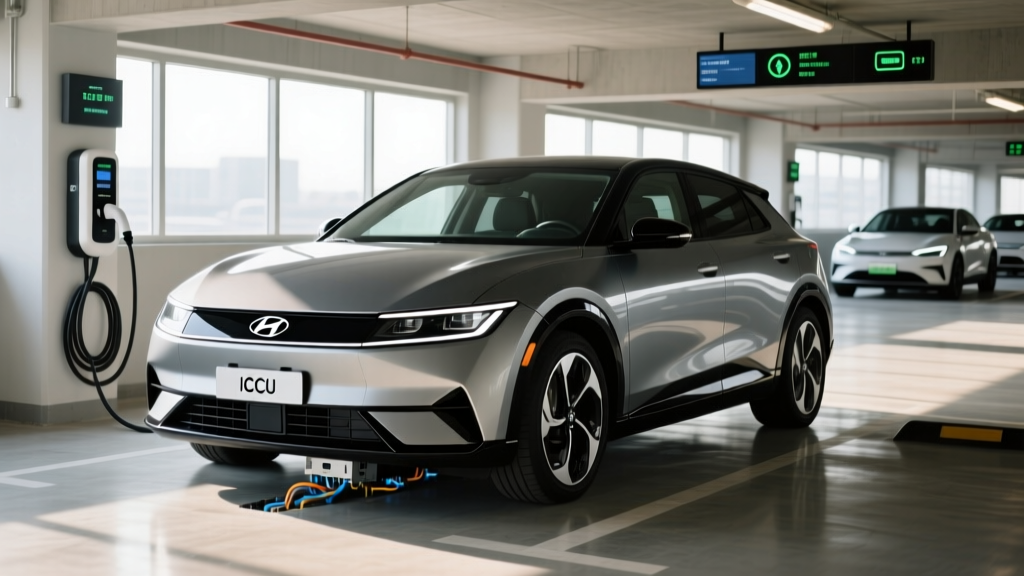
The Hyundai Ioniq 5 remains one of the most compelling electric crossovers on the market, blending retro-futuristic styling with legitimate 800V fast-charging capability. But for buyers researching reliability, one term dominates forum threads and service bulletins: ICCU. The Integrated Charging Control Unit has been the Ioniq 5's most publicized weak point since the model's 2022 launch, and understanding what it is, whether Hyundai has fixed it, and what it means for ownership in 2026 is essential before signing a purchase agreement.
This review covers the ICCU issue in depth, then evaluates the 2026 Ioniq 5 across range, charging, performance, pricing, and tax-credit eligibility to help you decide if it's the right EV for your garage.
What Is the ICCU and Why Does It Fail?
The Integrated Charging Control Unit (ICCU) is a power electronics module that manages the Ioniq 5's onboard charger, DC-DC converter, and high-voltage distribution. It sits between the charge port and the 84.0 kWh traction battery, converting incoming AC power for Level 2 charging and stepping down high-voltage DC to run the 12V accessory system and vehicle electronics.
In 2022–2024 model-year Ioniq 5s, the ICCU became a known failure point. Symptoms included:
- Refusal to accept AC Level 2 charge
- Sudden loss of propulsion with a "Check Electric Vehicle System" warning
- 12V battery drain caused by the DC-DC converter failing to maintain auxiliary power
- Intermittent charging interruptions at public DC fast chargers
Hyundai issued multiple Technical Service Bulletins (TSBs) and eventually a warranty extension covering ICCU replacement. The root cause was traced to thermal management inadequacies and moisture ingress in early-production units. According to NHTSA complaint databases, the majority of reported failures clustered around vehicles built between late 2021 and mid-2023.
Has Hyundai Fixed the ICCU for 2026?
For the 2025 model year, Hyundai introduced a revised ICCU with improved thermal management and sealed connectors. The 2026 Ioniq 5 carries forward this updated hardware. While no high-volume component is entirely failure-proof, early-build 2025 and current 2026 models show a dramatically lower ICCU failure rate in owner forums and service data. Hyundai's 10-year/100,000-mile powertrain warranty (which includes the ICCU as a high-voltage component) provides additional protection.
2026 Ioniq 5 Specifications at a Glance
| Specification | SE/SEL (RWD Std Range) | SEL/Limited (RWD Long Range) | Limited (AWD Long Range) |
|---|---|---|---|
| Battery (usable) | 63.0 kWh (NMC) | 84.0 kWh (NMC) | 84.0 kWh (NMC) |
| EPA Range | 245 mi | 303 mi | 270 mi |
| Horsepower | 168 hp | 225 hp | 320 hp |
| 0–60 mph | 7.4 sec | 6.7 sec | 4.5 sec |
| MPGe (combined) | 114 MPGe | 114 MPGe | 101 MPGe |
| Max DC Fast Charge | 180 kW | 239 kW | 239 kW |
| 10–80% DCFC Time | ~22 min | ~18 min | ~18 min |
| Level 2 (AC) Rate | 10.9 kW (~37 mi/hr) | 10.9 kW (~37 mi/hr) | 10.9 kW (~37 mi/hr) |
| Base MSRP | $42,600 | $47,850 | $52,350 |
Sources: fueleconomy.gov, Hyundai USA specifications. MPGe = miles per gallon equivalent, measuring energy consumption relative to gasoline energy content.
Real-World Range: What to Actually Expect
EPA Sticker: 303 miles (RWD Long Range)
Real-World Highway (70 mph, mild weather): ~255–275 miles
Real-World Highway (cold weather, 30°F): ~210–235 miles
Mixed City/Suburban: ~280–300 miles (regen braking recovers energy)
The Ioniq 5 RWD Long Range achieves its 303-mile EPA rating through excellent aero efficiency and Hyundai's heat pump (standard on Long Range trims), which reduces cabin-heating energy draw in cold weather. However, EV physics still apply: sustained highway speeds above 70 mph increase aerodynamic drag significantly, and cold temperatures reduce battery chemical efficiency.
In real-world highway testing at 75 mph with climate control active, the Long Range RWD typically delivers 255–275 miles before reaching 10% State of Charge (SoC). In freezing conditions, expect a 20–30% reduction from the EPA figure, landing around 210–235 miles. City driving with frequent regenerative braking opportunities pushes efficiency closer to the sticker number.
The AWD Long Range sacrifices some efficiency for its 320 hp dual-motor setup, returning 270 miles EPA. Real-world highway driving yields roughly 225–245 miles in moderate weather.
Charging Speed: 800V Architecture Still Shines
The Ioniq 5's E-GMP platform uses an 800V electrical architecture, enabling DC fast-charging speeds that remain among the best in its class. On a 350 kW-capable charger (Electrify America, Ionity, or similar), the Long Range models peak at 239 kW and sustain above 200 kW through roughly 60% SoC before tapering.
| Charging Level | Power (kW) | Speed (miles added/hr) | Typical Use Case |
|---|---|---|---|
| Level 1 (120V household) | ~1.4 kW | ~5 mi/hr | Emergency top-up only |
| Level 2 (240V home, 48A) | 10.9 kW | ~37 mi/hr | Overnight home charging (~8.5 hrs for 10–100%) |
| DC Fast (50 kW station) | 50 kW | ~170 mi/hr | Older public chargers; 10–80% in ~65 min |
| DC Fast (150 kW station) | ~150 kW | ~500 mi/hr | Common public DCFC; 10–80% in ~28 min |
| DC Fast (350 kW station) | Peak 239 kW | ~800 mi/hr (peak) | Ultra-fast public DCFC; 10–80% in ~18 min |
The Ioniq 5 uses a CCS1 connector in North America. As of 2026, Hyundai has not yet switched to the NACS (Tesla-style) connector on the Ioniq 5, though adapters are available for Supercharger access via Hyundai's partnership with Tesla's network.
Performance, Drivetrain, and Daily Usability
The Ioniq 5 offers three distinct powertrain configurations:
RWD Standard Range (168 hp): Adequate for city commuting but feels modestly powered at highway merging speeds. The 63.0 kWh battery keeps curb weight lower, which aids efficiency.
RWD Long Range (225 hp): The sweet spot for most buyers. Sufficient power for confident passing, excellent efficiency, and maximum range. 0–60 mph in 6.7 seconds is brisk without being thrilling.
AWD Long Range (320 hp): Dual-motor all-wheel drive delivers genuine performance-car acceleration (4.5 seconds to 60 mph) and improved traction in snow and rain. The trade-off is 33 miles of EPA range and a ~$4,500 price premium over the RWD equivalent.
Interior Space and Cargo
The Ioniq 5's flat-floor E-GMP platform creates an unusually spacious cabin for a compact crossover:
- Front legroom: 41.7 inches
- Rear legroom: 39.4 inches (class-leading; exceeds the Toyota RAV4 and Tesla Model Y)
- Cargo volume (rear seats up): 27.2 cu ft
- Cargo volume (rear seats folded): 59.3 cu ft
- Frunk (front trunk): 2.0 cu ft (AWD) / 2.0 cu ft (RWD) — small but useful for charging cables
The "Universal Island" center console slides fore and aft by up to 5.5 inches, enabling walk-through access from the driver to passenger side in tight parking situations. Rear seats recline and slide, a feature many competitors omit.
Pricing, Trims, and Federal Tax Credit Eligibility
| Trim | MSRP | Est. After §30D Credit* | §30D Eligible? |
|---|---|---|---|
| SE Standard Range RWD | $42,600 | ~$35,100 | Yes (verify sourcing) |
| SEL Long Range RWD | $47,850 | ~$40,350 | Yes (verify sourcing) |
| Limited Long Range RWD | $52,350 | ~$44,850 | Yes (verify sourcing) |
| Limited Long Range AWD | $56,850 | ~$49,350 | Yes (verify sourcing) |
*Federal tax credit amount assumes full $7,500 eligibility. All Ioniq 5 trims fall under the $80,000 SUV MSRP cap for §30D. Credit availability depends on buyer income limits and battery-component/critical-mineral sourcing requirements, which change periodically. Consult IRS.gov §30D guidelines and a tax professional before relying on credit eligibility. The credit can be transferred to the dealer at point of sale as an upfront discount.
§30D Tax Credit Requirements (2026)
- Buyer income cap: $300,000 (married filing jointly), $225,000 (head of household), $150,000 (single)
- Vehicle MSRP cap: $80,000 for SUVs (all Ioniq 5 trims qualify)
- Battery sourcing: Increasingly strict critical-mineral and battery-component requirements apply; Hyundai has shifted significant battery production to the Georgia Metaplant, but verify current-year sourcing compliance on the window sticker or dealer documentation
- Point-of-sale transfer: You can apply the credit as an immediate purchase-price reduction at the dealership rather than waiting for tax filing
Pros and Cons: The Honest Assessment
✅ Pros
- Class-leading DC fast charging (18 min 10–80% on 350 kW station)
- Spacious rear cabin with reclining/sliding rear seats
- Standard heat pump on Long Range trims (improves cold-weather efficiency)
- Vehicle-to-load (V2L) capability — power devices or appliances from the charge port
- Smooth ride quality and quiet cabin at highway speeds
- 10-year/100,000-mile powertrain and battery warranty
- ICCU hardware revised for improved reliability in current production
❌ Cons
- Early-model ICCU failures (2022–2024) remain a concern on the used market
- CCS1 connector (not NACS); Supercharger access requires an adapter
- No front wiper on rear window (visibility compromise in rain)
- Infotainment touch-capacitive buttons can be distracting while driving
- AWD range penalty is significant (33 miles lost vs RWD)
- Base Standard Range trim's 245-mile EPA range is modest for the price
- Insurance premiums run 15–25% higher than comparable ICE crossovers
Who Should Buy the Ioniq 5 (and Who Shouldn't)
Buy the Ioniq 5 if:
- You have access to a 350 kW DC fast charger for road trips (this is where the 800V architecture pays off)
- Rear-seat passenger space is a priority (families, ride-share drivers)
- You want a mainstream EV with strong dealer support and a long warranty
- You value fast home charging (10.9 kW fills overnight in ~8.5 hours)
- You need NACS-native Supercharger access without an adapter → Tesla Model Y
- You want maximum range above 320+ miles → Tesla Model Y Long Range or Chevrolet Equinox EV
- You frequently tow (Ioniq 5 is rated for only 1,650 lbs with trailer brakes) → Ford F-150 Lightning or Rivian R1S
- Budget is tight and you need a sub-$35k EV → Chevrolet Equinox EV or used Nissan Leaf
Ioniq 5 vs Key Competitors
| Metric | Hyundai Ioniq 5 (LR RWD) | Tesla Model Y (LR RWD) | Ford Mustang Mach-E (ER RWD) |
|---|---|---|---|
| EPA Range | 303 mi | 320 mi | 310 mi |
| Max DC Fast Charge | 239 kW | 250 kW | 150 kW |
| 10–80% DCFC | ~18 min | ~22 min | ~36 min |
| Rear Legroom | 39.4 in | 36.5 in | 38.1 in |
| Starting MSRP | $47,850 | $44,990 | $46,995 |
| Battery Warranty | 10 yr / 100,000 mi | 8 yr / 120,000 mi | 8 yr / 100,000 mi |
The Ioniq 5's key advantage over the Mach-E is charging speed — 18 minutes vs 36 minutes on a fast-charger road trip is a meaningful difference. Against the Model Y, the Ioniq 5 offers significantly more rear-seat room and a longer battery warranty, though the Tesla wins on range and Supercharger network convenience.
Frequently Asked Questions
Is the Hyundai Ioniq 5 ICCU problem fully resolved in 2026 models?
Hyundai revised the ICCU hardware starting with 2025 model-year production, addressing the thermal management and moisture-sealing issues that plagued 2022–2024 vehicles. Current 2026 models use the updated unit. While no component is 100% failure-proof across millions of units, the widespread failure pattern has not recurred in post-revision vehicles. The 10-year/100,000-mile powertrain warranty covers the ICCU regardless.
What is the real-world highway range of the Ioniq 5 Long Range?
Expect approximately 255–275 miles at 70–75 mph in moderate temperatures (60–80°F). In cold weather (below 35°F), highway range drops to roughly 210–235 miles. The heat pump helps mitigate cabin-heating energy loss, but cold battery chemistry still reduces usable capacity. City driving with regenerative braking can approach the 303-mile EPA figure.
Does the 2026 Ioniq 5 qualify for the $7,500 federal tax credit?
All Ioniq 5 trims fall under the $80,000 MSRP cap for SUVs under IRS §30D. However, eligibility depends on the buyer's adjusted gross income (under $300K joint / $150K single) and the vehicle's battery-component and critical-mineral sourcing compliance, which can change during the model year. Hyundai's Georgia-built Ioniq 5s have generally qualified, but always verify with your dealer and consult IRS guidelines before finalizing a purchase. The credit can be applied at point of sale as an immediate discount.
How fast does the Ioniq 5 charge at home on Level 2?
The onboard charger accepts up to 10.9 kW on a 240V/48A Level 2 home charger, adding roughly 37 miles of range per hour. A full charge from 10% to 100% takes approximately 8.5 hours for the Long Range model — easily accomplished overnight. For Level 2 installation, budget $800–$2,000 for the charger and electrician, with potential additional cost if your electrical panel requires a 200A upgrade.
Is the Ioniq 5 worth buying over the Tesla Model Y?
It depends on your priorities. The Ioniq 5 offers faster real-world DC charging, significantly more rear-seat space, a longer battery warranty, and V2L capability. The Model Y wins on EPA range (320 vs 303 miles), native NACS Supercharger access, and a slightly lower starting price. If you road-trip frequently and value charge speed, the Ioniq 5 is compelling. If you rely heavily on the Supercharger network or want maximum range, the Model Y has the edge. Both are strong choices; test-drive both back-to-back.
What is the battery warranty coverage?
Hyundai covers the Ioniq 5's high-voltage battery for 10 years or 100,000 miles (whichever comes first), with a capacity-retention threshold of 70%. If the battery degrades below 70% of original capacity within the warranty period, Hyundai will repair or replace it. This is one of the longest battery warranties in the segment, exceeding Tesla's 8-year/120,000-mile coverage in duration.
Can I use Tesla Superchargers with the Ioniq 5?
Yes, but with a caveat. The Ioniq 5 uses a CCS1 connector, while Tesla Superchargers use NACS. Hyundai offers a NACS-to-CCS adapter (approximately $200–$250) that enables Supercharger access. As of 2026, Hyundai has not adopted the native NACS port on the Ioniq 5. The adapter works, but adds a step to the charging process and represents an additional cost that Tesla owners don't face.