Quick Verdict: The Ioniq 5 Still Punches Above Its Weight
The 2024 Hyundai Ioniq 5 remains one of the most compelling electric crossovers on the market, blending retro-futuristic styling with genuine 800-volt fast-charging capability that most rivals still can't match. Whether you're researching the top-spec Limited trim (sometimes referenced in enthusiast circles alongside the D100 Platinum edition tail light kit for its distinctive rear lighting signature) or the more accessible SE/SEL models, this is an EV that delivers where it counts: charging speed, interior space, and everyday usability.
For 2024, Hyundai expanded the lineup with the addition of the XRT concept-inspired styling elements and continued to offer both Standard Range and Long Range batteries across rear-wheel-drive and all-wheel-drive configurations. The result is a model range that starts approachably and climbs into premium territory — all riding on the dedicated E-GMP platform that gives the Ioniq 5 its flat floor and generous cabin dimensions.
Range, Battery & Real-World Efficiency
Real-World Expectation: ~260–280 miles in mixed highway driving at 70 mph; ~200–230 miles in sustained cold weather (below 32°F). City/regenerative driving can push closer to or slightly above EPA estimates.
The 2024 Ioniq 5 Long Range models use a 77.4 kWh usable lithium-ion battery pack with NMC (nickel manganese cobalt) chemistry, chosen for its higher energy density compared to LFP. The Standard Range variant carries a 58 kWh pack, also NMC.
EPA efficiency varies by configuration. The Long Range RWD achieves 117 MPGe combined (roughly 30 kWh per 100 miles), while the AWD version dips to 110 MPGe combined. In real-world highway testing at sustained speeds above 70 mph, expect efficiency closer to 33–36 kWh/100mi — which is typical for a crossover of this weight and frontal area.
| Configuration | Battery (kWh usable) | Chemistry | EPA Range | MPGe (Combined) | kWh/100mi |
|---|---|---|---|---|---|
| SE Standard Range RWD | 58.0 | NMC | 220 mi | 114 | 29 |
| SE/SEL/Limited Long Range RWD | 77.4 | NMC | 303 mi | 117 | 29 |
| SE/SEL/Limited Long Range AWD | 77.4 | NMC | 260 mi | 110 | 31 |
According to fueleconomy.gov, the Long Range RWD Ioniq 5 achieves its 303-mile rating with relatively consistent city and highway numbers — a sign of strong regenerative braking performance in urban use. However, buyers in cold climates should budget for 20–30% range reduction during winter months, a reality common to all NMC packs without exceptional thermal preconditioning.
Charging Speed: The 800-Volt Advantage
This is where the Ioniq 5 separates itself from nearly every competitor in its price bracket. Hyundai's E-GMP platform supports 800-volt DC fast charging, enabling peak charge rates that rival vehicles costing twice as much.
| Charging Level | Power / Rate | Time / Miles Added |
|---|---|---|
| Level 1 (120V household) | ~1.4 kW | ~3–4 miles per hour |
| Level 2 (240V, 48A home charger) | 10.9 kW (max onboard) | ~32–36 miles per hour; full charge in ~7–8 hours |
| DC Fast Charge (350 kW station) | Peak ~233 kW | 10–80% in ~18 minutes (Long Range) |
| DC Fast Charge (150 kW station) | Sustained ~100–130 kW | 10–80% in ~30–35 minutes |
Charge curve reality check: The Ioniq 5 peaks near 233 kW only between roughly 10–45% state of charge on a 350 kW-capable charger. Above 60% SoC, the rate tapers significantly — by 80%, you're looking at roughly 80–90 kW. This is why the advertised 10–80% time of 18 minutes is accurate, but a 10–100% session will take considerably longer (closer to 35–40 minutes). Plan your road-trip stops around 80% departures for optimal time efficiency.
The Ioniq 5 uses a CCS1 (Combined Charging System) connector for DC fast charging and a J1772 inlet for Level 2 AC. With Tesla opening its Supercharger network to non-Tesla vehicles via adapter (NACS), Hyundai has confirmed future models will adopt NACS natively, but the 2024 Ioniq 5 requires a CCS-to-NACS adapter for Supercharger access where available.
For home charging, the Ioniq 5's 10.9 kW onboard charger means a properly installed 48-amp Level 2 circuit (requiring a 60-amp breaker) will add roughly 32–36 miles of range per hour — enough to fully replenish the Long Range battery overnight. Installation costs for a Level 2 home setup typically range from $500–$2,000 depending on panel proximity and local electrical code requirements.
Performance & Drivetrain
| Configuration | Horsepower | Torque (lb-ft) | 0–60 mph | Drivetrain |
|---|---|---|---|---|
| Standard Range RWD | 168 hp | 258 | ~7.4 sec | Rear-wheel drive |
| Long Range RWD | 225 hp | 258 | ~6.7 sec | Rear-wheel drive |
| Long Range AWD (dual motor) | 320 hp | 446 | ~4.5 sec | Dual-motor AWD |
The dual-motor AWD variant delivers genuinely quick acceleration — 4.5 seconds to 60 mph puts it in hot-hatch territory despite a curb weight exceeding 4,600 pounds. The RWD models prioritize efficiency and feel more than adequate for daily driving, with instant electric torque providing confident highway merging and passing.
All Ioniq 5 models feature one-pedal driving capability through Hyundai's adjustable regenerative braking system, controlled via paddle shifters behind the steering wheel. The i-Pedal mode enables full stop-without-braking operation, though the transition between regen and friction braking is among the smoother implementations in the segment.
Interior Space, Cargo & Daily Usability
The E-GMP platform's flat floor and long wheelbase (118.1 inches) give the Ioniq 5 interior dimensions that rival midsize SUVs despite its compact exterior footprint.
- Front headroom: 39.6 inches
- Rear legroom: 39.4 inches (class-leading; more than the Tesla Model Y's ~36 inches)
- Cargo volume (behind rear seats): 27.2 cu ft
- Cargo volume (rear seats folded): 59.3 cu ft
- Front trunk (frunk): 0.85 cu ft (AWD) / 2.0 cu ft (RWD) — enough for charging cables, not luggage
The sliding center console (a signature Ioniq 5 feature) provides flexible storage and can retract to create a pass-through between front seats — useful for tight parking situations where one side is blocked. Rear seats recline and slide on tracks, allowing passengers to prioritize legroom or cargo space as needed.
The 2024 Ioniq 5 Limited trim (the highest factory specification, which enthusiasts sometimes associate with premium aftermarket accessories like the D100 Platinum edition tail light kit) includes a panoramic fixed glass roof, Bose premium audio, ventilated front seats, heated rear seats, and a head-up display with augmented-reality navigation overlays.
Pricing, Trims & Federal Tax Credit Eligibility
| Trim | MSRP (approx.) | Est. After §30D Credit* |
|---|---|---|
| SE Standard Range RWD | $41,800 | ~$34,300 |
| SE Long Range RWD | $45,850 | ~$38,350 |
| SEL Long Range AWD | $50,200 | ~$42,700 |
| Limited Long Range AWD | $56,200 | ~$48,700 |
*Federal tax credit estimates assume full §30D eligibility. Actual credit depends on battery component and critical mineral sourcing requirements, buyer income, and MSRP caps. Consult a tax professional and check IRS.gov §30D rules for current-year eligibility.
- MSRP cap: SUVs/crossovers must be ≤ $80,000 (all Ioniq 5 trims qualify)
- Buyer income cap: AGI ≤ $150,000 (single) / $225,000 (head of household) / $300,000 (joint)
- Battery sourcing: Increasingly strict critical-mineral and battery-component requirements may reduce or eliminate credit for some build dates — verify VIN eligibility at the IRS portal or with your dealer at point of sale
- Point-of-sale transfer: As of 2024, eligible buyers can transfer the credit to the dealer for an immediate purchase-price reduction rather than waiting for tax filing
A critical note: Hyundai's ability to secure compliant battery sourcing determines whether specific Ioniq 5 units qualify for the full $7,500, a partial $3,750, or no federal credit. This changes throughout the model year — always verify the specific VIN's eligibility before finalizing a purchase. Some state incentives (California, Colorado, New York, and others) may stack on top of the federal credit, but these vary by jurisdiction.
Standout Tech, Safety & Driver Assistance
Every 2024 Ioniq 5 includes Hyundai's SmartSense suite of driver-assistance features:
- Forward collision-avoidance assist with pedestrian, cyclist, and junction-turning detection
- Highway Driving Assist 2 (HDA2) — adaptive cruise with stop-and-go, lane-centering, and lane-change assist (SAE Level 2; driver must remain engaged)
- Blind-spot collision-avoidance assist
- Rear cross-traffic collision-avoidance assist
- Remote Smart Parking Assist (Limited trim) — the car can pull itself in and out of tight spaces via key fob
The infotainment system uses a dual 12.3-inch display setup (instrument cluster + touchscreen) with wireless Apple CarPlay and Android Auto on lower trims, though upper trims with navigation require a wired connection — an odd inconsistency. Over-the-air updates keep the software current, and Hyundai's Bluelink connected services include remote climate preconditioning, which warms or cools the cabin and battery while still plugged in.
The IIHS awarded the 2024 Ioniq 5 its Top Safety Pick+ designation, the highest rating available, with Good ratings across all crash-test categories.
About That D100 Platinum Edition Tail Light Kit
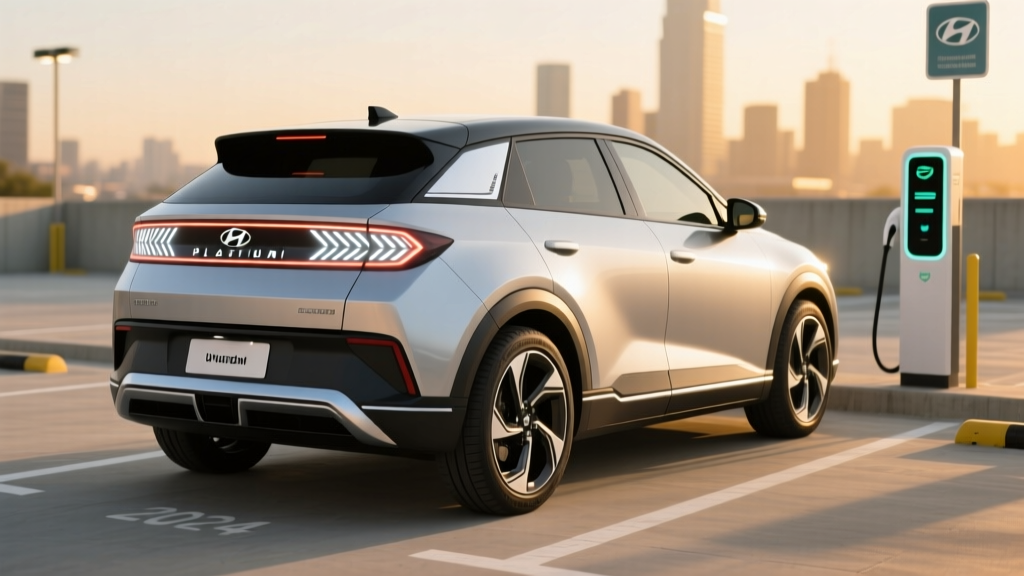
Enthusiasts searching for "D100 Platinum edition tail light kit" in connection with the Ioniq 5 are typically referring to aftermarket or regional-market lighting accessories that modify or enhance the distinctive pixel-LED rear light bar. The Ioniq 5's parametric pixel lighting — a grid of square LED elements that animate during lock/unlock sequences — is one of the vehicle's most recognizable design features.
Hyundai does not officially market a "D100 Platinum edition" Ioniq 5 in the United States. The top US-spec trim is the Limited, which includes the full pixel LED lighting package front and rear. Some international markets (South Korea, in particular) offer additional accessory packages or special editions that may carry different naming conventions. Aftermarket tail light kits exist through third-party suppliers, but any modification to exterior lighting should comply with DOT/FMVSS regulations for road legality in the US.
If you're drawn to the Ioniq 5's lighting design, the factory Limited trim delivers the complete pixel-LED experience without aftermarket modifications — including the animated welcome sequence, full-width rear light bar, and pixel-pattern daytime running lights up front.
Pros & Cons: Living With the Ioniq 5
- Class-leading 800V DC fast-charging speed (10–80% in ~18 min)
- Spacious rear seat with 39.4" legroom — more than most competitors
- Distinctive, aging-well design that stands out in parking lots
- Vehicle-to-load (V2L) capability — power appliances from the car's battery
- Strong safety ratings (IIHS Top Safety Pick+)
- Competitive pricing relative to feature content
- 10-year/100,000-mile powertrain warranty
- Frunk is disappointingly small, especially on AWD models
- No rear wiper (visibility issue in rain/snow)
- Wired-only CarPlay/Android Auto on navigation-equipped upper trims
- Range drops noticeably in cold weather without preconditioning discipline
- CCS connector (not NACS) — Supercharger access requires adapter
- Some competitors offer more cargo volume (Model Y, EV6)
Who Should Buy the 2024 Ioniq 5?
- You prioritize fast public charging for road trips (the 800V advantage is real and measurable)
- Rear-seat passenger comfort matters (adults ride comfortably in back)
- You want distinctive styling that doesn't look like every other crossover
- V2L capability appeals to you for camping, tailgating, or emergency backup power
- You can charge at home and want an overnight-friendly Level 2 experience
- Maximum cargo volume is your priority (the Model Y offers ~76 cu ft with seats folded)
- You need a large frunk for under-hood storage
- You frequently drive in heavy rain/snow and demand a rear wiper
- You want native NACS/Tesla Supercharger access without an adapter
- Towing is a requirement (rated at only ~1,650 lbs with AWD; not ideal for trailers)
Warranty & Ownership Costs
| Component | Coverage |
|---|---|
| New Vehicle (bumper-to-bumper) | 5 years / 60,000 miles |
| Powertrain (incl. motors, reduction gear) | 10 years / 100,000 miles |
| High-Voltage Battery | 10 years / 100,000 miles (retains ≥70% capacity) |
| Complimentary Maintenance | 3 years / 36,000 miles |
| Roadside Assistance | 5 years / unlimited miles |
Hyundai's battery warranty guarantees the pack will retain at least 70% of its original capacity over 10 years or 100,000 miles — whichever comes first. Real-world degradation data from early 2022–2023 Ioniq 5 owners suggests NMC packs in this platform hold up well, with most reporting 3–5% loss over the first 30,000–40,000 miles, well within the warranty threshold.
Insurance costs for the Ioniq 5 tend to run 15–25% higher than comparable gas-powered crossovers, a pattern common across the EV segment. Get quotes before purchasing — premiums vary significantly by state, driving record, and insurer.
Frequently Asked Questions
What is the real-world range of the 2024 Hyundai Ioniq 5?
The EPA rates the Long Range RWD at 303 miles and the AWD at 260 miles. In real-world highway driving at 70+ mph, expect 260–280 miles (RWD) and 220–240 miles (AWD). Cold weather (below freezing) can reduce range by 20–30% without consistent preconditioning. City driving with regenerative braking often matches or slightly exceeds EPA estimates.
How fast does the Ioniq 5 charge at home and on the road?
At home on a 240V Level 2 charger (48A), the Ioniq 5 adds roughly 32–36 miles of range per hour, filling the Long Range battery in about 7–8 hours. On a 350 kW DC fast charger, it peaks at ~233 kW and charges from 10–80% in approximately 18 minutes. On a more common 150 kW charger, expect 10–80% in about 30–35 minutes.
Does the 2024 Ioniq 5 qualify for the $7,500 federal EV tax credit?
It depends. All Ioniq 5 trims fall under the $80,000 MSRP cap for SUVs, and buyer income limits apply ($150K single / $300K joint AGI). However, battery component and critical mineral sourcing requirements determine whether a specific vehicle qualifies for the full $7,500, a partial $3,750, or no credit. Verify eligibility by VIN at the point of sale or via the fueleconomy.gov tax credit lookup. The credit can be transferred to the dealer for an immediate price reduction as of 2024.
Is the Ioniq 5 worth buying over the Tesla Model Y or Kia EV6?
It depends on your priorities. The Ioniq 5 offers faster 800V charging than the Model Y, a more comfortable rear seat, and distinctive styling. The Model Y wins on cargo volume, Supercharger network access (without adapters), and software integration. The Kia EV6 is mechanically similar (same E-GMP platform) but offers a sportier driving position and slightly more cargo space. Test-drive all three — the Ioniq 5 typically wins on comfort and charging speed, while the Model Y leads on practicality and network infrastructure.
What is the D100 Platinum edition tail light kit for the Ioniq 5?
"D100 Platinum edition" is not an official Hyundai US-market trim or accessory designation. The top US-spec Ioniq 5 trim is the Limited, which includes the full parametric pixel LED lighting package. Some international markets or aftermarket suppliers may use different naming conventions for lighting accessories. Any aftermarket tail light modification should be verified for DOT compliance before installation.
Can the Ioniq 5 use Tesla Superchargers?
Not natively. The 2024 Ioniq 5 uses a CCS1 connector, while Tesla Superchargers use the NACS (North American Charging Standard) connector. Tesla has begun opening some Supercharger stations to non-Tesla EVs via a built-in adapter or through the Tesla app at equipped stations, but availability is limited. Hyundai has announced that future models will adopt NACS natively, and a CCS-to-NACS adapter may become available for existing vehicles. For now, the Ioniq 5 relies on Electrify America, EVgo, ChargePoint, and other CCS-compatible networks.