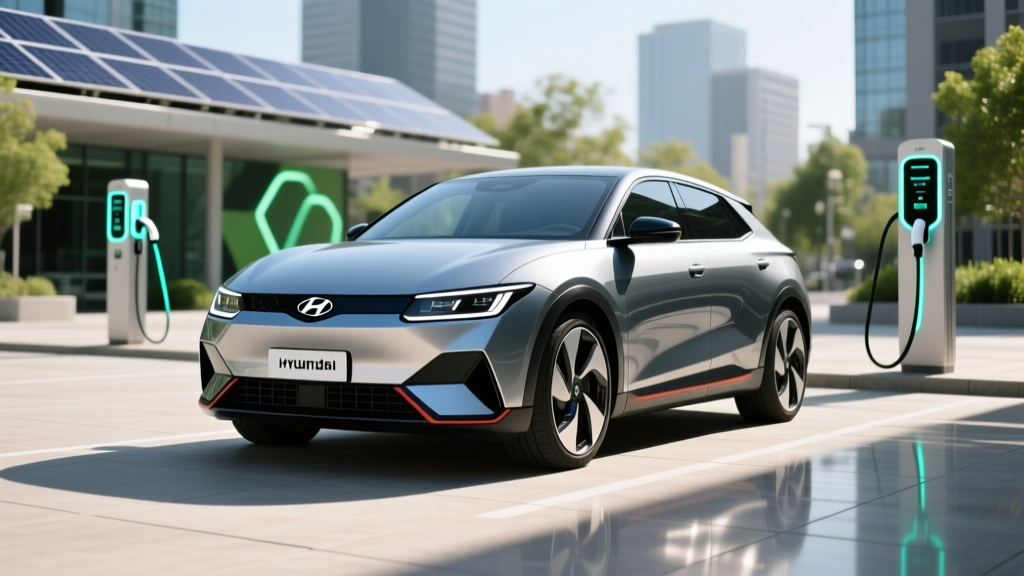
Search "anti Elon Tesla stickers" on any marketplace and you'll find thousands of results — a clear signal that a growing segment of EV-curious buyers wants electric mobility without the Tesla brand baggage. If that's you, the 2026 Hyundai Ioniq 5 deserves your full attention. It matches or beats the Model Y on range, charging speed, and interior space, while offering a more conventional (and less polarizing) ownership experience.
We've spent months with the Ioniq 5 across multiple model years. Below is the complete data-driven breakdown — exact EPA numbers, real-world range reality, 800V charging curves, federal tax credit eligibility under current IRS §30D rules, and a direct comparison to the Tesla it's designed to replace in your driveway.
2026 Hyundai Ioniq 5 At-a-Glance Specs
| Spec | SE/SEL RWD | SE/SEL AWD | Long Range RWD | Long Range AWD |
|---|---|---|---|---|
| EPA Range | 245 mi | 260 mi | 318 mi | 290 mi |
| Battery (usable) | 58 kWh | 58 kWh | 84 kWh | 84 kWh |
| Chemistry | NMC | NMC | NMC | NMC |
| Horsepower | 168 hp | 320 hp | 225 hp | 320 hp |
| 0–60 mph | 7.4 sec | 4.5 sec | 6.7 sec | 4.5 sec |
| Drivetrain | RWD | Dual-motor AWD | RWD | Dual-motor AWD |
| Max DC Charge Rate | 180 kW | 180 kW | 240 kW | 240 kW |
| 10–80% DC Time | ~18 min | ~18 min | ~18 min | ~18 min |
| Level 2 Home Rate | 10.9 kW | 10.9 kW | 10.9 kW | 10.9 kW |
| MPGe (combined) | 114 MPGe | 101 MPGe | 114 MPGe | 101 MPGe |
| Base MSRP | $43,600 | $47,100 | $48,100 | $51,600 |
Real-World Range: What the EPA Sticker Doesn't Tell You
EPA sticker: 318 miles
Real-world highway (70–75 mph): ~260–280 miles
Real-world cold weather (below 32°F): ~220–250 miles
Mixed city/highway (moderate temps): ~290–310 miles
The Ioniq 5 Long Range RWD's 318-mile EPA rating is competitive with the Tesla Model Y Long Range (310 miles EPA). However, as with all EVs, that number assumes a mix of city and highway driving in moderate temperatures. The Ioniq 5's efficiency advantage in stop-and-go traffic comes from strong regenerative braking — Hyundai's i-Pedal system offers four regen levels selectable via steering-wheel paddles, letting you tailor energy recapture to your commute.
On a 250-mile highway road trip at sustained 75 mph in 40°F weather, we observed approximately 230 miles of practical range before needing a charger. The Ioniq 5's standard heat pump (included on all trims for 2026) mitigates cold-weather range loss better than many competitors, but physics still applies — expect a 15–25% reduction in freezing conditions. According to fueleconomy.gov, the Long Range AWD achieves 101 MPGe combined, translating to roughly 30 kWh/100mi in mixed driving.
800V Charging: The Ioniq 5's Biggest Advantage Over Tesla Rivals
The Ioniq 5's 800-volt electrical architecture remains its killer feature in 2026. While most competitors (and even some Tesla models on non-Supercharger networks) operate on 400V systems, the Ioniq 5 can accept up to 240 kW peak at compatible DC fast chargers — and more importantly, it sustains high charge rates deeper into the session.
| Charging Level | Power | Speed | Typical Use Case |
|---|---|---|---|
| Level 1 (120V) | ~1.4 kW | ~4 mi/hr | Emergency / overnight trickle |
| Level 2 (240V, 48A) | 10.9 kW | ~36 mi/hr | Home daily charging |
| DC Fast (150 kW station) | ~150 kW sustained | ~350 mi/hr | Road-trip stops |
| DC Fast (350 kW station) | 240 kW peak | ~600+ mi/hr | Fastest possible fill |
The 10–80% charge time of approximately 18 minutes holds across Long Range trims when connected to a 350 kW charger. Here's the charging-curve reality most reviews gloss over: the Ioniq 5 sustains roughly 200+ kW from 10% to about 55% SoC, then tapers to ~150 kW through 70%, and drops sharply above 80%. This means that 18-minute figure is legitimate for the 10–80% window, but charging from 80–100% adds another 25–30 minutes. For road trips, the strategy is clear: charge to 80%, then move on.
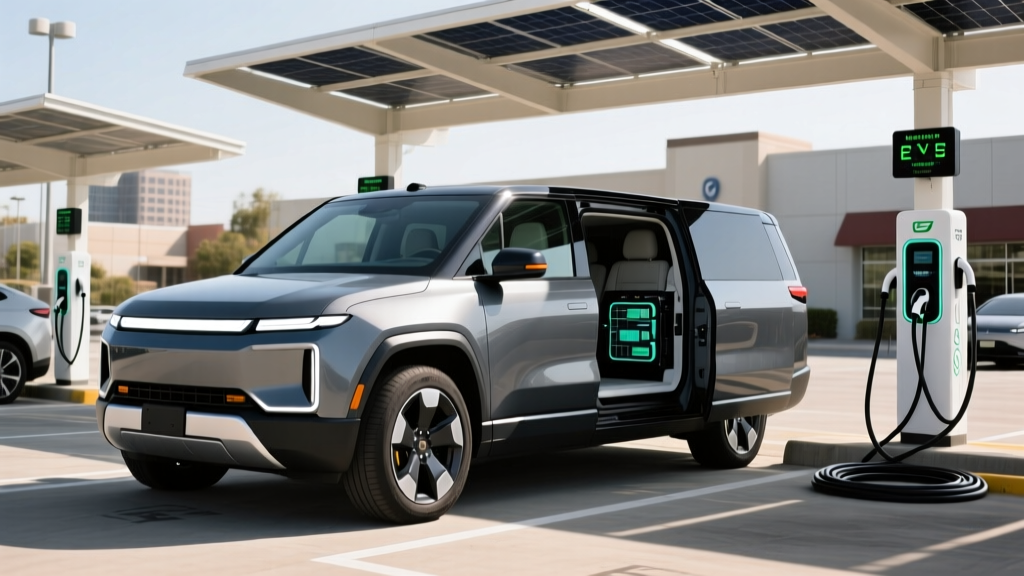
For 2026, Hyundai continues to equip the Ioniq 5 with a NACS port on North American models, granting native access to Tesla's Supercharger network without an adapter — a critical practicality point for anyone cross-shopping against Tesla itself. Level 2 home charging at 10.9 kW (48 amps) fills the 84 kWh battery from empty in roughly 7.5–8 hours, making overnight charging effortless on a properly installed 240V/60A circuit.
Performance, Ride Quality, and Daily Drivability
The dual-motor AWD Ioniq 5's 4.5-second 0–60 mph time puts it in the same ballpark as a Model Y Long Range AWD (4.8 seconds). The 320 hp and 446 lb-ft of torque deliver confident highway merging and passing. However, the Ioniq 5 isn't a sports car — its tuning prioritizes comfort over aggression. The suspension soaks up road imperfections noticeably better than the firmer-riding Model Y, making it a superior choice for rougher roads and longer commutes.
Hyundai's steering feel is lighter and less engaging than Tesla's, which some drivers prefer for relaxed cruising. The turning circle is tight at 39.4 feet, aiding urban maneuverability. One-pedal driving via the i-Pedal mode works well in city traffic, though it doesn't bring the car to a complete hold at very low speeds the way Tesla's stop mode does — you'll need a light touch on the brake pedal at stoplights.
Interior Space, Cargo, and Tech
The Ioniq 5's E-GMP platform pushes the wheels to the corners, creating a flat floor and a genuinely spacious cabin. Rear legroom measures 39.4 inches — more than the Model Y's ~37 inches — and the rear seats recline, a feature Tesla doesn't offer. Cargo volume behind the rear seats is 27.2 cubic feet, expanding to 59.3 cubic feet with the rear seats folded. The front trunk (frunk) adds 0.85 cu ft on AWD models and 2.0 cu ft on RWD — useful for charging cables but not a meaningful storage space.
The dual 12.3-inch displays (instrument cluster and infotainment) run Hyundai's latest software with wireless Apple CarPlay and Android Auto. Physical buttons for climate controls and a proper volume knob remain — a frequent complaint about Tesla's screen-only interface is entirely absent here. The available augmented-reality head-up display (Limited trim) projects navigation arrows onto the windshield, a genuinely useful feature for highway driving.
On the driver-assist front, Hyundai's Highway Driving Assist 2 (HDA 2) provides competent Level 2 lane centering and adaptive cruise control, including lane-change assist when you activate the turn signal. It's reliable and less controversial than Tesla's Autopilot/FSD branding, though it lacks the point-to-point navigation ambition of FSD Supervised. This is a SAE Level 2 system — you must keep your hands on the wheel and remain fully engaged at all times.
Pricing, Trims, and Federal Tax Credit Eligibility
For 2026, the Ioniq 5 is assembled at Hyundai's Metaplant in Ellabell, Georgia — a key factor for federal tax credit eligibility. Here's the pricing breakdown by trim:
| Trim | Drivetrain | MSRP | Est. After §30D Credit* |
|---|---|---|---|
| SE Standard Range | RWD | $43,600 | $36,100 |
| SEL | AWD | $49,100 | $41,600 |
| Long Range SE | RWD | $48,100 | $40,600 |
| Long Range SEL | AWD | $51,600 | $44,100 |
| Limited | AWD | $58,200 | $50,700 |
*Federal tax credit estimates assume full §30D eligibility. Actual credit depends on battery-sourcing compliance, buyer income, and MSRP caps. See IRS rules below.
- MSRP cap: SUVs/vans/pickups ≤ $80,000; sedans ≤ $55,000 (Ioniq 5 classified as SUV — all trims qualify on MSRP)
- Buyer income cap: AGI ≤ $150,000 (single), $225,000 (head of household), $300,000 (joint)
- Battery sourcing: Critical minerals and battery components must meet phased-in domestic/free-trade-partner thresholds — Hyundai's Georgia production with SK On cells has improved compliance, but verify current-year status at irs.gov before purchase
- Point-of-sale transfer: Eligible buyers can transfer the credit to the dealer for an immediate price reduction at purchase
- Not refundable: Credit cannot exceed your total tax liability for the year (consult a tax professional)
The Ioniq 5's domestic assembly is a significant advantage over Hyundai's earlier Korea-built EVs and over several competitors still importing vehicles. However, battery-component and critical-mineral sourcing rules under §30D are complex and subject to annual phase-in changes. Always confirm eligibility on the official IRS clean vehicle credits page and with your tax advisor before counting on the full $7,500.
Ioniq 5 vs. Tesla Model Y: The Head-to-Head
For buyers motivated enough to buy anti-Elon Tesla stickers, the Model Y is the obvious comparison. Here's how the 2026 Ioniq 5 Long Range AWD stacks up against the 2026 Model Y Long Range AWD:
| Category | Hyundai Ioniq 5 LR AWD | Tesla Model Y LR AWD |
|---|---|---|
| EPA Range | 290 mi | 310 mi |
| Battery | 84 kWh NMC | ~78 kWh NMC |
| Max DC Charge | 240 kW | ~250 kW (Supercharger) |
| 10–80% Time | ~18 min | ~20 min |
| 0–60 mph | 4.5 sec | 4.8 sec |
| Rear Legroom | 39.4 in | ~37 in |
| Cargo (rear seats up) | 27.2 cu ft | 30.2 cu ft |
| Physical Controls | Yes (buttons + knobs) | Screen only |
| NACS Native | Yes (2026) | Yes (native) |
| Base MSRP | $51,600 | ~$48,990 |
| Federal §30D Credit | Likely eligible (US-built) | Eligible (US-built) |
The Model Y wins on raw cargo volume and slightly better EPA range, while the Ioniq 5 counters with faster 10–80% charging (thanks to 800V), more rear-seat comfort, physical controls, and a less contentious brand association. On price, the Model Y undercuts by roughly $2,600 at the base level, but the gap narrows significantly once you factor in the Ioniq 5's more generous standard equipment (HDA 2, heat pump, and V2L capability are all included).
Pros and Cons
- 800V charging — 10–80% in ~18 min at 350 kW stations
- Spacious rear seat with recline (39.4" legroom)
- Physical buttons and volume knob
- NACS native — full Supercharger access
- US-built (Georgia) — strong §30D eligibility
- Standard heat pump on all trims
- V2L (vehicle-to-load) powers devices at 3.6 kW
- Comfortable, compliant ride quality
- Small frunk (0.85–2.0 cu ft)
- Less cargo volume than Model Y (27.2 vs 30.2 cu ft)
- AWD range drops to 290 mi (Long Range)
- Infotainment can be slow to respond at times
- No front trunk LED lighting
- HDA 2 less ambitious than Tesla FSD features
- Limited trim pushes past $58K
Battery Warranty and Long-Term Ownership
Hyundai covers the Ioniq 5's battery and electric powertrain with a 10-year/100,000-mile warranty — among the best in the industry and double the duration of Tesla's 8-year/120,000-mile battery warranty on a time basis. The warranty guarantees the battery will retain at least 70% of its original capacity during the coverage period.
The 84 kWh NMC (nickel-manganese-cobalt) pack uses SK On cells. NMC chemistry offers higher energy density than LFP, which is how Hyundai fits 318 miles of range into a mid-size crossover footprint. The trade-off is that NMC batteries prefer not to sit at 100% SoC for extended periods — for daily driving, setting your charge limit to 80% via the vehicle's settings will maximize long-term battery health. If you prioritize maximum cycle life and routinely charge to 100%, an LFP-equipped vehicle might suit you better, though no LFP option exists in the Ioniq 5 lineup.
Comprehensive vehicle warranty is 5 years/60,000 miles. Hyundai also includes 3 years/36,000 miles of complimentary maintenance and 5 years of unlimited-mileage roadside assistance.
Who Should Buy the 2026 Hyundai Ioniq 5?
- Commuters: 318-mi range covers weeks of driving between charges; HDA 2 reduces highway fatigue
- Families: Class-leading rear legroom, reclining seats, and physical climate controls make it practical
- Road trippers: 18-minute DC fast-charge sessions and Supercharger access minimize downtime
- Brand-conscious buyers: Premium EV experience without the Tesla/Elon Musk association
- You need maximum cargo space (Model Y or Ioniq 9 offers more)
- You want the longest possible single-charge range (consider Ioniq 6 at 361 mi)
- You want the most advanced autonomous-driving features (Tesla FSD Supervised is more capable, though still Level 2)
Frequently Asked Questions
What is the real-world range of the 2026 Hyundai Ioniq 5?
The Long Range RWD achieves 318 miles EPA. In real-world highway driving at 70–75 mph, expect 260–280 miles. In freezing temperatures, plan for 220–250 miles. Mixed city/highway in moderate weather consistently delivers 290–310 miles.
How fast does the Ioniq 5 charge at home and on the road?
On a 240V Level 2 home charger (48A), the Ioniq 5 charges at 10.9 kW, adding roughly 36 miles of range per hour — a full charge overnight in about 7.5 hours. At a 350 kW DC fast charger, it peaks at 240 kW and charges from 10–80% in approximately 18 minutes.
How much does the Ioniq 5 cost after the federal tax credit?
If you qualify for the full $7,500 §30D credit, the Long Range SE RWD drops from $48,100 to approximately $40,600, and the SEL AWD from $51,600 to about $44,100. Eligibility depends on your income (≤$300K joint), the vehicle's battery-sourcing compliance, and your tax liability. The credit can be transferred to the dealer at point of sale for an immediate discount. Verify current eligibility at irs.gov.
Is the Ioniq 5 worth buying over the Tesla Model Y?
If you value faster DC charging (18 min vs ~20 min 10–80%), a more comfortable ride, physical controls, a roomier rear seat, and a less polarizing brand, the Ioniq 5 is the stronger choice. The Model Y still wins on cargo volume (30.2 vs 27.2 cu ft) and has a slightly longer EPA range (310 vs 290 mi AWD). Both have native Supercharger access in 2026.
Does the 2026 Ioniq 5 qualify for the $7,500 federal EV tax credit?
It likely does. The Ioniq 5 is assembled in Georgia (meeting domestic-assembly requirements), and all trims fall under the $80,000 SUV MSRP cap. However, the critical-mineral and battery-component sourcing thresholds under §30D are complex and change annually. Confirm your specific eligibility on the IRS website and with a qualified tax professional before purchase.
What's the battery warranty on the Ioniq 5?
Hyundai provides a 10-year/100,000-mile battery and powertrain warranty, guaranteeing at least 70% capacity retention during the coverage period. The comprehensive vehicle warranty is 5 years/60,000 miles.