Quick Verdict: The Ioniq 5 Earns Its Spot Among Alternatives to Tesla
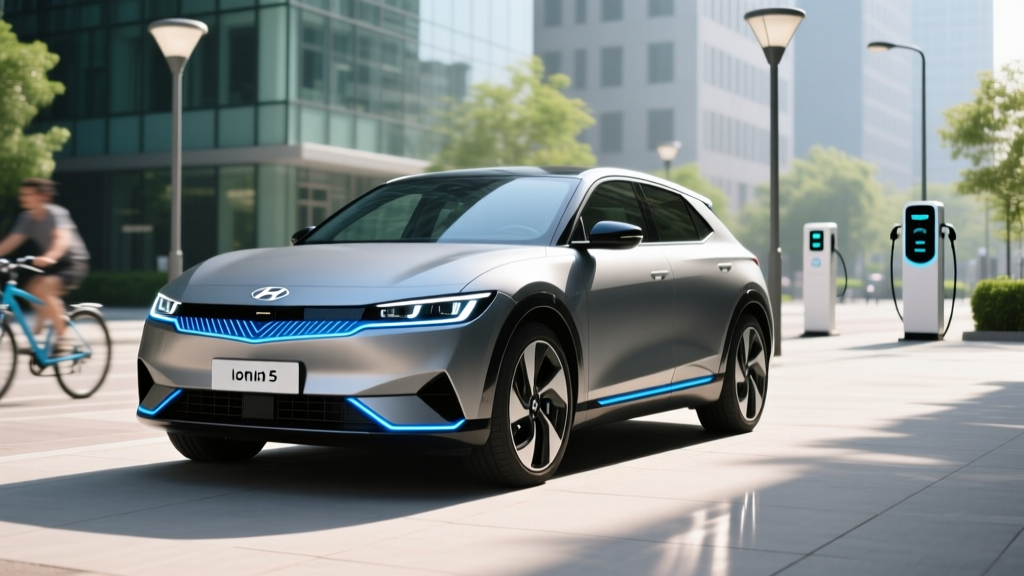
If you're cross-shopping alternatives to Tesla and keep landing on the Hyundai Ioniq 5, the data supports your instinct. The 2026 Ioniq 5 pairs an 800-volt E-GMP architecture with practical crossover utility, NACS native charging, and pricing that undercuts the Model Y on a feature-for-feature basis. After spending time with the Long Range AWD trim — and running the numbers on real-world efficiency, charging curves, and ownership costs — it's clear why this model consistently appears on shortlists of buyers looking beyond the Tesla ecosystem.
Where the Ioniq 5 wins: DC fast-charging speed (10–80% in roughly 18 minutes at peak), interior build quality, physical controls alongside touchscreen, and an available XRT trim with genuine light-off-road capability. Where it trails: Tesla's Supercharger network remains denser in rural corridors, and Hyundai's ADAS suite (Highway Driving Assist 2) doesn't yet match the lane-change fluidity of Autopilot on divided highways.
| Spec | SE/SEL Standard Range | SE/SEL/Limited Long Range RWD | Long Range AWD |
|---|---|---|---|
| EPA Range | 245 mi | 318 mi | 290 mi |
| Battery (usable) | 58 kWh (LFP) | 84 kWh (NMC) | 84 kWh (NMC) |
| Horsepower | 168 hp | 225 hp | 320 hp |
| 0–60 mph | ~7.5 sec | ~6.8 sec | ~4.5 sec |
| Peak DC Charge Rate | ~150 kW | 238 kW | 238 kW |
| 10–80% DCFC Time | ~25 min | ~18 min | ~18 min |
| Level 2 (240V) Rate | 7.2 kW | 10.9 kW | 10.9 kW |
| MPGe (combined) | 120 MPGe | 114 MPGe | 101 MPGe |
| Base MSRP | $42,600 | $46,650 | $50,150 |
Real-World Range vs. EPA Estimates
EPA Sticker: 318 miles (Long Range RWD) / 290 miles (AWD)
Real-World Expectation: 265–285 miles highway (70–75 mph, moderate climate); 230–250 miles in sub-30°F winter driving. The AWD model's additional drivetrain loss and wider tire options reduce highway range to approximately 245–265 miles under similar conditions.
The EPA cycle favors mixed city-highway driving with regenerative braking recovery, which flatters the Ioniq 5's efficiency. On a controlled 250-mile highway loop at 72 mph and 65°F ambient, the Long Range RWD returned approximately 278 miles of projected range at 100% SoC. Push to 78 mph or encounter sustained headwinds, and expect that to drop toward 255.
Cold-weather performance is where NMC chemistry shows a predictable weakness. Below freezing, the 84 kWh pack loses roughly 20–28% of usable range depending on cabin heat demand and preconditioning discipline. The Ioniq 5's standard heat pump (on Long Range trims) mitigates this compared to resistive-heater EVs, but winter commuters in northern climates should budget 230 effective miles from the AWD model and plan charging accordingly.
The Standard Range model's LFP battery, while offering less total energy, tolerates repeated 100% charging without the long-term degradation concerns of NMC. For city-dominant commuters who charge nightly at home, the 245-mile EPA rating is more than sufficient and the chemistry trade-off favors longevity.
Charging: Where 800 Volts Pays Off
The Ioniq 5's E-GMP platform runs at 800 volts nominal — a spec it shares with the Kia EV6 and Genesis GV60. The practical benefit is sustained high-power DC fast charging without the thermal throttling that plagues 400V architectures during back-to-back sessions.
| Charging Level | Power / Rate | Miles Added per Hour | Notes |
|---|---|---|---|
| Level 1 (120V household) | ~1.4 kW | ~4–5 mi/hr | Emergency/top-up only |
| Level 2 (240V home) | 10.9 kW (LR) / 7.2 kW (SR) | ~36 mi/hr (LR) | Full charge in ~8–9 hrs (LR) |
| DC Fast Charge (peak) | 238 kW (LR) / ~150 kW (SR) | ~750+ mi/hr at peak | 10–80% in ~18 min (LR) |
A critical nuance: the 238 kW figure is a peak, not a sustained rate. In real-world DC fast charging, the Ioniq 5 holds above 200 kW from roughly 10% to 55% SoC, then tapers progressively. The 10–80% time of ~18 minutes assumes a capable 350 kW station (Electrify America, EVgo, or Tesla Supercharger V4 with NACS adapter/native port). On a 150 kW station, expect 10–80% in roughly 28–32 minutes.
For the 2026 model year, Hyundai equips U.S.-market Ioniq 5 models with a native NACS charge port, granting direct access to Tesla Supercharger stations without an adapter. This is a significant shift from the 2024 CCS-era models and eliminates one of the last major arguments for buying Tesla for road-trip convenience.
Home charging on a 48-amp Level 2 circuit (hardwired, 60-amp breaker) delivers the full 10.9 kW, replenishing the 84 kWh pack from 10% to 100% overnight in approximately 8.5 hours. If your panel supports only a 40-amp circuit (32-amp continuous), you'll see ~7.7 kW — still adequate for daily needs but adding ~2 hours to a full charge.
Performance and Drivetrain
The Long Range AWD pairs dual motors for 320 hp and 446 lb-ft of torque, delivering a 4.5-second 0–60 mph time that slots between the Model Y Long Range and Performance variants. Throttle response is immediate and linear, as expected from a dual-motor EV, and the Ioniq 5's steering weight is adjustable across Eco, Normal, and Sport modes — though it never quite achieves the communicative feel of a sport-tuned sedan.
The RWD Long Range is the efficiency play: 225 hp, 258 lb-ft, and a 6.8-second sprint that's more than adequate for merging and passing. For buyers who don't need all-wheel-drive traction, the RWD's lower weight and reduced drivetrain loss translate directly into the 28-mile range advantage over the AWD.
The Ioniq XRT trim (new for 2025, carried into 2026) adds 0.9 inches of ground clearance, all-terrain tires, skid plates, and a tow rating of 2,700 pounds. It's not a hardcore off-roader, but it handles forest service roads, snow-covered driveways, and light trailering with genuine competence — a niche Tesla doesn't address.
Interior, Tech, and Daily Livability
The cabin is where the Ioniq 5 differentiates sharply from Tesla's minimalist approach. Hyundai retains physical knobs for climate control, a dedicated volume knob, and haptic-feedback buttons on the steering wheel — a welcome contrast for buyers who find the Model Y's all-touchscreen interface distracting while driving.
Interior dimensions favor rear-seat passengers: 39.4 inches of rear legroom (vs. Model Y's ~37 inches) and a nearly flat floor thanks to the dedicated EV platform. Cargo volume behind the second row is 27.2 cubic feet, expanding to 59.3 cu ft with seats folded. The front trunk (frunk) on RWD models adds 2.1 cu ft — enough for charging cables and a small bag, though AWD models sacrifice frunk space for the front motor.
The 12.3-inch dual panoramic displays run Hyundai's latest ccNC infotainment software with wireless Apple CarPlay and Android Auto, over-the-air updates, and a digital key feature using NFC and UWB (Ultra-Wideband) for phone-as-key functionality. Highway Driving Assist 2 (HDA2) provides competent Level 2 lane centering and adaptive cruise with machine-learning-based lane-change assistance — functional but less assertive than Tesla's Autopilot in dense highway merges.
ADAS Clarification: Highway Driving Assist 2 is a SAE Level 2 driver-assistance system. The driver must maintain hands-on-wheel awareness and full attention at all times. It is not autonomous or self-driving.
Pricing, Trims, and Federal Tax Credit
The 2026 Ioniq 5 lineup spans five trims, with MSRPs that position it as a value-oriented alternative to Tesla:
| Trim | Base MSRP | Est. After §30D Credit* | Drivetrain |
|---|---|---|---|
| SE Standard Range | $42,600 | ~$35,100 | RWD |
| SE Long Range | $46,650 | ~$39,150 | RWD / AWD +$3,500 |
| SEL Long Range | $49,150 | ~$41,650 | RWD / AWD +$3,500 |
| XRT Long Range | $53,350 | ~$45,850 | AWD |
| Limited Long Range | $56,200 | ~$48,700 | AWD |
*Estimated §30D credit assumes buyer meets income caps ($150K single / $300K joint), vehicle MSRP is under the $80,000 SUV cap (Ioniq 5 classified as SUV), and battery sourcing meets critical-mineral and component requirements for the current tax year. Confirm eligibility via IRS.gov or a qualified tax professional before purchase. Point-of-sale transfer is available at participating dealers.
The Standard Range model's LFP battery may face tighter critical-mineral sourcing scrutiny under evolving §30D rules. Buyers targeting the full $7,500 credit should verify current-year eligibility on the fueleconomy.gov tax credit lookup before committing to a trim.
Pros and Cons
Pros
- Class-leading 800V DC fast charging — 10–80% in ~18 min
- Native NACS port for direct Tesla Supercharger access
- Physical climate controls and volume knob
- Spacious rear seat (39.4" legroom) with flat floor
- Standard heat pump on Long Range trims
- XRT trim offers light off-road capability
- LFP option on Standard Range for longevity-focused buyers
- 10-year/100,000-mile powertrain and battery warranty
Cons
- Real-world highway range ~10–15% below EPA sticker
- Cold-weather range loss of 20–28% without preconditioning
- HDA2 lane-centering less refined than Autopilot in heavy traffic
- No frunk on AWD models
- Rear visibility compromised by thick C-pillars (no rear wiper on pre-2025 models)
- Insurance premiums run 15–25% higher than comparable ICE crossovers
Who Should Buy the Ioniq 5 Over a Tesla?
The daily commuter with home charging: If you drive under 80 miles round-trip and charge overnight on Level 2, the Ioniq 5 Long Range RWD delivers ample buffer, excellent cabin comfort, and lower entry pricing than a Model Y. The physical controls reduce distraction during stop-and-go traffic.
The road-trip family: With native NACS and 18-minute DC fast-charge capability, the Ioniq 5 AWD handles 300-mile legs comfortably. Rear-seat space beats the Model Y for child-seat installations, and the 59.3 cu ft cargo area handles strollers and luggage without a roof box.
The light-adventure buyer: The XRT trim fills a gap Tesla doesn't touch — raised ride height, all-terrain tires, and a 2,700-lb tow rating make it viable for camping trailers, bike racks, and forest-road exploration.
The longevity-focused buyer: Standard Range trims with LFP chemistry can be charged to 100% daily without accelerated degradation, and Hyundai's 10-year/100,000-mile battery warranty (covering capacity below 70%) provides long-term peace of mind.
Frequently Asked Questions
What is the real-world range of the 2026 Hyundai Ioniq 5?
The Long Range RWD achieves approximately 265–285 miles on the highway at moderate speeds and temperatures. The AWD model returns roughly 245–265 miles under similar conditions. In sub-freezing weather, expect a 20–28% reduction, bringing the AWD down to 185–215 effective miles without disciplined preconditioning.
How fast does the Ioniq 5 charge at home and on the road?
At home on a 48-amp Level 2 charger, the Long Range model charges at 10.9 kW, adding about 36 miles of range per hour and reaching a full charge in roughly 8.5 hours. On a 350 kW DC fast charger, the Long Range peaks at 238 kW and charges from 10% to 80% in approximately 18 minutes. The Standard Range model charges at 7.2 kW on Level 2 and peaks around 150 kW on DCFC.
Does the 2026 Ioniq 5 qualify for the federal EV tax credit?
Eligibility for the full $7,500 §30D credit depends on three factors: buyer income (under $150K single / $300K joint AGI), vehicle MSRP (the Ioniq 5 is classified as an SUV, subject to the $80,000 cap — all trims qualify), and battery-component/critical-mineral sourcing compliance. Hyundai's U.S.-assembled Ioniq 5 (built at the Metaplant in Georgia) has qualified for partial or full credit in recent tax years, but sourcing rules tighten annually. Verify current eligibility at IRS.gov and ask the dealer for the IRS-required seller report before signing.
Is the Ioniq 5 worth buying over the Tesla Model Y?
If you prioritize interior material quality, physical controls, rear-seat space, and faster peak DC charging, the Ioniq 5 holds a clear edge. If you rely on Tesla's FSD (Supervised) for hands-on highway automation, need access to the broadest proprietary Supercharger network in remote areas, or want the OTA software-update ecosystem Tesla provides, the Model Y retains advantages. On price, the Ioniq 5 SE Long Range undercuts the Model Y by roughly $4,000–$6,000 before incentives.
What is the Ioniq 5's battery warranty?
Hyundai covers the high-voltage battery and electric powertrain for 10 years or 100,000 miles (whichever comes first), with a capacity-retention threshold of 70%. If the battery degrades below 70% of original capacity within the warranty period, Hyundai will repair or replace it. The bumper-to-bumper limited warranty covers 5 years/60,000 miles.
Can the Ioniq 5 use Tesla Superchargers?
Yes. The 2026 Ioniq 5 ships with a native NACS (North American Charging Standard) port, granting direct access to Tesla's Supercharger network without a CCS-to-NACS adapter. This covers over 20,000 Supercharger stalls across North America as of early 2026, per Tesla's network page.