Quick Verdict: The Ioniq 5 in 2026
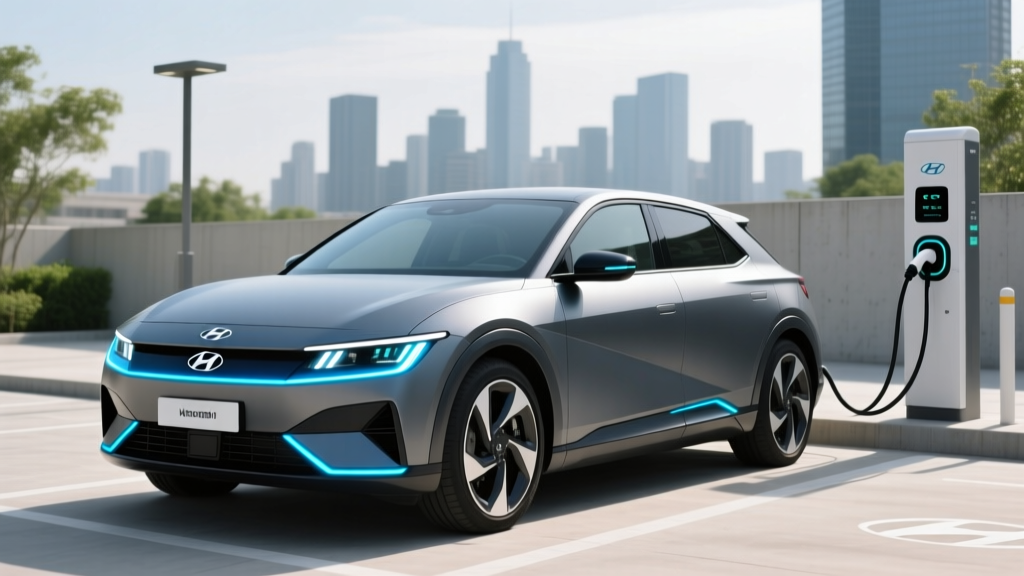
The 2026 Hyundai Ioniq 5 remains one of the most capable midsize electric crossovers on the market, thanks largely to its 800-volt E-GMP platform that enables class-leading DC fast-charging speeds. Now assembled at Hyundai's Metaplant in Georgia, the Ioniq 5 qualifies for the full $7,500 federal tax credit under IRS §30D for eligible buyers — a critical advantage in a segment where competitors like the Ford Mustang Mach-E and Volkswagen ID.4 face partial or no credit eligibility depending on battery sourcing. With up to 310 miles of EPA-estimated range, a spacious cabin, and distinctive retro-futuristic styling, the 2026 Ioniq 5 is a compelling daily driver and road-trip companion. Its main trade-offs? Highway range falls short of the EPA sticker, and the infotainment system still lags behind Tesla's interface in responsiveness.
2026 Ioniq 5 Specs at a Glance
| Spec | SE/SEL (Std Range) | SE/SEL/Limited (Long Range RWD) | SE/SEL/Limited (Long Range AWD) | N |
|---|---|---|---|---|
| EPA Range | 245 mi | 310 mi | 280 mi | 260 mi (est.) |
| Battery (usable) | 63.0 kWh | 84.0 kWh | 84.0 kWh | 84.0 kWh |
| Chemistry | NMC | NMC | NMC | NMC |
| Drivetrain | RWD | RWD | Dual-motor AWD | Dual-motor AWD |
| Horsepower | 168 hp | 225 hp | 320 hp | 641 hp |
| 0-60 mph | 7.4 sec | 6.8 sec | 4.5 sec | 3.4 sec |
| Peak DC Charge Rate | 180 kW | 240 kW | 240 kW | 240 kW |
| 10-80% DCFC Time | ~24 min | ~18 min | ~18 min | ~18 min |
| Level 2 Rate (kW) | 10.9 kW | 10.9 kW | 10.9 kW | 10.9 kW |
| MPGe (city/hwy/combined) | 127/106/117 | 132/103/117 | 110/87/99 | TBD |
| Base MSRP | $42,900 | $46,500 | $50,000 | $66,200 |
| Destination | $1,495 | |||
| Battery Warranty | 8 years / 100,000 miles | |||
Sources: fueleconomy.gov, Hyundai Motor America. Ioniq 5 N specs are manufacturer estimates for the performance variant.
Range and Efficiency: EPA vs. the Real World
Real-World Expectation: 260-280 miles on mixed highway/city driving at 70 mph; expect 220-245 miles in freezing temperatures or sustained 80+ mph travel.
Efficiency: 117 MPGe combined (RWD Long Range); approximately 29 kWh/100 mi (AWD)
The 310-mile EPA figure on the Long Range RWD is genuinely competitive with the Tesla Model Y Long Range (320 mi) and exceeds the Ford Mustang Mach-E Extended Range RWD (~320 mi EPA but at a higher price point). However, the Ioniq 5's boxy, upright design creates more aerodynamic drag than sleeker competitors, and this shows up most on the highway. In our experience, sustained 70-75 mph Interstate driving yields roughly 2.5-2.8 mi/kWh, translating to 210-235 miles of real highway range before you'd want to stop. City and suburban driving, where regenerative braking recaptures energy, pushes efficiency closer to the EPA combined estimate.
Cold weather compounds the highway penalty. At 20°F with the cabin heater active, expect a 25-30% range reduction from the EPA figure. The Ioniq 5's standard heat pump (on all trims except the base SE Standard Range) helps mitigate this compared to EVs without one, but physics wins: the 84 kWh pack delivers roughly 220-240 real miles in freezing conditions. If you live in the northern tier and commute more than 60 miles round trip in winter, the AWD Long Range is the safer choice for its buffer.
Charging: 800V Architecture That Actually Delivers
The Ioniq 5's defining technical advantage is its 800-volt E-GMP electrical architecture, shared with the Kia EV6 and Genesis Electrified GV60. Most EVs in this class run 400V systems, which limits their DC fast-charging ceiling. The Ioniq 5's 800V setup enables peak charge rates up to 240 kW on the Long Range models — and crucially, it sustains high rates through the middle of the charge curve rather than spiking and immediately tapering.
| Charging Level | Power | Connector | Miles Added per Hour (approx.) | Notes |
|---|---|---|---|---|
| Level 1 (120V) | ~1.4 kW | J1772 / NACS | ~4-5 mi/hr | Emergency/trickle only |
| Level 2 (240V, 48A) | 10.9 kW | J1772 / NACS | ~35-40 mi/hr | Full charge in ~8 hours (84 kWh pack) |
| DC Fast Charge (peak) | 240 kW (LR) / 180 kW (SR) | CCS / NACS | ~650-900 mi/hr at peak | 10-80% in ~18 min (LR); tapers above 80% |
At a 350 kW Electrify America or Ionity station, the Long Range Ioniq 5 will accept its full 240 kW peak. The charge curve holds above 180 kW from roughly 15% to 55% SoC, then gradually tapers. The 10-80% sprint takes approximately 18 minutes under ideal thermal conditions. If you arrive at a charger with a cold battery, preconditioning (activated by entering a charging station in the navigation system) warms the pack to optimize charge acceptance — skip this and your first 10 minutes may average only 80-120 kW.
For 2026, Hyundai has equipped the Ioniq 5 with the native NACS (North American Charging Standard) port on new production, replacing the CCS1 connector used on 2022-2024 models. This grants direct access to Tesla Supercharger stalls without an adapter — a meaningful expansion of the available fast-charging network, especially on rural routes. Owners of earlier CCS-equipped Ioniq 5 models can use Hyundai's provided CCS-to-NACS adapter at Superchargers.
Home charging on a Level 2, 48-amp, 240V circuit (requiring a 60-amp breaker) replenishes the 84 kWh pack from empty in roughly 8 hours. Most owners who charge nightly from 30-80% SoC will see a full top-up in 3-4 hours. Installation of a home Level 2 charger typically costs $500-$1,500 for the equipment and $800-$2,500 for electrician labor and permitting, depending on panel capacity and run distance. Consult a licensed electrician to verify your panel can support a 60-amp circuit; older homes with 100-amp service may require a $2,000-$4,000 panel upgrade.
Performance and Driving Dynamics
The Ioniq 5 lineup spans a wide performance envelope. The Standard Range RWD with 168 hp is adequate for city commuting and light highway merging but feels deliberately unhurried — 0-60 mph in 7.4 seconds. The Long Range RWD bumps output to 225 hp (6.8 sec to 60), which is the sweet spot for most buyers: responsive enough for confident passing, efficient enough to maximize range.
The dual-motor AWD Long Range is the enthusiast's daily driver: 320 hp, 446 lb-ft of torque, and a 4.5-second 0-60 time. Power delivery is instant and linear, as expected from an EV, and the AWD system provides confident traction in rain and light snow. The chassis tuning is compliant rather than sporty — the Ioniq 5 prioritizes ride comfort over corner-carving, which suits its crossover mission but means the Ford Mach-E GT feels more engaging on a back road.
At the top of the range, the Ioniq 5 N is Hyundai's performance halo: 641 hp (with N Grin Boost engaged), a 3.4-second 0-60, simulated gear shifts, and track-capable cooling. It's a legitimate performance EV that competes with the Tesla Model Y Performance and Porsche Macan Electric on thrills, though at a $66,200 MSRP that pushes well beyond the mainstream buyer's budget — and above the §30D MSRP cap for SUVs.
Interior, Cargo, and Technology
The Ioniq 5's cabin is one of its strongest selling points. The flat floor (enabled by the E-GMP skateboard platform) and long 118.1-inch wheelbase create rear-seat legroom of 39.4 inches — more than the Model Y and comparable to a midsize sedan. Front legroom is generous at 41.7 inches. The dual 12.3-inch displays (instrument cluster and infotainment) are mounted on a single curved panel, and physical buttons for climate and volume remain — a welcome choice in an era of touchscreen-only frustration.
Cargo volume behind the rear seats is 27.2 cubic feet, expanding to 59.3 cu ft with the rear seats folded. The front trunk (frunk) on AWD models holds 0.85 cu ft — enough for a charging cable bag or small backpack, but far smaller than the Ford Mach-E's 4.7 cu ft frunk. RWD models get a slightly larger 2.1 cu ft frunk since there's no front motor.
Technology highlights include:
- Hyundai Digital Key 2: Use your smartphone as the key fob via NFC and UWB
- Vehicle-to-Load (V2L): Power laptops, appliances, or camping gear from the charge port or an interior 120V outlet (up to 3.6 kW output)
- Highway Driving Assist 2 (HDA2): Adaptive cruise with lane centering and lane-change assist — SAE Level 2, requiring driver supervision at all times
- Remote Smart Parking Assist: Move the vehicle in/out of tight spots from outside the car using the key fob
- Over-the-air (OTA) updates: Firmware, navigation, and feature updates delivered wirelessly
The infotainment system runs Hyundai's latest ccNC (Connected Car Navigation Cockpit) software, which is faster and more intuitive than the previous generation but still trails Tesla's UI in speed and third-party app integration. Wireless Apple CarPlay and Android Auto are standard across all trims.
Pricing, Trims, and Federal Tax Credit Eligibility
The 2026 Ioniq 5 is offered in four trims for the mainstream lineup (SE, SEL, Limited) plus the performance N variant. All Long Range models and the N are assembled at Hyundai's Metaplant America in Ellabell, Georgia — a critical factor for federal tax credit eligibility.
| Trim | MSRP (+ $1,495 dest.) | Est. Price After $7,500 §30D Credit | MSRP Under §30D Cap? |
|---|---|---|---|
| SE Standard Range RWD | $42,900 ($44,395) | $36,895 | Yes (SUV cap: $80,000) |
| SE Long Range RWD | $46,500 ($47,995) | $40,495 | Yes |
| SEL Long Range AWD | $50,000 ($51,495) | $43,995 | Yes |
| Limited Long Range AWD | $56,500 ($57,995) | $50,495 | Yes |
| Ioniq 5 N | $66,200 ($67,695) | $60,195 | Yes |
Federal Tax Credit (§30D) Eligibility Checklist:
- MSRP Cap: Vehicle MSRP must not exceed $80,000 for SUVs (all Ioniq 5 trims qualify)
- Buyer Income Cap: Modified AGI must not exceed $150,000 (single), $225,000 (head of household), or $300,000 (joint filers)
- Battery Sourcing: Battery components must be manufactured or assembled in North America; critical minerals must be sourced from the US or a free-trade-agreement country. The Georgia-built Ioniq 5 meets these requirements for the full $7,500 credit as of 2026
- Point-of-Sale Transfer: Eligible buyers can transfer the credit to the dealer at purchase, reducing the purchase price by $7,500 at the point of sale rather than waiting to claim it on their tax return
Verify your personal eligibility at IRS.gov §30D or consult a tax professional. Rules are subject to change.
Ownership Costs, Warranty, and Long-Term Value
Hyundai backs the Ioniq 5 with one of the strongest warranty packages in the EV segment:
- Battery & Drive Unit: 8 years / 100,000 miles (whichever comes first)
- New Vehicle Limited: 5 years / 60,000 miles
- Roadside Assistance: 5 years / unlimited miles
- Complimentary Maintenance: 3 years / 36,000 miles (oil changes don't apply, but tire rotations and inspections are covered)
The battery warranty guarantees that the high-voltage pack will retain at least 70% of its original capacity over the 8-year/100,000-mile term. In practice, Hyundai's NMC cells in the E-GMP platform have shown modest degradation — owners of 2022-2024 Ioniq 5 models report roughly 3-5% capacity loss after 40,000-50,000 miles, which is in line with industry averages. The liquid-cooled thermal management system helps slow degradation by keeping cell temperatures in an optimal range during charging and discharging.
Insurance costs for the Ioniq 5 are moderate for the segment. Expect annual premiums of $1,800-$2,400 depending on your location, driving record, and trim (AWD Limited and N models cost more to insure than RWD base trims). Always get a quote before purchasing — EV insurance can vary significantly by carrier.
How the Ioniq 5 Stacks Up Against Key Rivals
| Spec | Hyundai Ioniq 5 LR RWD | Tesla Model Y LR | Ford Mach-E ER RWD | VW ID.4 Pro S |
|---|---|---|---|---|
| EPA Range | 310 mi | 320 mi | 320 mi | 291 mi |
| Battery | 84 kWh NMC | ~78 kWh NMC | 91 kWh NMC | 82 kWh NMC |
| Peak DCFC | 240 kW | 250 kW | 150 kW | 175 kW |
| 10-80% Time | ~18 min | ~20 min | ~36 min | ~28 min |
| 0-60 mph | 6.8 sec | 5.0 sec (AWD) | 6.1 sec | 7.7 sec |
| Base MSRP (comparable trim) | $46,500 | $44,990 | $48,995 | $45,290 |
| §30D Credit Eligible? | Yes ($7,500) | Partial/No* | Partial/No* | Yes ($7,500) |
| NACS Native? | Yes (2026) | Yes | Adapter | Adapter |
*Tesla Model Y and Ford Mach-E §30D eligibility depends on battery-sourcing compliance, which has varied by production batch. Check fueleconomy.gov for the latest qualifying VIN ranges.
The Ioniq 5's key advantage over this group is the combination of 240 kW charging and full §30D eligibility, which together save time on road trips and up to $7,500 at purchase. The Model Y offers more range, a more mature Supercharger network experience, and stronger performance in AWD form — but its credit eligibility is inconsistent. The Mach-E drives well but charges significantly slower. The ID.4 is the value play but trails on efficiency and tech.
Pros, Cons, and Who Should Buy
Pros
- Class-leading 240 kW DC fast charging (10-80% in ~18 min)
- Full $7,500 federal tax credit (US-built, compliant sourcing)
- Spacious cabin with excellent rear legroom (39.4 in)
- Standard NACS port for direct Supercharger access (2026 models)
- V2L capability (3.6 kW) for camping, worksite, or emergency power
- 8-yr/100,000-mi battery warranty
- Physical buttons for climate and volume
- Heat pump standard on most trims
Cons
- Real-world highway range 15-20% below EPA (boxy aero)
- Small frunk (0.85 cu ft AWD)
- Infotainment UI less responsive than Tesla's
- No front trunk storage on AWD models (minimal space)
- Standard Range RWD is underpowered (168 hp)
- Rear wiper absent on early builds (addressed on 2025+ production)
- No hands-free driving — HDA2 is Level 2 only, driver must stay engaged
Best for: Daily commuters with home charging who take 2-4 road trips per year and value fast DC charging stops. The Long Range RWD or AWD trims suit families needing rear-seat space and cargo room. The Ioniq 5 is not ideal for buyers who regularly tow (it's rated for only 1,650 lbs with AWD) or those in extreme cold climates without garage parking, where the range penalty compounds.
Frequently Asked Questions
What is the real-world range of the 2026 Ioniq 5?
The Long Range RWD achieves 310 miles EPA, but expect 260-280 miles in real-world mixed driving and 220-245 miles on sustained highway trips at 70+ mph. Cold weather (below 30°F) reduces range by 25-30%, yielding roughly 220-240 miles. The AWD model's EPA rating of 280 miles translates to approximately 235-255 real-world miles in moderate conditions.
How fast does the Ioniq 5 charge at home and on the road?
At home on a Level 2, 240V/48A charger, the Ioniq 5 charges at 10.9 kW, adding roughly 35-40 miles of range per hour. A full charge of the 84 kWh pack takes about 8 hours. On a DC fast charger rated at 350 kW, the Long Range models peak at 240 kW and charge from 10-80% in approximately 18 minutes. The Standard Range peaks at 180 kW and takes about 24 minutes for the same 10-80% interval.
How much does the 2026 Ioniq 5 cost after the federal tax credit?
The Long Range RWD SE starts at $47,995 (including destination) and drops to approximately $40,495 after the $7,500 §30D credit for eligible buyers. The popular SEL AWD comes in around $43,995 after credit. Eligibility requires the buyer to meet income caps ($150K single / $300K joint) and the credit can be transferred at the point of sale to reduce the purchase price directly.
Does the 2026 Ioniq 5 qualify for the full $7,500 federal EV tax credit?
Yes, as of 2026, all US-built Ioniq 5 trims assembled at Hyundai's Georgia Metaplant qualify for the full $7,500 credit under IRS §30D, provided the buyer meets income limits. The battery meets North American sourcing requirements for both components and critical minerals. Always verify current eligibility at IRS.gov before purchasing, as rules can change.
Is the Ioniq 5 worth buying over the Tesla Model Y or Ford Mach-E?
Choose the Ioniq 5 if DC fast-charging speed, full tax credit eligibility, and cabin comfort are your top priorities. Choose the Model Y if you want maximum range, the most seamless charging network experience, and stronger performance — but verify §30D eligibility for your specific VIN. Choose the Mach-E if driving dynamics matter most, but accept slower charging speeds (150 kW peak). For most buyers seeking a balanced daily driver with road-trip capability and the lowest net purchase price, the Ioniq 5 Long Range RWD or AWD is the strongest value proposition in 2026.
What is the Ioniq 5's battery warranty and expected lifespan?
Hyundai covers the high-voltage battery for 8 years or 100,000 miles, guaranteeing at least 70% capacity retention. Real-world data from early Ioniq 5 owners suggests 3-5% degradation over the first 40,000-50,000 miles, which projects to roughly 85-90% capacity at 100,000 miles — well within the warranty threshold. A full battery replacement outside warranty is estimated at $12,000-$18,000, though this is rare and costs are expected to decline as battery manufacturing scales.