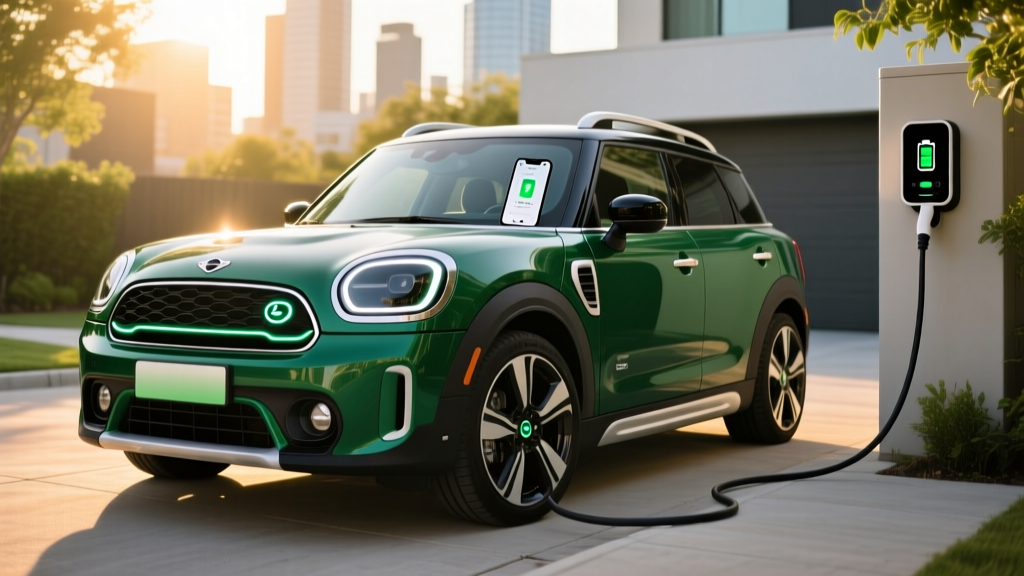
If you're searching for a compact electric crossover with personality, the 2026 Mini Cooper Countryman Electric (officially the Countryman SE ALL4) delivers iconic styling, practical hatchback cargo space, and a usable 230 miles of EPA range. But before you put down a deposit, you need to know the real-world numbers: its 64.5 kWh battery, 130 kW peak DC charging, and ~$38,900 starting price — plus whether you'll actually qualify for the federal tax credit given strict battery-sourcing and income rules. This guide covers the exact specs, ownership costs, and practical realities of living with the electric Countryman.
Quick Answer: Is the Mini Cooper Countryman Electric Worth It?
The short verdict: The 2026 Mini Cooper Countryman SE ALL4 is best suited for urban and suburban drivers who want a premium-styled, compact EV with decent cargo room and don't regularly drive more than 200 miles in a single stretch. It's not the longest-range option in its class — rivals like the Hyundai Ioniq 5 and Tesla Model Y push past 300 miles — but it compensates with engaging driving dynamics, a high-quality interior, and strong Level 2 charging speeds. Expect to pay around $38,900 before incentives. If you have home Level 2 charging and a daily commute under 60 miles round-trip, this EV can realistically replace a gas car while cutting your per-mile fuel cost by roughly 60%.
Range, Battery & Charging: The Numbers That Matter
The Countryman SE ALL4 is built on the BMW Group's FA2 platform (shared with the BMW iX1) and packs a 64.5 kWh usable battery using NMC (nickel-manganese-cobalt) chemistry. Here's what that translates to in practice:
| Specification | 2026 Mini Countryman SE ALL4 |
|---|---|
| EPA Range | 230 miles |
| Real-World Range (highway/cold) | ~180–205 miles |
| Battery Capacity (usable) | 64.5 kWh (NMC) |
| Efficiency | ~103 MPGe (combined) |
| Peak DC Fast Charge Rate | 130 kW |
| 10–80% DC Fast Charge Time | ~29 minutes |
| Level 2 (AC) Charge Rate | 11 kW (22 kW optional) |
| Level 2 Full Charge Time (11 kW) | ~6.5 hours |
| Motor Output | 308 hp / 364 lb-ft torque (dual motor AWD) |
| 0–60 mph | 5.4 seconds |
| Battery Warranty | 8 years / 100,000 miles |
Real-World Range Reality Check: The EPA rates the Countryman SE ALL4 at 230 miles. In mixed highway driving at 70+ mph, expect closer to 195–205 miles. In freezing temperatures (below 30°F), range can drop to 165–185 miles due to cabin heating demands and increased battery resistance. The Countryman includes a heat pump (standard), which mitigates cold-weather losses compared to resistive heaters — but physics still applies. Plan road trips around ~180-mile charging intervals in winter to maintain a safe buffer.
The 130 kW peak DC charge rate is adequate for road-trip stops but trails competitors like the Hyundai Ioniq 5 (peak 240 kW) and Kia EV6 (peak 240 kW). The charge curve holds near peak from roughly 10–40% State of Charge, then tapers progressively. A 10–80% session takes about 29 minutes at a 150+ kW charger. At home on a standard 11 kW Level 2 wallbox, a full charge takes roughly 6.5 hours — plug in after your evening commute and wake up full every morning.
Pricing, Trims & Federal Tax Credit Eligibility
The 2026 Mini Cooper Countryman SE ALL4 starts at approximately $38,900 MSRP (including destination). Mini keeps the trim structure simple — most options are bundled in packages rather than separate trim levels:
- Countryman SE ALL4 (base): ~$38,900 — includes dual-motor AWD, 8.8-inch OLED display, Mini Operating System 9, heated front seats, power liftgate
- Signature/Plus packages: Add $2,000–$4,500 for panoramic roof, Harman Kardon audio, head-up display, adaptive cruise, and premium upholstery
- Fully loaded: ~$45,000–$47,000
§30D Federal Tax Credit: Do You Qualify?
The Mini Countryman SE ALL4 is assembled at BMW's Leipzig plant in Germany, which creates complications under the IRS §30D Clean Vehicle Credit rules. Here's the eligibility checklist for 2026:
- MSRP Cap: SUVs/vans must be under $80,000 — the Countryman qualifies ✓
- Buyer Income Cap: AGI must not exceed $150,000 (single) / $300,000 (joint) ✓ (buyer-dependent)
- Battery Sourcing (Critical Minerals): Must meet escalating percentage thresholds — the Countryman's battery supply chain may only partially qualify; check the DOE/EPA eligible vehicle list for current status ⚠️
- Battery Component Assembly: Must meet North American assembly thresholds — foreign-assembled modules may reduce or eliminate credit eligibility ⚠️
- Point-of-Sale Transfer: If eligible, you can transfer the credit to the dealer at purchase for an immediate price reduction
Bottom line: Do not assume the Countryman qualifies for the full $7,500. Due to its German assembly and battery sourcing, it may qualify for $3,750 (partial), $0, or the full amount depending on 2026 sourcing rule updates. Verify on fueleconomy.gov before purchasing, and consult a tax professional for your specific situation.
EV vs. Gas Countryman: 5-Year Cost Comparison
How does the electric Countryman stack up against its gas-powered sibling, the Countryman S ALL4? Here's a 5-year / 75,000-mile ownership comparison:
| Cost Category | Countryman SE ALL4 (EV) | Countryman S ALL4 (Gas) |
|---|---|---|
| Purchase Price (MSRP) | $38,900 | $36,500 |
| Estimated Federal Tax Credit | $0–$7,500 (varies) | $0 |
| Effective Purchase Price | $31,400–$38,900 | $36,500 |
| Fuel/Energy (75k mi) | $2,700–$4,100 | $8,400–$9,800 |
| Maintenance (75k mi) | $1,200–$1,800 | $3,500–$4,500 |
| Insurance (5 yr avg) | $9,500–$11,500 | $7,800–$9,500 |
| 5-Year Depreciation (est.) | $16,000–$19,500 | $14,000–$17,000 |
| Total 5-Year Cost | $52,800–$67,800 | $60,200–$77,300 |
Energy costs assume $0.14/kWh for home charging and $0.45/kWh for public DC fast charging (roughly 70/30 split). Gas costs assume $3.60/gallon at 28 MPG combined. The EV saves $4,500–$7,000 in fuel and maintenance over five years, though higher insurance premiums (typically 15–25% more for EVs) and potentially faster depreciation partially offset those savings. If you qualify for a $3,750 or $7,500 tax credit, the EV's total cost advantage widens significantly.
Real-World Ownership: What First-Time EV Buyers Must Know
Buying your first EV involves considerations that don't exist with a gas car. Here's what matters with the Countryman SE ALL4:
Home Charging Access Is Non-Negotiable (Ideally)
The Countryman's ownership experience is fundamentally different depending on your charging situation. With a Level 2 home charger (240V, 11 kW), you'll start every morning with a full battery and rarely visit a public charger. Installation costs typically run $800–$2,200 for the charger and electrician work if your panel has capacity. If you need a panel upgrade (100A → 200A), add $1,500–$3,500.
If you live in an apartment or lack garage/outdoor outlet access, you'll rely on public charging. At DC fast-charging rates of $0.40–$0.60/kWh, your "fuel" cost nearly doubles versus home charging, and you'll spend 30+ minutes per session 2–3 times per week. Before buying, confirm your charging plan.
Cold Climate? Plan for 20–25% Range Loss
The Countryman's heat pump helps, but NMC batteries lose efficiency in cold temperatures. If you live where winters regularly drop below freezing, treat the 230-mile EPA range as 175–185 miles in January. Preconditioning the battery while still plugged in (using the Mini app's departure timer) warms the pack and recovers some range — but the physics of lithium-ion chemistry in cold weather are unavoidable.
The Charging Curve Matters on Road Trips
Mini's 130 kW peak rate means the Countryman charges from 10–80% in about 29 minutes at a capable station. But above 80% State of Charge, the rate drops sharply — often to under 30 kW. Charging from 80–100% can take as long as 10–80%. On road trips, plan to charge to 80% and go. This is normal EV behavior, not a Countryman-specific flaw.
Common Misconceptions About the Electric Countryman
| Myth | Fact |
|---|---|
| "230 miles of range isn't enough for daily driving." | The average American drives 37 miles per day (FHWA data). The Countryman covers nearly a week of commuting on a single charge. |
| "EV batteries need replacing every few years." | NMC batteries typically degrade 10–15% over 8 years/100,000 miles. Mini warranties the battery for 8 years/100,000 miles with a 70% capacity retention guarantee. Most EV batteries outlast the car. |
| "It qualifies for the full $7,500 tax credit." | German assembly and battery sourcing complicate eligibility. The credit could be $0, $3,750, or $7,500 depending on current-year sourcing rules. Always verify before purchase. |
| "Charging takes too long." | At home (Level 2), charging happens overnight while you sleep — zero active time. On road trips, a 29-minute DC fast charge every 2.5–3 hours aligns with rest stops. |
| "EVs are more expensive to own overall." | Higher purchase price is offset by dramatically lower fuel and maintenance costs. Over 5 years, the Countryman EV can save $4,500–$7,000+ versus the gas version. |
Decision Framework: Should You Buy the Countryman SE ALL4?
Choose the Mini Cooper Countryman Electric if:
- You have home Level 2 charging access (or can install it)
- Your daily driving is under 80 miles round-trip
- You want a compact, stylish EV with premium interior quality and engaging handling
- You value a practical hatchback with ~16.5 cu ft of cargo space (seats up, ~55 cu ft folded)
- Road trips are occasional (2–4 per year) and you're comfortable planning DC fast-charge stops
- You want AWD capability without the fuel cost penalty of a gas AWD crossover
Look elsewhere if:
- You regularly drive 250+ miles between stops and don't want to charge en route (consider the Tesla Model Y Long Range at 320+ miles or Hyundai Ioniq 5 at 303 miles)
- You lack any home or workplace charging access and your area has sparse public charging infrastructure
- You need maximum interior space — the Countryman is compact; the Kia EV9 or Rivian R1S offer far more room
- Federal tax credit eligibility is a deal-breaker — if the Countryman doesn't qualify in 2026, competitors with North American assembly (Tesla Model Y, Ford Mustang Mach-E, VW ID.4) are more likely to qualify
- You tow — the Countryman's towing capacity is limited to ~2,600 lbs; larger EVs handle 5,000+ lbs
Frequently Asked Questions
What is the real-world range of the Mini Cooper Countryman Electric?
The EPA rates it at 230 miles. In mixed highway driving at 65–75 mph, expect 195–210 miles. In freezing weather, plan for 165–185 miles. The standard heat pump helps mitigate cold-weather losses but doesn't eliminate them.
How long does it take to charge the Countryman SE ALL4?
On a Level 2 home charger (11 kW), a full charge takes about 6.5 hours — ideal for overnight charging. At a DC fast charger (150+ kW), 10–80% takes roughly 29 minutes at the 130 kW peak rate. Charging above 80% slows dramatically.
Does the Mini Countryman Electric qualify for the $7,500 federal tax credit?
It depends. The MSRP and buyer income caps are met, but battery sourcing and component assembly rules (which tighten annually under §30D) may reduce or eliminate the credit because the vehicle is assembled in Germany. Check fueleconomy.gov for the current eligibility status before purchasing.
How does the Countryman Electric compare to the gas Countryman?
The EV costs ~$2,400 more upfront but saves $4,500–$7,000 over five years in fuel and maintenance. The EV is quicker (5.4s vs ~7.0s 0–60), smoother, and quieter. The gas version has longer range (~380 miles per tank) and simpler road-trip logistics. If you can charge at home, the EV wins on total cost and driving refinement.
What does the battery warranty cover?
Mini covers the high-voltage battery for 8 years or 100,000 miles against defects and excessive degradation. If the battery falls below 70% of its original capacity within that period, Mini will repair or replace it. Based on industry data, NMC batteries typically retain 85–90% capacity at the 8-year mark under normal use.
Is the Mini Countryman Electric good in snow?
Yes — the dual-motor ALL4 system provides competent AWD traction, and the low center of gravity (battery pack under the floor) aids stability. Pair it with winter tires for optimal performance. Just account for 20–25% range reduction in sustained sub-freezing temperatures.