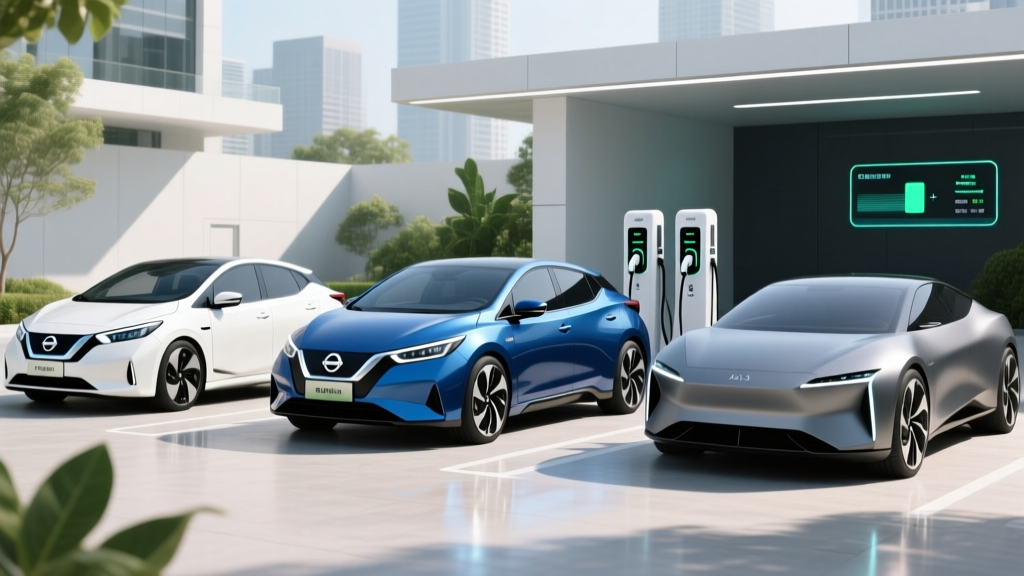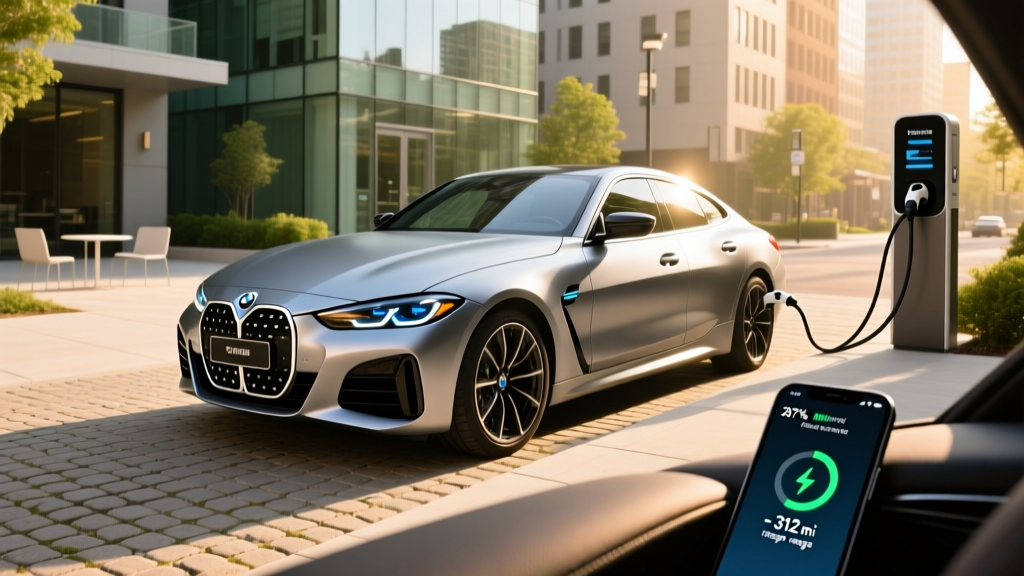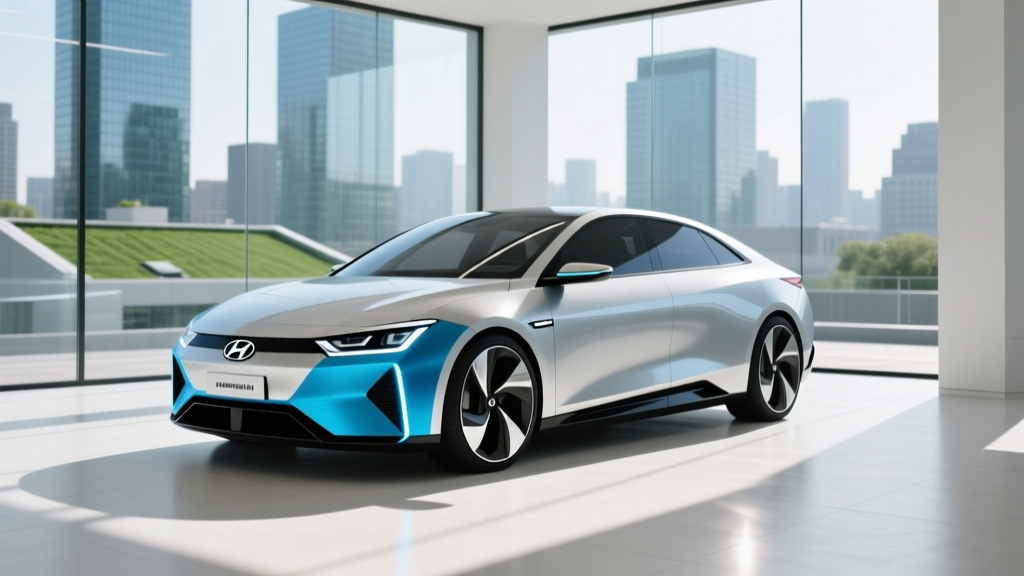
When Hyundai unveiled the Ioniq sub-brand with the Ioniq 5, it signaled a design-forward, tech-dense approach to electrification. Now, the Hyundai Ioniq 3 design concept points toward the next chapter: a compact electric crossover aimed squarely at the high-volume segment occupied by the Volvo EX30, Kia EV3, and upcoming next-gen Chevrolet Bolt EUV. This profile breaks down everything we know from the concept reveal and Hyundai's E-GMP platform trajectory — while clearly separating confirmed data from preliminary estimates.
What the Hyundai Ioniq 3 Design Concept Reveals
The Ioniq 3 concept continues Hyundai's "Parametric Dynamics" design language — first seen on the Ioniq 5 and Ioniq 6 — but shrinks it into a footprint closer to a Kona Electric. The concept showcases a fastback-crossover silhouette with a short front overhang, flush door handles, pixel-LED lighting signatures, and an aerodynamically optimized rear diffuser. Hyundai has indicated the production version will ride on a evolution of the Electric-Global Modular Platform (E-GMP), potentially a shortened variant to accommodate the compact segment.
Inside, the concept features a minimalist dual-screen layout, recycled-material upholstery, and Hyundai's latest ccNC (Connected Car Navigation Cockpit) infotainment system. The design ethos targets urban professionals and small families who want EV practicality without the Ioniq 5's midsize footprint or price tag.
Expected Range, Battery, and Efficiency
Based on the concept's stated battery architecture and Hyundai's current E-GMP cell partnerships (SK On and LG Energy Solution), here is what we anticipate for the production Ioniq 3:
| Spec | Estimated Value |
|---|---|
| Battery Capacity (usable) | ~58–65 kWh (NMC chemistry) |
| EPA Estimated Range | ~250–290 miles (depending on trim/drivetrain) |
| Efficiency | ~115–125 MPGe combined (~27–30 kWh/100 mi) |
| Drivetrain | RWD standard; AWD dual-motor optional |
| Horsepower | ~168 hp (RWD) / ~300 hp (AWD) |
| 0–60 mph | ~7.2 sec (RWD) / ~5.1 sec (AWD) |
The EPA sticker may read up to 290 miles for a RWD Long Range trim, but real-world conditions tell a different story:
- Highway driving (70–80 mph): Expect ~220–250 miles. Aerodynamic drag hits compact crossovers harder at sustained speed.
- Cold weather (below 32°F): Plan for 20–30% range loss, dropping effective range to ~175–220 miles unless the battery is preconditioned.
- City/commuter driving: This is where the Ioniq 3 will shine — regenerative braking and low-speed efficiency could push real-world city range close to or slightly above the EPA number.
If Hyundai offers a heat pump (standard on most 2025+ E-GMP vehicles), cold-weather losses will be on the lower end of that range.
Charging Speed: DC Fast and Home Level 2
Charging is where E-GMP vehicles have consistently punched above their weight. The Ioniq 5 and Ioniq 6 both support 800-volt architecture, enabling exceptionally fast DC charging. The concept suggests the Ioniq 3 will inherit this capability, though Hyundai may limit peak rates on the smaller battery to manage cell stress.
| Charging Level | Power (kW) | Speed / Time |
|---|---|---|
| Level 1 (120V household) | ~1.4 kW | ~4–5 miles per hour |
| Level 2 (240V home/public) | ~10.9 kW | ~32–36 miles per hour; full charge in ~6–7 hours |
| DC Fast Charge (peak) | ~150–175 kW (800V capable) | 10–80% in ~18–22 minutes |
Charging-curve reality check: Peak kW is not sustained kW. Like all E-GMP vehicles, expect the Ioniq 3 to hold its peak rate from roughly 10–55% State of Charge (SoC), then taper progressively. From 80–100%, charging slows dramatically to protect battery longevity — a full 0–100% DC session could take 40+ minutes. For daily driving, charging to 80% is the practical target.
kW vs. kWh reminder: kW (kilowatts) measures the rate of charging — like water flow from a hose. kWh (kilowatt-hours) measures the battery's total energy capacity — like the size of the tank. A 175 kW charger delivers energy quickly into a ~62 kWh battery.
Interior Space, Cargo, and Practicality
The Ioniq 3 concept positions itself between the Kona Electric and the Ioniq 5 in size. Based on concept dimensions and Hyundai's packaging claims:
- Seating: 5 passengers
- Rear legroom (est.): ~37–38 inches — competitive with the Volvo EX30 and slightly tighter than the Ioniq 5's generous 39.4 inches
- Cargo behind rear seats (est.): ~22–25 cu ft
- Cargo with rear seats folded (est.): ~50–55 cu ft
- Front trunk (frunk): Likely a small ~0.7–1.0 cu ft compartment for charging cables, consistent with other E-GMP compact applications
The flat floor enabled by the dedicated EV platform should give the Ioniq 3 a cabin-space advantage over converted-ICE competitors. However, buyers needing maximum cargo volume should still look at the Ioniq 5 (up to 59.3 cu ft) or the Kia EV6.
Pricing, Trims, and Federal Tax Credit Eligibility
Hyundai has not announced official MSRP for the production Ioniq 3, but based on the concept's positioning and competitive pressure from the Volvo EX30 (~$36,000) and Kia EV3 (~$30,000 in markets where it's available), here is our pricing projection:
| Trim | Est. MSRP | Est. After §30D Credit* |
|---|---|---|
| SE Standard Range (RWD) | ~$32,000–$34,000 | ~$24,500–$26,500 |
| SEL Long Range (RWD) | ~$37,000–$39,000 | ~$29,500–$31,500 |
| Limited AWD | ~$42,000–$45,000 | ~$34,500–$37,500 |
*Federal tax credit estimates assume full $7,500 eligibility under IRS §30D. Actual credit depends on battery component and critical-mineral sourcing requirements, buyer income limits, and MSRP caps. See details below.
According to IRS guidelines, qualifying for the full $7,500 credit requires all of the following:
- MSRP cap: Vehicle base price must not exceed $55,000 for SUVs/crossovers — the Ioniq 3 should clear this easily.
- Buyer income limits: Modified AGI must not exceed $150,000 (single), $225,000 (head of household), or $300,000 (joint filers).
- Battery sourcing: A percentage of critical minerals and battery components must be sourced from the U.S. or free-trade-agreement partners. These thresholds increase annually. Hyundai's shift toward U.S. battery production (via the Metaplant Alabama facility and SK On joint ventures) improves the Ioniq 3's prospects.
- Point-of-sale transfer: As of 2024+, buyers can transfer the credit to the dealer at purchase, reducing the upfront price rather than waiting for a tax refund.
- Final assembly: Must occur in North America. Hyundai's Savannah, Georgia, Metaplant is the likely production site.
Important: Credit eligibility rules are subject to legislative and regulatory changes. Always verify current-year requirements on irs.gov and consult a tax professional before making a purchase decision based on the credit.
Tech, Safety, and Driver Assistance
The Ioniq 3 concept showcases Hyundai's latest technology suite. Based on the concept and the current Ioniq lineup, expect:
- Infotainment: Dual 12.3-inch displays running Hyundai's ccNC system with wireless Apple CarPlay and Android Auto, over-the-air (OTA) updates, and digital key support.
- Hyundai SmartSense (ADAS): Forward collision-avoidance assist, blind-spot monitoring, rear cross-traffic alert, lane-keeping assist, adaptive cruise control with stop-and-go, and highway driving assist.
- Highway Driving Assist 2 (HDA2): Hyundai's SAE Level 2 driver-assistance system — combining adaptive cruise and lane-centering on divided highways. The driver must remain attentive and keep hands on or near the wheel at all times.
- Vehicle-to-Load (V2L): The Ioniq 5 offers V2L (powering external devices from the traction battery). If included on the Ioniq 3, it would be a standout feature for camping or emergency power.
Hyundai SmartSense and HDA2 are SAE Level 2 systems. They are not self-driving. The driver is fully responsible for vehicle operation and must monitor the road at all times. No production Hyundai vehicle currently offers Level 3 or higher autonomy.
Warranty and Long-Term Ownership
Hyundai's warranty coverage is among the best in the industry, and the Ioniq 3 should continue this tradition:
- New-vehicle limited warranty: 5 years / 60,000 miles
- Powertrain warranty: 10 years / 100,000 miles
- EV battery warranty: 10 years / 100,000 miles (covering capacity retention below ~70% of original)
- Complimentary maintenance: 3 years / 36,000 miles (oil changes aren't relevant, but this covers cabin air filters, tire rotations, and multi-point inspections)
The 10-year battery warranty is a significant confidence builder. Based on real-world data from the Ioniq 5 and Kona Electric, Hyundai's NMC cells have shown modest degradation — typically 5–8% capacity loss over the first 100,000 miles under normal use. The Ioniq 3's thermal management system (liquid cooling with active preconditioning) should deliver similar or better longevity.
How It Compares: Ioniq 3 vs. the Compact EV Field
| Spec | Hyundai Ioniq 3 (Est.) | Volvo EX30 | Kia EV3 (Est.) |
|---|---|---|---|
| EPA Range | ~250–290 mi | ~275 mi (Extended Range) | ~270–300 mi |
| Battery | ~58–65 kWh NMC | 69 kWh NMC | ~58–81 kWh NMC |
| DC Fast Charge (peak) | ~150–175 kW | ~153 kW | ~150 kW |
| 10–80% DC Time | ~18–22 min | ~26 min | ~25–30 min |
| Starting MSRP (Est.) | ~$32,000 | ~$36,145 | ~$30,000 |
| Platform | E-GMP (dedicated EV) | SEA (dedicated EV) | E-GMP variant |
| NACS Connector | Expected (2025+ Hyundais) | CCS (adapter for NACS) | Expected NACS |
The Ioniq 3's potential edge lies in its 800-volt charging architecture — a feature typically reserved for premium EVs. If Hyundai carries this through to production, the Ioniq 3 could offer 10–80% charge times significantly faster than rivals limited to 400V systems. The native NACS connector (expected for all Hyundai EVs from 2025 onward) would also grant direct access to Tesla's Supercharger network without an adapter — a meaningful daily-use advantage.
Who Should Wait for the Hyundai Ioniq 3?
- Want a compact EV crossover under $35,000 (before credits) with a dedicated EV platform — not a converted gas-car chassis
- Prioritize fast DC charging for road trips (800V architecture advantage)
- Prefer Hyundai's warranty coverage and dealer network
- Need NACS-native Supercharger access without relying on adapters
- Are cross-shopping the Volvo EX30, Kia EV3, or a potential next-gen Chevy Bolt EUV
- Need three rows of seating or maximum cargo volume (step up to the Ioniq 5 or Ioniq 9)
- Need a vehicle now — the Ioniq 3 is not yet available for purchase
- Require towing capability (compact crossovers in this class typically max out at ~1,500–2,000 lbs, if rated at all)
Pros and Cons at a Glance
- 800V fast-charging architecture in an affordable compact
- Native NACS connector for Tesla Supercharger access
- Dedicated EV platform = flat floor, optimized packaging
- Industry-leading 10-yr/100,000-mi battery warranty
- Likely eligible for full $7,500 federal tax credit (U.S. production)
- Competitive starting price under $35,000
- Not yet available — production timing uncertain
- Rear seat and cargo space tighter than Ioniq 5
- AWD availability may be limited to top trim
- Real-world highway range may fall 15–20% below EPA estimate
- Cold-weather range loss without preconditioning discipline
- Specs and pricing remain preliminary
Frequently Asked Questions
What is the real-world range of the Hyundai Ioniq 3?
Based on estimated battery capacity (~58–65 kWh) and efficiency, expect roughly 250–290 miles EPA. In real-world highway driving at 70–80 mph, plan for 220–250 miles. In cold weather below freezing, range could drop to 175–220 miles without battery preconditioning. City driving with regenerative braking should yield results closest to the EPA sticker.
How fast does the Hyundai Ioniq 3 charge?
If the 800V architecture carries over from the Ioniq 5, expect peak DC fast-charging rates of ~150–175 kW, with a 10–80% charge in approximately 18–22 minutes. At home on a Level 2 (240V) charger at ~10.9 kW, a full charge takes about 6–7 hours, adding roughly 32–36 miles of range per hour of charging.
How much does the Hyundai Ioniq 3 cost after tax credits?
Estimated starting MSRP is ~$32,000–$34,000 for the base trim. If the vehicle qualifies for the full $7,500 federal §30D tax credit (and you meet income and sourcing requirements), the effective price could drop to approximately $24,500–$26,500. Final pricing will be confirmed closer to the production launch.
Does the Hyundai Ioniq 3 qualify for the federal EV tax credit?
It is expected to, provided Hyundai meets the battery-sourcing and critical-mineral thresholds that tighten each year under §30D. Because the Ioniq 3 will likely be assembled at Hyundai's Metaplant in Georgia and use batteries from SK On's U.S. joint ventures, it has a strong path to eligibility. However, buyers must also meet income caps ($150K single / $300K joint) and the vehicle MSRP must stay under $55,000. Always verify on irs.gov before purchasing.
Is the Hyundai Ioniq 3 worth waiting for vs. competitors?
If you don't need to buy immediately and want a compact EV with fast 800V charging, native NACS access, and a sub-$35K starting price, the Ioniq 3 is one of the most promising upcoming entries. If you need a car now, the Volvo EX30 is already on sale, and the Kia EV3 is expected in the U.S. market soon. The Ioniq 3's dedicated EV platform and Hyundai's warranty give it a strong value proposition once it reaches production.
When will the Hyundai Ioniq 3 be available?
Hyundai has not confirmed an exact on-sale date. Based on the concept timeline and typical 12–18 month gap between concept reveal and production launch, a late 2026 or early 2027 arrival in the U.S. market is plausible. We will update this article as Hyundai releases official timing.
Sources: Hyundai Motor America Newsroom, fueleconomy.gov (EPA), IRS §30D Clean Vehicle Credits. All specifications are preliminary estimates based on concept disclosures and platform data. Final production figures may vary.