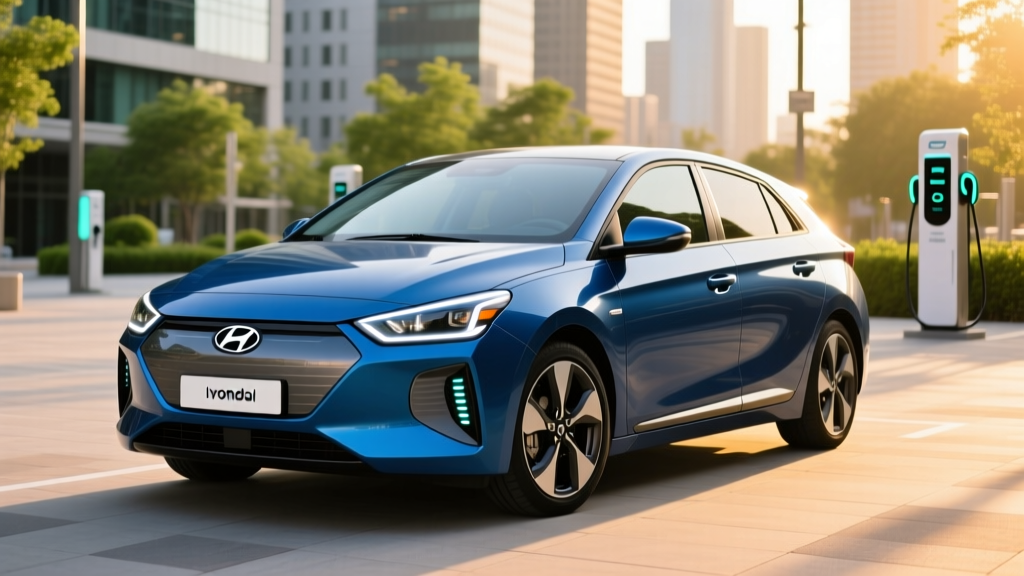
Hyundai's next move in the electrified compact segment is almost here. The automaker has confirmed that the Hyundai Ioniq 3 compact EV debuts globally on April 20, 2026, slotting below the Ioniq 5 and Ioniq 6 as a more affordable, city-friendly battery-electric vehicle built on the next iteration of Hyundai's Electric Global Modular Platform (E-GMP). As of this writing, the Ioniq 3 is an announced vehicle — not yet available for purchase — and all specifications below are preliminary, based on Hyundai's teaser disclosures, supply-chain reporting, and platform carryover data. Final EPA certification figures will arrive closer to the U.S. on-sale date, expected late 2026 as a 2027 model-year vehicle.
What follows is a data-driven preview of everything confirmed or highly probable about the Ioniq 3, with clear distinctions between official numbers and analyst estimates. We'll update this profile with certified EPA range, pricing, and tax-credit eligibility once Hyundai publishes them.
What the Hyundai Ioniq 3 Is — and Where It Fits
The Ioniq 3 is positioned as a subcompact-to-compact crossover EV, targeting the segment currently occupied by the Chevrolet Equinox EV, Volvo EX30, Kia EV3 (where available), and the upcoming next-generation Nissan Leaf. Hyundai has described it as a "global strategic EV" designed for dense urban markets in Europe, South Korea, and North America, with an emphasis on interior packaging efficiency — a hallmark of the E-GMP architecture's flat-floor, dedicated-EV layout.
Unlike the Kona Electric (which rides on a shared ICE/EV platform), the Ioniq 3 is expected to be EV-only from the ground up, which typically yields better cabin space utilization, a lower center of gravity, and more predictable thermal management. Hyundai has not confirmed whether the Ioniq 3 will use the current 400V/800V E-GMP architecture or a cost-optimized derivative.
Preliminary Specs: Range, Battery, and Efficiency
| Attribute | Estimated / Target | Confidence |
|---|---|---|
| EPA Est. Range (Standard Range) | ~230–250 mi | Estimated |
| EPA Est. Range (Long Range) | ~290–310 mi | Estimated |
| Battery Capacity (usable) | ~58 kWh (SR) / ~77 kWh (LR) | Estimated |
| Battery Chemistry | LFP (SR) / NMC (LR) expected | Probable |
| Efficiency | ~120–130 MPGe (combined est.) | Estimated |
| Drivetrain | RWD standard; AWD optional (LR) | Probable |
| Horsepower | ~168 hp (SR) / ~225 hp (LR RWD) | Estimated |
| 0–60 mph | ~7.5 sec (SR) / ~6.5 sec (LR RWD) | Estimated |
| Max DC Fast Charge | ~150–180 kW (peak) | Estimated |
| 10–80% DC Fast Charge | ~22–28 min (est.) | Estimated |
| Level 2 Home Charge Rate | ~10.9 kW (est.) | Estimated |
| Base MSRP (target) | ~$30,000–$33,000 (SR) | Target |
| Warranty (battery) | 10 yr / 100,000 mi (expected) | Probable |
Important context on chemistry: Hyundai has been publicly signaling a dual-chemistry strategy for its next-generation EVs — LFP (lithium iron phosphate) for cost-sensitive standard-range trims and NMC (nickel manganese cobalt) for long-range variants. LFP offers superior cycle life and lower cost but carries an energy-density penalty (roughly 10–15% less range per kilogram) and reduced cold-weather performance. NMC delivers higher energy density and better winter range retention at higher material cost.
Real-World Range Expectations
EPA estimate (Long Range, preliminary): ~290–310 miles
Real-world highway (70–75 mph, moderate temps): Expect ~240–270 miles. Compact crossovers in this class typically lose 12–18% of EPA range at sustained highway speeds due to aerodynamic drag.
Cold-weather impact (below 32°F): LFP variants may see 25–35% range reduction; NMC variants typically lose 15–25%. Battery preconditioning (if equipped) can mitigate fast-charge slowdown in cold weather but does not fully recover range.
Bottom line: Plan for ~220 miles of usable highway range in winter for the Long Range NMC variant, and somewhat less for the LFP Standard Range.
Charging: DC Fast, Level 2, and Connector Details
Charging speed remains one of the top concerns for EV buyers, and Hyundai's E-GMP platform has historically been a class leader. The Ioniq 5, for example, peaks at 240 kW on 800V architecture and charges 10–80% in approximately 18 minutes under ideal conditions. Whether the Ioniq 3 inherits full 800V capability or uses a cost-reduced 400V system is not yet confirmed.
| Charging Level | Power / Rate | Estimated Time or Miles Added |
|---|---|---|
| Level 1 (120V household) | ~1.4 kW | ~4–5 mi/hr |
| Level 2 (240V, 48A home charger) | ~10.9 kW | ~35–40 mi/hr; full charge ~7–8 hr (LR) |
| DC Fast Charge (peak) | ~150–180 kW | 10–80% in ~22–28 min (est.) |
| DC Fast Charge (sustained avg.) | ~100–120 kW | Expect taper above 80% SoC |
Charging-curve reality check: Peak kW figures are never sustained for the full session. A typical DC fast-charge curve peaks early (around 20–40% SoC) and progressively tapers as the battery fills, especially above 80%. Hyundai's 800V architecture — if carried over — would maintain higher sustained rates deeper into the charge session compared to 400V competitors, which is where real-world time savings materialize.
Connector: All new Hyundai EVs sold in North America from 2025 forward use the NACS (North American Charging Standard) connector natively, giving Ioniq 3 buyers direct access to the Tesla Supercharger network without an adapter. This is a significant advantage over CCS1-only vehicles, which rely on Electrify America, EVgo, and ChargePoint networks with variable reliability.
Performance and Driving Dynamics
The Ioniq 3 is not positioned as a performance EV. Its target is efficiency, affordability, and daily-driver comfort. Based on Hyundai's recent powertrain deployments (the Kona Electric delivers 201 hp from a single front motor; the Ioniq 5 Standard Range offers 168 hp RWD), we expect:
- Standard Range (RWD): ~168 hp, 0–60 mph in approximately 7.5 seconds. Adequate for highway merging and city driving; not quick by EV standards.
- Long Range (RWD): ~225 hp, 0–60 mph in approximately 6.5 seconds. Brisk and confident for a compact crossover.
- AWD variant (if offered): Dual-motor, potentially ~300+ hp, 0–60 in the low 5-second range. Not confirmed for the U.S. market at launch.
Expect regenerative braking with adjustable levels via steering-wheel paddles (a Hyundai EV staple) and a heat pump for cabin heating efficiency — critical for preserving range in cold climates. Hyundai's i-Pedal one-pedal driving mode should carry over.
Interior, Cargo, and Technology
Hyundai has previewed a "roomier than expected" cabin enabled by the E-GMP's flat floor and short overhangs. Based on the segment and Hyundai's recent design language:
- Passenger space: Expect ~40–42 inches of front legroom and ~36–38 inches rear legroom — competitive with the Equinox EV and superior to the Volvo EX30's notoriously tight rear seat.
- Cargo volume: Estimated ~23–26 cu ft behind the rear seats, ~55–60 cu ft with seats folded. A front trunk (frunk) is likely on RWD variants but may be reduced or absent on AWD.
- Infotainment: Expect a 12.3-inch dual-screen setup or a single curved panoramic display running Hyundai's latest ccNC (Connected Car Navigation Cockpit) software with wireless Apple CarPlay and Android Auto, OTA updates, and digital key support.
- Driver assistance: Hyundai SmartSense suite including Highway Driving Assist 2 (HDA2 — SAE Level 2, requiring driver supervision), forward collision-avoidance assist, blind-spot monitoring, rear cross-traffic alert, and lane-keeping assist. No Level 3 or Level 4 autonomy is expected.
Driver-Assist Limitations
Hyundai's Highway Driving Assist 2 and any available semi-autonomous features are SAE Level 2 systems. The driver must remain fully engaged, hands on or near the wheel, and eyes on the road at all times. These systems do not make the vehicle self-driving. For reference on automation levels, see SAE International's J3016 framework.
Pricing, Trims, and Federal Tax Credit Eligibility
Hyundai has targeted an aggressive entry price for the Ioniq 3, with early reporting suggesting a base MSRP in the $30,000–$33,000 range for the Standard Range trim, with Long Range and higher-equipped variants climbing to $36,000–$42,000. Final U.S. pricing will be announced closer to the on-sale date.
| Trim (Est.) | Base MSRP | Est. After §30D Credit | Credit Eligibility |
|---|---|---|---|
| SE Standard Range | ~$30,000–$32,000 | ~$22,500–$24,500 | Pending sourcing verification |
| SEL Long Range | ~$36,000–$38,000 | ~$28,500–$30,500 | Pending sourcing verification |
| Limited Long Range AWD | ~$40,000–$42,000 | ~$32,500–$34,500 | Pending sourcing verification |
Federal tax credit (§30D) caveats — critical reading: The up-to-$7,500 clean vehicle credit is subject to multiple eligibility requirements that change periodically:
- MSRP cap: Vans, SUVs, and pickup trucks are capped at $80,000; sedans and other vehicles at $55,000. The Ioniq 3's classification (SUV vs. car) will determine which cap applies — likely the $80,000 SUV cap if Hyundai designates it as such.
- Buyer income cap: Modified AGI must not exceed $150,000 (single), $225,000 (head of household), or $300,000 (joint filers).
- Battery component sourcing: A percentage of battery components must be manufactured or assembled in North America (thresholds increase annually through 2029).
- Critical minerals sourcing: A percentage of critical minerals must be sourced from the U.S. or a free-trade-agreement partner (thresholds increase annually).
- Foreign entity of concern (FEOC) exclusion: Vehicles with battery components or critical minerals from a FEOC (primarily China, Russia, North Korea, Iran) are disqualified.
- Point-of-sale transfer: Buyers may elect to transfer the credit to the dealer at purchase, reducing the upfront price — subject to IRS registration requirements.
Key uncertainty: Hyundai manufactures many of its EVs at the Hyundai Motor Group Metaplant America (HMGMA) in Georgia, which satisfies North American final assembly. However, battery cell sourcing (SK On, with operations in Georgia) and critical-mineral supply chains must meet annual thresholds. We cannot confirm Ioniq 3 credit eligibility until Hyundai publishes its IRS-compliant sourcing documentation. Consult a tax professional before relying on the credit in your purchase decision.
Warranty and Long-Term Ownership
Hyundai's EV warranty has been a competitive advantage. Based on current Hyundai EV coverage:
- Battery: 10 years / 100,000 miles (expected), with a capacity-retention threshold typically around 70% of original capacity. If the battery degrades below this threshold within the warranty period, Hyundai will repair or replace it.
- Powertrain: 10 years / 100,000 miles (expected).
- New vehicle limited: 5 years / 60,000 miles.
- Roadside assistance: 5 years / unlimited miles.
Hyundai's 10-year battery warranty is among the best in the industry and a meaningful differentiator against competitors offering 8 years / 100,000 miles (the federal minimum for EV batteries). For context, fueleconomy.gov maintains a database of EV efficiency and tax-credit data once EPA certification is complete.
Who the Hyundai Ioniq 3 Is For — and Who Should Look Elsewhere
Choose the Ioniq 3 if:
- You want a compact EV with a sub-$35,000 starting price and strong warranty coverage.
- Your daily commute is under 60 miles round-trip and you have home Level 2 charging.
- You value NACS connector access to the Supercharger network without adapters.
- You prioritize interior space efficiency and modern infotainment over outright performance.
- You want a dedicated EV platform (not a converted gas car) at an accessible price point.
Look elsewhere if:
- You need 300+ miles of real-world highway range — consider the Ioniq 5 Long Range or Tesla Model Y.
- You frequently tow — the Ioniq 3 is not expected to offer significant towing capacity.
- You need three rows of seating or maximum cargo volume.
- You live in a region with no home charging access and limited public DC fast-charging infrastructure.
- You need a vehicle available now — the Ioniq 3 won't reach U.S. dealers until late 2026 at the earliest.
How It Compares: Ioniq 3 vs. Key Rivals
| Attribute | Hyundai Ioniq 3 (Est.) | Chevrolet Equinox EV | Volvo EX30 | Kia EV4 (Est.) |
|---|---|---|---|---|
| EPA Range (best) | ~290–310 mi | 319 mi | 261 mi | ~280–300 mi |
| Base MSRP | ~$30,000–$33,000 | ~$33,000 | ~$36,000 | ~$30,000–$32,000 |
| Max DC Charge | ~150–180 kW | ~150 kW | 153 kW | ~150–180 kW |
| Connector (US) | NACS | NACS (2025+) | NACS (2025+) | NACS |
| Battery Warranty | 10 yr / 100k mi (est.) | 8 yr / 100k mi | 8 yr / 100k mi | 10 yr / 100k mi |
| Platform | Dedicated EV (E-GMP) | Dedicated EV (Ultium) | Dedicated EV (SEA) | Dedicated EV (E-GMP) |
Pros, Cons, and Final Assessment
Pros
- Targeted sub-$33K entry price undercuts most competitors
- NACS connector = native Supercharger access
- Dedicated EV platform maximizes interior space
- Expected 10-year battery warranty (class-leading)
- Dual LFP/NMC chemistry options for budget vs. range buyers
- Hyundai's proven thermal management and heat pump
Cons
- Not available until late 2026 — long wait for U.S. buyers
- DC fast-charge speed may trail Ioniq 5's 800V benchmark
- LFP Standard Range variant will suffer notable cold-weather range loss
- Tax credit eligibility unconfirmed pending battery-sourcing details
- AWD availability and towing capacity not yet confirmed
- Real-world range and pricing remain estimates until EPA certification
Bottom line: If the Hyundai Ioniq 3 delivers on its target pricing and range figures, it could become one of the most compelling affordable EVs on the market when it arrives. The combination of NACS connectivity, a dedicated EV platform, dual-chemistry battery options, and Hyundai's industry-leading warranty positions it well against the Equinox EV and EX30. However, buyers who need a vehicle now, or who require confirmed tax-credit eligibility for budget planning, should wait for official EPA and IRS documentation before committing.
Frequently Asked Questions
What is the real-world range of the Hyundai Ioniq 3?
Based on preliminary estimates, the Long Range variant should deliver approximately 290–310 miles EPA. In real-world highway driving at 70–75 mph, expect roughly 240–270 miles. In cold weather (below 32°F), plan for 200–230 miles on the NMC Long Range variant and less on the LFP Standard Range.
How fast does the Ioniq 3 charge at home and on the road?
Estimated Level 2 home charging (240V, 48A) delivers approximately 35–40 miles of range per hour, with a full charge taking 7–8 hours for the Long Range battery. DC fast charging is estimated at 150–180 kW peak, achieving 10–80% in roughly 22–28 minutes under ideal conditions.
How much will the Ioniq 3 cost after federal tax credits?
If the Standard Range trim starts around $30,000–$32,000 and qualifies for the full $7,500 §30D credit, the effective price could drop to approximately $22,500–$24,500. However, credit eligibility depends on battery component sourcing, critical mineral sourcing, buyer income, and MSRP caps — none of which have been confirmed for the Ioniq 3 as of this writing.
Does the Hyundai Ioniq 3 qualify for the $7,500 federal EV tax credit?
Not yet confirmed. The Ioniq 3 is expected to be assembled at Hyundai's Georgia plant (satisfying North American final assembly), but battery cell sourcing and critical mineral supply chains must meet IRS thresholds under §30D. Hyundai will publish a compliance letter once the vehicle is certified. Consult irs.gov for current rules and a tax professional for personal eligibility.
Is the Ioniq 3 worth buying vs. the Chevrolet Equinox EV or Volvo EX30?
On paper, the Ioniq 3's combination of lower entry price, NACS connectivity, 10-year battery warranty, and dedicated EV platform gives it strong competitive positioning. The Equinox EV currently offers more confirmed EPA range (319 mi) and is available now. The EX30 is more premium but pricier and offers less range. If you can wait for late 2026 delivery and the Ioniq 3's specs hold up in EPA testing, it's likely to be a top contender in the affordable compact EV segment.
Can I reserve or order the Hyundai Ioniq 3 now?
No. As of April 2026, the Ioniq 3 has been announced for global debut on April 20 but is not yet available for reservation or purchase in the United States. U.S. on-sale timing is expected in late 2026 as a 2027 model-year vehicle. Monitor Hyundai's official U.S. newsroom for reservation announcements.
What battery chemistry does the Ioniq 3 use?
Hyundai is expected to offer dual chemistry options: LFP (lithium iron phosphate) for the Standard Range trim — lower cost, longer cycle life, but reduced energy density and worse cold-weather performance — and NMC (nickel manganese cobalt) for the Long Range trim, offering higher energy density and better winter range retention at a higher cost.