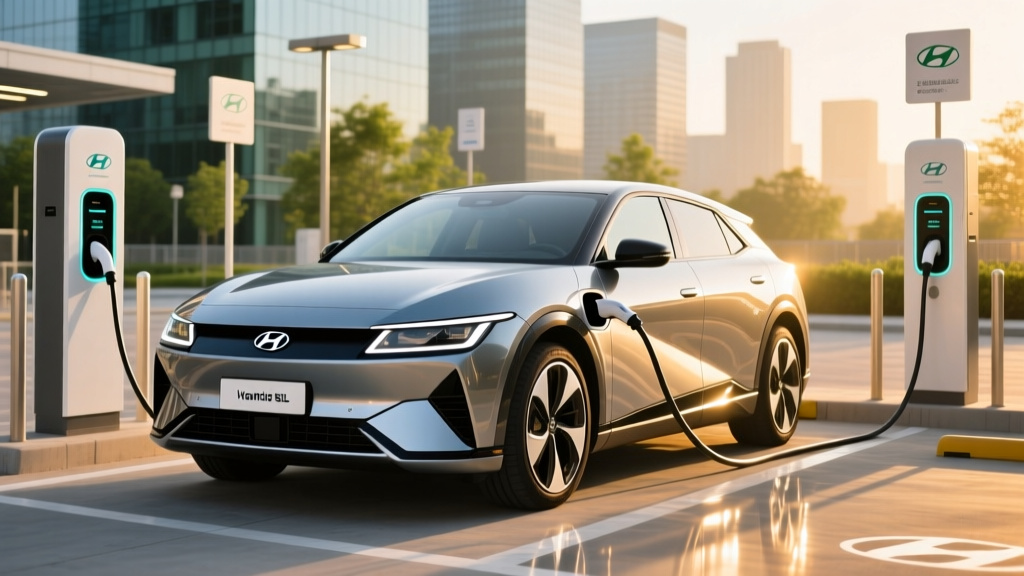
If you've been searching for Hyundai Ioniq 5 SEL lease deals, you're zeroing in on one of the best-value trims in the midsize electric crossover segment. The SEL sits above the base SE but below the Limited, offering the 84 kWh usable long-range battery, an 800V architecture for class-leading DC fast charging, and a well-equipped interior — all at a monthly payment that undercuts many gas-powered SUVs once federal incentives are applied.
This review covers the 2026 Hyundai Ioniq 5 SEL specifically: its real-world range, charging speeds, lease economics, tax-credit eligibility, and how it stacks up against the Tesla Model Y, Ford Mustang Mach-E, and Kia EV6. Every figure below reflects the latest 2026 model-year data.
2026 Ioniq 5 SEL: The Spec Sheet That Matters
| Spec | Value |
|---|---|
| Base MSRP (SEL RWD) | $47,650 |
| SEL AWD MSRP | $51,150 |
| EPA Range (RWD) | 303 miles |
| EPA Range (AWD) | 270 miles |
| Usable Battery Capacity | 84 kWh (NMC lithium-ion) |
| Peak DC Fast Charge | 238 kW (800V architecture) |
| 10–80% DC Charge Time | ~18 minutes (optimal conditions) |
| Level 2 Home Charge Rate | 10.9 kW (~35 mi/hr) |
| Motor Output (RWD) | 168 kW / 225 hp, 258 lb-ft torque |
| Motor Output (AWD) | 239 kW / 320 hp, 446 lb-ft torque |
| 0–60 mph (RWD) | 7.0 seconds |
| 0–60 mph (AWD) | 4.5 seconds |
| EPA Efficiency (RWD) | 117 MPGe combined / 29 kWh/100mi |
| EPA Efficiency (AWD) | 101 MPGe combined / 33 kWh/100mi |
| Drivetrain | RWD standard; AWD optional (dual motor) |
| Battery Warranty | 10 years / 100,000 miles |
| Vehicle Warranty | 5 years / 60,000 miles bumper-to-bumper |
Sources: EPA fueleconomy.gov, Hyundai Newsroom.
Real-World Range: What to Actually Expect
EPA estimate: 303 miles
Highway driving (70–80 mph, moderate temps): ~245–265 miles
Cold weather (below 32°F, mixed driving): ~210–235 miles
City/regenerative-heavy driving: ~280–300 miles
The 84 kWh NMC battery delivers its full EPA-rated 303 miles in the RWD SEL under ideal conditions — moderate temperatures, sub-60 mph speeds, and liberal use of regenerative braking. But real-world physics tells a different story.
On highway road trips at 75 mph with climate control running, expect roughly 245–265 miles before the low-battery warning appears. The Ioniq 5's boxy crossover shape creates more aerodynamic drag than a sedan, so efficiency drops noticeably above 65 mph. In winter conditions — particularly sustained sub-freezing temperatures — the NMC pack loses 20–30% of usable capacity. Hyundai's standard heat pump (included on all 2026 trims) mitigates some of this loss compared to resistive cabin heating, but cold-weather range still settles around 210–235 miles for mixed driving.
The AWD SEL sacrifices range for traction: its EPA rating is 270 miles, and real-world highway figures land closer to 220–240 miles in fair weather. If your daily commute is under 50 miles round-trip, either drivetrain provides ample buffer. For frequent road-trippers, the RWD's extra 33 EPA miles matters.
Charging Speed: 800V Architecture Makes a Difference
The Ioniq 5's E-GMP platform uses an 800V electrical architecture — still uncommon in this price bracket — which enables DC fast-charging speeds that rival vehicles costing twice as much. Here's how charging breaks down across all three levels:
| Charging Level | Power (kW) | Miles Added per Hour | Notes |
|---|---|---|---|
| Level 1 (120V household) | ~1.4 kW | ~5 mi/hr | Emergency/trickle only; ~60 hrs for full charge |
| Level 2 (240V home, 48A) | 10.9 kW | ~35 mi/hr | Full charge overnight (~8.5 hrs from 10%) |
| DC Fast Charge (350 kW station) | Peak 238 kW | ~700+ mi/hr (peak) | 10–80% in ~18 min; tapers above 80% |
Understanding the charge curve: The 238 kW peak rate holds roughly from 10% to 55% state of charge, then progressively tapers. From 55–80%, average speed drops to around 120–150 kW. Above 80%, charging slows dramatically to protect the NMC cells — expect 80–100% to take an additional 25+ minutes. This is why we recommend charging to 80% on road trips and moving on; the time penalty for that last 20% is rarely worth it.
For home charging, a Level 2 wallbox on a 60-amp circuit (48 amps continuous) delivers 10.9 kW — enough to replenish a nearly empty battery overnight. Most Ioniq 5 owners report daily top-ups of 20–30% taking under two hours, which is how most EV driving actually works. Installation of a hardwired Level 2 charger typically runs $800–$2,000 depending on panel capacity and conduit length; budget toward the higher end if your electrical panel needs a 200-amp upgrade.
The Ioniq 5 uses the NACS (Tesla-style) connector on all 2026 models sold in the U.S., following Hyundai's transition from CCS1. This grants access to Tesla Superchargers with a NACS-equipped vehicle, significantly expanding the public charging network available to owners.
Lease Pricing, Tax Credits, and Total Monthly Cost
The 2026 Hyundai Ioniq 5 SEL starts at $47,650 for the RWD and $51,150 for the AWD. The SEL trim includes heated front seats, a power liftgate, Digital Key 2, a 12.3-inch dual-screen infotainment setup, and Hyundai's full Highway Driving Assist 2 (HDA2) suite — making it the value sweet spot over the more spartan SE or the $56,000+ Limited.
Federal Tax Credit Eligibility (IRS §30D)
The Ioniq 5 SEL may qualify for up to $7,500 in federal EV tax credits, but eligibility depends on several factors that change periodically. As of 2026, the key rules under IRS §30D include:
- MSRP cap: SUVs/crossovers must be under $80,000 — the Ioniq 5 SEL qualifies.
- Buyer income cap: Modified AGI must not exceed $150,000 (single), $225,000 (head of household), or $300,000 (joint filers).
- Battery sourcing requirements: Critical minerals and battery components must meet escalating domestic/free-trade-partner thresholds. The Ioniq 5's eligibility for the full $7,500 vs. a partial $3,750 depends on the current-year sourcing determination — check Hyundai's official incentive page or consult a tax professional before relying on a specific credit amount.
- Point-of-sale transfer: As of 2024, you can transfer the credit to the dealer at purchase, reducing the drive-off price immediately. This applies to purchases; lease structures handle the credit differently (see below).
How Leasing Changes the Credit Equation
When you lease an EV, the federal tax credit technically goes to the lessor (the financing entity), not to you. However, most Hyundai Motor Finance lease programs pass the credit's value through as a capitalized cost reduction — effectively lowering your monthly payment by the credit amount amortized over the lease term.
Here's what realistic Ioniq 5 SEL lease economics look like in 2026:
| Scenario | MSRP | Cap Cost Reduction | Est. Monthly Payment |
|---|---|---|---|
| SEL RWD — no credit applied | $47,650 | $2,500 (due at signing) | ~$479/mo |
| SEL RWD — $7,500 credit passed through | $47,650 | $10,000 (credit + due at signing) | ~$310/mo |
| SEL AWD — $7,500 credit passed through | $51,150 | $10,000 | ~$365/mo |
Note: Actual lease payments vary by region, dealer markup, money factor, residual value, and current Hyundai incentive programs. Always request the full lease disclosure (cap cost, money factor, residual, fees) before signing.
A key advantage of leasing the Ioniq 5 over purchasing: you sidestep long-term battery degradation concerns, and the 36-month term aligns with the bumper-to-bumper warranty period. The trade-off is that you build no equity and must return or buy out the vehicle at term end.
Interior, Cargo, and Technology
The Ioniq 5's 118.1-inch wheelbase — longer than a Toyota RAV4's — translates into genuinely spacious rear-seat room. Rear legroom measures 39.4 inches, enough for adults on long trips without knee contact. Front legroom is 41.7 inches.
Cargo volume behind the rear seats is 27.2 cubic feet, expanding to 59.3 cubic feet with the 60/40 split rear seats folded. The front trunk (frunk) adds 2.1 cubic feet on AWD models and 4.1 cubic feet on RWD — enough for a charging cable bag and small soft duffel.
The SEL trim's tech suite includes:
- Dual 12.3-inch displays (instrument cluster + infotainment) with wireless Apple CarPlay and Android Auto
- Hyundai Digital Key 2 (phone-as-key via NFC/UWB)
- Highway Driving Assist 2 (HDA2) — adaptive cruise with lane centering, automatic lane changes on highways
- Remote Smart Parking Assist (summon-style tight-space maneuvering)
- Vehicle-to-Load (V2L): an interior 120V outlet and exterior adapter that can output up to 3.6 kW — enough to power a laptop, small appliances, or trickle-charge another EV
- Over-the-air (OTA) software updates for powertrain calibration, infotainment, and ADAS features
HDA2 is an SAE Level 2 driver-assistance system. It handles steering, acceleration, and braking on marked highways but requires continuous driver attention and hands-on-wheel monitoring. It is not self-driving.
Highway Driving Assist 2 requires the driver to remain fully engaged. It does not handle construction zones, unmapped roads, severe weather, or complex urban intersections. Hands-off-wheel alerts trigger within 15–30 seconds. This is not autonomous driving — it is advanced cruise control with lane-keeping.
Pros, Cons, and Who Should Lease the Ioniq 5 SEL
✓ Pros
- Class-leading 238 kW DC fast charging (10–80% in ~18 min)
- 303-mile EPA range on RWD eliminates daily range anxiety
- NACS connector opens Tesla Supercharger network access
- Spacious rear seat and flat floor from E-GMP platform
- V2L capability adds utility for camping, power outages, tailgating
- 10-year/100,000-mile battery warranty exceeds most competitors
- Heat pump standard on all trims (improves cold-weather range)
✗ Cons
- No rear wiper (a common complaint in rain/snow)
- Frunk is small (2.1–4.1 cu ft) compared to some competitors
- Infotainment can lag; no physical volume knob (touch-sensitive)
- AWD range drops to 270 EPA miles — meaningful on road trips
- Towing capacity limited to 1,650 lbs — not a hauler
- Dealer markups still common in high-demand markets
- Tax credit eligibility can shift with battery sourcing rule updates
Who the Ioniq 5 SEL Suits Best
Commuters: If your round-trip commute is under 80 miles, the SEL RWD handles a full work week between Level 2 home charges. HDA2 reduces highway fatigue significantly.
Small families: Two car seats fit easily in the rear with room for a third passenger. The 27.2 cu ft cargo area handles strollers and groceries simultaneously.
Road-trip enthusiasts: The 18-minute 10–80% charge time at 350 kW stations makes highway travel practical — you'll spend less time charging than eating at a rest stop. Plan around Electrify America or Tesla Supercharger corridors for best results.
Not ideal for: Heavy tower (1,650-lb limit), those needing a third row, or buyers in areas with exclusively Level 1 charging access (120V trickle charging takes 60+ hours).
How the Ioniq 5 SEL Compares to Key Rivals
| Spec | Hyundai Ioniq 5 SEL RWD | Tesla Model Y LR RWD | Ford Mach-E Premium RWD | Kia EV6 Wind RWD |
|---|---|---|---|---|
| Base MSRP | $47,650 | $46,630 | $48,995 | $48,500 |
| EPA Range | 303 mi | 320 mi | 290 mi | 310 mi |
| Peak DC Charge | 238 kW | 250 kW | 150 kW | 238 kW |
| 10–80% Time | ~18 min | ~22 min | ~36 min | ~18 min |
| Battery Warranty | 10 yr / 100K mi | 8 yr / 120K mi | 8 yr / 100K mi | 10 yr / 100K mi |
| Rear Legroom | 39.4 in | 41.6 in | 38.9 in | 39.0 in |
| V2L Capability | Yes (3.6 kW) | No | No | Yes (3.6 kW) |
The Ioniq 5 SEL and its corporate cousin, the Kia EV6 Wind, share the E-GMP platform, battery, and powertrain — so the choice often comes down to styling preference and dealer proximity. Against the Model Y, the Ioniq 5 offers a longer battery warranty and V2L but trails slightly on EPA range and Supercharger-native access (though NACS adoption narrows that gap). The Mach-E's slower 150 kW peak charging is a meaningful disadvantage for road-trippers.
- Choose the Ioniq 5 SEL if: You prioritize fast DC charging, want V2L utility, value the 10-year battery warranty, and prefer Hyundai's dealer/service network.
- Choose the Tesla Model Y if: Maximum range per dollar and seamless Supercharger integration matter most, and you're comfortable with Tesla's service model.
- Choose the Kia EV6 Wind if: You prefer its sportier styling and can find better local dealer incentives — mechanically, it's the same vehicle.
- Choose the Mach-E Premium if: You prefer Ford's dealer network and BlueCruise hands-free driving on approved highways, and road-trip charging speed is less critical.
Frequently Asked Questions
What is the real-world range of the Hyundai Ioniq 5 SEL?
The RWD SEL is EPA-rated at 303 miles. In real-world highway driving at 70–80 mph, expect 245–265 miles. In cold weather (below 32°F), range drops to roughly 210–235 miles for mixed driving. The AWD SEL rates at 270 EPA miles with proportionally lower real-world figures.
How fast does the Ioniq 5 SEL charge?
On a 350 kW DC fast charger, the Ioniq 5 SEL peaks at 238 kW and charges from 10–80% in approximately 18 minutes under optimal conditions (warm battery, low state of charge at start). At home on a Level 2 wallbox (10.9 kW), a full charge takes about 8.5 hours — easily overnight.
Does the Ioniq 5 SEL qualify for the $7,500 federal EV tax credit?
The Ioniq 5 SEL's MSRP falls well under the $80,000 SUV cap, so it clears that hurdle. Whether you receive the full $7,500, a partial $3,750, or no credit depends on your income, the current battery-sourcing/critical-minerals requirements, and whether you purchase or lease. Under IRS §30D rules, the credit can be transferred to the dealer at purchase for a point-of-sale price reduction. For leases, the lessor claims the credit but typically passes value through as a cap-cost reduction. Always verify current eligibility with your dealer and a tax professional.
Is it worth leasing vs. buying the Ioniq 5 SEL?
Leasing makes sense if you want the lowest monthly payment (lease credit pass-through often beats purchase incentives), prefer to stay under warranty the entire ownership period, and don't mind returning the car after 36 months. Buying makes more sense if you plan to keep the vehicle 5+ years, want to build equity, or drive high annual miles (lease overage penalties typically run $0.20–$0.25/mile).
What are the biggest drawbacks of the Ioniq 5 SEL?
The most common owner complaints: no rear windshield wiper, a small frunk, touch-sensitive climate controls that lack a physical volume knob, and limited 1,650-lb towing capacity. The infotainment system, while feature-rich, occasionally lags compared to Tesla's or BMW's interfaces.
Does the 2026 Ioniq 5 use NACS or CCS?
All 2026 Hyundai Ioniq 5 models sold in the U.S. use the NACS (Tesla-style) charge port natively. This means direct access to Tesla Supercharger stalls without an adapter, in addition to Electrify America, EVgo, and other networks that have deployed NACS connectors.
Specifications and pricing reflect 2026 model-year data available at time of publication. Federal tax credit rules under IRS §30D are subject to change. Always confirm current eligibility at irs.gov and verify lease terms with your local Hyundai dealer. Range and charging figures may vary based on temperature, driving style, and station conditions.