What Is an ICCU and Why Does It Fail?
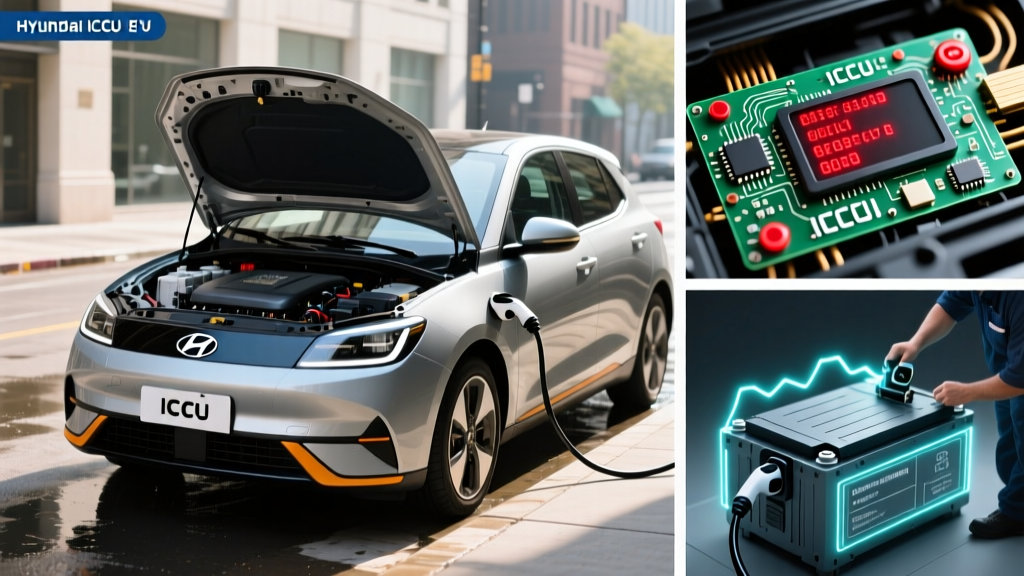
The Integrated Charging Control Unit (ICCU) is a critical component in Hyundai, Kia, and Genesis electric vehicles that manages both AC charging (Level 1/Level 2) and DC fast charging. When the ICCU fails, your EV cannot charge at all — not from a home outlet, not from a public fast charger, not from any source. Symptoms include complete charging refusal, dashboard error messages like "Check Electric Vehicle System," and in some cases, the vehicle becoming stranded with a depleted battery.
Out-of-warranty replacement costs typically run $1,500 to $3,000 including parts and labor, though Hyundai has issued extended warranty coverage and recalls for affected 2022-2024 Ioniq 5 models. If you're experiencing ICCU issues, contact your dealer immediately to check recall eligibility before pursuing paid repairs.
ICCU Failure Symptoms: How to Spot It Early
ICCU failures rarely happen without warning. Most owners report a progression of symptoms before complete charging system failure:
- Charging refusal: The vehicle won't accept charge from any source — Level 1 (120V), Level 2 (240V), or DC fast charging
- Dashboard warnings: "Check Electric Vehicle System" or "Charging System Malfunction" messages appear
- Intermittent charging: The car charges sometimes but not consistently, or starts charging then stops after a few minutes
- Reduced charging speed: DC fast charging peaks at much lower kW than normal (e.g., 50 kW instead of 200+ kW on an Ioniq 5)
- 12V battery drain: The ICCU also manages the DC-DC converter that maintains the 12V auxiliary battery; failure can leave you with a dead 12V even when the main traction battery has charge
If you notice any of these symptoms, don't wait. ICCU issues can strand you, and early diagnosis may catch the problem while you're still covered under warranty or recall.
Which Models Are Affected?
The ICCU design is shared across Hyundai Motor Group's E-GMP platform vehicles. Affected models include:
| Model | Years | Known Issues |
|---|---|---|
| Hyundai Ioniq 5 | 2022-2024 | Most documented ICCU failures; subject to NHTSA recall |
| Hyundai Ioniq 6 | 2023-2024 | Fewer reports but same ICCU design |
| Kia EV6 | 2022-2024 | Similar ICCU architecture; some failure reports |
| Genesis GV60 | 2023-2024 | Lower volume but same platform |
| Genesis Electrified GV70 | 2023-2024 | Shares ICCU components |
The 2025-2026 model years use updated ICCU hardware and firmware, though long-term reliability data is still limited. If you're buying a used 2022-2024 E-GMP vehicle, verify ICCU replacement history and remaining warranty coverage.
Real Repair Costs and Warranty Coverage
ICCU Replacement Cost Breakdown (2026)
| Scenario | Cost to Owner | Notes |
|---|---|---|
| Under original 5-year/60,000-mile warranty | $0 | Full coverage if failure occurs within warranty period |
| Under extended warranty/recall | $0 | Hyundai extended ICCU coverage to 8 years/100,000 miles for affected 2022-2024 Ioniq 5 models |
| Out of warranty (dealer repair) | $1,500-$3,000 | Parts: $800-$1,500; Labor: $700-$1,500 (3-5 hours) |
| Independent EV specialist | $1,200-$2,200 | Lower labor rates, but parts sourcing can be difficult |
| Used/salvage ICCU | $600-$1,200 | Risky — may have same failure mode; limited or no warranty |
Hyundai's extended warranty coverage for the ICCU is significant. According to NHTSA recall documentation, the company acknowledged that certain 2022-2024 Ioniq 5 vehicles may experience ICCU failure due to software calibration issues that can damage internal components. The extended coverage applies even if your original 5-year warranty has expired, as long as you're within 8 years/100,000 miles of the original in-service date.
Action step: Before paying for an ICCU repair, call Hyundai customer service (1-800-633-5151) with your VIN to confirm recall or extended warranty eligibility. Many owners have successfully gotten out-of-warranty repairs covered after escalation.
ICCU vs. Onboard Charger: What's the Difference?
Older EVs (and some current models from other manufacturers) separate the onboard charger (AC-to-DC conversion) from the DC fast charging contactors. The ICCU combines these functions into one unit, which reduces weight and complexity but creates a single point of failure.
In a traditional setup:
- Onboard charger: Converts AC power from Level 1/Level 2 sources to DC for the battery (typically 7-11 kW)
- DC fast charging: Bypasses the onboard charger entirely; the car's battery management system (BMS) communicates directly with the DC charger
In the E-GMP ICCU design:
- ICCU handles both: AC charging conversion AND DC fast charging management
- Integrated DC-DC converter: Also maintains the 12V auxiliary battery
- Single failure point: ICCU failure disables ALL charging methods
This integration is why ICCU failures are so disruptive — you lose every charging option simultaneously, not just one charging mode.
Prevention and Maintenance: Can You Avoid ICCU Failure?
While some ICCU failures appear to be manufacturing defects, certain practices may reduce risk:
What May Help:
- Firmware updates: Hyundai has released software updates that adjust ICCU operating parameters. Ensure your vehicle has the latest software — ask your dealer during service visits.
- Avoid extreme heat exposure: The ICCU generates heat during charging; parking in shade or a garage when possible reduces thermal stress.
- Don't ignore warning signs: Intermittent charging issues or reduced charging speeds may indicate early ICCU degradation. Address them before complete failure.
What Doesn't Matter:
- Charging speed: There's no evidence that frequent DC fast charging accelerates ICCU failure. The issue appears to be component quality and software calibration, not usage patterns.
- Third-party chargers: Using Electrify America, EVgo, or other networks doesn't increase ICCU risk. The ICCU manages the vehicle-side charging protocol regardless of the charger brand.
EV vs. Gas: How ICCU Issues Affect the Ownership Equation
5-Year Ownership Cost Comparison: Ioniq 5 vs. Tucson Gas (2026)
| Cost Category | Hyundai Ioniq 5 SEL ($47,000 MSRP) | Hyundai Tucson SEL Gas ($33,000 MSRP) |
|---|---|---|
| Purchase price (after $7,500 federal credit if eligible) | $39,500 | $33,000 |
| Fuel/charging (15,000 miles/year × 5 years) | $3,200 (home charging at $0.13/kWh) | $8,500 (28 MPG combined at $3.50/gallon) |
| Maintenance (5 years) | $800 (cabin filter, tire rotation, fluid checks) | $2,500 (oil changes, filters, spark plugs) |
| ICCU repair risk (out-of-warranty) | $0-$3,000 (one-time potential cost) | $0 |
| Total 5-year cost | $43,500-$46,500 | $44,000 |
Sources: fueleconomy.gov, manufacturer MSRP, IRS §30D tax credit rules. Actual costs vary by location, electricity rates, and tax credit eligibility.
The ICCU repair risk is real but relatively small in the context of total ownership costs. Even if you face a $3,000 out-of-warranty repair, the Ioniq 5's fuel and maintenance savings largely offset it over five years. The bigger concern is inconvenience and stranding risk — an ICCU failure can leave you unable to charge at all, potentially requiring a tow.
For comparison, gas vehicles have their own expensive single-point failures: transmission replacement ($3,000-$7,000), engine issues ($4,000-$10,000), or fuel pump failure ($800-$1,500). The ICCU is the EV equivalent — a costly but relatively rare component failure.
Decision Framework: Should You Buy, Keep, or Avoid E-GMP Vehicles?
If you're considering a used 2022-2024 Ioniq 5, EV6, or Ioniq 6:
- YES, buy it if: The ICCU has already been replaced under warranty/recall (get documentation), or the vehicle is still within the 8-year/100,000-mile extended ICCU coverage period, AND the price reflects typical used EV depreciation (30-40% off MSRP for 2-3 year old examples).
- MAYBE, with caution if: The ICCU hasn't been replaced but the vehicle is within extended warranty coverage. Verify coverage with Hyundai/Kia before purchase, and budget time for potential dealer visits.
- NO, avoid if: The vehicle is outside the 8-year/100,000-mile window with no ICCU replacement history, unless the seller offers a significant discount ($3,000+ off comparable listings) to account for your repair risk.
If you already own an affected vehicle:
- Check recall status immediately: Visit nhtsa.gov/recalls and enter your VIN. If your vehicle is included, schedule the software update or ICCU replacement with your dealer.
- Don't ignore symptoms: If you experience charging issues, address them while you're still within extended warranty coverage. Waiting could push you into out-of-warranty territory.
- Keep records: Document all charging-related service visits. If you later experience ICCU failure outside warranty, this history may help with goodwill coverage requests.
If you're buying new (2025-2026 models):
- Lower risk: Updated ICCU hardware and firmware in 2025-2026 models appear to have addressed the early failure mode, though long-term data isn't available yet.
- Standard warranty applies: 5-year/60,000-mile basic warranty, 10-year/100,000-mile powertrain warranty (which includes the ICCU and high-voltage components).
Frequently Asked Questions
Can I drive the car if the ICCU has failed?
Technically yes, if the main traction battery still has charge. The ICCU failure doesn't disable the drivetrain — it only prevents charging. But you're essentially driving on borrowed time with no way to recharge. Most owners report the vehicle going into a reduced-power "limp mode" after ICCU failure, limiting speed and range. Don't attempt to drive long distances; tow the vehicle to a dealer instead.
Will a bad ICCU damage my main battery?
No. The ICCU failure doesn't affect the high-voltage battery itself. The battery management system (BMS) is separate and will protect the battery from damage. However, if the ICCU's integrated DC-DC converter fails, your 12V auxiliary battery may drain, which can cause starting and accessory issues even if the main battery is charged.
How long does ICCU replacement take?
Typically 3-5 hours of labor, but dealer parts availability can extend the timeline. If your dealer has the part in stock, same-day service is possible. If they need to order it, expect 1-3 weeks depending on supply chain conditions. Ask your dealer about loaner vehicle availability if you'll be without your car for an extended period.
Does my insurance cover ICCU failure?
Generally no. ICCU failure is considered a mechanical/electrical breakdown, not collision or comprehensive damage. Some extended warranty or mechanical breakdown insurance (MBI) policies may cover it — check your policy details. If the failure was caused by an external event (flood, collision damage to the charging port area), comprehensive coverage might apply.
Are there any aftermarket ICCU options?
As of 2026, no. The ICCU is proprietary Hyundai Motor Group hardware with integrated software calibration. You cannot use a generic or third-party unit. Some independent EV repair shops can perform the replacement using OEM parts, but the part itself must come from Hyundai/Kia/Genesis channels.
What's the success rate of ICCU replacement?
Very high when performed by a certified technician using updated parts and firmware. Hyundai's revised ICCU design and software calibration appear to have resolved the early failure mode. Owners who've had the ICCU replaced under recall or extended warranty report no recurring issues in follow-up periods of 1-2 years.
Bottom Line: ICCU Issues Are Manageable, Not Deal-Breakers
The ICCU failure problem in 2022-2024 E-GMP vehicles is real and frustrating, but it's also a known issue with established remedies. Hyundai's extended warranty coverage and recall actions have protected most affected owners from out-of-pocket costs. If you're buying used, verify ICCU history and warranty status. If you're experiencing symptoms, don't delay — contact your dealer and Hyundai customer service to explore coverage options before paying for repairs.
For 2025-2026 buyers, the updated ICCU design appears more robust, though long-term reliability remains to be proven. The E-GMP platform's strengths — 200+ kW DC fast charging, 250-300+ mile EPA range, competitive pricing — still make these vehicles compelling choices despite the ICCU history. Just go in with eyes open about this specific failure mode and your warranty protection options.