Quick Answer: Hyundai's EV Design Advantage in 2026
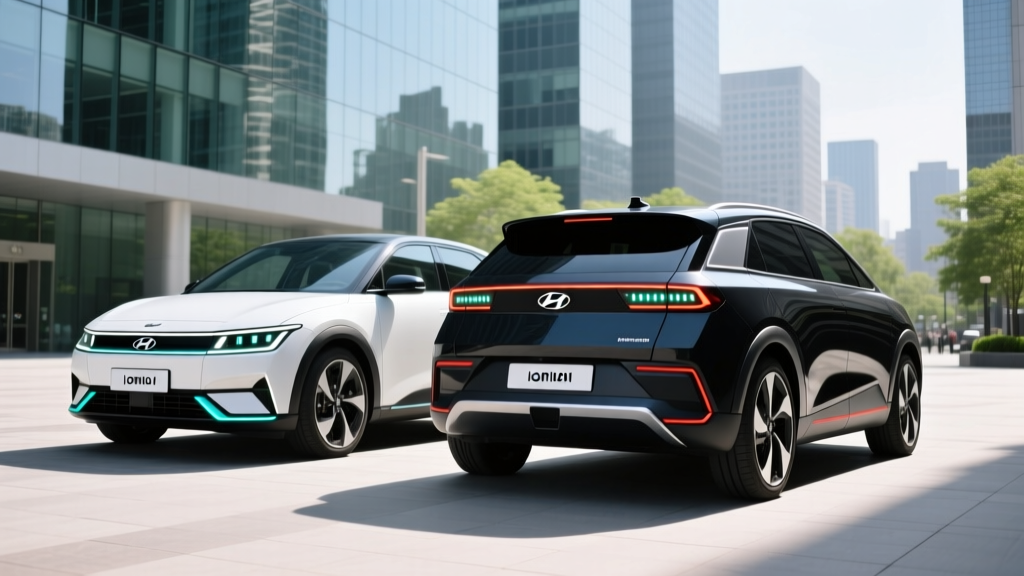
Hyundai's "Parametric Dynamics" design language — debuted on the Ioniq 5's pixel-art retro-futurism and refined into the Ioniq 6's "Electrified Streamliner" teardrop — isn't just aesthetic. The Ioniq 6's 0.21 drag coefficient (Cd) directly translates to up to 361 miles of EPA range on the Long Range RWD trim, making it one of the most efficient mainstream EVs on sale. The Ioniq 5 offers up to 318 miles EPA with a more practical hatchback footprint. Both ride on Hyundai's E-GMP platform with 800V architecture enabling 10–80% DC fast charging in approximately 18 minutes at peak rate. Pricing starts at $42,600 (Ioniq 5 SE Standard Range) and $39,750 (Ioniq 6 SE Standard Range) before incentives.
What Makes Hyundai's EV Design Actually Unique
Hyundai's design studio took a risk that most legacy automakers avoided: building EVs that look unmistakably electric rather than dressing up gas-car proportions. The Ioniq 5, launched for MY2022 and refreshed for 2025, draws from the 1974 Pony Coupe concept with its origami surfacing, pixel LED lighting signatures, and a flat floor enabled by the skateboard-style E-GMP platform. The cabin's "Living Space" concept features a sliding center console (140mm travel) and a relaxed, lounge-like seating position.
The Ioniq 6 went further. Its teardrop silhouette, active front air flaps, wheel gap reducers, and underbody aero panels produce that class-leading 0.21 Cd. The interior trades the Ioniq 5's angular motifs for a cocooning, curved dual-display layout with ambient lighting integrated into the door panels. Both vehicles share the same fundamental architecture: an 800V electrical system (rare outside Porsche/Audi/Lucid at their launch), bidirectional V2L capability outputting up to 3.6 kW, and battery options ranging from 58 kWh (Standard Range) to 84 kWh (Long Range).
The design isn't purely cosmetic. Aerodynamic efficiency is the single largest factor in highway range, and Hyundai's investment in form-follows-aero shapes pays measurable dividends at the charger and on your electricity bill.
Ioniq 5 vs Ioniq 6: Spec-by-Spec Breakdown
| Specification | 2026 Ioniq 5 SE Long Range AWD | 2026 Ioniq 6 SEL Long Range RWD |
|---|---|---|
| EPA Range | 290 mi | 361 mi |
| Real-World Highway (est.) | ~245–260 mi | ~300–320 mi |
| Usable Battery | 84 kWh (NMC) | 84 kWh (NMC) |
| MPGe (combined) | 110 MPGe | 140 MPGe |
| Peak DC Fast Charge | ~240 kW | ~240 kW |
| 10–80% DCFC Time | ~18 min | ~18 min |
| Level 2 (240V) Rate | 10.9 kW | 10.9 kW |
| Horsepower | 320 hp | 225 hp |
| 0–60 mph | 4.5 sec | 6.2 sec |
| Cargo (rear seats up) | 27.2 cu ft | 12.3 cu ft |
| V2L Output | 3.6 kW | 3.6 kW |
| Base MSRP | $48,600 | $43,750 |
| Battery/Powertrain Warranty | 10 yr / 100,000 mi | 10 yr / 100,000 mi |
Real-World Range Reality: The EPA numbers above assume moderate temperatures, mixed driving, and modest speeds. Expect a 10–15% range reduction at sustained 75+ mph highway speeds, and a 20–30% reduction in sub-freezing temperatures even with the Ioniq's heat pump (standard on Long Range trims). The Ioniq 6's superior aero means it loses proportionally less range at highway speed compared to the boxier Ioniq 5.
Hyundai EV vs Gas Sedan: 5-Year Cost Comparison
Let's compare the Ioniq 6 SEL Long Range RWD against a similarly sized gas midsize sedan — the 2026 Toyota Camry SE (203 hp, 28 city/39 hwy/32 combined MPG, ~$30,500 MSRP). This comparison isolates the ownership economics of Hyundai's unique EV design against a proven gas alternative.
| Cost Category (5 years / 75,000 mi) | Ioniq 6 SEL LR RWD | Camry SE (Gas) |
|---|---|---|
| Purchase Price (MSRP) | $43,750 | $30,500 |
| Est. Federal Tax Credit (§30D) | –$3,750* | $0 |
| Effective Purchase Price | $40,000 | $30,500 |
| Fuel / Electricity (75k mi) | $4,050** | $8,790*** |
| Maintenance (5 yr) | $1,200 | $3,500 |
| Insurance (5 yr avg) | $9,500 | $7,200 |
| Est. Depreciation (5 yr) | $18,000 | $12,500 |
| Total 5-Year Cost | $74,750 | $62,490 |
| Cost Per Mile | $0.63/mi | $0.83/mi**** |
*§30D credit amount depends on battery sourcing compliance, buyer income caps ($150k single / $300k joint), and point-of-sale transfer. Verify current eligibility at IRS.gov §30D. Hyundai's credit eligibility has fluctuated as battery sourcing rules tightened through 2025–2026.
**Based on $0.14/kWh national avg, 3.6 mi/kWh efficiency. Home charging dominant.
***Based on $3.75/gal, 32 MPG combined.
****Excludes purchase price amortized differently; operating cost per mile (fuel+maint) is $0.16/mi Ioniq vs $0.16/mi Camry, but EV saves significantly on fuel alone when gas prices rise.
Charging the Hyundai Ioniq Lineup: What Owners Actually Experience
Hyundai's 800V E-GMP platform is one of the strongest arguments for the brand. While most mainstream EVs (including many competitors at similar price points) use 400V systems limited to ~150 kW peak charging, the Ioniq 5 and 6 can accept up to ~240 kW at a compatible DC fast charger. The charging curve is the real story:
| Charging Level | Power (kW) | Miles Added Per Hour | Typical Use Case |
|---|---|---|---|
| Level 1 (120V household) | ~1.4 kW | ~5 mi/hr | Emergency / overnight trickle |
| Level 2 (240V, 48A home) | 10.9 kW | ~39 mi/hr | Daily home charging, full charge in ~8 hr |
| DC Fast Charge (peak) | ~240 kW | ~650+ mi/hr (burst) | Road trips, 10–80% in ~18 min |
| DC Fast Charge (sustained avg 10–80%) | ~165 kW avg | — | Real-world average during session |
Charging curve reality: The 240 kW peak only holds between roughly 10–55% state of charge. From 55–80%, the rate tapers to 100–150 kW, and above 80% it drops sharply to protect the battery (under 50 kW). This is why Hyundai quotes 10–80% times — the last 20% can add another 20+ minutes. On road trips, plan to charge to 80% and move on rather than waiting for a full charge.
Connector note: For 2026, Hyundai has transitioned the Ioniq lineup to the NACS (Tesla-style) charge port on new production, with CCS1 adapters available for legacy infrastructure. This opens access to Tesla Supercharger stations (15,000+ nationally), significantly improving road-trip charging reliability.
Real-World Ownership: What First-Time Hyundai EV Buyers Need to Know
Before committing to a Hyundai EV based on its striking design, evaluate these practical ownership factors honestly:
Home Charging Access Is Non-Negotiable for Most Buyers
If you can install a Level 2 (240V/48A) home charger, the Ioniq 5 or 6 is a seamless daily driver — plug in at night, wake up to a full battery, and rarely visit a public charger. Expect $800–$2,000 for a quality Level 2 unit (ChargePoint Home Flex, Emporia Level 2) plus $500–$2,500 for electrician installation depending on panel proximity and whether your electrical panel needs a 200A upgrade ($1,500–$3,500 additional). If you live in an apartment without charging access or rely solely on street parking, ownership becomes significantly more inconvenient and expensive.
Cold Climate Considerations
Hyundai equips Long Range Ioniq models with a heat pump, which reduces cold-weather range loss compared to resistive cabin heating. However, in sustained sub-20°F conditions, expect 20–30% range reduction even with preconditioning. Battery preconditioning for DC fast charging (activated via navigation routing to a charger) is essential in cold weather to avoid painfully slow charge rates.
Insurance Costs Are Higher
EV insurance premiums run 15–25% higher than comparable gas vehicles due to higher repair costs, specialized parts, and total-loss thresholds. Budget $1,800–$2,200/year for an Ioniq 5 or 6 depending on your state and driving record. Shop quotes from GEICO, Progressive, and EV-specialty insurers before purchasing.
Tax Credit Eligibility Is Not Guaranteed
The federal §30D clean vehicle credit has become increasingly complex. Key eligibility requirements for 2026:
- Buyer income cap: AGI ≤ $150,000 (single) / $300,000 (married filing jointly)
- MSRP cap: Vehicles must be under $55,000 (sedans like Ioniq 6) or $80,000 (SUVs/trucks like Ioniq 5)
- Battery sourcing: Increasing percentages of critical minerals and battery components must be sourced from the US or FTA partners — this threshold tightens annually
- Point-of-sale transfer: Eligible buyers can transfer the credit to the dealer at purchase for an immediate price reduction
- Final assembly: Vehicle must be assembled in North America (Hyundai's Metaplant America in Georgia began production in late 2024, qualifying US-built Ioniq models)
The credit amount varies — it may be $3,750 or $7,500 depending on whether the vehicle meets both the critical minerals AND battery component thresholds. Always verify current eligibility before relying on the credit in your budget.
Hyundai EV Design: Myths vs Facts
| Myth | Fact |
|---|---|
| "The pixel design is just a gimmick with no function" | The Ioniq 6's teardrop shape (0.21 Cd) yields 30+ more miles of range vs the Ioniq 5 at highway speeds — aero efficiency is the function. |
| "800V charging only works at rare specialty chargers" | Any CCS/NACS DC fast charger rated 150+ kW will deliver strong charge rates. The Ioniq simply charges faster than 400V rivals at the same station. |
| "The battery will need expensive replacement within a few years" | Hyundai warranties the battery at 10 years/100,000 miles with a 70% capacity retention threshold. Industry data shows NMC batteries typically retain 85–90% capacity at 100k miles with normal use. |
| "The Ioniq 5 and 6 are basically the same car" | They share the E-GMP platform, but the Ioniq 6 is lower, more aerodynamic, more efficient, and has less cargo space. The Ioniq 5 is the practical hatchback; the 6 is the range-maximized sedan. |
| "You can't take an EV on a road trip" | With NACS Supercharger access and 18-min 10–80% charging, a 600-mile trip requires one 20-minute stop. Plan with the PlugShare or A Better Routeplanner app. |
Decision Framework: Which Hyundai EV Fits Your Situation?
Choose the Ioniq 5 if:
- You need cargo versatility (27.2 cu ft hatch, 59.3 cu ft with seats folded)
- You want AWD for snow-belt climates (available dual-motor, 320 hp)
- You prefer a higher seating position and crossover ride height
- Your daily commute is under 60 miles and you charge at home
- Budget allows $46,000–$55,000 for the Long Range trims
Choose the Ioniq 6 if:
- Maximum range is your priority (361 mi EPA on SEL LR RWD)
- You drive long highway commutes where aero efficiency pays dividends
- Cargo space is secondary (12.3 cu ft trunk, no hatchback opening)
- You want the lowest cost-per-mile in the Hyundai EV lineup
- Budget is tighter — the SE Standard Range starts at $39,750
Consider a Hyundai PHEV (Tucson or Santa Fe) instead if:
- You lack reliable home charging access
- You frequently drive in remote areas with no DC fast charging
- You want 30+ miles of electric-only commuting plus unlimited gas range
- Cold climate range loss is unacceptable for your commute
Frequently Asked Questions
Does the Hyundai Ioniq 5 qualify for the $7,500 federal tax credit in 2026?
Eligibility depends on the specific build, battery sourcing compliance, and your income. Since Hyundai began US production at Metaplant America in Georgia, the Ioniq 5 meets the final-assembly requirement. However, the battery component and critical minerals thresholds determine whether you receive $3,750 or $7,500 — and these thresholds tighten annually. Check the latest eligible vehicle list at fueleconomy.gov and consult a tax professional before relying on the credit.
How does the Ioniq 6 achieve such high efficiency compared to other EVs?
The 140 MPGe combined rating comes primarily from the 0.21 drag coefficient — among the lowest of any production car. Active air flaps, a flat underbody, camera-based digital side mirrors (where legal), and the tapered rear deck all reduce aerodynamic drag, which accounts for roughly 60% of energy consumption at highway speeds. The RWD powertrain also avoids the ~5% drivetrain loss of AWD.
What is the real-world charging cost for a Hyundai Ioniq?
At the national average residential rate of $0.14/kWh and the Ioniq 6's efficiency of ~3.6 mi/kWh, home charging costs approximately $0.039 per mile. A full 84 kWh charge from empty costs about $11.76 at home. Public DC fast charging averages $0.35–$0.50/kWh, bringing road-trip cost to $0.10–$0.14 per mile — still below gas at current prices but not the dramatic savings of home charging.
Is Hyundai's 10-year battery warranty actually good?
Yes — it's among the strongest in the industry. The 10-year/100,000-mile warranty covers battery capacity loss below 70% of original capacity. If your battery degrades beyond that threshold within the warranty period, Hyundai will repair or replace it. Note that the warranty applies to the original owner and may have reduced terms for subsequent owners. See Hyundai's official warranty page for current terms.
Can I use Tesla Superchargers with a Hyundai Ioniq?
For 2026, Hyundai has adopted the NACS charge port on new Ioniq vehicles, enabling native access to Tesla's Supercharger network (15,000+ stations). For earlier model years equipped with CCS1, Hyundai provides a NACS adapter. This dramatically improves road-trip charging options, as Tesla's network has the best uptime and coverage in the US.