Quick Answer: The Hyundai EV sales increase through 2025 and into 2026 isn't hype — it's driven by concrete ownership advantages: the Ioniq 5 delivers up to 318 miles of EPA range, charges from 10-80% in ~18 minutes on a 350 kW DC fast charger, and qualifies for the full $7,500 federal tax credit (when eligibility rules are met). Combined with lower per-mile fueling costs and Hyundai's 10-year/100,000-mile battery warranty, the math works for a growing number of buyers. But real savings depend on your home charging access, driving patterns, and local electricity rates — details we unpack below.
What's Behind the Hyundai EV Sales Increase?
Hyundai's electrified lineup has steadily captured market share since the Ioniq 5's 2022 launch. By 2025, the brand was reporting record quarterly EV deliveries in the U.S., and that momentum has carried into 2026. The drivers are practical, not ideological:
- Expanded U.S. production: Hyundai's Metaplant America in Georgia began producing Ioniq 5 vehicles domestically, helping trims meet the IRS §30D battery-component and critical-mineral sourcing requirements for the federal tax credit.
- Competitive pricing: The 2026 Ioniq 5 starts at approximately $42,600 (SE Standard Range) and tops out near $58,000 (Calligraphy), keeping it within the $55,000 SUV MSRP cap for §30D eligibility on most trims.
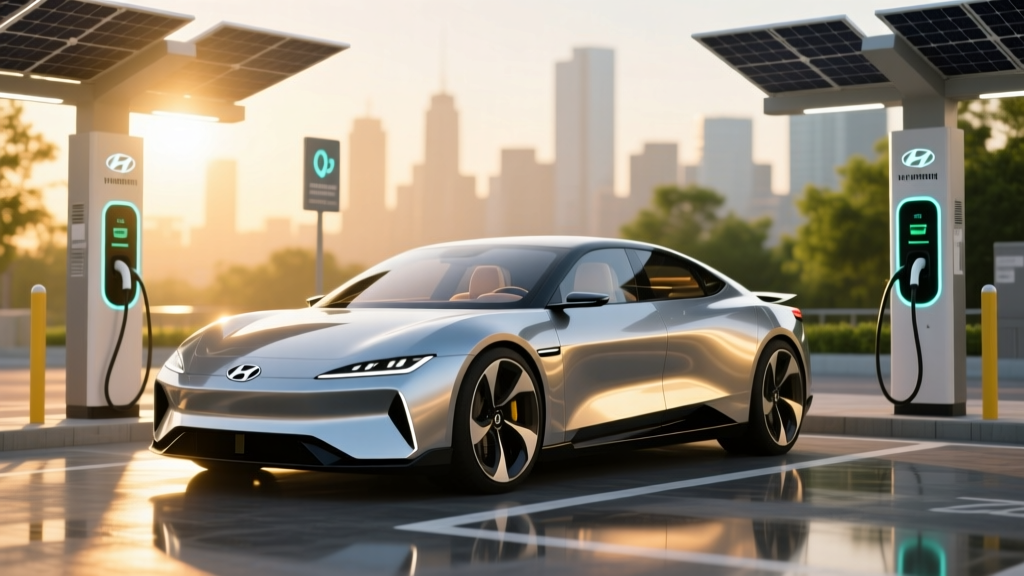
- Charging infrastructure maturation: Hyundai now equips new EVs with the NACS (Tesla-style) charging port natively, granting access to over 20,000 Tesla Supercharger stalls via adapter or native compatibility, dramatically reducing range anxiety on road trips.
- Proven platform: The E-GMP architecture with 800V electrical system enables some of the fastest DC charging in the segment — a tangible advantage buyers notice at public chargers.
But sales numbers alone shouldn't dictate your purchase. Let's look at what ownership actually costs and whether a Hyundai EV fits your specific situation.
Hyundai EV Lineup at a Glance: Specs That Matter
| Spec | 2026 Ioniq 5 (Long Range AWD) | 2026 Ioniq 6 (SEL AWD) | 2026 Ioniq 5 N |
|---|---|---|---|
| EPA Range | 290 mi | 316 mi | 245 mi |
| Battery (usable) | 84 kWh (NMC) | 84 kWh (NMC) | 84 kWh (NMC) |
| Peak DC Charge Rate | ~240 kW | ~240 kW | ~240 kW |
| 10-80% DC Fast Charge | ~18 min | ~18 min | ~18 min |
| Level 2 Charge (10.9 kW) | ~7 hrs (full) | ~7 hrs (full) | ~7 hrs (full) |
| Horsepower | 320 hp | 320 hp | 641 hp |
| 0-60 mph | 5.0 sec | 5.1 sec | 3.3 sec |
| MPGe (combined) | 110 MPGe | 117 MPGe | 85 MPGe |
| Base MSRP | ~$46,700 | ~$47,700 | ~$67,500 |
| Battery Warranty | 10 yr / 100,000 mi | 10 yr / 100,000 mi | 10 yr / 100,000 mi |
Real-World Range Reality Check: The EPA 290-mile figure for the Ioniq 5 Long Range AWD assumes mixed driving at moderate temperatures. Expect approximately 240-260 miles on sustained highway driving at 70+ mph, and 200-230 miles in sub-freezing winter conditions (below 30°F) due to battery heating demands and cabin climate load. The Ioniq 6's more aerodynamic sedan shape holds up better at highway speed — plan for 270-285 real-world highway miles.
EV vs. Gas: The Real Cost Comparison
The Hyundai EV sales increase reflects buyers running the numbers and coming out ahead — but only under the right conditions. Here's a five-year cost comparison between the 2026 Ioniq 5 SEL AWD and a comparably equipped 2026 Hyundai Tucson gas AWD (2.5L, ~28 MPG combined):
| Cost Category (5 yr / 75,000 mi) | Ioniq 5 SEL AWD | Tucson Gas AWD |
|---|---|---|
| Purchase Price (MSRP) | $49,200 | $36,500 |
| Federal Tax Credit (§30D) | -$7,500* | $0 |
| Effective Purchase | $41,700 | $36,500 |
| Fuel/Energy (home L2 @ $0.14/kWh) | $3,750 | $9,375 (gas @ $3.50/gal) |
| Maintenance (est.) | $1,200 | $3,500 |
| Insurance (est. avg) | $9,500 | $7,800 |
| 5-Year Total Out-of-Pocket | ~$56,150 | ~$57,175 |
*§30D credit eligibility depends on buyer income (≤$150K single / ≤$300K joint), vehicle MSRP caps ($55K for SUVs), and battery sourcing requirements. Verify current rules at IRS.gov and consult a tax professional. Point-of-sale transfer is available through registered dealers.
The Ioniq 5 breaks even or pulls ahead within five years for most home-charging owners, with savings widening each year you keep it. The Tucson's advantage is lower upfront cost and no charging infrastructure dependency.
Charging at Home: The Make-or-Break Factor
The single biggest determinant of EV satisfaction is reliable home charging. If you can install a Level 2 charger, a Hyundai EV integrates seamlessly into daily life — plug in at night, wake up to 250+ miles every morning. If you can't charge at home, the ownership equation changes significantly.
| Home Charging Setup | Estimated Cost | What You Get |
|---|---|---|
| Level 1 (120V outlet, included cord) | $0 | ~3-5 mi/hr added; full charge in 40+ hrs |
| Level 2 (240V, 48A hardwired) | $800–$2,200 | ~30-36 mi/hr; full charge in ~7 hrs |
| Electrical panel upgrade (200A) | $1,500–$4,000 | Required if existing panel is 100A or maxed out |
| Permit & inspection | $100–$400 | Varies by municipality |
Critical note: Always have a licensed electrician assess your panel capacity before purchasing a Level 2 charger. A 48-amp charger requires a 60-amp dedicated circuit. Older homes with 100-amp panels may need a costly upgrade — factor this into your budget.
Hyundai's 800V E-GMP platform really shines on DC fast charging. At a 350 kW Electrify America or Tesla Supercharger station, the Ioniq 5 sustains high charge rates longer than most competitors, reaching 80% in roughly 18 minutes. However, the charge curve tapers sharply above 80% — expect 80-100% to take another 15-20 minutes. For road trips, plan stops around the 10-80% window for maximum efficiency.
Common Misconceptions About Hyundai EVs
| Myth | Fact |
|---|---|
| "The battery will need replacing in 5 years and cost $20,000." | Hyundai's NMC batteries are warranted for 10 years/100,000 miles at 70%+ capacity retention. Industry data shows modern liquid-cooled packs retaining 85-90% capacity at 100K miles. Full replacement, if needed out of warranty, runs $12,000-$18,000 — but is statistically rare within the first decade. |
| "You can't road trip in an EV." | With native NACS access to Tesla's Supercharger network and Hyundai's 18-minute 10-80% charging, a 600-mile trip requires one 20-25 minute stop. Apps like A Better Routeplanner precondition the battery for optimal charging speed. |
| "EVs are worse in cold weather." | Range drops 15-30% in sub-freezing temps (verified in multiple tests). The Ioniq 5 includes a heat pump on most trims, which recovers waste heat and reduces cabin-heating energy draw. Preconditioning while plugged in mitigates most cold-weather impact for daily driving. |
| "The tax credit is gone or I definitely qualify." | Both assumptions are risky. §30D eligibility hinges on MSRP caps, buyer income limits, battery sourcing requirements, and point-of-sale dealer registration. Rules have shifted multiple times — always verify at IRS.gov before committing. |
Hyundai EV vs. Hybrid: Which Powertrain Fits You?
Not every buyer is ready for a full BEV. Hyundai also offers the Tucson PHEV (33 miles electric-only, ~35 MPG combined after battery depletion) as a bridge option. Here's a decision framework:
Choose the Ioniq 5 (BEV) if:
- You have reliable home Level 2 charging (garage, driveway, or employer-provided)
- Your daily commute is under 150 miles round-trip
- You qualify for the §30D credit, closing the upfront price gap
- You want minimal maintenance and lowest per-mile energy cost
- You take road trips 2-4 times per year and can plan 20-minute charging stops
Choose the Tucson PHEV if:
- You lack home charging access (apartment, street parking, no 240V option)
- You regularly drive 300+ miles in rural areas with sparse DC charging
- You want electric-only commuting (33 mi covers most errands) without range anxiety on longer drives
- Your budget can't absorb the EV premium even after tax credits
Choose a gas Tucson if:
- You drive under 8,000 miles/year (fuel savings won't offset the EV price premium)
- You live in an extreme-cold climate (consistently below 10°F) and lack garage parking
- You frequently tow (the Ioniq 5 is rated for only 1,500 lbs vs. Tucson gas at 2,000 lbs)
Insurance, Depreciation, and Hidden Ownership Costs
EV insurance premiums run 15-25% higher than comparable gas vehicles, driven by higher repair costs for battery-adjacent damage and elevated vehicle values. For the Ioniq 5, expect annual premiums of $1,700-$2,200 depending on your state, driving record, and coverage level. Shop quotes from EV-friendly insurers (GEICO, Progressive, and State Farm all underwrite EVs broadly) before purchasing.
Depreciation has historically been a weak point for EVs, with steeper first-year drops than gas equivalents. However, the Hyundai EV sales increase and growing used-EV demand have stabilized residuals. The Ioniq 5 currently retains approximately 55-60% of its value at three years/36,000 miles — competitive with mainstream gas crossovers and improving as the market matures.
Maintenance savings are real and measurable: no oil changes, no transmission fluid, no spark plugs, no emissions testing. Brake pad life extends to 80,000+ miles thanks to regenerative braking handling most deceleration. Budget roughly $200-$300/year for cabin air filters, wiper fluid, tire rotations, and windshield wipers.
Frequently Asked Questions
Does the 2026 Hyundai Ioniq 5 qualify for the $7,500 federal tax credit?
Most trims qualify, provided you meet income limits (≤$150,000 single / ≤$300,000 joint filing), the vehicle MSRP stays under the $55,000 SUV cap, and battery sourcing requirements are satisfied. U.S.-built Ioniq 5 vehicles from the Georgia Metaplant have a strong eligibility profile. The credit can be transferred to the dealer at point of sale as an instant price reduction. Always confirm current eligibility on IRS.gov and with your dealer before signing.
How long does it take to charge a Hyundai Ioniq 5 at home?
On a Level 2 home charger (240V, 48 amps / 11.5 kW), a full 0-100% charge takes roughly 7.5 hours for the 84 kWh battery. Most owners charge from 20-80% overnight, which takes about 4.5 hours and provides roughly 230 miles of range. On a standard 120V outlet (Level 1), expect ~4 miles of range per hour of charging — adequate only for low-mileage drivers or as a backup.
Is the Hyundai EV battery warranty really 10 years?
Yes. Hyundai covers the high-voltage traction battery for 10 years or 100,000 miles (whichever comes first) against defects and capacity loss below 70%. This is among the longest battery warranties in the industry. The warranty is transferable to subsequent owners, which supports resale value.
Can I use Tesla Superchargers with a Hyundai Ioniq 5?
Starting with 2025-2026 model years, Hyundai has transitioned to the NACS (North American Charging Standard) port on new vehicles, enabling direct Supercharger access. For earlier CCS-equipped Ioniq 5 vehicles, Hyundai provides or sells a CCS-to-NACS adapter. Tesla Superchargers currently represent the largest and most reliable DC fast-charging network in the U.S., with over 20,000 stalls nationwide. Confirm compatibility with your specific model year at purchase.
What happens if I need to replace the Ioniq 5 battery out of warranty?
Full high-voltage battery replacement currently costs approximately $12,000-$18,000 including parts and labor. However, catastrophic battery failure outside the warranty period is statistically uncommon for liquid-cooled NMC packs. Individual module replacement (if supported) can reduce costs significantly. Battery prices continue to decline year over year, and by the time a 2026 Ioniq 5 exits its 10-year warranty window in 2036, replacement costs are projected to be substantially lower.