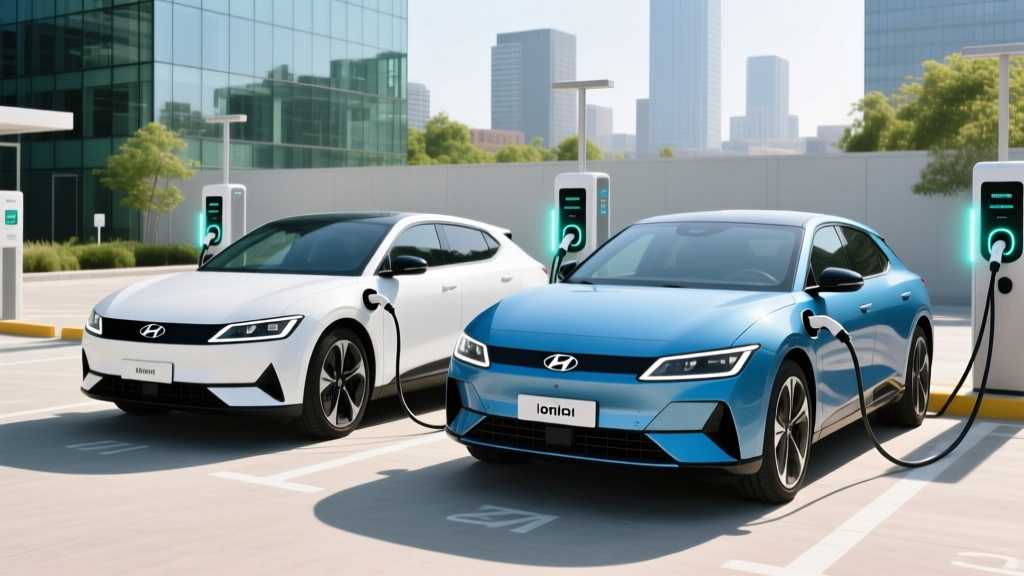
If you are shopping the Hyundai Ioniq 5 or Ioniq 6, the sticker price is only the opening move. The real math lives in the gap between Hyundai EV incentives, 5-year operating costs, insurance premiums, and resale value. Hyundai has aggressively priced its E-GMP-based EVs, and when you stack the federal §30D credit with state rebates and utility programs, the effective cost of ownership can undercut a comparable gas crossover like the Tucson — but only if you clear the credit's eligibility hurdles and charge mostly at home.
Below is a data-first teardown of what it actually costs to buy, fuel, insure, and eventually sell a Hyundai EV in 2026. We use the Ioniq 5 SEL (the volume trim) and the Ioniq 6 SEL as baselines, with numbers pulled from the EPA, IRS, and Hyundai's published specs.
Which Hyundai EVs Qualify for Federal Incentives in 2026?
Not every Hyundai EV on the lot qualifies for the full $7,500 federal credit under IRS §30D. The rules tighten around three axes: where the vehicle is assembled, where the battery's critical minerals and components come from, and whether you — the buyer — fall under income and MSRP caps. Hyundai's U.S. assembly footprint (via the Metaplant in Georgia) now qualifies several models, but battery sourcing remains the swing factor and shifts by model year.
§30D Credit Eligibility Checklist (2026 Rules)
- Assembly: Vehicle must undergo final assembly in North America (Hyundai Ioniq 5, Ioniq 6, and Kona Electric built at Metaplant Georgia qualify; older imports do not).
- MSRP caps: ≤$80,000 for vans/SUVs/pickups; ≤$55,000 for sedans. The Ioniq 5 (SUV classification) clears this easily. The Ioniq 6 (sedan) sits under $55K on most trims but the Limited AWD brushes the cap.
- Buyer income caps (MAGI): $300K married-filing-jointly, $225K head-of-household, $150K single. Exceed by $1 and the credit is $0.
- Battery sourcing: Critical-mineral and battery-component percentages phase up yearly. The split is two halves — up to $3,750 for minerals, up to $3,750 for components. Foreign Entity of Concern (FEOC) rules can disqualify one or both halves.
- Point-of-sale transfer: You can assign the credit to the dealer at purchase, reducing the drive-off price. You still must file IRS Form 8936 and meet MAGI at tax time; if you exceed the cap, you repay the credit.
- One vehicle per VIN, one credit per taxpayer per year.
Because the critical-mineral and component thresholds ratchet up annually, a trim that qualified for the full $7,500 in 2024 may qualify for $3,750 or nothing in 2026. Always verify the specific VIN on fueleconomy.gov before signing.
Hyundai Ioniq 5 vs Ioniq 6: Incentive-Relevant Specs
| Spec | 2026 Ioniq 5 SEL AWD | 2026 Ioniq 6 SEL AWD |
|---|---|---|
| EPA range | 290 mi (real-world ~250–270 mi hwy; ~220 mi cold) | 316 mi (real-world ~275–290 mi hwy; ~240 mi cold) |
| Battery (usable) | 84.0 kWh, NMC | 84.0 kWh, NMC |
| Peak DC fast charge | 240 kW (10–80% ~18 min) | 240 kW (10–80% ~18 min) |
| Level 2 onboard | 10.9 kW | 10.9 kW |
| Power / torque | 320 hp / 446 lb-ft | 320 hp / 446 lb-ft |
| 0–60 mph | 4.5 sec | 4.7 sec |
| MPGe (combined) | 110 MPGe | 117 MPGe |
| Base MSRP | ~$49,950 | ~$47,950 |
| SUV/sedan classification | SUV ($80K cap) | Sedan ($55K cap) |
| Powertrain warranty | 10 yr / 100,000 mi | 10 yr / 100,000 mi |
5-Year Total Cost of Ownership: Hyundai EV vs Gas Baseline
To see whether Hyundai EV incentives actually tilt the math, we model 5 years / 60,000 miles of ownership for an Ioniq 5 SEL AWD against a similarly equipped gas crossover (Tucson SEL AWD, ~$34,000 MSRP, 28 MPG combined). Assumptions: electricity at $0.16/kWh (national residential average), gas at $3.60/gal, 12,000 miles/year.
| Category | Ioniq 5 SEL AWD | Gas Tucson SEL AWD | Notes |
|---|---|---|---|
| Purchase (after §30D, $7,500) | $42,450 | $34,000 | Assumes full credit; verify VIN |
| Fuel / energy | $2,950 | $7,715 | EV: 30 kWh/100mi; Gas: 28 MPG |
| Maintenance | $1,400 | $3,600 | No oil, fewer brakes on EV |
| Insurance (5 yr) | $9,500 | $7,600 | EV premiums run 15–25% higher |
| Depreciation | $21,200 | $14,300 | ~50% EV vs ~42% gas at yr 5 |
| Total 5-yr cost | $77,500 | $67,215 | |
| Cost per mile (all-in) | $1.29 | $1.12 |
The Ioniq 5 wins on fuel and maintenance by roughly $7,000 over five years, but gives back ~$6,900 to higher depreciation and ~$1,900 to insurance. With the full $7,500 credit applied, the net gap vs the Tucson is roughly $10,000 — meaningful, not dominant. If you only qualify for $3,750 or $0 of the credit, the EV becomes more expensive to own than the gas car on pure TCO unless you drive high annual miles (15K+) or have access to cheap overnight electricity (<$0.10/kWh).
Charging vs Gas: The Per-Mile Math
Cost per mile, Ioniq 5 (30 kWh/100 mi) vs Tucson (28 MPG)
| Scenario | EV $/mile | Gas $/mile | EV savings |
|---|---|---|---|
| Home Level 2 @ $0.16/kWh | $0.048 | $0.129 | 63% |
| Home Level 2 @ $0.10/kWh (off-peak utility rate) | $0.030 | $0.129 | 77% |
| Public DCFC @ $0.45/kWh | $0.135 | $0.129 | −5% (EV costs more) |
| Tesla Supercharger / EA @ $0.35/kWh | $0.105 | $0.129 | 19% |
The takeaway is blunt: the EV fuel savings only exist if you charge at home. Drivers who rely exclusively on public DC fast charging at $0.40–$0.55/kWh will spend more per mile than a 28-MPG gas crossover. Hyundai's 2-year complimentary Electrify America charging (limited kWh) helps bridge the early ownership period, but it is not a long-term plan.
Maintenance Savings: Where the EV Quietly Wins
| Service item | Gas Tucson (5 yr) | Ioniq 5 (5 yr) |
|---|---|---|
| Oil changes | ~$450 (10 services) | $0 |
| Transmission fluid | ~$250 | $0 (reduction gear) |
| Brake pads/rotors | ~$900 | ~$250 (regen extends life 2–3×) |
| Cabin air filter | ~$200 | ~$200 |
| Coolant, belts, plugs | ~$600 | ~$100 |
| Tire rotation / replacement | ~$1,200 | ~$1,500 (EV weight + instant torque) |
| Total | ~$3,600 | ~$2,050 |
The EV saves roughly $1,550 over five years on scheduled maintenance. The hidden cost is tires — the Ioniq 5's 4,600-lb curb weight and 446 lb-ft of instant torque chew through rubber ~20% faster than the Tucson. Budget for a premium EV-rated tire set (Hankook iON, Michelin Pilot Sport EV) at ~$1,200–$1,500 mounted around year 4.
Insurance Reality: The Line Item Hyundai Can't Hide
Expect to pay 15–25% more to insure an Ioniq 5 or Ioniq 6 than a Tucson. National average for an Ioniq 5 SEL runs $1,800–$2,100/year for a 40-year-old driver with clean record, vs $1,400–$1,700 for the Tucson. The reasons are structural, not arbitrary:
- Battery replacement exposure: A minor rear-end collision that damages the 84-kWh pack can total the car; insurers price that tail risk.
- Repair complexity: High-voltage systems require certified techs and longer shop times.
- Parts pricing: E-GMP-specific components (inverters, heat pump, charge port) carry a premium.
- Higher MSRP baseline: Insurers start from replacement cost.
Shop quotes from at least three carriers before purchase — Geico, Progressive, and State Farm price EVs very differently, and some offer green-vehicle discounts of 5–10%. Hyundai's own insurance program in select states can be competitive for clean-record drivers.
Depreciation and Resale: The Honest Picture
EV depreciation has been steeper than gas vehicles over the last three cycles, driven by three forces: aggressive price cuts (led by Tesla), rapid range/charging improvements making 2–3-year-old EVs feel dated, and battery-health uncertainty in the used market. Industry data from Kelley Blue Book and iSeeCars puts average 5-year EV depreciation around 45–55%, vs 38–45% for mainstream gas crossovers.
For the Ioniq 5 specifically:
- Year 1: ~15–18% loss (typical new-car hit)
- Year 3: ~35–40% cumulative
- Year 5: ~48–52% cumulative
The Ioniq 6 sedan depreciates slightly faster (sedans are weaker in the used market, and the polarizing styling narrows the buyer pool). The Hyundai 10-year/100,000-mile battery warranty helps, but note it is non-transferable to second owners in most cases — the used buyer gets 5-year/60,000-mile powertrain coverage, which softens the resale floor.
Offsetting this: as Hyundai scales Metaplant Georgia production, parts availability and service familiarity should improve, which historically supports used values. Plan to keep the car 6+ years to amortize the depreciation hit.
State, Local, and Utility Incentives
Beyond the federal §30D credit, state and utility incentives vary dramatically by ZIP code and change quarterly. Always verify on your state energy office site and DSIRE (nc-cleanenergy.org). Examples as of early 2026:
- California (CVRP): Up to $2,000 for income-qualified buyers (stackable with federal); high-income buyers are excluded.
- Colorado: State EV tax credit up to $5,000 for vehicles under $80K MSRP, stackable with §30D.
- New York (Drive Clean Rebate): Point-of-sale rebate up to $2,000, income-tiered.
- Utility rebates: PG&E, Xcel Energy, ConEdison, and others offer $300–$1,500 for home Level 2 charger purchase/install, plus off-peak charging rates as low as $0.07–$0.10/kWh.
- HOV lane access: CA, CO, VA, MD, and others grant solo-carpool access for EVs — a non-cash incentive worth thousands in commute time.
For exact amounts and current eligibility, consult the Alternative Fuels Data Center and your utility's EV program page.
Stacking Incentives: A Real Purchase Scenario
Let's put it together for a Colorado buyer purchasing a 2026 Ioniq 5 SEL AWD at $49,950 MSRP, with home Level 2 install:
- Federal §30D (assuming full qualification): −$7,500 (point-of-sale)
- Colorado state credit: −$5,000
- Xcel Energy charger rebate: −$500
- Utility off-peak rate: $0.09/kWh → $0.027/mile
- Effective drive-off: ~$36,950 before destination/doc fees
That same buyer in a state with no EV credit and a utility at $0.20/kWh sees an effective drive-off of ~$42,450 and a cost-per-mile of $0.060 — still cheaper than gas, but the gap narrows by nearly half. Your ZIP code is as important as the car itself when evaluating Hyundai EV incentives.
Frequently Asked Questions
How much does it really cost to own a Hyundai EV over 5 years?
For an Ioniq 5 SEL AWD with the full $7,500 federal credit, expect roughly $77,500 all-in over 5 years / 60,000 miles — about $1.29 per mile including depreciation. The gas Tucson equivalent runs ~$67,200 ($1.12/mi). The EV wins on fuel and maintenance but loses on insurance and resale. High-mileage drivers (15K+ mi/yr) or those with cheap home electricity ($0.10/kWh or less) close or reverse the gap.
Do I qualify for the Hyundai EV federal tax credit?
You qualify for up to $7,500 under §30D if (a) your MAGI is ≤$150K single / $300K joint, (b) the vehicle MSRP is under the class cap ($80K SUV, $55K sedan), (c) the specific VIN's battery meets 2026 critical-mineral and component thresholds, and (d) the car was assembled in North America. Verify the VIN on fueleconomy.gov — qualification can change mid-year as sourcing shifts. The credit can be transferred to the dealer at point-of-sale.
How much do I save on fuel and maintenance vs a gas Hyundai?
Home-charging an Ioniq 5 at $0.16/kWh costs ~$0.048/mile vs ~$0.129/mile in a 28-MPG gas Tucson — a $4,765 fuel savings over 60,000 miles. Maintenance saves another ~$1,550 (no oil, fewer brakes, no belts). Combined operational savings: ~$6,300 over 5 years. Public DC fast charging at $0.40+/kWh erases most of the fuel advantage.
Are Hyundai EVs more expensive to insure?
Yes — typically 15–25% higher than equivalent gas models. Expect $1,800–$2,100/year for an Ioniq 5 SEL vs $1,400–$1,700 for a Tucson. The premium reflects battery replacement risk, HV repair complexity, and higher MSRP. Shop at least three carriers; some offer green-vehicle discounts.
How well do Hyundai EVs hold their value?
Average 5-year depreciation for the Ioniq 5 is ~48–52%, steeper than the Tucson's ~42%. The Ioniq 6 sedan depreciates slightly faster. The 10-yr/100K-mi battery warranty helps first-owner confidence but largely doesn't transfer to second owners. Plan on 6+ years of ownership to amortize the steeper curve, or lease to push depreciation risk back to Hyundai.
Does Hyundai's complimentary charging change the math?
Hyundai typically includes 2 years of complimentary Electrify America charging (capped kWh). At ~10,000 miles of DCFC coverage, that's worth $400–$600. It's a meaningful bridge for apartment dwellers, but not a substitute for long-term home charging economics.